


News
Nobody happy with 12.5% Council Tax compromise

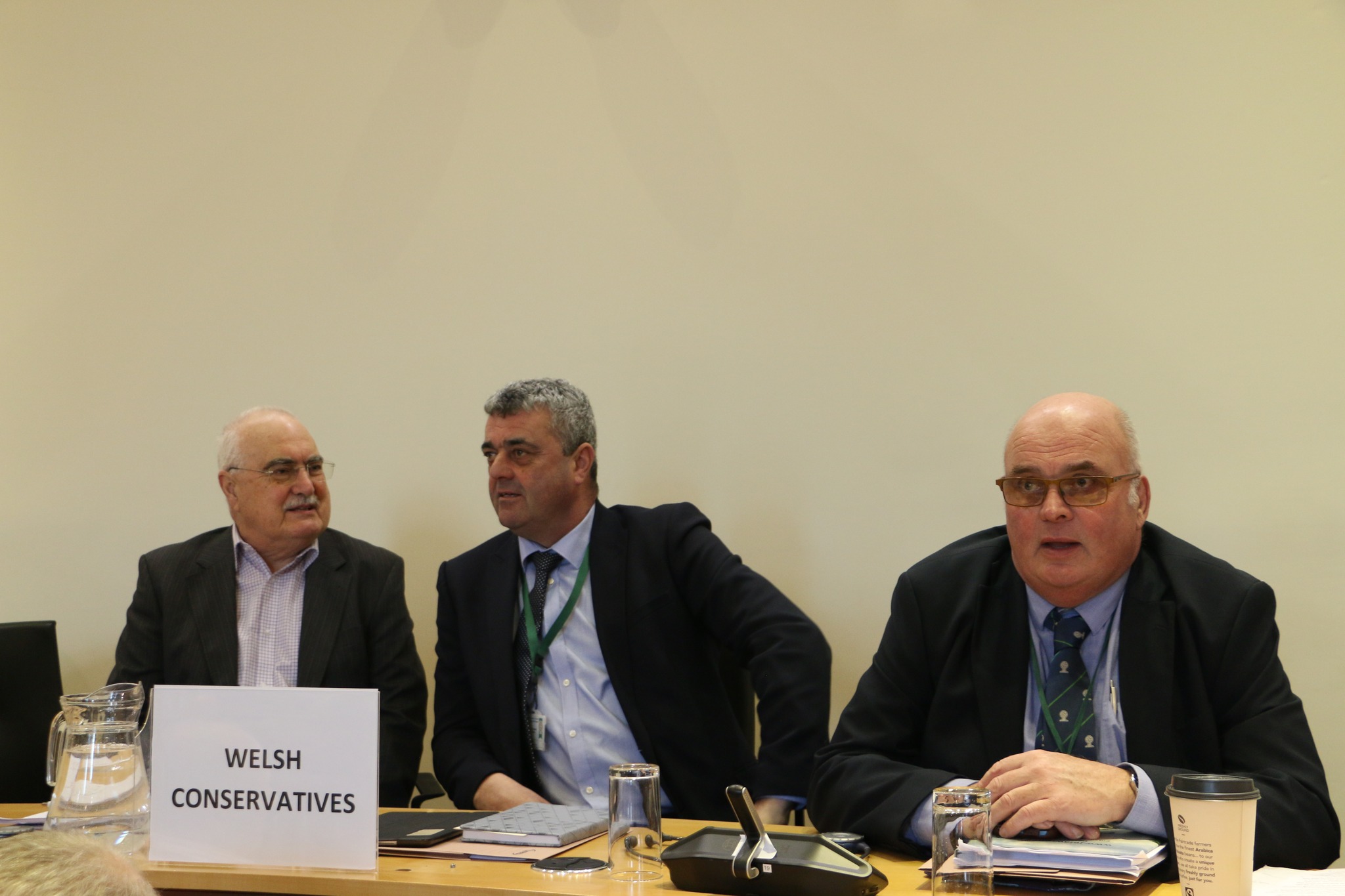
THE QUESTION was who would blink first.
Would councillors vote down the budget and Council Tax proposals, plunging the Council into turmoil, or would there be a last-minute deal?
A deal, there wasn’t.
But, faced with the possibility of Independent Group councillors and Conservatives banding together to block the budget, the Cabinet did offer a compromise.
That compromise – a 12.5% Council Tax rise this year – finally passed after a debate that involved more officer input than any previous budget.

The Monitoring Officer and Head of Legal, Rhian Young, faced with allegations that officers had engaged in “strongarm” tactics intended to intimidate well-known nervous nellies David Bryan, Michael Williams, and Mike Stoddart, carefully explained—three times—that she and the Council’s Director of Resources had been asked by several councillors what would happen if the Council did not set a budget. To inform all councillors and avoid confusion, they emailed their response to all of Pembrokeshire’s county councillors.
The CEO, Will Bramble, clearly exasperated by being asked the same question three different ways by three different councillors, deferred to Ms Young to reply on matters of procedure.
The Director of Resources, Jon Haswell, carefully explained his reservations about a 12.5% Council Tax rise.
Too many councillors were stuck on transmit and too few on receive.
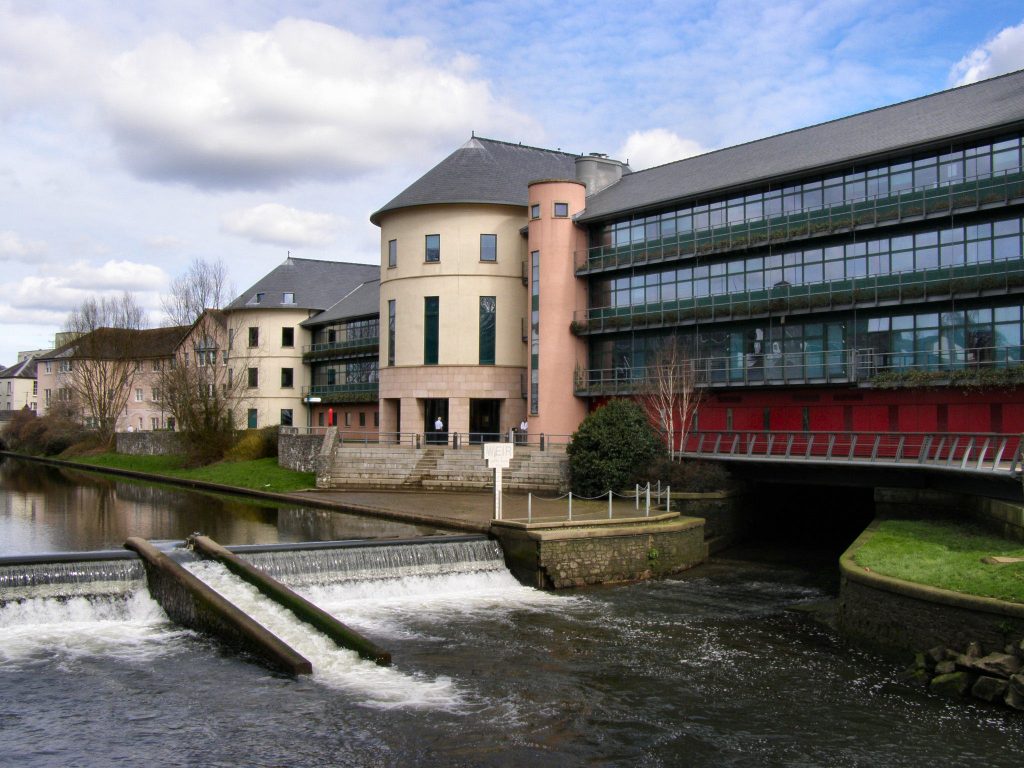
So Mr Haswell had to repeat them. Twice.

During a break in proceedings caused by an equipment malfunction, the disembodied voice of a couple of councillors could be heard.
One, easily identifiable as Cllr Mike Williams, lamented that the connection indicator was “just going round and round”. He paused and added: “Like this morning, really.”
And that’s what it was like.

In truth, Cllr Williams’s observation about the proceedings was not his best contribution to the meeting.
After Cllr Alec Cormack moved the main budget motion, the Council’s Deputy Leader, Paul Miller, moved to suspend standing orders to place an amended budget before the Council.
After lunatic procedural shenanigans, Councillors eventually voted to let Cllr Miller lay his amendments and speak to them.
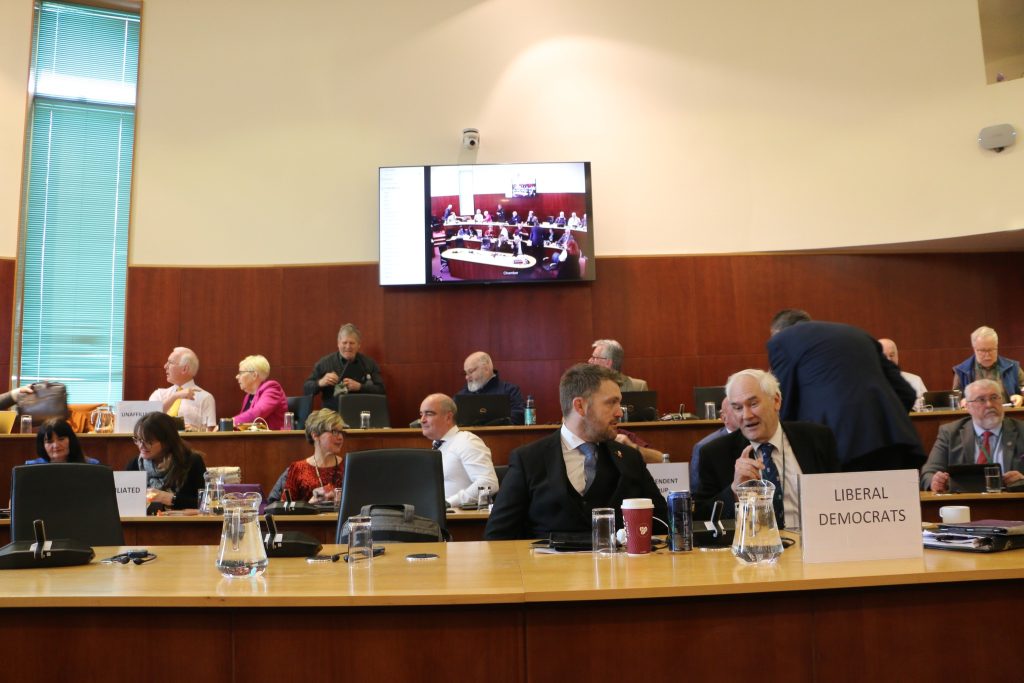
12.5% – more out of reserves, a different approach to the leisure budget, a restructure of back-office functions – and the proposed Council Tax rise fell from 16.31% to 12.5%.
Cllr Jamie Adams did his best to respond, but the killer blow came from Mike Williams.
The Tenby North councillor wondered if Cllr Adams opposed a 12.5% increase and the amended budget fell, would he then support a 16.31% rise as that was the only other proposal on the table?
There was no snappy comeback to that one.
Cllr Williams had shot Cllr Adams’s fox.
Cllr Adams wriggled and tried to get Jon Haswell to come to his aid. Unimpressed as the Director of
Resources was by a 12.5% Council Tax rise, he wouldn’t do Cllr Adams’s job for him.
Through gritted teeth, Jon Haswell said he was satisfied the 12.5% rise met the Council’s obligation to set a balanced budget for the coming financial year.
He added, however, that next year’s budget would be trickier than forecast.
Conservative Group Leader Di Clements expressed her reservations about the last-minute changes to the budget.
Her principal concern was that the figures used to justify a 12.5% rise had to be taken on trust, as they had not been scrutinised.
She also observed, with frustration, that waiting until the last minute to pull a budgetary rabbit out of a hat was not good for building consensus.
It all looked to be drifting to a vote when, with a speech written and not wanting to waste his opportunity to get his deathless oratory into the record, Cllr Jamie Adams moved to give more time for speakers to address the amendment.
Cllr Adams’s speech wasn’t about the amendment.
First, taking the good points he made, local government funding is a mess. Wales has far too many councillors. The local government system is deficient. How councils get grants and what they are allowed to spend them on is wrong.
So far, so good. Nothing to disagree with there.
However, Cllr Adams then decided that with a speech written for a debate that wouldn’t happen, he had to score some political points.
Cllr Adams complained that the administration hadn’t been bolder with Council Tax increases in the past to avoid the present crisis.
Cllr Adams did not acknowledge that he and the IPG had opposed and engaged in guerilla warfare against the Council Tax rises that would have avoided the present crisis.
The Cabinet, Jamie Adams declared, was too focused on the jam and not the bread and butter issues.
Councillor Adams failed to mention the number of white elephants he’d left littering the capital budget.
Cllr Adams said the current administration had been in place for seven years, so banging on about the previous one’s addiction to the “Lowest Council Tax in Wales” was jolly unfair. Put a pin in that thought.
Cllr Adams then mentioned he’d examined the figures behind the Children’s Social Care budget and accused Cllr Paul Miller of sleeping on the job for not paying attention to it. Put a pin in that thought.
Finally, Cllr Adams said the Cabinet had only cobbled together a compromise because it knew it would otherwise lose the vote and its remaining time in office was short.
Step forward, Cllr Tessa Hodgson.
She began gently. Cllr Adams, she reminded him, had been the only person in the room to mention the previous administration and the lowest council tax in Wales. Nobody had mentioned his administration.
She said the Cabinet, of which she is a member, is focused on the here and now.
She then reminded Cllr Adams of how the Cabinet works. Cllr Miller does not have the Social Care portfolio; Cllr Hodgson does.
Highlighting the IPG’s old boys’ nature, she suggested that instead of addressing his remarks at Paul Miller, he should address them to her. The implicit criticism of Cllr Adams for directing flak at the Deputy Leader because he is a member of the Labour Party was clear.
Cllr Hodgson not only defended the Council’s handling of the Social Care budget but also pointed out that unplanned and unanticipated cost increases in service delivery were, by their very nature, not something anyone could anticipate. The cost of delivering services had shot up, the demand increased, and the Council had to provide them.
There was no alternative budget on the table.
It was the sort of firm smackdown needed to draw a line under a fractious debate that spent more time speaking about what members said they felt about setting the budget than any real engagement with the budget itself.
When Cllr Miller’s amendment to the budget passed by 32-26, the Council had managed to dodge a bullet.
Having been marched up to the top of the hill by the IPG twice in the last year, the Conservatives will feel deflated.
They’ll be invited to hitch their wagon to the IPG again in May as the Independent Group tries to form another administration.
Who and what they’ll be able to rally behind is anyone’s guess.


A HAKIN motorist has been banned from driving for three years after being caught behind the wheel with cocaine and benzoylecgonine in his system.
Mark Briskham, 53, of Waterloo Square, Wellington Road, Hakin, was stopped by police on January 5 as he drove a Ford Kuga along Steynton Road, near Milford Haven.
Blood tests carried out at the police station showed he had 800mcg of benzoylecgonine in his system. The legal limit is 50mcg.
He also had 64mcg of cocaine in his system. The legal limit is 10mcg.
Briskham pleaded guilty to two drug-driving charges when he appeared before Haverfordwest Magistrates’ Court this week.
Magistrates disqualified him from driving for three years, taking into account a previous drug-drive conviction from 2020.
He was also fined £120 and ordered to pay £85 costs and a £48 surcharge.cr
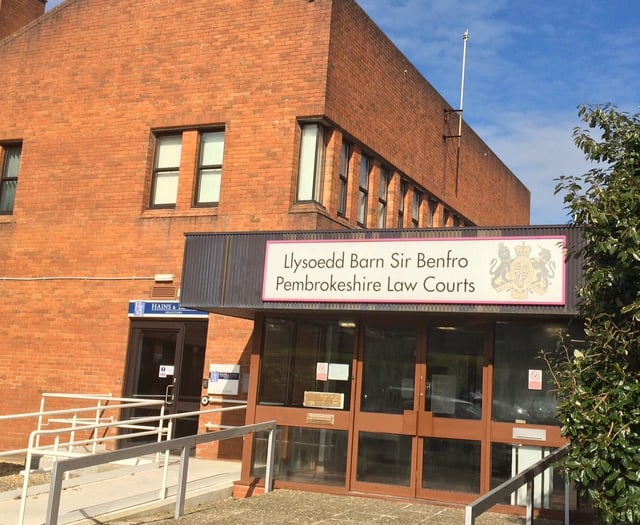
A PEMBROKESHIRE man has been remanded in custody following an alleged May Day assault against a woman in Begelly.
Tomas Baker, 34, of Ty Dee, New Road, Begelly, is accused of assaulting the woman, causing actual bodily harm, at an undisclosed location in Begelly on May 1.
Baker appeared before Haverfordwest Magistrates’ Court this week by video link from Swansea Prison.
He pleaded not guilty to the charge.
His trial will take place at Haverfordwest Magistrates’ Court on June 22.

A WATERSTON man has appeared before magistrates charged with 13 sexual offences against children, including three allegations of raping a girl under the age of 13.
Chaisee Price, 25, of Biggins Hill, Waterston, Milford Haven, appeared before Haverfordwest Magistrates’ Court this week.
He faces three charges of raping a girl under 13, eight charges of sexually assaulting girls aged between five and eight, and two charges of intentionally inciting girls under 13 to engage in sexual activity.
The offences are alleged to have taken place between 2014 and 2019.
Price denied all charges.
Because of the seriousness of the allegations, magistrates declined jurisdiction and the case will now proceed to Swansea Crown Court on July 10.
Price was released on conditional bail.
The conditions include a daily electronically monitored curfew between 6:00pm and 6:00am, no contact with the prosecution witness, no unsupervised contact with children under 18, and a requirement to surrender his passport to police.



News14 hours ago
First Minister challenged over jobs for student nurses
REFORM WALES has accused the First Minister of failing to guarantee jobs for student nurses in Wales, despite continuing pressure...

Crime16 hours ago
Knife blankets call as school staff face rising violence fears
GMB says protective equipment should be considered where risk assessments show staff could face blades SCHOOL staff should be given...


News16 hours ago
Claire Archibald secures review of Milford Haven train times
RURAL TRANSPORT CONCERNS RAISED WITH TFW CLAIRE ARCHIBALD MS has secured a review of train times between Milford Haven and...


Crime16 hours ago
PCC review calls for stronger youth crime prevention work
REPORT MAKES 13 RECOMMENDATIONS A REVIEW into crime and anti-social behaviour services for young adults has called for stronger prevention...


Crime19 hours ago
Families condemn failed appeal by paddleboard boss jailed over Haverfordwest tragedy
RELATIVES SAY LATEST COURT BID HAS REOPENED PAIN AFTER FOUR DEATHS ON WESTERN CLEDDAU THE FAMILIES of victims of the...

Community1 day ago
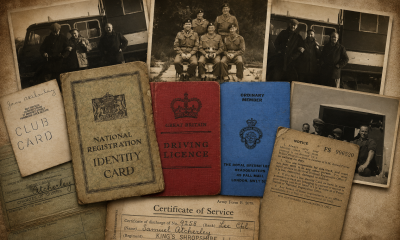
Forgotten wartime archive found in Pembroke Dock attic after 80 years
Remarkable family collection reveals story of father and son who served through two world wars A REMARKABLE untouched family archive...


Crime2 days ago
Milford Haven woman left with facial fractures after drunken attack
A WOMAN in her late fifties suffered facial fractures after being repeatedly punched through the window of her car during...


Crime2 days ago
Sex offender in senior role at Tenby family hotel
CREST HOTEL GROUP says it is investigating safeguarding concerns after staff at the Imperial Hotel in Tenby raised alarm over...

Sport2 days ago
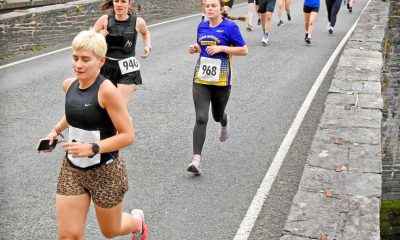
Runners tackle new route in Ras Y Castell 10k
MORE than 90 runners took to the streets and paths around Cardigan on Friday evening (June 5) for the annual...

Business2 days ago
Turkish Kitchen reaches Welsh restaurant award semi-finals
Haverfordwest café praised as small independent business flies flag for Pembrokeshire A HAVERFORDWEST café has been named as a semi-finalist...
-
Crime4 days ago
Paddleboard company owner loses bid to cut sentence over Haverfordwest tragedy
-

 Crime3 days ago
Milford Haven man admits harassment and assault
-

 Crime7 days ago
Milford Haven man bit neighbour’s neck near cashpoint
-

 News3 days ago
Community appeal for privacy after serious emergency in Pendine
-
 Crime7 days ago
Pembroke Dock driver avoided jail after drug-drive crash
-

 Crime7 days ago
Dinas Cross man jailed over shop thefts
-
Community1 day ago
Forgotten wartime archive found in Pembroke Dock attic after 80 years
-
Crime2 days ago
Sex offender in senior role at Tenby family hotel