

Climate
Clean energy projects ‘harming’ rural Wales, warns Conservative MS

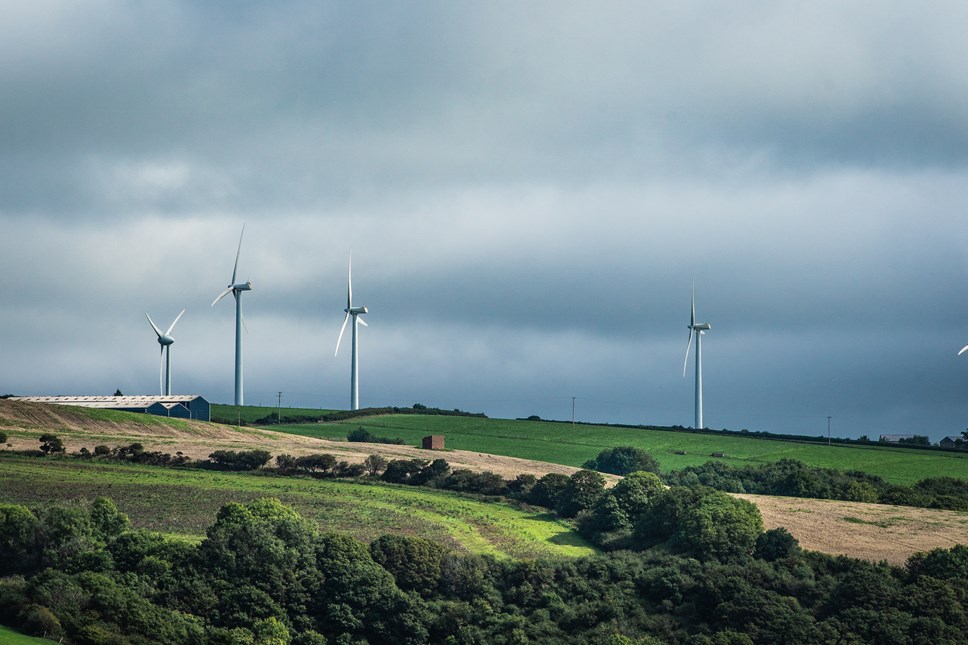
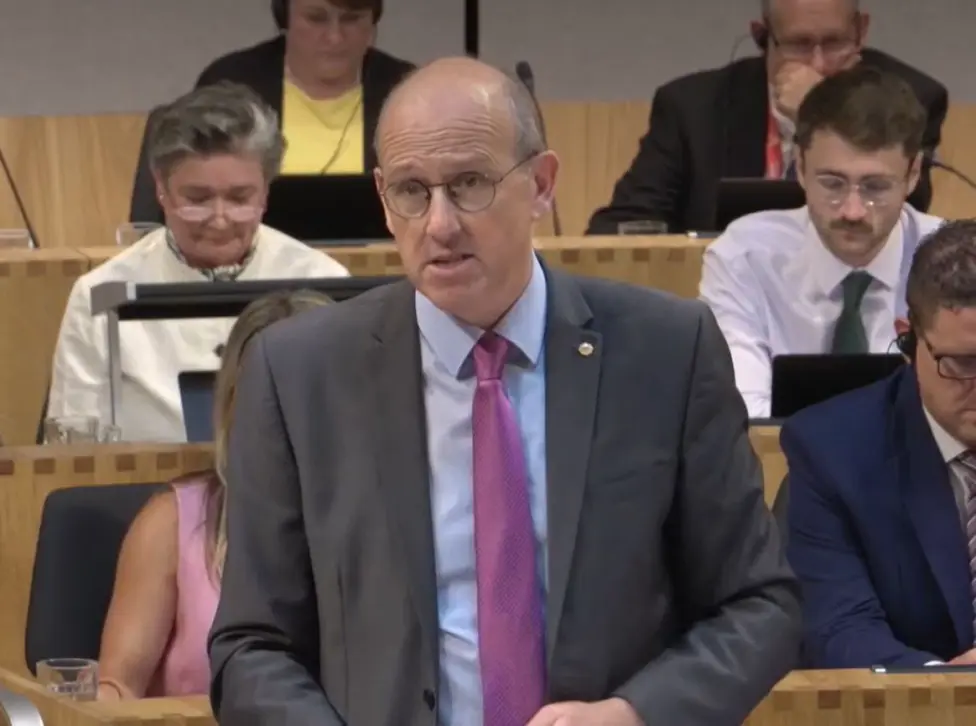
THE BUILDING of renewable energy projects should not be at the expense of Wales’ rural communities, a Conservative MS has warned.
James Evans, who represents Brecon and Radnorshire, said large-scale wind farms and pylons threaten Wales’ breathtaking landscapes and tourism industry.
Despite his concerns, Mr Evans said he recognised that green energy is crucial to a sustainable future.
He said: “We can’t ignore the potential harm that these projects can inflict on the very communities they’re supposed to help.
“Imagine this: you wake up to the consistent sound of a hum of a turbine blade. Some residents have described this sound as similar to a plane consistently being overhead.

“This isn’t science fiction – it is the reality for many living near wind farms.”
Warning that renewable projects can drastically change the countryside’s character, Mr Evans raised concerns about “shadow flicker” from the colossal structures.
Leading a short debate in the Senedd on April 17, the Tory highlighted a study that found a statistically significant negative impact on property values near onshore wind farms.
Mr Evans said the most concerning aspect is a feeling of voicelessness among residents “who are battling against big corporations like David and Goliath”.
He told the chamber:” Many communities fear that they have little say in the decision-making process surrounding windfarm development.
“Consultations, if they happen at all, can often feel like a mere formality. “
Mr Evans said Planning Policy Wales clearly states cables should be undergrounded but developers often say it is not financially viable.

He told MSs: “All these developments should be designed, in the first instance, to comply with Planning Policy Wales.
“They cannot use costs as an excuse to circumvent the planning policies here in Wales, and I think Welsh ministers need to be a lot stronger in following their own guidance.”
Mr Evans questioned the tangible benefits from developments for rural Wales, saying these are dwarfed by big returns for shareholders.
He argued responsible development is key, calling for noise emission limits, turbines to be placed further from homes and more robust community consultation.
Cefin Campbell, for Plaid Cymru, said his party has no objection to onshore renewables but Wales must question the size and scale of wind farm proposals.
He raised concerns about a “green rush” with developers proposing to build pylons criss-crossing Powys, Ceredigion and Carmarthenshire.
Russell George, the Conservative MS for Montgomeryshire, similarly argued against the “over-proliferation” of wind farms.
His Tory colleague Samuel Kurtz raised the potential for floating offshore wind in the Cetlic sea, saying it is vital to minimise the disruption caused by associated onshore infrastructure.
Janet Finch-Saunders, a fellow Conservative, who represents Aberconwy, also urged ministers to explore undergrounding as an alternative to overhead lines.
Jeremy Miles told the chamber the Welsh Government wants to see a fair transition, which strengthens the economy, creates jobs and supports social change.
Wales’ new economy secretary emphasised that energy is crucial to the economy, with a target of 100% of electricity coming from renewable sources by 2035.
Mr Miles reassured MSs that the planning process is rigorous, robust, transparent and, critically, affords opportunities for community engagement.
He said: “Communities will be heard and decisions will be made balancing the climate emergency and the needs of communities for the long term.”
Stressing that rural Wales is at the forefront of ministers’ thinking, Mr Miles announced plans to convene an independent advisory group on the future of Wales’ electricity grid.


THE WELSH Government has no plans to force a reduction in livestock numbers to meet climate targets, the rural resilience minister has insisted.
Llyr Gruffydd said agriculture remains “central” to Wales’ rural economy following a clash in the Senedd over net-zero policies.
The minister was challenged by Reform’s Laura Anne Jones, who accused the administration of pursuing “left-wing ideological climate targets” at the expense of farmers.
Ms Jones, the shadow rural affairs minister, questioned whether the government would adopt independent recommendations to cut meat and dairy consumption.
The UK Climate Change Committee previously advised that meat consumption should drop by 25% by 2033, alongside a 27% reduction in cattle and sheep numbers by 2040 to hit net-zero goals by 2050.
Ms Jones said the UK Government had accepted the framework and called for clarity on whether Wales would follow suit.

Rejecting the claims, Mr Gruffydd said: “This government is clear that Wales needs a strong, sustainable and productive livestock sector.
“We want to see Welsh farmers producing high-quality food in a way that’s both economically and, yes, environmentally sustainable.”
The minister pointed to the upcoming Sustainable Farming Scheme as the primary vehicle to help farmers improve long-term resilience while maintaining food production standards.
He added that his long-term vision relied on boosting local production, processing, and procurement.
The row escalated when Ms Jones expressed surprise that the minister would not commit to the UK committee’s figures, citing an “obsession” with climate targets.
Responding to what he described as a “quip” about left-wing ideology, Mr Gruffydd said: “Your colleague two questions ago was asking me about heat in schools and the consequences of climate change and the need for air conditioning and improved infrastructure.

“Maybe you should talk to each other about where you stand on this, because I’m hearing very different messages coming from these sides, these benches over here.”

Labour MS, Vikki Howells reminded the Siambr of the work done by the previous Labour administration to protect nature in Wales.
Noting that the Welsh Labour government was the first in the world to formally recognise and declare a nature emergency in 2021, Ms Howells stressed the importance of policies and initiatives to help improve habitats and reverse biodiversity loss.
The Pontypridd Cynon Merthyr MS – who is also the Labour spokesperson for the environment and farming – discussed one of the last initiatives established by her party, Nature Estate Cymru.
She also referenced the Naturfa sites – places for nature recognised under a Welsh Government programme – four of which were announced at the end of the last Senedd term.
Ms Howells asked Mr Gruffydd for his assessment of the two schemes, and if he will commit to continuing them.
Admitting he is not yet “fully versed” on the two initiatives, Mr Gruffydd said he will write to Ms Howells with his reflections.
He added: “We do have an aspiration within our climate and nature action plan, which we’re working at and working on, that will hopefully meet and support some of the aspirations that those groups and herself, I’m sure, will share.”

Andrew RT Davies meanwhile told the Siambr that the Economy, Trade and Rural Affairs Committee has produced a report on governance at Hybu Cig Cymru.
The former Welsh Conservative leader noted one of it’s recommendations was that it should be “returned to the producers and actually be run by the producers and the levy payers”.
Mr Davies, who declared an interest as a levy payer himself, called for HCC to be returned to the levy payers.
He said this would promote “quality Welsh beef, lamb and pork on the world stage rather than paying solicitors and human resources advisers to deal with ludicrous accusations levelled against many individuals within that organisation”.
Mr Gruffydd confirmed he has met with the chief executive and the chair of Hybu Cig Cymru, saying they “know what [his] view is”.
He said: “I want a fully functioning, firing-on-all-cylinders Hybu Cig Cymru. I feel that under the new chief exec and the Vision 2030 strategy that’s been published recently, that they are now on a positive trajectory.
“I will be a critical friend of theirs, but I will support the work that they do, because I honestly think that they are the organisation to move us forward in this space.
“Levy payers’ voices are critical, of course they are, but we need to strike the right balance in terms of making sure that we have an organisation that is functioning, delivering.
“If we rip it up and start again, I fear we’ll do nothing but look at internal structures for time to come. I think we’re beyond the point now where we’re looking back. For me, it’s about looking forward and building Hybu Cig Cymru into what it could and should be.”
But Mr Davies accused the minister of failing to answer his question and pressed for clarification on whether he will allow levy payers to take ownership of HCC.
Mr Gruffydd responded: “Let’s not forget that the Welsh Government brings a lot to the table here as well. So, the Welsh Government has to be represented in the organisation. And I believe that they are on the right trajectory now.
“So, I don’t believe in changing the current structure. I will, of course, keep a watching brief on things as they develop.
“And I’ve spoken with NSA Cymru and others on a myriad of issues around this. But I’ve also spoken to the people running HCC, leading HCC, and they are giving me confidence that they are on the right track and I will support them.”


The Llŷr project could see up to ten floating turbines installed 35km off the coast, with power brought ashore at Freshwater West
A MARINE licence has been granted for a floating offshore wind demonstration project off the Pembrokeshire coast.
Natural Resources Wales has approved the licence for Llŷr Floating Wind Limited, allowing the Llŷr Floating Offshore Wind Farm Project to move forward.
The test and demonstration facility is proposed around 35km off the Pembrokeshire coast, off Linney Head, and is among the first demonstration-scale floating wind projects in Wales.
The scheme could include up to ten turbines, each reaching up to 300 metres above sea level, together with floating platforms, mooring lines and anchors.
Up to two offshore export cables, around 50km in length, are planned to bring electricity ashore at Freshwater West.
Ruth Jenkins, Head of Planning and Permitting Services and Marine Operations at Natural Resources Wales, said the organisation had a role to play in supporting the move towards clean energy while ensuring projects were developed responsibly.
She said: “At Natural Resources Wales, we have a unique opportunity to tackle the climate emergency across a range of sectors and industries. This includes using our licensing powers to support Wales’s transition to clean energy.
“As a regulator and advisor, we ensure energy projects are developed sustainably and with respect for the environment and local communities. At the same time, we play a vital role in enabling innovation in green energy, helping projects move forward safely and responsibly.
“Wales has enormous potential as a leader in renewable energy, and we’re committed to supporting the benefits that can come from these projects as we move towards net-zero targets.”
Natural Resources Wales is the Marine Licensing Authority on behalf of Welsh Ministers.
Full details of the marine licence granted for the Llŷr Floating Offshore Wind Farm Project are available on the NRW public register.
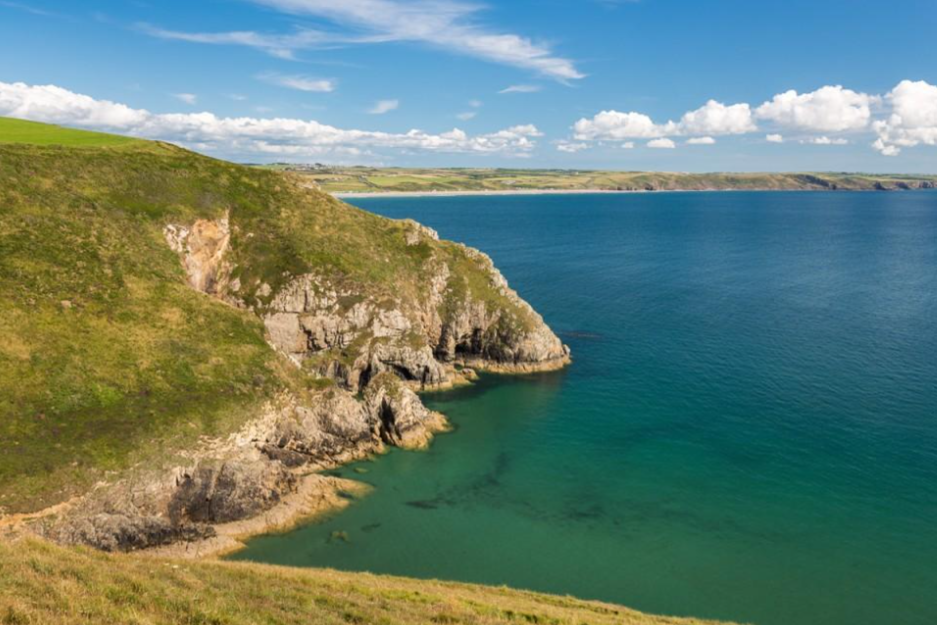
THE SEA is often treated as background. We look at heatwaves on land, at parched gardens, hosepipe warnings, pressure on hospitals, wildfires abroad and record temperatures in cities. But the ocean is where much of the climate story is really being written.
This week, European climate scientists reported that global sea surface temperatures outside the polar regions have hit record levels for this time of year. On June 21, data from the Copernicus Climate Change Service showed sea surface temperatures edging above the extraordinary records seen in 2023 and 2024.
That matters because the ocean is not just a passive victim of climate change. It is one of the main engines of the world’s weather.
Warmer seas put more moisture into the atmosphere. They help keep the air warmer for longer. They can add energy to storms. They can increase the risk of intense rainfall, flooding, marine heatwaves and disruption to wildlife. For coastal communities, fishing industries and anyone who depends on the sea, rising ocean heat is not an abstract statistic. It is a warning light.
The oceans absorb more than 90% of the excess heat trapped in the Earth system. That heat is mainly caused by the burning of fossil fuels such as coal, oil and gas. For decades, the seas have acted like a giant buffer, slowing the pace of warming on land. But that buffer comes at a cost.
The more heat the ocean stores, the more the whole climate system is pushed out of balance.
For Wales, this is not a distant concern. We have just seen an exceptional spell of heat. Cardiff Bute Park recorded 35.9C on June 25, setting a new Welsh June maximum temperature record. The same site also recorded an overnight minimum of 23.5C, a new record for both Wales and the UK.
Hot days are one thing. Hot nights are another. When temperatures do not fall properly overnight, people, animals, buildings and infrastructure get no chance to recover. That is when heat becomes especially dangerous for older people, young children, outdoor workers and those with health conditions.
The link between a warming ocean and weather in Wales is not simple. No single heatwave, storm or wet summer can be blamed on one measurement in the sea. Weather is always shaped by a mix of pressure systems, winds, ocean currents and natural patterns such as El Niño. But the direction of travel is becoming clearer. A warmer world loads the dice.
When the ocean surface is unusually warm, the atmosphere has more energy and more water vapour to work with. That can mean heavier downpours when rain does arrive. It can mean stronger marine heatwaves. It can affect fish, seabirds, plankton, shellfish and the wider food chain. Around our own coast, changes in sea temperature can influence where species live, how well they breed and how resilient marine habitats are to pollution, storms and disease.
This is why climate change should not only be discussed when there is a flood, a heatwave or a political row about net zero. It should be understood as a steady reshaping of the conditions we live with.
For Pembrokeshire, Carmarthenshire and Ceredigion, the sea is part of daily life. It supports tourism, fishing, ferry routes, wildlife, beaches, ports and coastal communities. Warmer seas may sound pleasant to some visitors, but they come with risks: more stress on marine ecosystems, changing fish patterns, increased coastal vulnerability and greater pressure on already stretched public services during extreme weather. There is also a danger that record-breaking weather becomes normalised.

The 2023 ocean temperature records shocked scientists. Then came 2024. Now those levels have been passed again. Each new record can make the previous one feel less remarkable, but the lesson should be the opposite. Records falling year after year are not a sign that we are adapting comfortably. They are a sign that the baseline is shifting.
The ocean has been buying humanity time. It has absorbed vast quantities of heat that would otherwise have warmed the land and atmosphere even faster. But the heat has not disappeared. It is in the system. It affects currents, storms, sea levels, ice melt and marine life. What happens at sea eventually comes back to shore.
There are still practical choices to make. Cutting emissions matters. Protecting saltmarshes, seagrass and coastal habitats matters. Planning for hotter summers and heavier rainfall matters. Supporting farmers, fishers, councils and emergency services to adapt matters. So does taking everyday heat risk seriously, especially for vulnerable people.
Climate change is sometimes presented as a future threat. But this week’s ocean temperature record is another reminder that it is already here, already measurable and already affecting the world around us.
The sea is speaking. The question is whether we are listening.



Crime21 hours ago
Ann Widdecombe: Welsh politicians pay tribute as murder probe launched
Prime Minister Sir Keir Starmer has praised the former minister’s “conviction and dedication”, while political figures in Wales remembered her...


News1 day ago
Solardo pulls out of Haverfordwest show as organisers offer full refunds
Headline act confirms non-appearance as Park House Series announces major event changes DANCE music duo Solardo will no longer perform...


Local Government1 day ago
Conservatives win Pembroke Dock seat as Reform stalls and Dowson polls just 11
Jamie Street takes Market ward with a 43-vote majority as Reform finishes fourth despite its major Senedd breakthrough two months...


Health1 day ago
Hospital ward closed after highly contagious scabies outbreak
Hywel Dda confirms wider rise in cases across Carmarthenshire, Pembrokeshire and Ceredigion as patients and staff are offered treatment A...


Crime2 days ago
Teacher stabbing trial: The first week of evidence
Jury hears accounts of alleged planned classroom attack, teacher’s fear she was dying, and boy’s words after leaving school A...


Community2 days ago
Haverfordwest Castle refurbishment reaches new heights as roof goes on
Major milestone reached in project to transform historic gaol building into flagship visitor attraction A MAJOR milestone has been reached...


Business3 days ago
Pembrokeshire lands £98m share of Wales marine energy boom
New industry report says county has received the second highest level of marine energy investment in Wales, supporting more than...
Crime3 days ago
First aider tells jury teacher was “crying, shaking” after classroom stabbing
A SCHOOL first aider has told a jury that teacher Vicki Williams was “crying, shaking” and in “complete shock” after...


Crime4 days ago
Teacher feared she was dying after Milford Haven classroom stabbing
A TEACHER allegedly stabbed in the head at Milford Haven Comprehensive School told a jury she feared she was dying...


News4 days ago
Farage to resign as MP and fight Clacton by-election amid finance row
NIGEL FARAGE has announced he will resign as MP for Clacton and stand again in the by-election he intends to...
-

 Farming4 days ago
Pembrokeshire slaughterhouse given urgent improvement rating after audit failure
-

 Entertainment3 days ago
Swing and big band classics heading to Torch Theatre
-
 News5 days ago
Large fire breaks out at Impala Terminal in Milford Haven
-

 News4 days ago
From boccia to boxing: ALN multisport events give youngsters chance to try activities
-

 Education5 days ago
Council failed Welsh language standards over school closure
-

 News4 days ago
Questions raised over Hamilton Accies finances after club’s Haverfordwest friendly
-

 Community7 days ago
Milford Haven Carnival brings colour, music and crowds to the town
-

 Entertainment5 days ago
Crymych Arms to host weekend of local music, food and drink