


Business
Steelworkers’ Union presses Tata to adopt expert plan ahead of talks


THE Steelworkers’ union, Community, is pressing Tata Steel UK to scrap its bad deal for steel and commit to the alternative Multi-Union Plan ahead of crucial talks with the company this week.
The call follows a meeting between steel unions and Tata officials last week, and the publication of a new report from industry experts Syndex which slams Tata’s approach for pursuing ‘what’s cheap’ over ‘what’s best’. The report highlights that the company’s current proposal – which would cut around 2,800 jobs in South Wales by moving production at Port Talbot to a single 3mt Electric Arc Furnace – comes with significant risks, and would make Tata Steel UK an outlier in Europe.
In contrast, Syndex describes the Multi-Union Plan as “the only solution offering to maintain all the volume currently produced by Tata Steel UK” providing “a future for all the company’s assets and a roadmap for a just transition under the constraint of the financial hurdles and the reality of market dynamics for the UK steel industry.”
Community General Secretary Roy Rickhuss said: “During our meeting with Tata last week, members of the National Trade Union Steel Coordinating Committee provided our final conclusions on the company’s restructuring proposals: namely that the company’s plan is reckless; that it weakens national security by removing Britain’s primary steelmaking capacity; and that it would have devastating consequences for steel communities in South Wales and beyond.
“Our Multi-Union Plan is a credible alternative to Tata’s destructive scheme. It would safeguard the future of Port Talbot steelmaking, protect all the downstream plants, save thousands of jobs and can be delivered with no compulsory redundancies.

“It is not too late for Tata to do the right thing and adopt the Multi-Union Plan – and we hope that they will take this step. However, should the company choose to reject it, we will fight them every step of the way. To enable us to do this, we will need the strongest possible mandate from our ongoing industrial action ballot. For that reason, I am urging all our members to vote ‘YES’ and ‘YES’ and return their ballot papers at the earliest opportunity.”
Community’s Assistant General Secretary Alasdair McDiarmid said: “Syndex’s new report demonstrates clearly that our Multi-Union Plan is viable and sustainable, whilst Tata’s proposals are reckless and harmful. The company must change course, and the UK Government need to step up too. Our alternative plan would require additional investment from the government – taking total public support for the decarbonisation of Port Talbot to £950m overall – but this is still significantly less than the support packages other governments are providing to green their steel industries. It’s also in line with the £3bn Green Steel Fund the Labour Party has guaranteed to deliver in the next parliament.
“We are at a critical moment, and the choices that Tata and the government make now will reverberate for generations to come. The fundamental question here is whether we want to be a country that makes its own steel, or a country that imports it – as would be inevitable under Tata’s damaging proposal. With the spectre of a CBAM exemption for India hanging over free trade talks, we risk under current plans becoming little more than a simple processor for imported Indian Steel. We can’t allow our industry to be sacrificed on the altar of Rishi Sunak’s search for a legacy.
“With so much at stake, we are urging our members to vote ‘YES and ‘YES’ in our industrial action ballot to enable us to fight to maintain blast furnace steelmaking into the 2030s and to prevent compulsory redundancies.”

Leading South Wales steel MPs have also thrown their support behind Community and the GMB’s Multi-Union Plan.
Stephen Kinnock, MP for Aberavon, said: “As industry experts at Syndex have laid out this week, the Multi-Union Plan is a detailed, serious, robust and compelling proposal for the future of the Port Talbot steelworks and it has my full and unequivocal support. It’s the only realistic route to retaining our customer base, and it’s also the only credible pathway to a strong, competitive and profitable future for steel-making in Port Talbot and throughout the downstream plants across Wales and the UK. By contrast Tata’s shortsighted and counter-productive plan will mean exporting jobs from Port Talbot to India, a country where steel plants have a far higher carbon footprint.
“It’s vital that steel is at the heart of a forward-looking industrial strategy, which is why Labour has pledged £3billion to support the industry over the next decade.”

Jessica Morden, MP for Newport East which includes Llanwern Steelworks, said: “Tata and Rishi Sunak’s bad deal for steel would represent a huge blow to our steel industry and steel communities like our own in Newport. The deal would also leave the UK country dependent on imported steel from heavy-polluting countries at a time of global uncertainty.
“It doesn’t have to be this way, and the Multi-Union Plan for steel which Community and GMB have put forward represents a viable alternative to protect jobs and preserve steelmaking capacity here in South Wales. I urge Tata to think again and change course from their damaging proposals.”


MENTAL HEALTH support has become a key issue for businesses in Wales as employers face growing pressure to help staff manage financial strain, stress and wellbeing at work.
The issue is being highlighted during Mental Health Awareness Week, with new insight from Reed showing that support for employee wellbeing is now an important part of attracting and retaining staff.
Workers in Wales said they need an annual income of £42,000 to live comfortably, compared with an average regional salary of £36,000. That leaves a “comfort gap” of £6,000.
Reed’s latest salary guides also show that 71% of workers say pay has become more important since the cost-of-living crisis, with many employees feeling the pressure of rising everyday costs.
The strain is not only financial. Separate research shows almost one in four workers in Wales, 24%, say they have previously been formally diagnosed with a mental health condition — the highest reported proportion of any UK region.
Pay alone ‘not enough’
Becky Hole, Regional Director at Reed, said employers now needed to look beyond salary alone.
She said: “In Wales, financial pressure and mental health challenges are closely linked. Our data shows that many employees are placing greater importance on stability and support, particularly where salary growth is constrained.
“This means benefits that support work-life balance and mental wellbeing are becoming a much more important part of how valued people feel at work.
“Organisations that prioritise employee wellbeing also benefit in tangible ways. By providing stronger support for mental health, employers can lower staff turnover and reduce the long-term costs linked to ongoing recruitment and the loss of skilled, experienced employees.”
What workers want
WHEN asked what would help them manage stress, 35% of workers in Wales said they wanted more flexible working, 34% wanted better mental health training for managers, and 30% wanted clearer communication about support already available.
However, Reed said there remains a gap between what workers want and what they receive.
The most common benefits currently reported by workers in Wales are onsite parking, at 28%, flexi time, at 26%, and hybrid working, at 23%. Nearly one in five workers, 18%, said they receive no benefits at all.

Ms Hole added: “What this shows is a disconnect between what employees say would most help them manage stress and how clearly mental health support is currently embedded and communicated.
“However, Wales stands out when it comes to flexi time, with a higher proportion of employers offering this benefit compared to other regions — a positive step given its proven role in supporting employee wellbeing and work-life balance.
“Flexible working, open conversations about mental health and managers who are properly trained all come through strongly as priorities.
“Employers have a responsibility to look after their people, and those who want to help their workforce truly destress need to ensure their benefits are visible, accessible and actively support everyday mental resilience.”
Reed said businesses that take wellbeing seriously are more likely to retain skills, stability and trust over the long term.


A CALL to site specialist diesel generators at Pembroke Power Station to help keep the lights on in the event of a National Grid shutdown has been given the thumbs-up by county planners.
In a screening application to Pembrokeshire County Council, RWE Generation UK PLC, through Ove Arup & Partners Ltd, sought to site up to six containerised diesel generators, diesel storage tank(s) and electrical connections at Pembroke Power Station, Pwllcrochan, near Pembroke.
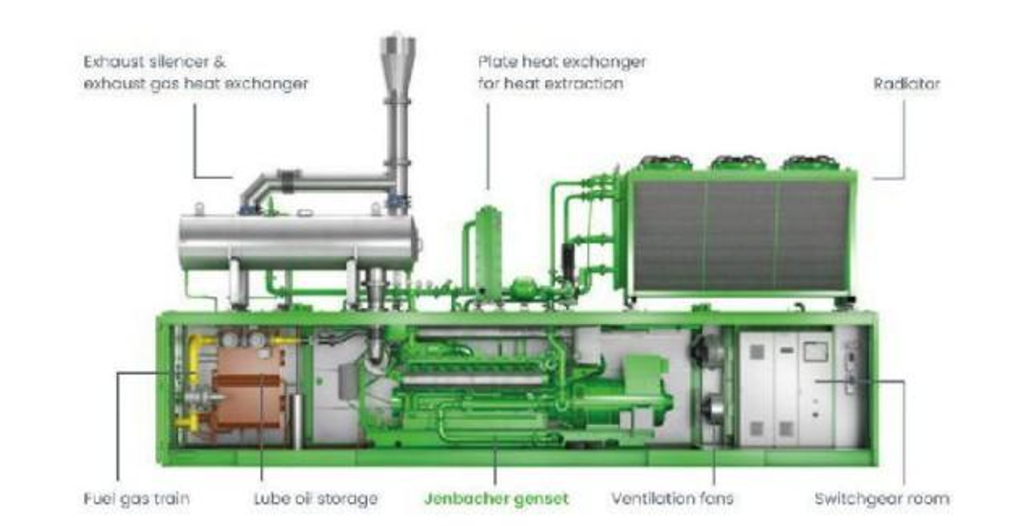
The application site is within the site of the existing Pembroke Power Station, a combined-cycle gas turbine (CCGT) station which began commercial operation in September 2012, with a gross consented capacity of about 2,199 megawatts electric (MWe), replacing the previous oil-fired power station which operated for almost 30 years and was decommissioned in 1999.
A supporting statement says, subject to confirmation, it is considered to comprise permitted development, the scheme “a standalone plant, with its own fuel supply, capable of starting up, operating and shutting down independently from the power station”.
It adds: “It is required only in an emergency to maintain plant status and keep the power station operationally ‘ready’ in the event of a total or partial shutdown of the National Grid system. It is not required for the normal operation of the power station and does not extend its capacity, which remains as already consented, therefore it is not considered a change or extension.”
On need, it says it is mandatory that all electricity generators of over a megawatt have to adopt a new minimum standard of asset resilience; power stations “must be capable of restoring demand on the National Grid electricity transmission system in the event of a total or partial shutdown of the National Grid system,” the Power Station not currently meeting this new asset resilience standard.
It says construction is hoped to start in July 2026, lasting approximately nine to 12 months, the main part across the summer months.
The application was considered by officers to fall under permitted development, saying it “does not require Environmental Impact Assessment because the development, including cumulatively with other development in the locality, is not likely to have significant effects on the environment”.

A WELSHCAKE maker from Wales has joined a global movement of businesses recognised for high standards of social and environmental responsibility.
MamGu Welshcakes has announced that it has become a Certified B Corporation, also known as a B Corp.
The certification, verified by B Lab, recognises companies which meet standards covering social and environmental performance, transparency and accountability.
The assessment looks at a company’s operations across areas including governance, workers, community, the environment and customers. Businesses must also legally embed a commitment to purpose as well as profit.
MamGu Welshcakes now joins more than 10,700 B Corps globally, including more than 2,700 in the UK. Well-known certified businesses include The Guardian, Innocent Drinks, Patagonia, The Big Issue, Finisterre, Elemis and Sipsmith Gin.
The company says it is only the 13th food and drink producer in Wales to receive B Corp certification.
Chris Turner, CEO of B Lab UK said: “We are pleased to have B Corps of all shapes and sizes as part of our community – from startups to multinationals and across many different industries.
“Business is a powerful force and B Corps demonstrate that positive impact is possible in any sector. Welcoming MamGu Welshcakes is an exciting moment for the food and drink industry.
“B Lab UK and the rest of the B Corp community are really pleased that MamGu Welshcakes is paving the way for a new way of doing things.”
Sam Swift, director of MamGu Welshcakes said: “From day one we have always strived to be a business rooted in the community and we’re over the moon to now achieve B Corp certification.
“It’s a clear and rigorous standard that holds us accountable for how we do business; from supporting our people and communities to reducing our environmental impact.”
He added: “B Corp is not just a badge and certainly not the finish line, in fact we see this moment as a new baseline for everything we do next.

“We’re already looking at ways we can be better at everything, from who we work with to the ingredients we use and where they come from.”
B Lab is a non-profit organisation which says it is working to transform the global economy to benefit people, communities and the planet.



News7 hours ago
State Opening overshadowed by Starmer leadership crisis
KING CHARLES has arrived at Parliament for the State Opening as Sir Keir Starmer faces the most serious crisis of...


News1 day ago
Rhun ap Iorwerth becomes Wales’ new First Minister
PLAID CYMRU TAKES POWER AFTER HISTORIC SENEDD VOTE PLAID CYMRU leader Rhun ap Iorwerth has become Wales’ new First Minister...


News1 day ago
Hotel was hit during a Luftwaffe bombing raid
THE COMMEMORATION, held on Tuesday (May 12), marked the anniversary of the wartime attack, with members of the community gathering...


News1 day ago
Starmer fights for survival as Labour civil war erupts
Cabinet split, ministers resign and MPs revolt as pressure mounts on Prime Minister after disastrous election losses KEIR STARMER is...


News2 days ago
Starmer accused of ignoring Wales in major ‘reset’ speech
Prime Minister pledges EU reset, British Steel nationalisation and youth jobs guarantee — but critics say Wales was left out...


Community3 days ago
Concern grows after child hospitalised following Tenby sea swim
PARENT SAYS BOY BECAME SERIOUSLY ILL AFTER SWIMMING DURING FAMILY VISIT CONCERN is growing in Pembrokeshire after a parent claimed...


News3 days ago
Rhun prepares for clash with Starmer as Plaid eyes power in Cardiff Bay
PLAID CYMRU leader Rhun ap Iorwerth has signalled he is ready for confrontation with Prime Minister Keir Starmer after the...


News4 days ago
Plaid Cymru celebrates historic victory as Rhun ap Iorwerth arrives at Cardiff Bay
CROWDS gathered outside the Senedd as Plaid Cymru leader Rhun ap Iorwerth arrived in Cardiff Bay following his party’s historic...


Crime4 days ago
Police standoff ends after four-hour incident in Pembroke Dock
ELIZABETH COURT SCENE STOOD DOWN AFTER DOMESTIC INCIDENT A FOUR-HOUR police standoff in Pembroke Dock has ended with a 21-year-old...


Crime4 days ago
Teen denies attempted murder of Milford Haven teacher
TEENAGER REMANDED AHEAD OF JULY TRIAL A 15-YEAR-old boy has denied attempting to murder a teacher during a stabbing incident...
-

 Crime10 hours ago
Man threatens to torch Silverdale Lodge through ‘demon drink’, court hears
-

 Crime6 days ago
Racial abuse suspect barricaded himself inside Johnston lodge
-

 Local Government6 days ago
Tenant says botched wetroom repair left her fearing flooding
-

 Crime6 days ago
Milford Haven woman denies causing suffering to cat
-
Crime4 days ago
Police standoff ends after four-hour incident in Pembroke Dock
-

 Crime6 hours ago
Man sentenced for stalking women and threatening to torch home
-

 Local Government2 days ago
Council leadership hopeful responds after anti-Tory rally photos surface
-

 Entertainment6 days ago
Llys-y-frân Lake to launch Wales’s largest inflatable aqua park