


News
Milford Haven tops list of UK’s most polluted ports

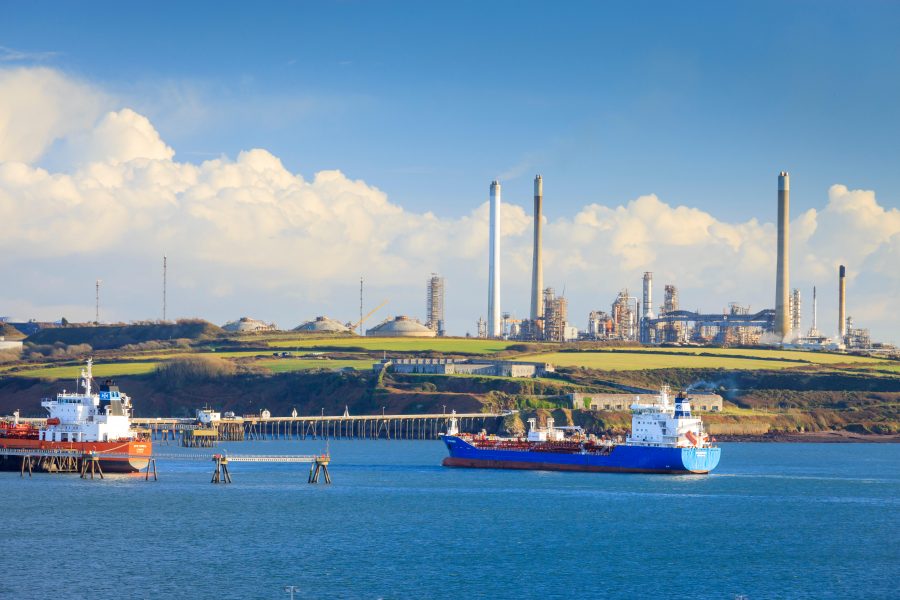
NEW analysis by Transport & Environment UK (T&E UK) has revealed alarming levels of air pollution from ships at UK ports, with Milford Haven, Southampton, and Immingham emerging as the top three for harmful sulphur oxides (SOx) emissions. The study highlights the urgent need for regulatory action to address the severe environmental and health impacts associated with shipping emissions.
The findings show that in 2022, just 472 ships visiting Milford Haven produced nearly 100 times more SOx emissions than all of Pembrokeshire’s 67,000 cars. This disparity is stark, given that Milford Haven had only half the ship traffic of Immingham, which ranked second, yet still managed to emit 50% more SOx. Southampton, ranking third, saw 46 cruise ships – representing a mere 6% of its total vessels – contributing more SOx than 200 container ships.
The top ten ports for SOx pollution, according to T&E UK, collectively saw 3,700 ships emitting 30 times more SOx than the one million cars registered in their respective local authority areas. This paints a troubling picture of the pollution burden borne by port communities.
In terms of nitrogen oxides (NOx), ships in the top ten polluted ports produced nearly 1.75 times as much NOx as the 970,000 cars registered in those areas. Southampton again topped this list, with its ships producing four times more NOx than all the city’s cars, half of which came from cruise ships. The scenario was similar for fine particulate matter (PM2.5), where Southampton also led, with ships producing half as much PM2.5 as a million cars, with cruise ships contributing significantly.
Ships not only release poisonous exhaust fumes but also discharge pollutant-laden wash water from exhaust gas cleaning systems, commonly known as “scrubbers.” This wash water, dumped directly into the sea, adversely affects marine life and exacerbates ocean pollution, a growing concern in the UK. Despite this, only a few UK ports prohibit such discharges.

T&E UK’s rankings were derived from an analysis of SOx, NOx, and PM2.5 emissions from commercial passenger and cargo ships docked at UK ports in 2022. The study included vessels mooring within a 1.5 nautical mile radius of a port’s main coordinates, with emissions compared to pollution from cars registered in the same local authority areas, based on data from the Department for Transport and Driver and Vehicle Licensing Agency.
T&E UK has called for the government to enact comprehensive policy and regulations to address air pollution and greenhouse gas emissions from UK shipping. The forthcoming refreshed Clean Maritime Plan is seen as a critical opportunity for action. Key recommendations include mandating zero-emission berths, implementing a shore-side electricity plan, charging ships for emissions while moored, and designating all UK territorial waters as Emission Control Areas. Additionally, a prohibition on scrubber wash water discharge is urged.
Jonathan Hood, UK Sustainable Shipping Manager at T&E, stated: “The awful levels of pollution revealed in this analysis demonstrate how the UK’s port cities are being choked by the harmful fumes caused by a shipping industry that, thanks to years of government inaction, has no impetus to change. The government has its last chance to chart a better course for the industry with the updated Clean Maritime Plan and it must not waste this opportunity. We need to see a rapid switch away from filthy fossil fuels, and ports must set binding targets to implement zero-emission technologies. These must include shore-side electricity, which would ensure ships can plug in at port and switch off their polluting engines.”
The Rt Hon. the Lord Deben, former Chairman of the UK Government’s Climate Change Committee, added: “It is disheartening to see the staggering levels of emissions from ships around UK ports, as revealed by T&E’s new analysis. There is an urgent need for stringent action from the government by prioritising stricter emissions control measures around UK territorial waters, increasing the use of shore-side electricity across ports, and prohibiting the discharge of dirty scrubber water into waterways. Without decisive action, the health impacts for residents and workers in port towns, not to mention economic costs, will continue to soar, leaving communities to suffer the dire consequences of inaction.”
The Port of Milford Haven said it was “working incredibly hard, inside our own business and with our customers, to reduce emissions and deliver an accelerated transition to a Net Zero future”.
A Port of Milford spokesperson said: “The Port of Milford Haven is the busiest energy port in the UK supporting Britain and Europe with vital energy and fuel. As custodians of the Milford Haven Waterway, our environment is very important to us. Sustainability is one of our core values and we are working incredibly hard, inside our own business and with our customers, to reduce emissions and deliver an accelerated transition to a Net Zero future.
“This year, the Port implemented a ‘Green Ship Incentive Program’ to provide discounted rates for ships that perform better in reducing air emissions. Milford Haven is one of the first UK ports – and the only one in Wales – to financially incentivise environmental improvements to ships.

“In addition, the Port is one of only a handful of UK ports to prohibit ships that use open loop scrubbers to clean exhaust emissions from discharging their wash water within the Milford Haven Waterway.
“The Port of Milford Haven supports the British Port Association’s rebuttal of the report produced by Transport and Energy (T&E) UK and question the methodology they have used to reach their conclusions. We are also disappointed they did not engage with us ahead of the report’s launch.
“The Port of Milford Haven has a pivotal role to play in delivering the UK’s Net Zero ambitions offering a whole energy cycle solution that will unlock accelerated transition while stimulating economic growth. Together with our customers, we are committed to a resilient, low carbon future and as a lead partner in the Milford Haven Energy Cluster we have documented a pathway to achieve this here: Milford Haven Waterway Future Energy Cluster – Delivering an accelerated transition to a Net Zero future – 2023 on Vimeo.”
The British Ports Association, which represents UK operators, said the report lacked critical context and industry research showed emissions from ports were a fraction of wider background emissions in most cities.
Mark Simmonds, the association’s policy director, said most of the industry had “ambitious” net-zero targets, which would have “a positive impact on air quality”.













New enforcement unit given powers to search homes, seize assets and recover money from bank accounts
A NEW government counter-fraud squad has begun investigations into suspected Covid loan scammers as ministers step up efforts to recover billions of pounds lost during the pandemic.
The Public Authorities Fraud Investigation and Enforcement Service (PAFIES) has been launched with what ministers say are the strongest investigatory powers in a generation.
The new unit will be able to search the premises of suspected fraudsters, seize assets, compel information from third parties, and recover money directly from bank accounts and wages where debts are not repaid.
The window for pursuing civil claims relating to Covid fraud has also been doubled from six years to twelve years, meaning suspected fraudsters can be pursued until 2032.
The crackdown follows the government’s response to the Covid Counter Fraud Commissioner’s final report, which found that £10.9 billion was initially lost to pandemic fraud and error.
Nearly 2,000 company directors have already been banned and 86 criminals prosecuted.
The government says counter-fraud measures introduced in the 2024 and 2025 Budgets have protected £7.5 billion of public money over two years.
Chancellor Rachel Reeves said: “In contrast to the last government, who left the door open to £10.9 billion of pandemic era fraud and error, we have taken action to protect £7.5 billion of public money.
“My message to those who owe the public purse money is clear — those who profited, will pay.”
Satvir Kaur, Parliamentary Secretary in the Cabinet Office, said: “Those who chose to exploit a national crisis to line their own pockets now have nowhere left to hide.
“Our decision to go after those who have cheated the system as part of our wider crackdown on fraud against public services has already helped save £7.5 billion.
“We will use every tool at our disposal to protect public money and fund the frontline services the British people rely on.”

The new powers are contained in the PAFER Act 2025, which gives investigators enhanced search-and-seizure powers, stronger information-gathering powers, civil financial penalties, and direct recovery powers following a Public Sector Fraud Authority investigation.
Those who failed to respond to the Voluntary Repayment Scheme last year are expected to face enforcement action from the autumn.
A Covid fraud reporting website, launched in September, has already received more than 1,000 reports of suspected fraud.

Union says Welsh Government has funded repairs, meals and swimming lessons but failed to address one of the biggest pressures facing schools
SCHOOL leaders have welcomed extra Welsh Government funding for repairs, free school meals and swimming lessons — but warned that pupils with additional learning needs have been overlooked.
The criticism came after the Welsh Government set out its supplementary budget for 2026-27, including £40m for school buildings and repairs, £15m to expand free school meals in secondary schools, and £2m for swimming lessons.
Laura Doel, national secretary of school leaders’ union NAHT Cymru, said the extra capital funding for school buildings was welcome and would “go some way to plugging the gap”.
She also welcomed the expansion of free school meals, saying no child should go hungry because of their parents’ financial circumstances.
But Ms Doel said the “significant omission” was the lack of additional funding for ALN provision.
She said: “It beggars belief that of money that has come to Wales thanks to investment into additional needs in England, not a penny has gone to support pupils with ALN in Wales.
“We have seen local authorities, directors of education and the profession united on the need for significant investment in supporting our most vulnerable learners, but this government has chosen to ignore the pleas for support.
“It calls into question whether education is a key priority for this government.”
ALN pressure
Additional learning needs provision has become one of the major pressures facing schools and councils across Wales, with rising demand for specialist support, assessments, staffing and placements.
School leaders argue that without dedicated funding, already stretched school budgets are being forced to absorb costs which can affect support for both ALN pupils and the wider school community.
The Welsh Government says the supplementary budget is designed to support key priorities, including public services, schools, health and the cost of living.
But NAHT Cymru said the absence of new ALN money was difficult to justify at a time when schools are repeatedly warning that vulnerable learners need more support.

The Herald has asked the Welsh Government how much of the school buildings funding will come to west Wales and why no specific additional allocation has been made for ALN provision.

MINISTERS have announced plans to speed up reforms aimed at helping high street businesses compete with online retailers and overseas sellers.
The Treasury said changes to low-value imports will now be brought forward by six months, with customs duty relief on goods worth £135 or less set to be scrapped from October 2028.
The move is designed to stop online retailers gaining an unfair advantage over shops, pubs, restaurants, hotels and other high street businesses.
At present, many cheaper imported goods can enter the UK without customs duty, a system which ministers say has left traditional retailers at a disadvantage.
The Government is also reviewing how VAT is collected from businesses trading through online marketplaces, amid concerns that some sellers are failing to pay the tax they owe.
The Treasury said revenue raised from tougher VAT enforcement would be used to help improve the business rates system for high street firms.
Dan Tomlinson, Exchequer Secretary to the Treasury, said: “This action tackles the unfair competition and dodgy businesses that are doing real damage to our high streets.
“And by making sure that tax is paid when it’s owed, we can raise revenue to put back into improvements to the business rates system for pubs, restaurants, hotels and other high street businesses.”
The package also includes a consultation on VAT reform for land used in new social housing developments.
Ministers say the change could help speed up the delivery of affordable homes by making the tax system better reflect how social housing schemes are developed.
The Treasury said the measures form part of wider plans to make the UK tax and customs system simpler, fairer and more focused on economic growth.



Community46 minutes ago
Manorbier fire scandal: Council’s payout just £63,777 after school destroyed
PEMBROKESHIRE COUNTY COUNCIL has accepted an insurance settlement which leaves it with just £63,777.07 after the catastrophic fire which destroyed...


News9 hours ago
Bus overturns in major incident near Kidwelly
All passengers rescued as emergency services remain at scene A BUS overturned on the A484 between Kidwelly and Ferryside on...


Community1 day ago
Tenby Summer Spectacular cancelled amid council row over harbour access
Organisers say popular charity events cannot safely go ahead without clear powers to control crowds TENBY ROUND TABLE has announced...


News1 day ago
Motorcyclist dies after four-vehicle crash on A40 in Carmarthenshire
A MOTORCYCLIST has died following a four-vehicle collision on the A40 between St Clears and Whitland. Dyfed-Powys Police said the...


News2 days ago
Rhun ap Iorwerth urges new deal for Wales after Starmer quits
First Minister says next Prime Minister must focus on greater powers, fair funding and respect for Wales’ democratic mandate FIRST...


News2 days ago
How Labour’s landslide victory unravelled in just two years
Prime Minister announces resignation after losing support within his own party as Andy Burnham emerges as overwhelming favourite to take...


News2 days ago
Long Course Weekend set to bring thousands to Pembrokeshire
Three days of swimming, cycling and running will once again transform Tenby into one of the UK’s biggest endurance sporting...


Community2 days ago
The gentle giant behind the tattoos
Pembrokeshire security worker Josh Davies praised for professionalism, kindness and proving first impressions can be wrong JOSH Davies is hard...


Charity3 days ago
Toy Story fans fill charity toy box at Haverfordwest cinema
Donations pour in for SNAP Specialist Play as families embrace Toy Story 5 launch A TOY STORY-themed charity appeal at...


Community4 days ago
Lord Rhys emerges from the mist in St Davids
Giant puppet begins historic journey marking 850 years since the first Eisteddfod MIST swirled around St Davids Cathedral on Friday...
-

 Crime6 days ago
Milford Haven man jailed for breaching domestic violence protection order
-

 News5 days ago
Crash on Freeman’s Way causes school-run chaos across Haverfordwest
-

 Health3 days ago
Woman jailed assaults on police, harassment and XL Bully possession
-

 Crime3 days ago
Milford Haven woman spared jail despite string of shop thefts
-

 Crime6 days ago
Portfield Gate man faces careless driving allegation after Tufton crash
-
Community2 days ago
The gentle giant behind the tattoos
-

 Local Government5 days ago
Pembrokeshire faces accessible housing shortage as 403 people wait for homes
-

 News6 days ago
Brexit at 10: How Britain was sold a dream that cost us dearly