


Community
RNLI storage facility allowed to stay at Whitesands


STORAGE facilities to provide lifeguard rescue watercraft on one of Pembrokeshire’s most popular beaches, and “one of the best surfing beaches in the country” will be allowed to remain in place.
In an application before Pembrokeshire coast National Park, Mr A Summer of the RNLI sought permission for a temporary use of land for Lifeguard Rescue Equipment store associated with RNLI beach patrols at Whitesands Beach Shop & Cafe, St Davids.
The scheme, supported by St Davids City Council, sought a two-year permission, March – November, for the siting of the shipping container, which will store rescue life-saving equipment including a quad bike and a rescue watercraft necessary to support the existing RNLI lifeguard patrols of Whitesands beach.
An officer report for planners said: “The current planning application was submitted in part due to recent enforcement action taken against the landowner for the unauthorised siting of a shipping container unit.
“An enforcement investigation found that the unit was in breach of planning control and a formal application was required and requested. The planning statement submitted as part of the application states that the field is currently used as an overflow carpark. Whilst this may be the case, it does not have official planning permission and it is assumed to operate only under the 28-day rule. The storage container has been on site from March to November annually since 2022 and therefore does not comply with the 28-day rule.”

It added: “Although the container does not enhance the natural beauty of the immediate area, its temporary nature whilst the RNLI find a more permanent solution to store their lifesaving equipment is deemed acceptable on a temporary basis, on this occasion.”
Supporting documents for the application said: “The ‘Visit Wales’ website confirms that Whitesands Bay is one of the most popular beaches in Pembrokeshire. It is a large west-facing expanse of sand with views of Ramsey Island and several smaller islets. It is one of the best surfing beaches in the UK and also popular with swimmers, windsurfers, kayakers and divers alike.”
Further documentation said: “The RNLI has a long-established presence in Pembrokeshire, providing lifeguarding services on behalf of the Pembrokeshire County Council. Whitesands is a Blue Flag beach with a high number of visitors and, as a requirement of that designation, it must be guarded/patrolled by an adequate number of lifeguards placed at appropriate intervals according to the beach characteristics and use.”
It said RNLI data found strong tidal flows were easily accessible to those on stand-up paddleboards (SUPs), sit on top and inflatable kayaks etc who can find themselves very quickly in deeper waters.
“Without Rescue Water Craft (RWC), the lifeguards opportunities to manage and intervene, should people stray into fast flowing tidal waters, is limited. In such cases, the lifeguards are only left with the option of asking for lifeboard support from St David’s lifeboat station, which in addition is a slower response.”
The application was conditionally approved.



PEMBROKESHIRE COUNTY COUNCIL has accepted an insurance settlement which leaves it with just £63,777.07 after the catastrophic fire which destroyed Manorbier School.
The figure, confirmed in a director’s decision notice dated Tuesday (Jun 23), is likely to appal parents, taxpayers and campaigners who have fought to save the village school.
The council accepted the insurer’s full and final settlement offer of £263,777.07.
But after a £200,000 excess was deducted, the net payment to the authority was only £63,777.07.

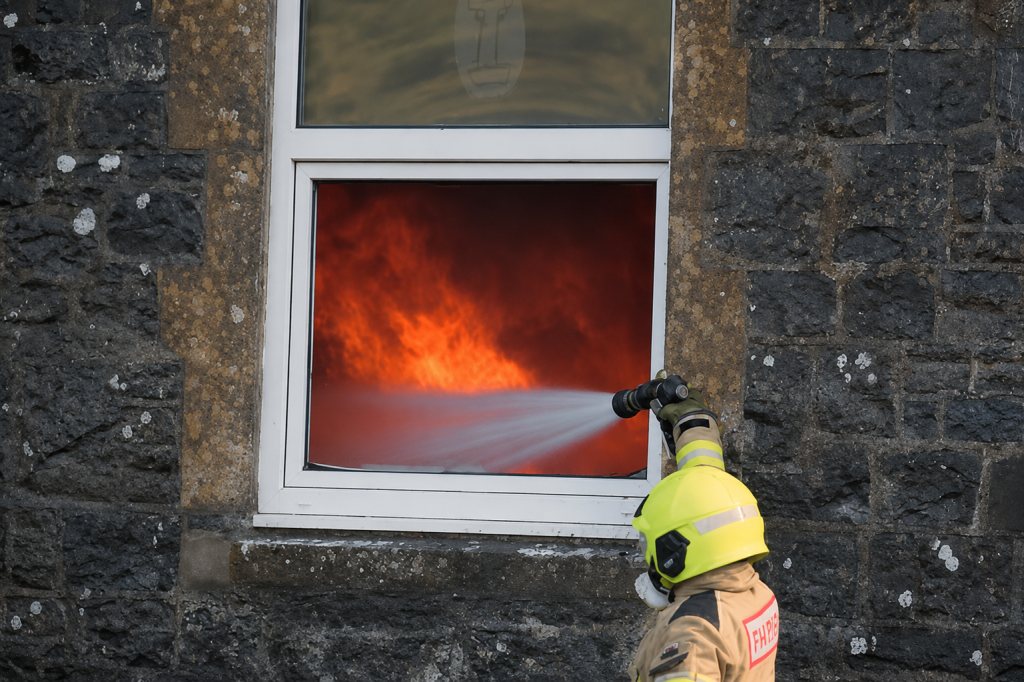
The fire broke out on October 10, 2022, during roofing works at the school. The council’s own document states that the blaze followed the use of flame torches and caused extensive damage to the original school building and adjoining schoolhouse, destroying the pitched roof structures.
Nearly four years later, the school has been discontinued, the building has not been rebuilt, and the insurance payout left to the council is less than the price of many family homes in Pembrokeshire.
The revelation raises devastating questions about how a public building used by young children could be left so exposed.
It also raises wider concerns about whether other schools and council-owned public buildings in Pembrokeshire are properly insured against catastrophic loss.

Council leader calls for review
Council leader Cllr Tessa Hodgson has now written to Dr Norma Barry, chair of the Governance and Audit Committee, formally requesting a wider review of the authority’s insurance arrangements.

In her letter, Cllr Hodgson said it was “difficult to explain and to understand” how there could be such a wide gap between the value of the damage to the asset and the value of the settlement figure.
She asked the committee to undertake a “formal, thorough and more general review” to provide assurance that insurance arrangements across the authority are “fit for purpose and robust”.
That request will now place the council’s insurance policies, risk management and decision-making under intense scrutiny.


Church dispute
The issue is made even more explosive by the fact that Manorbier School is a Church in Wales voluntary controlled school.
The Church has previously made clear that it expects the building to be reinstated, and solicitors acting for the Diocese have already accused the council of using the school closure process to avoid responsibility for rebuilding the fire-damaged premises.
The Diocese has demanded full structural reinstatement and has warned that legal action, including judicial review, could follow.
If the Church continues to insist that the school must be returned to its pre-fire condition, the council could yet face a much larger bill than the £63,777.07 it will receive from the insurer.
Contractor questions

There are also unanswered questions about the roofing contractor working at the site when the fire broke out.
The council document states that the fire occurred during roofing works following the use of flame torches.
Former Schools Overview and Scrutiny Committee chair Cllr Huw Murphy has questioned where the contractor’s public liability insurance was, and why the consequences of the fire appear to have fallen back on the council.
He said there were “serious concerns” over the lack of insurance cover in place for such a catastrophic incident.
Cllr Murphy said the fire not only rendered the school unusable, but also destroyed an attached schoolhouse, leaving a tenant requiring rehousing by the local authority.
He said: “If there was a template on how not to deal with a catastrophic incident then Pembrokeshire wrote it for Manorbier.”
Wider public concern
The Manorbier case now raises a stark question for every parent in Pembrokeshire: if another school suffered a major fire tomorrow, would the council be able to rebuild it?
A large insurance excess may not be unusual for a local authority, but residents will want to know whether the council had the right cover, the right reserves, and the right legal protections in place.
Had Manorbier School been rebuilt, Pembrokeshire would at least have retained a valuable public asset capable of serving future generations.
Instead, the community has lost its school, the building remains unrestored, and the council is left with a net insurance payment of just £63,777.07.
The Herald has asked Pembrokeshire County Council whether all school buildings are insured for full reinstatement value, what excesses apply, whether any claim has been pursued against the contractor or its insurers, and what legal advice has been received in relation to the Church in Wales’ position.
UPDATE 24.06.2026:
Pembrokeshire County Council has confirmed that the Governance and Audit Committee review will examine whether the authority’s insurance arrangements are “robust, fit for purpose and provide value for money”.
The council said the review follows the acceptance of the Manorbier School insurance settlement and will assess whether current insurance arrangements ensure public assets are “appropriately valued, insured, and restored in the event of loss or damage”.
Council leader Cllr Tessa Hodgson said: “We have a duty to ensure that all public assets are properly protected and insured. This review will provide assurance to residents and stakeholders that our insurance arrangements are effective and that public money is being safeguarded.”
The statement does not address why the Manorbier settlement left the authority with a net payment of just £63,777.07 after a £200,000 excess, nor whether the council is pursuing any claim against the contractor or its insurers.

CHURCH education in Pembrokeshire, the birthplace of Wales’s Patron Saint, is under threat from a series of actions by the council which could amount to religious discrimination, the Church in Wales has said.
The Church in Wales has issued a formal notice that it will take legal action against Pembrokeshire County Council if it presses ahead with plans to remove church status from Cilgerran Voluntary Controlled Primary School.
Back in May, the council voted to remove the Voluntary Controlled status of the Welsh-speaking rural school and to establish it as a 3-11 community school despite 97 per cent of the responses to a consultation about its potential discontinuation opposing it.
That consultation followed a review which “considered the extent of surplus school places in the area, set against a significant decline in the pupil population,” the council has previously said.
Hundreds opposed the proposed changes, with a petition on the council’s own website gaining 391 signatures.
During the consultation, 203 responses were received; 97 per cent (197 responses) against the proposal, with just 1.5 per cent (three) in favour.
Earlier this year, councillors heard from vice-chair of the school governors Gary Fieldhouse who said the loss of the Church in Wales status would be “a profound mistake,” the school’s association with the church “not symbolic but fundamental”.
Reverend John Cecil had told councillors the proposals were “fundamentally flawed,” with the school’s land legally in trust as a Church of Wales school, and change “essentially creating a new school with no premises to occupy”.
A letter has now been sent to council officers on behalf of the Diocese of St Davids and the Church in Wales saying that, if the council persists with this course, the Church will take legal action on the grounds of claims of “public misrepresentation and unqualified legal assertions made by Pembrokeshire County Council officers,” and “discrimination against faith schooling”.
The letter also says that, if the council removes VC status from the school, the Church will not make the site available for a successor school, which it says will render “the case on which the proposed removal of VC status is based untenable”.
The legal warning follows Pembrokeshire County Council’s decision earlier this month to close Manorbier Church in Wales Voluntary Controlled School, which was damaged by a fire in 2022.
The church says that despite repeated assurances from Cabinet Members and senior officers that it would be rebuilt, it has been allowed to sit empty while the number of children, forced for years to learn in temporary accommodation, has declined.

A spokesperson for the Church in Wales said: “Pembrokeshire County Council’s behaviour in the case of Manorbier VC School has been utterly unconscionable.
“The council has presided over a catalogue of delay, incompetence and broken promises resulting in the literal destruction of a thriving school which has served its community for more than 150 years.
“Taken together with the gratuitous attack on the church status of Ysgol Cilgerran, this amounts to a targeted assault on the inclusive Christian education which Church in Wales schools have provided to their communities for generations.
“That the council should be pursuing this potentially discriminatory action against Church schools in the county which is the cradle of Christianity in Wales, and which takes pride in being the birthplace and shrine of our nation’s Patron Saint, is a bitter irony.
“We are not prepared to allow it to happen, and we look to the county’s elected representatives to halt this destructive course of action.”
Pembrokeshire County Council has been contacted for a response.
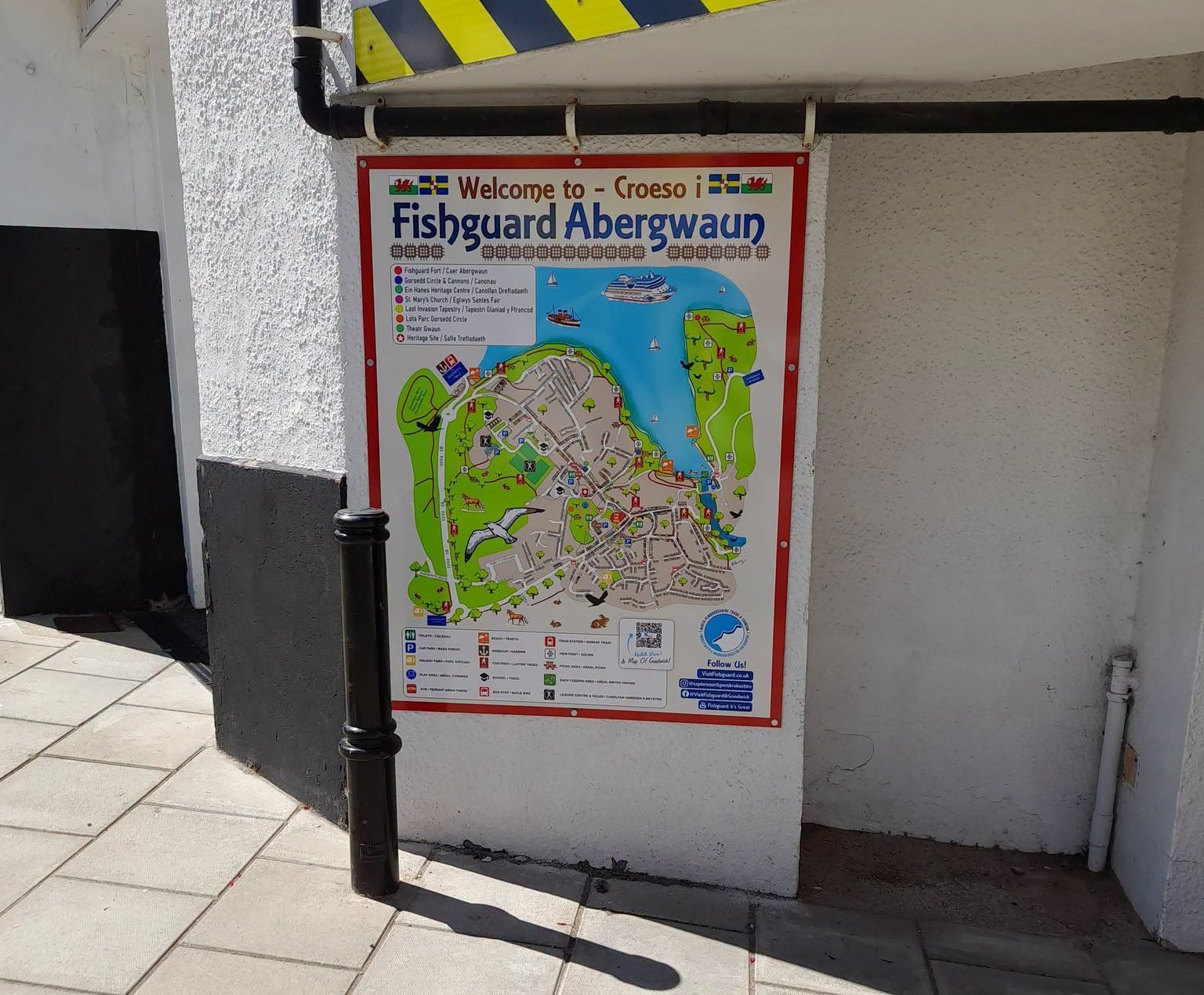
A NEW town map has been installed in the heart of Fishguard to help residents and visitors discover more of what the area has to offer.
The map, created by Visit Fishguard & Goodwick’s in-house graphic designer, has been placed on the Abergwaun Hotel tunnel, near Offshore Surfwear’s new shop.
The group said it was “incredibly proud” of the finished result and thanked the building owner for allowing the map to be installed on the premises.
Visit Fishguard & Goodwick is now hoping to create a similar map for Goodwick and is asking for help from a centrally located building owner who may be willing to host it.
Anyone who can help, or knows of a suitable location, is being asked to get in touch with Visit Fishguard & Goodwick.



Community6 hours ago
Manorbier fire scandal: Council’s payout just £63,777 after school destroyed
PEMBROKESHIRE COUNTY COUNCIL has accepted an insurance settlement which leaves it with just £63,777.07 after the catastrophic fire which destroyed...


News15 hours ago
Bus overturns in major incident near Kidwelly
All passengers rescued as emergency services remain at scene A BUS overturned on the A484 between Kidwelly and Ferryside on...


Community1 day ago
Tenby Summer Spectacular cancelled amid council row over harbour access
Organisers say popular charity events cannot safely go ahead without clear powers to control crowds TENBY ROUND TABLE has announced...


News2 days ago
Motorcyclist dies after four-vehicle crash on A40 in Carmarthenshire
A MOTORCYCLIST has died following a four-vehicle collision on the A40 between St Clears and Whitland. Dyfed-Powys Police said the...


News2 days ago
Rhun ap Iorwerth urges new deal for Wales after Starmer quits
First Minister says next Prime Minister must focus on greater powers, fair funding and respect for Wales’ democratic mandate FIRST...


News2 days ago
How Labour’s landslide victory unravelled in just two years
Prime Minister announces resignation after losing support within his own party as Andy Burnham emerges as overwhelming favourite to take...


News2 days ago
Long Course Weekend set to bring thousands to Pembrokeshire
Three days of swimming, cycling and running will once again transform Tenby into one of the UK’s biggest endurance sporting...


Community3 days ago
The gentle giant behind the tattoos
Pembrokeshire security worker Josh Davies praised for professionalism, kindness and proving first impressions can be wrong JOSH Davies is hard...


Charity4 days ago
Toy Story fans fill charity toy box at Haverfordwest cinema
Donations pour in for SNAP Specialist Play as families embrace Toy Story 5 launch A TOY STORY-themed charity appeal at...


Community4 days ago
Lord Rhys emerges from the mist in St Davids
Giant puppet begins historic journey marking 850 years since the first Eisteddfod MIST swirled around St Davids Cathedral on Friday...
-

 Crime6 days ago
Milford Haven man jailed for breaching domestic violence protection order
-

 News6 days ago
Crash on Freeman’s Way causes school-run chaos across Haverfordwest
-

 Health4 days ago
Woman jailed assaults on police, harassment and XL Bully possession
-

 Crime4 days ago
Milford Haven woman spared jail despite string of shop thefts
-
Community3 days ago
The gentle giant behind the tattoos
-

 Crime6 days ago
Portfield Gate man faces careless driving allegation after Tufton crash
-

 Local Government5 days ago
Pembrokeshire faces accessible housing shortage as 403 people wait for homes
-

 News6 days ago
Brexit at 10: How Britain was sold a dream that cost us dearly