


Community
Tenby rally part of huge nationwide response to the rise of far-right extremism


THE UNITY RALLY in Tenby on Saturday (Aug 10), was part of a nationwide response to the alarming rise of far-right extremism, which has been increasingly visible in the UK over recent weeks. Organised by West Wales Stand Up to Racism (SUTR), the rally in Tenby joined more than 50 similar demonstrations across the country, forming part of a national day of protest against racism and fascism.
Across the UK, thousands responded to the call to “stop the far-right,” with large crowds gathering in major cities and towns, including London, Edinburgh, Cardiff, and Belfast. These protests were a direct reaction to more than a week of violent far-right riots that had gripped various parts of the country, sparked by the horrific knife attack in Southport that claimed the lives of three young girls.
In London, up to 5,000 anti-racist protesters assembled outside the headquarters of Reform UK, where they accused its leader, Nigel Farage, of “spreading racism” and inciting violence. This demonstration then moved to Whitehall, where protesters loudly chanted “refugees are welcome here,” underscoring the inclusive message of the day’s protests. The rally was part of a broader pushback against the far-right, which has attempted to exploit the Southport tragedy to fuel anti-immigrant sentiment.

Similarly, in Belfast, up to 15,000 people took to the streets for an anti-racism rally organised by United Against Racism, where protesters carried placards with messages supporting migrant rights and opposing racism. Demonstrators chanted, “When migrants’ rights are under attack, what do we do? Stand up, fight back,” highlighting the solidarity felt across the nation.
Throughout the day, anti-racist protesters far outnumbered the far-right in every location. In some places, like Tenby, Cardiff, and Edinburgh, far-right protesters failed to show up at all, a testament to the strength of the anti-racist mobilisation. Where they did appear, such as in Newcastle, they were significantly outnumbered and outvoiced by counter-protesters.

The national mobilisation saw rallies in cities such as Glasgow, where up to 3,000 people gathered in George Square, and Manchester, where a similar number assembled in Piccadilly Gardens. The demonstrations were a clear message that communities across the UK are united against the spread of far-right ideologies.

In the wake of these events, Stand Up to Racism co-convenor Weyman Bennett remarked, “Today shows we can turn the tide against the far-right and the racists. Up and down the country, people have come together, organised, and marched to send a clear message: the far-right aren’t welcome. We won’t let them attack Muslims, migrants, and refugees. Our message is one of hope, solidarity, and unity.”
This wave of anti-racist demonstrations comes as Prime Minister Sir Keir Starmer cancelled his planned family holiday to stay in the UK, overseeing the government’s response to the unrest. Starmer, who has urged the police to remain on “high alert,” highlighted the need for continued vigilance to ensure public safety in the face of potential far-right threats.
As the protests unfolded peacefully and with a strong show of unity, it became evident that the far-right’s attempts to incite division were met with overwhelming resistance from communities across the UK. This national day of action not only reaffirmed the country’s commitment to inclusivity and tolerance but also sent a powerful message that hate and fascism will not go unchallenged in Britain.
Cover image: Gareth Davies/Herald

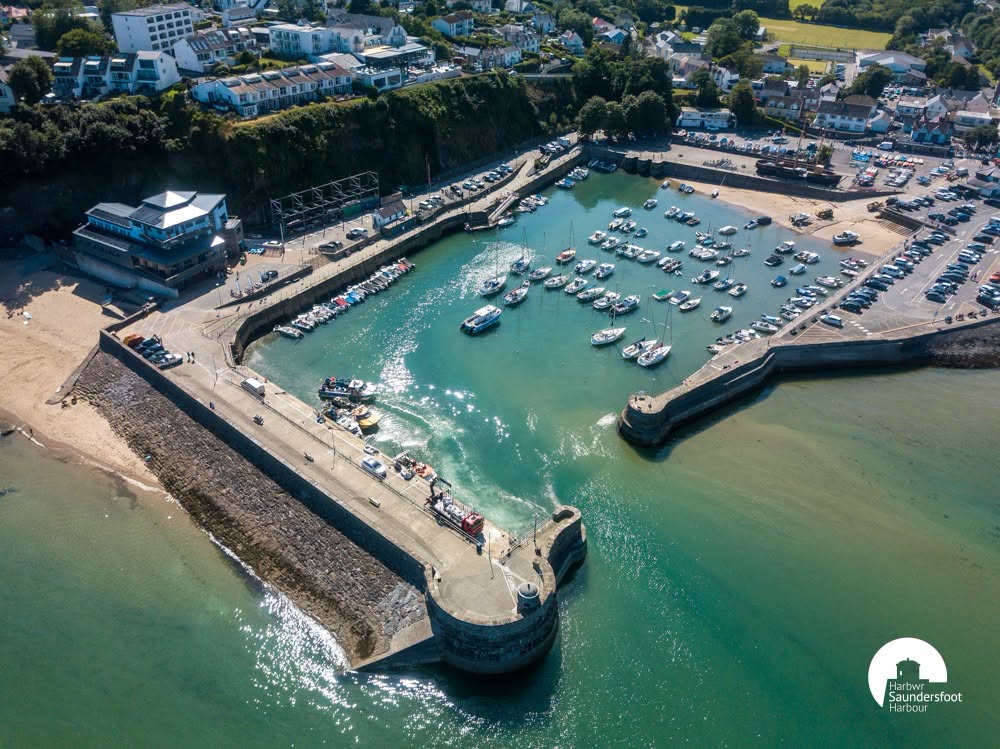
SAUNDERSFOOT HARBOUR’S redevelopment has been named Best Project at the RTPI Cymru Awards for Planning Excellence 2026.
The award recognises Phase 2 of the Saundersfoot Harbour Redevelopment Project, which has helped transform the harbour into a year-round destination with new commercial, community and visitor facilities.
Delivered by Saundersfoot Harbour, with planning input from Pembrokeshire Coast National Park Authority, the project was praised by judges as “an exemplar for coastal economic resilience in smaller settlements” and “a very good example of planning enabling place-based regeneration.”
Judges highlighted the scheme’s economic and community benefits, including investment, job creation, new local business space, improved public access, year-round activity, major events, and the reuse of brownfield and heritage assets.
They also recognised the role of planners in dealing with design changes, conservation area issues, flood risk, accessibility, and the coordination of several linked schemes within a working harbour.
Sara Morris, Director of Place and Engagement at Pembrokeshire Coast National Park Authority, said the award was a testament to the value of good planning.
She said: “We are delighted that Phase 2 of the Saundersfoot Harbour Redevelopment Project has been recognised by RTPI Cymru.
“This award is a real testament to the value of good planning in helping places adapt, thrive and deliver lasting benefits for their communities.
“Saundersfoot Harbour is a hugely important location, both locally and strategically, and this project shows how careful planning can support regeneration while respecting the character, heritage and environmental challenges of a coastal setting.
“I would particularly like to thank Andrew Richards and Nicola Gandy, who both led on the planning aspects of the project for the Authority.
“The judges’ comments underline the strength of the partnership approach behind the project, and we are very pleased to see the work of our planning team recognised alongside Saundersfoot Harbour’s ambition and commitment.”
Ted Sangster, Chairman of Saundersfoot Harbour Commission, congratulated the National Park Authority on the award.

He said: “As a trust port, we operate very much as a commercial business but with no shareholders and therefore no dividends to pay. Our strategy is to provide real, long-term benefit for our community and all users of the harbour.
“The successful Phase 2 of the harbour development now provides both an active fishing and recreational sailing harbour and a year-round visitor attraction serving an increasingly diverse range of users, and has created around 100 new jobs so far.
“Our work with local businesses and stakeholders has been greatly assisted by the open and consultative partnership with the National Park, which is based on the shared aim of sustainable economic delivery and social benefit to our community.”
As winner of the Best Project category in Wales, the Saundersfoot Harbour project will now be automatically entered as a finalist in the UK National Awards for Planning Excellence.
The national finalists are due to be announced by the RTPI on October 7, ahead of the UK national finals on December 3.
The National Park Authority also welcomed recognition for the Dark Skies Guidance for Wales, which won the Chair’s Award at the RTPI Cymru Awards.
The guidance was developed by a working group from across Wales, including the Authority’s Principal Planning Officer for Strategic Policy, Gayle Lister.
Sara Morris added: “It is particularly pleasing to see the Dark Skies Guidance for Wales recognised alongside the Saundersfoot Harbour project.
“Protecting dark skies is an important part of caring for the special qualities of Wales’ landscapes, and this guidance reflects the value of collaboration across planning, conservation and environmental disciplines.”
The RTPI Cymru Awards for Planning Excellence celebrate outstanding plans, projects and people that demonstrate the power of planning to make a positive difference to places and communities.

A NEW £5,000 annual grant has been launched in West Wales to support youth-led climate and environmental projects.
Cwm Arian has announced the Daniel Blackburn Memorial Fund for Youth Action, created in memory of its late founding director, Daniel Blackburn.
The fund will award one £5,000 grant each year to a local group developing a bold, sustainable project in West Wales.

Daniel was known for his passion for science, renewable energy and inspiring young people. He brought environmental science to life in memorable and imaginative ways, from classroom demonstrations using toilet rolls to building miniature wind turbines for children to hold and explore.
Cwm Arian said the new fund is intended to continue that creative spirit by helping young people turn community-minded environmental ideas into reality.
The scheme is open to schools, registered charities and youth groups working with people under the age of 18 in North Pembrokeshire, South Ceredigion and West Carmarthenshire.
Cwm Arian is particularly keen to hear from youth-led projects focused on low-carbon living, sustainable transport, renewable energy or environmental ecology.
Young people must be at the heart of the applications, with Cwm Arian looking for projects that have been inspired, shaped and delivered by local youth from start to finish.
The fund has now officially opened, with full criteria and digital application packs available on the Cwm Arian website.
Formal applications will be accepted throughout September and October, with the first grant recipient due to be announced in January 2027.
Cwm Arian said Daniel Blackburn “built the change he advocated for”, pointing to the community wind turbine in Llanfyrnach as a lasting symbol of his tenacity, fundraising and voluntary dedication.
The organisation added that by keeping the fund flexible and open to bold new ideas, it hopes Daniel’s “unique spark” will continue to inspire local change.

Cwm Arian is a community benefit society based in North Pembrokeshire, South Ceredigion and West Carmarthenshire. Established in 2015, it develops community-owned renewable energy projects and supports work linked to woodland restoration, nature recovery, sustainable transport, food growing and community engagement.
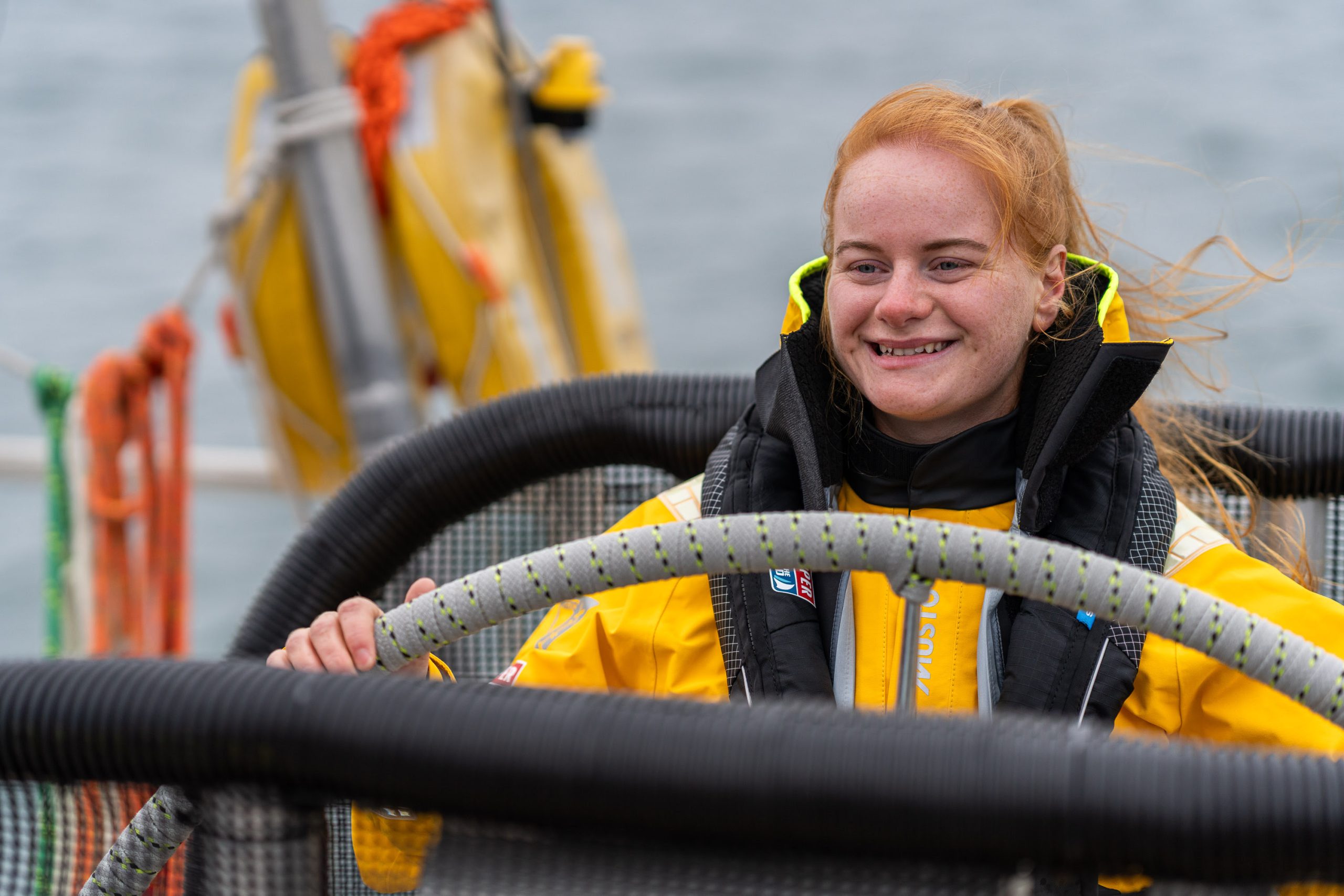
A PEMBROKESHIRE sailor is leading a team of non-professional crew members on the final ocean crossing of one of the world’s toughest yacht races.
Lou Boorman, from Haverfordwest, is skipper of Team Tongyeong in the Clipper 2025-26 Round the World Yacht Race.
Her team has now departed Washington, DC, and is heading across the North Atlantic to Oban in Scotland, marking the last major ocean crossing of the global race.
The Clipper Race is unusual because it takes people from all walks of life and trains them to become ocean racers. No previous sailing experience is required.

Each of the ten identical Clipper Race yachts is led by a professional skipper and first mate, with up to 22 non-professional crew members on board. The teams race around the clock for up to 30 days at a time, covering a global route of around 40,000 nautical miles.
Lou has been leading Team Tongyeong since the race began in Portsmouth last August. The team has been representing the South Korean city of Tongyeong throughout the competition.
Speaking ahead of the final Atlantic crossing, Lou said: “It doesn’t feel quite real that we’ve nearly sailed around the world and are one hop across the ocean to home waters!
“This is the hardest thing I’ve ever done. A huge challenge. We’ve had three podiums so far and are hungry for more.”
At the time of the release, Team Tongyeong was leading the current stage of the race.
The route from Washington, DC, to Oban is just over 3,000 nautical miles and will see crews face changing weather systems, strong Atlantic currents and the unpredictable conditions that make ocean racing so demanding.

Lou said the challenge had not only been about sailing, but also about leadership.
She said: “In addition to the sailing and the conditions, the challenging part has been about people management and leadership. I’ve had to be a strong leader. That’s what my team expects and needs from me. So the development in this race is incredible.”

She added: “I think it’s going to leave a big hole in my life, leaving this team and leaving the boat. I’m going to have to fill that gap in my life fairly quickly. I’ll miss it too much!”
After ten months at sea, and with just over three weeks of racing remaining, the arrival in Oban will mark a major milestone as the fleet returns to UK waters.
Oban is due to welcome the Clipper Race fleet from Friday, July 10, with a programme of public events allowing visitors to see the yachts and meet the race crews and professional skippers.
From Oban, the teams will race for the final time in the 2025-26 edition, finishing in Portsmouth on Saturday, July 25, where the overall leaderboard positions will be confirmed.
Applications are already open for the 2027-28 edition of the race, which is due to begin next summer.


Community1 hour ago
Saundersfoot Harbour regeneration project wins national planning award
SAUNDERSFOOT HARBOUR’S redevelopment has been named Best Project at the RTPI Cymru Awards for Planning Excellence 2026. The award recognises...


Business7 hours ago
Pembrokeshire-based Ascona Group expands UK portfolio with Truckhaven acquisition
PEMBROKESHIRE-BASED Ascona Group has completed the acquisition of Truckhaven (Carnforth) Ltd, a major trunk road services area in Lancashire. The...


Health1 day ago
Wales begins early NHS winter planning after long waits and ambulance pressure
Ministers say health boards and councils must act now to ease pressure on hospitals, ambulances and social care before winter...


Crime2 days ago
Judge calls pensioner a ‘dirty old man’ as he avoids jail for exposing himself to women
Judge says 75-year-old Stewart Laugharne behaved ‘disgracefully’ as he avoids jail but is ordered to sign sex offenders register A...
Health3 days ago
Stroke services consultation reaches halfway point as public urged to have say
HYWEL DDA University Health Board is urging people to take part in its consultation on the future of stroke services,...


Business3 days ago
Welsh firms eye share of £5bn defence drone boom
WELSH defence and aerospace firms could be in line for a share of billions of pounds in new military spending...


Community4 days ago
Thousands line Cardigan streets for Lord Rhys homecoming parade
THOUSANDS of people lined the streets and quayside in Cardigan on Saturday as the town marked 850 years since Lord...


Crime5 days ago
Dyfed-Powys Police rated only ‘Adequate’ in organised crime inspection
A WATCHDOG has rated Dyfed-Powys Police only “Adequate” in its response to serious and organised crime, despite praise for the...


News6 days ago
Two taken to hospital after aircraft ditches in Cardigan Bay
Coastguard helicopter spotted two casualties after light aircraft came down off west Wales coast TWO people were taken to hospital...

Sport6 days ago
Long Course Weekend gets underway in Tenby as thousands head for county
Three days of swimming, cycling and running begin with The Wales Swim at North Beach THOUSANDS of athletes and supporters...
-
Crime5 days ago
Dyfed-Powys Police rated only ‘Adequate’ in organised crime inspection
-

 Entertainment6 days ago
Torch cuts children’s cinema tickets to £5.25 for summer
-

 News3 days ago
Biker dies and woman seriously injured in Black Mountain crash
-
 News7 days ago
Reform MS: ‘I felt like shouting get out of the water’
-

 Climate6 days ago
Welsh waters, Westminster profits: Crown Estate row reignited in Wales
-

 Crime6 days ago
Former Swansea Prison inmate died 48 hours after release
-

 Crime5 days ago
Swansea man jailed for 16 years after attacking vulnerable woman
-

 Community6 days ago
Working-class young people ‘shut out’ of marine conservation careers in Wales