


Comment
Closure of Port Talbot blast furnace exposes limits of state power


By Jonathan Edwards
FUTURE historians will benchmark this week’s sad closure of the last remaining blast furnace at Tata Steel Port Talbot as a turning point in the UKs industrial history.
With the British Steel plant at Scunthorpe also due to turn off its own blast furnace, the UK as the birthplace of the industrial revolution will be left without the ability to produce its own steel.
This is a seismic moment therefore in our economic history: from here on in the UK will be reliant upon virgin steel imports.
Strategically this leaves the British state in an exposed position on all sorts of fronts.

Tragedy
This week’s development is of course primarily a tragedy for the 2,800 workers who will directly lose their jobs and those businesses further down the supply chain.
The jobs at Port Talbot were well paid in comparison to other available employment and therefore the local economy, even if workers were to find alternative jobs, will take a hit in terms of direct consumer expenditure.
The south Wales Valleys are already regrettably amongst the poorest regions of Europe.
The decision by Tata of course indicates the folly of privatising your primary industries in the first place. Once those industries are sold then governments lose control.
Decision makers
Port Talbot was originally bought by Corus before being ultimately bought by Tata in 2007, meaning that the fate of Welsh steel making was in the hands of decision makers in faraway Mumbai.

Understandably, directors and board members make decisions in what they perceive to be the best interests of their company.
Port Talbot is one asset of many that Tata holds across the world and in the group’s future business plan there is no longer a requirement for primary steel making capability in Port Talbot.
Did Brexit play a role in Tata’s thinking? The UK is no longer a part of the world’s largest economic union. If Tata wants to produce primary steel for the European market, why do it in Wales which is outside?
According to Tata, the blast furnaces were losing the company £1m a day. The restructuring involves £1.25bn investment by the company to build an electric arc furnace, which essentially recycles steel, with construction set to begin next summer. The UK Government will contribute £500m.
Savaged
In opposition the Labour Party absolutely savaged the blueprint, yet the final plans seem to have changed little now that they are in government at a UK level.
We were told in advance of the election that only a change of government could save the jobs. Prior to the election, Jo Stevens MP, the then Shadow Secretary of State for Wales, said in the Commons: “This government has forked out £500m taxpayers’ cash for the loss of 3,000 jobs and this is their deal, and they own it.”
Earlier this month, the new Business and Trade Secretary of State, Jonathan Reynolds, said the Labour version of the same deal gives “hope for the future of steel making in south Wales”.
From what I can see it’s the same number of jobs lost for the same amount of money invested by the UK Government. Furthermore, the unions’ alternative proposals have not been adopted.
I am not entirely convinced the tactic of the UK Government to gloss the agreement is credible.
Perhaps they genuinely thought that their proposals would change the position of the company; if so they have been given a very rude awakening on the limit of the powers of the nation state when up against a giant company like Tata.
Plaid Cymru’s ultimate call for the Welsh Government to compulsorily purchase the site also has its weaknesses.
The Welsh Government’s entire economic development budget for both revenue and capital is only £527m. At a £1m a day loss, compulsorily purchasing Port Talbot would wipe out 70% of the total budget without even considering the cost required to buy the plant.
Alternative for Deutschland
I was listening to a very interesting podcast by Irish economist David McWilliams recently where he discussed the rise of the far right AfD (Alternative for Deutschland) in Germany.
One of the main reasons for its recent electoral successes has been the decision of Volkswagen, a company that has provided well-remunerated employment for the best part of a century, to start closing production capacity in Germany.
The podcast argued that the demise of the old certainties has created a climate of fear that is being exploited.
We are no strangers to industrial decline in Wales; however the closure of the last steel making blast furnace in Wales underscores that we are facing a very uncertain economic future.
Faced with global forces they cannot control, the traditional political mainstream does not have a convincing narrative of where we are heading. Talk of a green industrial revolution sounds great in a pamphlet, but what exactly does it mean for working people in terms of employment and remuneration?
Looking at the overall strategic political position, I fear that Project Miserable by the UK Government could well backfire and play into the hands of the far right. Welsh nationalism also must move beyond its default grievance narrative. In the absence of hope for our people, malign forces will surely pounce.
Jonathan Edwards was the MP for Carmarthen East & Dinefwr from 2010 to 2024.



“Ukraine is fighting not just for its own freedom, but for the principles of democracy and justice that should unite us all”, says Herald Editor, Tom Sinclair

THERE are moments in history when leaders define themselves—not just by what they say, but by how they treat others. On Friday (Feb 28), in a shocking display of arrogance and ignorance, President Donald Trump showed the world precisely what kind of leader he is. In an extraordinary and disgraceful diplomatic blunder, Trump asked Ukrainian President Volodymyr Zelenskyy to leave the White House, cutting short a meeting that was meant to strengthen ties between the two nations. Instead of supporting a country fighting for its survival, Trump chose to humiliate its leader.
This was not just a moment of political theatre; it was an insult to every Ukrainian citizen suffering under Russia’s brutal invasion, to every soldier defending their homeland, and to every nation that has stood up against tyranny.
For all his bluster about “making America great,” Trump’s latest act proves yet again that he does not understand the difference between strength and bullying. A strong leader stands by their allies. A weak leader turns their back when it’s convenient. A strong leader understands diplomacy. A weak leader throws a tantrum when things don’t go their way.
Trump’s dismissive attitude towards Ukraine is a betrayal of not just one nation but of democratic values themselves. Under his administration, the White House has become a revolving door of diplomatic disasters, with world leaders leaving insulted and America’s reputation in tatters. Instead of standing up to Vladimir Putin—the aggressor responsible for this war—Trump appears more interested in undermining Ukraine at every turn. His words and actions send a dangerous message: that the United States is no longer a reliable ally, and that dictators can act with impunity.
Unlike Trump and his administration, the people of Pembrokeshire have demonstrated true solidarity with Ukraine. When Russia launched its unprovoked invasion, our community stepped up. Five vans filled with essential supplies were sent directly to those in need, organised by The Pembrokeshire Herald and backed by the incredible generosity of local people. Our firefighters have sent vital equipment to help their Ukrainian counterparts. Across our county, individuals and businesses have raised money, collected aid, and stood in unwavering support of Ukraine’s right to defend itself.


We do this because we understand something Trump never will: that integrity, compassion, and standing up for what’s right matter more than self-serving political games. Pembrokeshire knows that Ukraine is fighting not just for its own freedom, but for the principles of democracy and justice that should unite us all.
History teaches us that bullies never win. Whether it’s on the playground or the world stage, those who use power to intimidate and belittle eventually face their reckoning. Trump’s pathetic treatment of Ukraine will not be forgotten. The world is watching, and America’s allies are taking note. The bonds between democratic nations will not be broken by one man’s petulance.

The Pembrokeshire Herald remains steadfast in its support for Ukraine. We stand with President Zelenskyy. We stand with the Ukrainian people. And we stand with all those who believe that democracy, freedom, and justice must prevail over the cowardice and corruption of those who would rather appease tyrants.
Trump’s disgraceful behaviour will be remembered for what it is: a moment of shame. But the bravery of Ukraine and the solidarity of those who support it will be remembered for what it represents: hope, resilience, and the undeniable truth that justice will triumph in the end.


THE UK goes to the polls on Thursday, July 4.
The Prime Minister announced the general election date in a sodden Downing Street at 5pm on Wednesday, May 22.
As the rain fell and “Things Can Only Get Better” blared over a nearby sound system, Mr Sunak set out his party’s key attack lines.
The Prime Minister attacked Labour for lacking a plan and Sir Kier Starmer for lacking principles.
Mr Sunak urged citizens to stay the course and trust his government to deliver stability and improvements.
The Prime Minister offered nothing new or inspirational, missing the chance to set a positive mood for the General Election campaign.
If one could detect a theme in the PM’s delivery, it appeared to be: “Things are going pretty badly; don’t let Labour ruin it”.
The weather matched the mood of the PM’s speech: wet. When Mr Sunak finished his speech and walked back into Number Ten, he was drenched.
Talking heads, the usual suspects, and the commentariat are already in overdrive.
Look! See! Scandal! Shock!
While the UK parties get ready for battle across key marginal seats and try grabbing headlines and favourable coverage, it’ll be easy to forget the importance of local issues in a General Election campaign.
There are three seats in South West Wales, all redrawn or renamed.
The key battlegrounds for Herald readers are Carmarthenshire, Ceredigion and Preseli Pembrokeshire, and Mid & South Pembrokeshire.
At the last UK General Election in 2019, Pembrokeshire’s working-class voters abandoned Labour. Our County returned two Conservative MPs. In 2021, our County returned two Conservative MSs. At the Council elections a year later, the Conservative vote held up even as it went into shrank drastically elsewhere.
It would not be surprising if Labour’s performance in West Wales were worse than in the rest of the country.

As at previous elections, Labour candidates in West Wales must overcome the Welsh Government’s reeking and widespread unpopularity.
Twenty-five years of devolution has delivered nebulous benefits for the Welsh people.
A quarter of a century of “the Welsh difference” has made little or no difference to Wales’s people.
Banging on about crises in education, transport, public services, housing, and the NHS could be fruitful in England. It would be astonishing if it weren’t. However, Labour is hamstrung by being responsible for those policy areas and their appalling condition in Wales.
Labour in Wales can’t rely on claiming things are much worse over the Severn Bridge any more than the Welsh Conservatives can claim they’re much better.
Unable to campaign on its record in the Welsh Government, Labour will have to fight on a broader battleground:
- The cost-of-living crisis.
- The feeling that fourteen years of a Conservative government in Westminster have not improved Welsh voters’ lives.
- Pressing the case that the time has come for change.
As for Wales’s other political parties, the Liberal Democrats are nowhere, the Greens will take any protest votes on the left from those who confuse activism and virtue-signalling with politics, and Reform will take any protest votes on the right from those who think “Two World Wars and One World Cup” is a programme for government.
Plaid Cymru faces different problems, not least because it comprises several factions that loathe each other more than they dislike other parties.
A good night for Plaid Cymru would be three seats won. A great night would be four seats won. There are, however, thirty-two Welsh constituencies. Do the maths.
Plaid Cymru—like the SNP or DUP—could have considerable leverage in a hung parliament or a parliament where the governing party has a small majority. The problem is Plaid chaining itself to the
Labour Government in Wales. “Vote Plaid, Get Labour” could switch off voters Plaid must win over, whether or not Leanne Wood wants them.

Plaid would be functionally irrelevant in a parliament with a large Labour majority. They would have no more say than an independent MP or the departing Green Party MP, Caroline Lucas.
In addition, fewer seats in Wales (down to 32 from 40) will almost certainly mean fewer Plaid MPs. The tiny seats in North West Wales that Plaid usually won are gone, merged with other constituencies. Ceredigion has merged with Preseli Pembrokeshire. Carmarthenshire’s new seat boundaries exclude some strong Plaid-voting areas, and the local party is divided.
Despite New Labour’s anthem, “Things Can Only Get Better,” being played over Rishi Sunak’s speech on Wednesday, Sir Kier Starmer has not tapped into the public mood like Tony Blair did.
So far, Labour’s messaging offers only vague hope of undefined improvements.
Anyone for “Stuck in the Middle with You”?
It might be enough.

HELLO, readers!
Has it ever occurred to you that there’s just no pleasing some people?
Since the first asylum seekers arrived in the semi-mothballed Penally Training Camp’s palatial splendour, several groups have complained about their presence.
Now they’re being moved on elsewhere, some people are still moaning. Not that they’re moving, but that they’re even in the country.
The groups concerned can be divided broadly into three.
Firstly, those who live near the Camp. They were hit by the lack of notice and consultation. They were, understandably, alarmed by the turn of events thanks to misinformation, disinformation, and a lack of information. After all, readers, if their local MP – a Cabinet Minister – didn’t know what was going on, how could they?
Secondly, some understood the Camp was unsuited to accommodating asylum seekers due to its location and condition. They might have had better impulses but preaching to the choir loses the congregation.
Finally, there were volatile and violent arm-lifting bigots. They exploited the asylum seekers’ presence to push their own hateful agendas of division, racism, and Tommy Robinson-lite PayPal patriotism.
The whole affair revealed an essential truth about Pembrokeshire and some of its inhabitants.
As part of a new tourism campaign for Pembrokeshire, Badger proposes the following snappy slogan:’Pembrokeshire: a warm welcome if you’re white. Badger’s suggestion has a particular benefit for a tourism campaign: it’s true.
Forget the sweeping views of the coast; the images of the Preselis; families enjoying themselves on our beaches. Leave out the pitch for coffees overlooking rural landscapes, tents pitched on cliffs, and people enjoying fish and chips in the sunshine.
Cast them aside.
Instead, picture a gang of thugs chanting hate and congregated outside Penally Camp. It more accurately captures the sort of warm welcome that awaits those who don’t meet the desired racial profile of Pembrokeshire’s guests.
The only thing that’ll have to be photoshopped into the image is a flaming cross and a lynched corpse hanging from a tree.
People will come from as far afield as Milton Keynes, Swansea, and Manchester to holiday in Pale Pembrokeshire to practise a form of ‘Apartheid through Leisure’.
And if that sounds a bleak and harsh assessment: good!
It’s meant to be.
The whole series of events at Penally has revealed the worst of Pembrokeshire. Insular, bigoted, racist, cowardly, nasty, bitter, mean-spirited individuals seized by a sense of entitlement and innate superiority have come to The Herald’s social media pages and vented their spleen or spewed their bile. Quite frankly, with a million visits a month, it’s been the devil’s own job to police the filth and remove comments and ban users for persistent trolling and offensiveness.
Free speech is free under the law. Free speech is not a licence to incite hatred or encourage violence, whether directly or indirectly. The idea – the very notion – that Neil Hamilton made a point of coming to Penally to lie through a loudhailer is as loathsome as his presence in the Welsh Parliament. He’s got about as much to contribute to Pembrokeshire as he does to Wales. Sod all.
It is proof that when it comes to UKIP and the rest of the fringe right, getting to the top demonstrates that shit floats and it isn’t only the cream that rises.
The presence of far-right anti-migrant activists and their capacity to pander to certain personality types demonstrates equally that some will say anything, do anything, and agree with anything to get attention.
It’s like listening to a lousy tenor warming up: ‘ME-ME-ME-ME-ME’.
Jesus wept, readers.
And if he’d read the hatred hurled over our Facebook comments, he’d have cried a river.
So-called Christians – they aren’t, of course – claiming some sort of moral authority for their bigotry.
People demanding that our brave ex-servicemen on the streets should be housed first. Yeah. Stick the same ex-servicemen in a hostel near them and see what happens to their ‘compassion’.
Plans for such a hostel in Carmarthen were withdrawn by an armed forces charity after it got planning permission because locals were so opposed and unwelcome. Pembrokeshire wouldn’t be any different. If a proposal came forward to put such a hostel on a leafy street in any town in Pembrokeshire, there’d be an outcry. Locals would fulminate against it. The usual online trolls – hello Fishguard and Pembroke – would go dull.
‘House our own homeless first!’ Well, that’s a laugh. They moved homeless people into Johnston and Fishguard during the first lockdown. The result was non-stop whingeing and the demonization of every person who found themselves stuck in intolerance central.
Along the way, it’s struck Badger that there is no law so clear that people can misunderstand it and – in most cases – deliberately misrepresent it.
The law on asylum is unambiguous. Asylum seekers apply for refugee status. Those whose claims are approved get refugee status. Only at that point are they given limited permission to stay in the UK. Of those who do not get refugee status, some might be ‘economic migrants’. That’s, however, a determination for the end of the process, not the beginning. And only the decision-maker in the process can make that judgement: not ‘I’m not racist, but Bob (or Beryl) on social media.”
Besides, there is no legal requirement for asylum seekers to apply for refugee status in the first ‘safe’ country they land in. That is simply a lie. A lie. A lie. A lie. The UK’s own case law says it’s a lie.
The hard of thinking, wilfully ignorant, brainwashed, and bigots appear to believe the contrary proposition is true. To them, Badger suggests reading the law or – better – get someone to read it to them. In small and easy to understand words.
These short words would be a start: “People who come to the UK and apply for asylum have rights under UK law. What you want to believe isn’t true. What kippers and other fringe ding-dongs say isn’t true.
“Don’t listen to lies. Some people will lie to get you to lie. They feed off the hate they incite in you when you spread their lies. Others have used the Camp to boost themselves. They are vermin.”In the Second World War, your grandad probably went to Europe to shoot people who thought as they do.”
Badger has written this column for almost eight years now.
From the first edition in 2013 to this week, he has used this space to pick and probe and mock. Never has he felt the urge to say that Pembrokeshire would be better off without some people.
And it’s not the asylum seekers.
They’ve had a great – and lucky – escape.



News1 hour ago
Motorcyclist, 22, dies in A4075 crash
A 22-year-old woman remains in hospital after two-vehicle collision A MOTORCYCLIST has died following a serious two-vehicle crash on the...


Community2 hours ago
Why police will be visiting every home in Pembrokeshire
New operation aims to knock on more than 257,000 doors across Dyfed-Powys over the next three years DYFED-POWYS POLICE has...


Crime5 hours ago
Prisons at breaking point: MPs warn Wales is paying the price of a failing system
Frozen healthcare budgets, overcrowded jails, homelessness on release and mounting pressure on staff are undermining rehabilitation across Wales, according to...


News19 hours ago
Brexit at 10: How Britain was sold a dream that cost us dearly
A decade after the referendum, the promised benefits remain hard to find while the economic costs are increasingly difficult to...


Crime20 hours ago
Worcestershire man jailed after violent attack on woman in Tenby
Defendant was already serving a suspended sentence when serious assault took place A WORCESTERSHIRE man has been jailed for more...


Climate22 hours ago
Offshore wind ‘could bring new generation of jobs to Milford Haven’
Pembrokeshire ports and Celtic Sea projects placed at centre of Wales’ green energy ambitions MILFORD HAVEN and Pembroke Dock could...


Community2 days ago
Police officer hailed hero after midnight sea rescue in Milford Haven
PC swam 100 metres offshore to save distressed woman heard calling for help in darkness A DYFED-POWYS POLICE officer has...


Local Government2 days ago
Security privately arranged by Mayor at Beating of the Bounds
HAVERFORDWEST TOWN COUNCIL has confirmed that security personnel seen at this year’s Beating of the Bounds were privately arranged and...


Business3 days ago
Celtic Freeport five-year plan puts Milford Haven at centre of green energy future
Strategy promises investment, skilled jobs and new supply chains, but major barriers remain over grid connections, planning and delivery THE...


Education3 days ago
Closure of Ysgol Clydau approved after emotional council debate
COUNCILLORS WARNED RURAL COMMUNITIES WILL REMEMBER DECISION PEMBROKESHIRE councillors have voted to close Ysgol Clydau following an emotional debate over...
-

 Community4 days ago
Pembrokeshire Chess Club crowned Welsh champions
-
Local Government2 days ago
Security privately arranged by Mayor at Beating of the Bounds
-

 Crime6 hours ago
Milford Haven man jailed for breaching domestic violence protection order
-

 Education6 days ago
Diocese threatens legal action as Manorbier school closure battle intensifies
-

 Crime2 days ago
Man wanted by court after failing to attend hearing over alleged shop thefts
-

 Local Government6 days ago
Taxi suspended after county-wide licensing checks
-
 Crime2 days ago
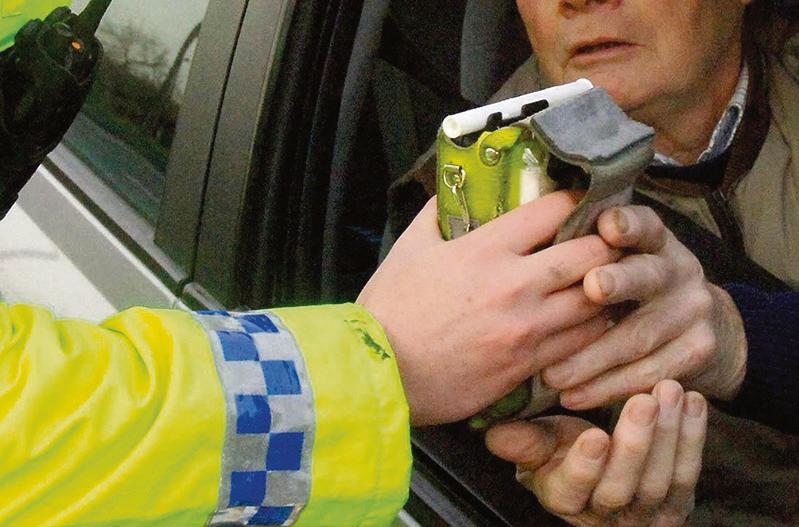
Man banned from roads after drink-driving offence
-

 Crime6 days ago
Currys worker denies stealing £2,500 of store stock