


Politics
First Minister tells scrutiny committees to cool it with recommendations

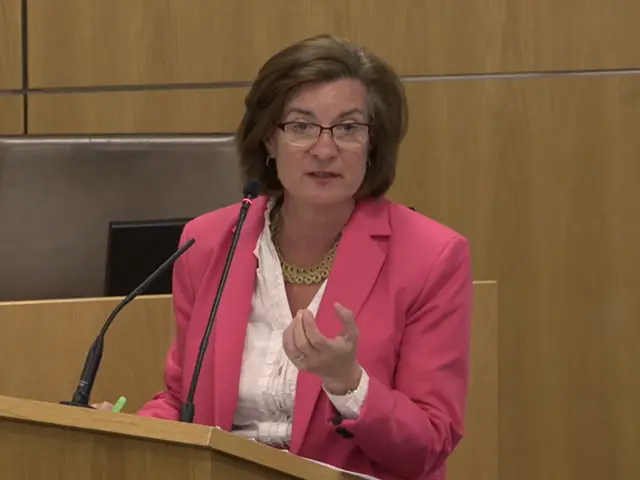
TENSIONS over parliamentary scrutiny have emerged after First Minister Eluned Morgan told Senedd committees to make fewer recommendations to the Welsh Government.
Baroness Morgan wrote to Elin Jones – the Senedd’s speaker or Llywydd – over the summer, expressing concerns about the volume of committee recommendations.
She said: “We need to be realistic about our ability to deliver committee recommendations and of the need to consider… the context of the limited resources which are available. If the current volume continues, the government is likely to need to reject more recommendations.”
In the letter, the First Minister stressed she was not seeking to fetter the critical work of Senedd scrutiny committees in holding the Welsh Government to account.
But Senedd Members have rebuked Baroness Morgan, arguing it is not for ministers to tell scrutiny committees how to do their work.

During a meeting of the public accounts committee, Labour’s Mike Hedges partly agreed with the First Minister. “I think committees produce far too many recommendations,” he said.
“But it’s not for the First Minister to say how many recommendations she wants.”
Mr Hedges was “hugely disappointed” with the number of recommendations for ministers that actually get accepted and implemented following committee inquiries.
He criticised ministers’ “mealy mouthed” tendency to accept many recommendations “in principle” rather than in full: “If you’re not going to do it, you’re actually rejecting it…. it’s just a reason to not have a row over it but ‘we’re not going to do anything about it’.”


Mr Hedges called for a meeting with the First Minister to discuss the Welsh Government’s concerns instead of simply saying: “We don’t like all those recommendations.”
Mark Isherwood, who chairs the committee, pointed to a 2018 promise by the Welsh Government’s then-permanent secretary to end the “accept in principle” practice.
Tom Giffard, a fellow Conservative, also called for the Welsh Government to be clearer in its responses to recommendations to aid committees in tracking implementation.


During the committee’s meeting on September 17, Alun Davies argued it’s perfectly fair and reasonable for the First Minister and the Welsh Government to take a view.
But he said: “If the government made fewer mistakes, we’d make fewer recommendations. So, I think there’s a point to be made there and I think we can push back on that.”
Adam Price, the former Plaid Cymru leader, agreed with the Labour backbencher about the value of forensic, more micro-level recommendations made by committees.
He raised concerns about the fundamental principle of the separation of powers, warning of lines being blurred between the roles of the Senedd and Welsh Government. The Senedd’s role is to scrutinise and create laws while the Welsh Government implements them.
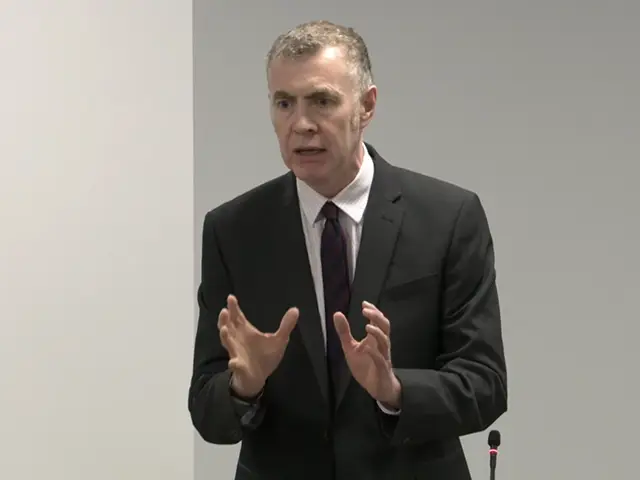
He told the meeting on September 17: “We’re there to scrutinise the government, not the government to scrutinise us. And I think that’s an important principle, ultimately. Committees need to make their own decisions about how they fulfil their remit and purpose.”
Mr Price said the Welsh Government should not see recommendations as criticism nor an additional burden but as a useful additional antenna to identify potential policy solutions.
But he stressed: “If there’s a change in the role of committees… then [the] government needs to honour its implied promise that if there are fewer and more focused recommendations, then more of them are going to be implemented.”
Senedd Members proposed arranging a meeting between committee chairs and the Welsh Government to discuss the issue in greater detail.



HISTORY has been made at Pembrokeshire County Council with the election of its first-ever woman leader, Tessa Hodgson, following a three-way battle at today’s May 15 AGM for the top job.
At Pembrokeshire County Council’s annual council meeting of May 15, an all-women battle to be the leader of Pembrokeshire County Council took place.
The leader of the council is elected every two years under the council’s constitution, and leader Cllr Jon Harvey had decided not to stand for re-election.
Pembroke St Mary North member Cllr Harvey became leader in May 2024 after narrowly beating fellow leadership hopeful Conservative group leader Di Clements by 30 votes to 27.
Cllr Harvey replaced Cllr David Simpson as leader.
Following his decision to step down, Cllr Harvey said: “It has been a fantastic two years, a real honour and privilege to lead the council, working with a talented and committed cabinet.
“After much thought and reflection, I feel now is the right time to make way for someone else to lead the council through the next 12 months to the local government elections in May 2027.”
Three nominations were received for the leadership battle: Conservative Group Leader Cllr Di Clements, unaffiliated member and current Cabinet Member for Adult Social Care Cllr Tessa Hodgson, and Leader of the Independent Group Cllr Anji Tinley.
Cllr Harvey had backed Cllr Hodgson for the top job.
The May 2026 leadership role will be held for one year, ahead of the 2027 council elections where the 2026 incumbent may, or may not, keep the role.
Two secret ballots were held, with 30 votes out of the 59 members present needed to secure a win.
During the first round, Cllr Hodgson gained 28 votes, Cllr Tinley 20, and Clements 11, Cllr Clements being eliminated for the second round.

That round saw Cllr Hodgson triumph by one vote: 30 to Cllr Tinley’s 29.
Accepting the role, Cllr Hodgson spoke of her “immense honour” to accept and being “part of history in the making as Pembrokeshire has its first ever female leader”.
Cllr Hodgson thanked her fellow leadership hopefuls for their “fair and honourable” challenge for the top job.
She also paid tribute to her colleagues and to, poignantly, her mother and late father, Cllr Viv Stoddart and former councillor Mike Stoddart for “their long record of public service,” and for their “always fair and unwavering support and guidance”.
Cllr Hodgeson has not yet announced her new Cabinet portfolios, the Cabinet remaining unchanged for now other than a vacancy following the news Cabinet Member for Education and Welsh Language Cllr Guy Woodham is to step down from his role.
The AGM also saw Cllr Delme Harries unanimously elected as council chair for the forthcoming year, replacing Cllr Maureen Bowen, and Cllr Nick Neumann elected as Deputy Presiding Member/Vice-Chair, beating Cllr Bethan Price by 34 votes to 24.
Cllr Simon Hancock will continue to serve as Presiding Member.

A CALL to discontinue a Pembrokeshire school has been backed by councillors despite 97 per cent of those responding to a recent consultation being against the change.
Last year, councillors backed a general consultation to discontinue Cilgerran Church in Wales Voluntary Controlled School, and to establish it as a 3-11 community school, the consultation closing earlier this year.
That consultation followed a review which “considered the extent of surplus school places in the area, set against a significant decline in the pupil population,” the council has previously said.
Hundreds opposed the proposed changes, with a petition on the council’s own website opposing the changes gaining 391 signatures.
During the consultation, 203 responses were received; 97 per cent (197 responses) against the proposal, with just 1.5 per cent (three) in favour.
Earlier this year, councillors heard from vice-chair of the school governors Gary Fieldhouse who said the loss of the Church in Wales status would be “a profound mistake,” the school’s association with the church “not symbolic but fundamental”.
Reverend John Cecil had told councillors the proposals were “fundamentally flawed,” with the school’s land legally in trust as a Church of Wales school, and change “essentially creating a new school with no premises to occupy”.
Following the ending of the consultation, a report was brought before the May 14 meeting of Pembrokeshire County Council.
The report for members presented by Cabinet Member for Education and Welsh Language Cllr Guy Woodham, who moved approval, recommended the Director of Education be authorised to publish a Statutory Notice to discontinue Cilgerran Church in Wales Voluntary Controlled school and establish the same as a 3-11 Community School.
On the land issue, the report said: “The Authority acknowledges that the school site includes land owned by the Diocese. Should the proposal proceed, the change of school category would be subject to appropriate legal agreements to ensure continued occupation of the premises.
“No change would be implemented without resolving land ownership and occupation rights in accordance with statutory and legal requirements.”
The report concluded: “The consultation exercise has provided a valuable opportunity for statutory consultees and other interested parties to give their perspective on the proposal to discontinue Cilgerran Church in Wales Voluntary Control School and establish the same as a 3-11 Community School.
“While arguments were made against the proposal, together with a small number of supportive comments, officers remain of the view that this is the most appropriate option in the context of quality and future sustainability of educational provision.”
At the May meeting, Cllr Jamie Adams felt the push for the change was “seemingly pushing water uphill,” with the school performing well; adding: “I’m a bit confused, we’re trying to impose a decision on a community that doesn’t want it.”
Recently elected councillor Scott Thorley echoed that, saying: “97 per cent want to keep it a VC, I think we should respect that.”
Director of Education Steven Richards-Downes said it was “about long term viability in the area,” members hearing from officers Cilgerran had a 28 surplus in pupil spaces.
Members by 34 to 16, with two abstentions, back the discontinuation recommendation.
The statutory notice will trigger a 28-day objection period, an objection report being brought to a future council meeting for determination.

COUNCIL TAX rates in Pembrokeshire have increased by nearly 100 per cent in less than a decade councillors heard.
For the 2026 to ’27 financial year, the county council part of council tax levels in the county rose by 4.6 per cent, equivalent to an extra £76 for the average Band D property, less than half last year’s increase.
The previous year saw Pembrokeshire’s council tax increased by 9.35 per cent, lower than that year’s Cabinet recommendation of 9.85 per cent.
The previous year to that saw a 12.5 per cent rise on top of previous increases of 12.5 per cent, 9.92 per cent, five per cent, 3.75 per cent, five per cent and 7.5 per cent.
The overall council tax bill is made up of the county council element, the largest part, the Dyfed-Powys Police precept, and individual town or community council elements.
In a submitted question heard at Pembrokeshire County Council’s May 14 meeting, Councillor Alan Dennison asked: “Since 2017, what percentage increase has occurred for a Band D property, and what benefits have the majority of council tax-payers experienced as a result of this increase in council tax?”
Responding, Cabinet Member for Corporate Finance Efficiencies Cllr Alistair Cameron said the level of council tax for a Band D average property had increased by 95.7 per cent in that time.
He said the benefits for the majority of taxpayers were the “ongoing provision and enhancement of essential services for some of the most vulnerable in our communities,” adding that funding in education had increased by 49 per cent and social care by 121 per cent.
Milford Haven North councillor Dennison, in a supplementary question, said feedback he received from constituents highlighted concerns at works needed on addressing “weeds reaching three feet in some areas of Milford Haven,” and an absence of dog waste bins, and “all the things associated” with the bill by council tax-payers.
“People that don’t have children don’t see the benefit of a 95 per cent increase,” he added.
Cllr Cameron responded by saying funding in the last budget had been allocated to such areas as street cleaning, adding of the areas previously highlighted by him: “The reality is a lot of the budget has to go in areas education and social care.”
Her said Pembrokeshire, with an ageing population, would see greater pressures as people got older, and it was “quite right” the council supported “the most vulnerable people”.

Alistair Cameron, in setting this year’s budget said: “The most significant cost pressure for the 2026-27 budget continues to be within social care, with a projected total increase in pressure of £12m for 2026-27 representing 42 per cent of the total council service pressures for 2026-27; and £30.5m across the remainder of the medium-term financial plan.”



Community3 hours ago
Surfers take sewage protest to Broad Haven beach
CAMPAIGNERS took to the sea at Broad Haven today in a colourful protest demanding urgent action over sewage pollution in...


Health15 hours ago
New NHS regional body raises questions over future hospital services in Pembrokeshire
Health bosses promise better joined-up care — but patients will want assurances over Withybush and travel distances PEMBROKESHIRE patients are...

Local Government1 day ago
Pembrokeshire County Council welcomes new chairman
CLLR DELME HARRIES has been elected chairman of Pembrokeshire County Council for the coming municipal year. Cllr Harries, who was...


News1 day ago
From Milford Mercury to County Hall for Pembrokeshire’s first female leader
Late councillor Mike Stoddart helped hold power to account for decades — now his daughter Tessa Hodgson leads the council...


Business2 days ago
Port reports record turnover, but debt, emissions and senior pay also rise
Annual report shows strong growth and major investment, but underlying figures reveal a more complex picture THE PORT OF MILFORD...


Community2 days ago
DARC radar: Campaigners ask Welsh Government to call in planning application
PARC AGAINST DARC has submitted an official request asking the new Welsh Government to call in the planning application for...


News4 days ago
State Opening overshadowed by Starmer leadership crisis
KING CHARLES has arrived at Parliament for the State Opening as Sir Keir Starmer faces the most serious crisis of...


News4 days ago
Rhun ap Iorwerth becomes Wales’ new First Minister
PLAID CYMRU TAKES POWER AFTER HISTORIC SENEDD VOTE PLAID CYMRU leader Rhun ap Iorwerth has become Wales’ new First Minister...

News4 days ago
Hotel was hit during a Luftwaffe bombing raid
THE COMMEMORATION, held on Tuesday (May 12), marked the anniversary of the wartime attack, with members of the community gathering...


News5 days ago
Starmer fights for survival as Labour civil war erupts
Cabinet split, ministers resign and MPs revolt as pressure mounts on Prime Minister after disastrous election losses KEIR STARMER is...
-

 News1 day ago
Palestine pledge backed by 36 new Senedd Members
-

 Crime3 days ago
Teenager banned from roads after being caught six times over drug-drive limit
-

 Crime4 days ago
Man threatens to torch Silverdale Lodge through ‘demon drink’, court hears
-

 Crime3 days ago
Man sentenced for stalking women and threatening to torch home
-

 Crime3 days ago
Violent man jailed after ‘Banksy’ claims and campaign of domestic abuse
-

 Community6 days ago
Concern grows after child hospitalised following Tenby sea swim
-

 Local Government5 days ago
Council leadership hopeful responds after anti-Tory rally photos surface
-

 Crime4 days ago
Man denies exposure in Pembrokeshire town