


Health
‘It’s bloody inhumane’: Damning account of corridor care at the Grange

A CANCER patient was forced to spend a “bloody inhumane” night in a chair at the Grange hospital, only getting a bed after collapsing on the floor, the Senedd has heard.
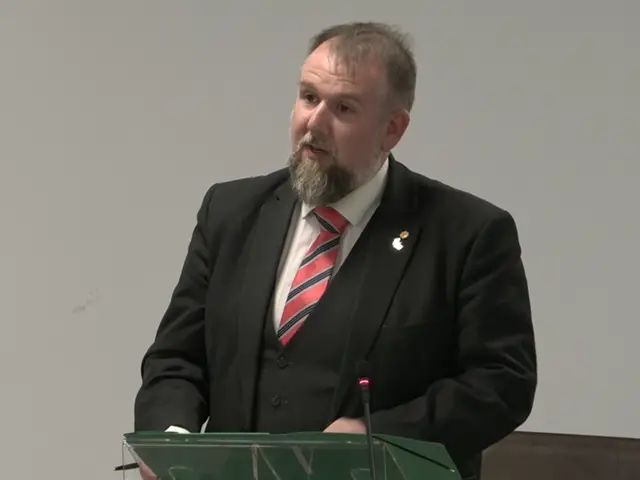
Plaid Cymru’s Peredur Owen Griffiths raised the pensioner’s frank account of so-called corridor care during health questions in the Senedd on October 1.
Warning corridor care has been normalised, Mr Owen Griffiths said his constituent has been back and forth to the Grange hospital in Cwmbran due to medical complications.
Quoting the pensioner’s damning account, Mr Owen Griffiths said: “‘I’m back in the Grange, feeling crap after one night on a chair. The staff are fantastic but the system definitely isn’t.
“‘The only reason I had a bed at last was because I staggered to the loo and collapsed on the floor. I had to get three nurses to pick me up and plonk me in a chair.

“‘I think they realised that I should get a bed. Some people are spending two nights in a chair. It’s bloody inhumane. Thank you, Welsh Government.’”
The South Wales East representative highlighted a petition to end corridor care for the sake of patients and staff who never signed up to provide care in such circumstances.
Health secretary Jeremy Miles replied: “I am as concerned… and it’s upsetting to hear that. I’m very sorry for the experience your constituent has had, which clearly is not acceptable.”

Cautioning that corridor care is a complex question, he said: “I wouldn’t accept the idea of normalisation. I certainly don’t think it is normal and it shouldn’t be normal but there is far too much of it happening in hospitals right across the UK.”

Mr Miles described corridor care as a symptom of a hospital’s inability to manage patient flow but he pointed to signs of improvement with handover delays at the Grange.
Natasha Asghar, the Tory Senedd Member for South Wales East, warned the Grange – which cost about £350m and opened in 2020 – has been plagued by problems.
With the hospital struggling to cope with demands, she raised her constituents’ calls to reopen the A&E department at the Royal Gwent Hospital in Newport.

Ms Asghar surveyed her constituents, with an “overwhelming” majority of respondents in favour of reopening the A&E unit at the Royal Gwent.

Mr Miles said by making the Grange the main hospital for emergencies other local hospitals can focus on planned operations and appointments, helping to clear waiting lists.
He told the Senedd: “The health board is implementing a model that people across the world are trying to implement, which is to separate emergency from elective care.
“We know from evidence everywhere that’s the best way of improving services overall.”
Laura Anne Jones, who defected from the Conservatives to Reform UK over the summer, called for a review of the “massive reorganisation” that has seen services centralised.

She asked whether the Welsh Government regretted “rushing” into the opening of the “not-fit-for-purpose” Grange, claiming it caused unnecessary suffering for patients.
Ms Jones described the current A&E as a small room with “appalling” waiting lists as she called for an update on plans to extend and reconfigure the hospital.
Mr Miles responded: “What I do regret is that if the member’s party was in government, we wouldn’t have a discussion about free access to health care of any sort.
“We’d all be paying privately for insurance premiums because her party’s been absolutely clear: they wouldn’t have an NHS funded from general taxation.”


Health bosses promise better joined-up care — but patients will want assurances over Withybush and travel distances
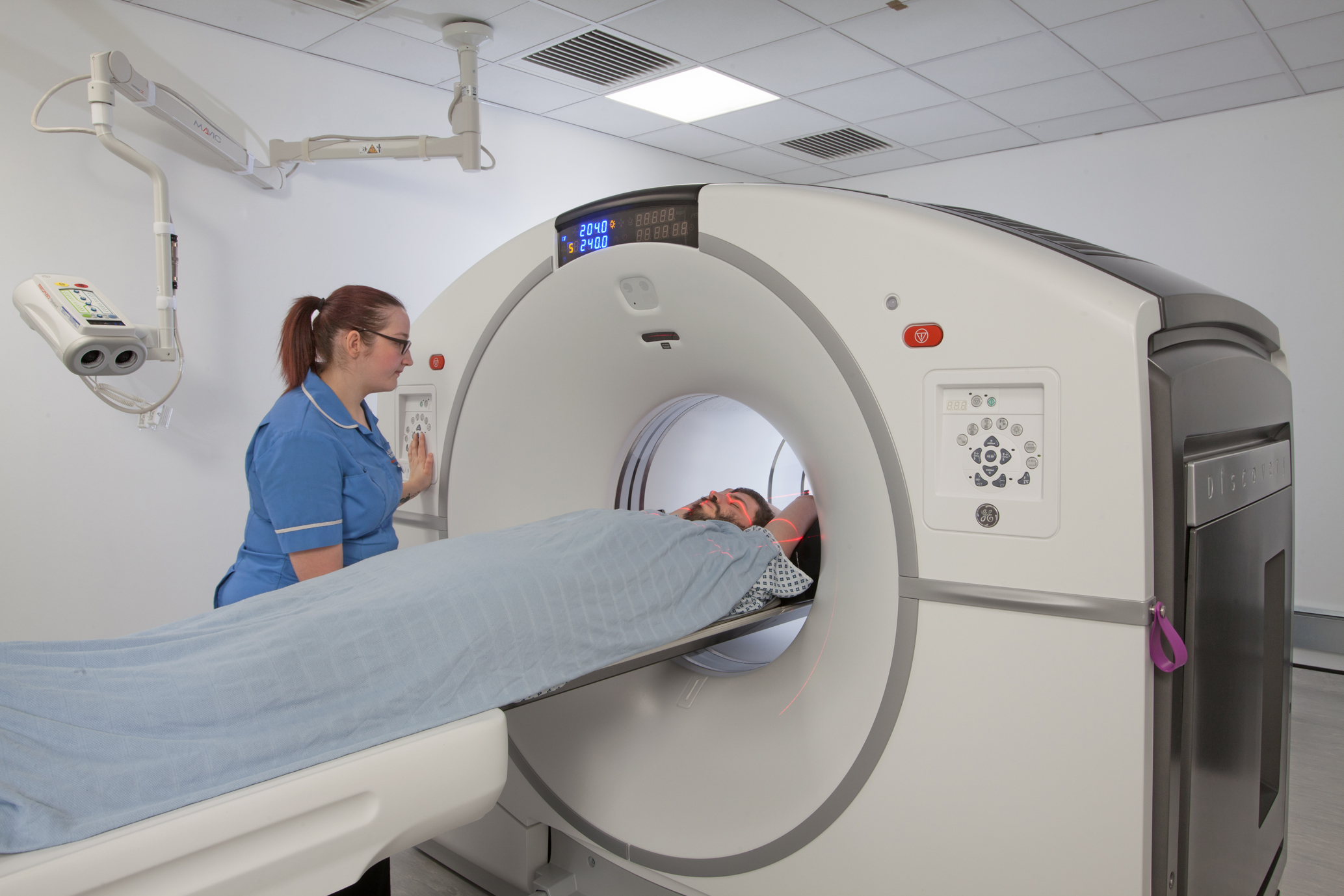
PEMBROKESHIRE patients are likely to be asking what a major NHS shake-up means for the future of hospital services closer to home after a new regional health body formally took over planning across south west Wales.
Health chiefs this week confirmed that regional working has formally transferred from ARCH (A Regional Collaboration for Health) to the South West Wales Regional Joint Committee (RJC), bringing together Hywel Dda and Swansea Bay university health boards under a new leadership structure.
The move is being presented by NHS leaders as a way to improve coordination, reduce waiting times and strengthen specialist healthcare across the region.
Key programmes expected to continue under the new body include cancer care, stroke services, vascular treatment, orthopaedics, pathology and eye care.
But for many in Pembrokeshire, the announcement may trigger familiar concerns about whether “regional working” could eventually mean more services being delivered further east, requiring patients to travel longer distances to Carmarthen or Swansea.
Withybush Hospital remains fiercely valued by local communities, and previous changes to hospital services have often sparked strong public reaction.
For patients in more rural parts of Pembrokeshire — including St Davids, Fishguard, Newport, Crymych and Tenby — access to healthcare can already involve journeys of 40 to 60 miles or more for appointments and treatment.
While health officials insist the new structure is about improving care and making better use of expertise across the region, questions are likely to be asked locally over how Pembrokeshire’s voice will be represented in decisions affecting frontline services.
Among the issues patients may want clarified are whether services currently provided at Withybush could be affected, how travel difficulties for rural communities will be considered, and whether the new regional approach will improve care locally or lead to greater centralisation.
The Regional Joint Committee replaces ARCH, which since 2015 brought together Swansea Bay University Health Board, Hywel Dda University Health Board and Swansea University to support healthcare innovation and service planning.
Health leaders say the new committee will continue to support research, technology and partnership working, while involving patients and communities in shaping services.
But in here Pembrokeshire, many will this plan weaken Withybush, not strengthen it.


MENTAL HEALTH support has become a key issue for businesses in Wales as employers face growing pressure to help staff manage financial strain, stress and wellbeing at work.
The issue is being highlighted during Mental Health Awareness Week, with new insight from Reed showing that support for employee wellbeing is now an important part of attracting and retaining staff.
Workers in Wales said they need an annual income of £42,000 to live comfortably, compared with an average regional salary of £36,000. That leaves a “comfort gap” of £6,000.
Reed’s latest salary guides also show that 71% of workers say pay has become more important since the cost-of-living crisis, with many employees feeling the pressure of rising everyday costs.
The strain is not only financial. Separate research shows almost one in four workers in Wales, 24%, say they have previously been formally diagnosed with a mental health condition — the highest reported proportion of any UK region.
Pay alone ‘not enough’
Becky Hole, Regional Director at Reed, said employers now needed to look beyond salary alone.
She said: “In Wales, financial pressure and mental health challenges are closely linked. Our data shows that many employees are placing greater importance on stability and support, particularly where salary growth is constrained.
“This means benefits that support work-life balance and mental wellbeing are becoming a much more important part of how valued people feel at work.
“Organisations that prioritise employee wellbeing also benefit in tangible ways. By providing stronger support for mental health, employers can lower staff turnover and reduce the long-term costs linked to ongoing recruitment and the loss of skilled, experienced employees.”
What workers want
WHEN asked what would help them manage stress, 35% of workers in Wales said they wanted more flexible working, 34% wanted better mental health training for managers, and 30% wanted clearer communication about support already available.
However, Reed said there remains a gap between what workers want and what they receive.
The most common benefits currently reported by workers in Wales are onsite parking, at 28%, flexi time, at 26%, and hybrid working, at 23%. Nearly one in five workers, 18%, said they receive no benefits at all.
Ms Hole added: “What this shows is a disconnect between what employees say would most help them manage stress and how clearly mental health support is currently embedded and communicated.
“However, Wales stands out when it comes to flexi time, with a higher proportion of employers offering this benefit compared to other regions — a positive step given its proven role in supporting employee wellbeing and work-life balance.
“Flexible working, open conversations about mental health and managers who are properly trained all come through strongly as priorities.
“Employers have a responsibility to look after their people, and those who want to help their workforce truly destress need to ensure their benefits are visible, accessible and actively support everyday mental resilience.”
Reed said businesses that take wellbeing seriously are more likely to retain skills, stability and trust over the long term.

NEW POLLING shows more than two-thirds of adults in Wales are using potentially harmful coping mechanisms when feeling stressed, anxious or low.
The Mental Health Foundation said the findings, released for Mental Health Awareness Week, show a need for the new Welsh Government to prioritise prevention and action on poor mental health.
The survey found that 69% of adults in Wales had taken harmful actions to cope with their mental health in the past month.
More than a third, 36%, said they had spent time isolating themselves from others, while 34% reported spending more time scrolling social media or going online as a way to deal with anxiety, stress or low mood.
Other commonly reported behaviours included comfort eating or overeating, at 27%, and oversleeping or not getting out of bed, at 31%.
The Mental Health Foundation said these behaviours were concerning because evidence suggests they can make mental health worse over time.
However, the polling also found that many people in Wales are taking positive steps to support their wellbeing.
More than four in five adults, 84%, had taken at least one helpful action to support their mental health. The most common were accessing nature, at 41%, doing something enjoyable such as a hobby, at 37%, and taking part in physical activity or prioritising sleep and rest, at 35%.
The poll of 1,015 people in Wales was carried out by Opinium on behalf of the Mental Health Foundation. It was released to mark Mental Health Awareness Week, which runs from May 11 to 17.
Catherine Razzell, Policy and Public Affairs Manager at the Mental Health Foundation, said: “This polling tells us that, here in Wales, there is a concerning degree of harmful actions taken by people as a way of dealing with their feelings of poor mental health, such as doomscrolling or overeating.
“We are hopeful to see positive actions being taken by individuals to help maintain and improve good mental health. Tried and trusted activities such as connecting with nature, which many of us are fortunate to have access to in Wales, and taking part in physical exercise and rest, in equal measure, are all known to support our mental health.”
Calls for action
The polling found that nearly two-thirds of people in Wales, 64%, are using at least one harmful coping mechanism alongside positive actions.

Only one in five, 20%, reported taking only helpful actions to support their mental health.
The Mental Health Foundation said the results come at a significant moment following the Senedd election, with a new Welsh Government now in place.
Ms Razzell added: “Whilst it is good news people are finding ways to prioritise and protect their mental health and support those around them, more action is needed from our governments to create the conditions to support good mental health.
“We are seeing a once in a generation change politically in Wales. We are one year into the new ten-year mental health strategy for Wales and are keen to see how the new government will implement and resource this.
“In addition to a resourced focus on prevention, which we know has long-term economic benefits, we know that inequalities exist here that are huge barriers to good mental health, keeping people locked in poverty for generations.
“We want to see these issues tackled head-on by the new government for Wales. Now is the time for action and not talk.”
Mental Health Awareness Week is run by the Mental Health Foundation. This year’s theme is “Action”.


Health12 hours ago
New NHS regional body raises questions over future hospital services in Pembrokeshire
Health bosses promise better joined-up care — but patients will want assurances over Withybush and travel distances PEMBROKESHIRE patients are...


Local Government1 day ago
Pembrokeshire County Council welcomes new chairman
CLLR DELME HARRIES has been elected chairman of Pembrokeshire County Council for the coming municipal year. Cllr Harries, who was...


News1 day ago
From Milford Mercury to County Hall for Pembrokeshire’s first female leader
Late councillor Mike Stoddart helped hold power to account for decades — now his daughter Tessa Hodgson leads the council...


Business1 day ago
Port reports record turnover, but debt, emissions and senior pay also rise
Annual report shows strong growth and major investment, but underlying figures reveal a more complex picture THE PORT OF MILFORD...


Community1 day ago
DARC radar: Campaigners ask Welsh Government to call in planning application
PARC AGAINST DARC has submitted an official request asking the new Welsh Government to call in the planning application for...


News3 days ago
State Opening overshadowed by Starmer leadership crisis
KING CHARLES has arrived at Parliament for the State Opening as Sir Keir Starmer faces the most serious crisis of...


News4 days ago
Rhun ap Iorwerth becomes Wales’ new First Minister
PLAID CYMRU TAKES POWER AFTER HISTORIC SENEDD VOTE PLAID CYMRU leader Rhun ap Iorwerth has become Wales’ new First Minister...


News4 days ago
Hotel was hit during a Luftwaffe bombing raid
THE COMMEMORATION, held on Tuesday (May 12), marked the anniversary of the wartime attack, with members of the community gathering...


News4 days ago
Starmer fights for survival as Labour civil war erupts
Cabinet split, ministers resign and MPs revolt as pressure mounts on Prime Minister after disastrous election losses KEIR STARMER is...


News5 days ago
Starmer accused of ignoring Wales in major ‘reset’ speech
Prime Minister pledges EU reset, British Steel nationalisation and youth jobs guarantee — but critics say Wales was left out...
-

 Crime3 days ago
Teenager banned from roads after being caught six times over drug-drive limit
-

 News1 day ago
Palestine pledge backed by 36 new Senedd Members
-

 Crime3 days ago
Man threatens to torch Silverdale Lodge through ‘demon drink’, court hears
-

 Crime3 days ago
Man sentenced for stalking women and threatening to torch home
-

 Crime3 days ago
Violent man jailed after ‘Banksy’ claims and campaign of domestic abuse
-

 Community6 days ago
Concern grows after child hospitalised following Tenby sea swim
-

 Local Government5 days ago
Council leadership hopeful responds after anti-Tory rally photos surface
-

 Crime3 days ago
Man denies exposure in Pembrokeshire town