


News
Farage tops UK popularity poll as Plaid leads in Wales


NIGEL FARAGE has been named the most popular politician in Britain according to new polling, but voters in Wales are still backing Plaid Cymru when it comes to choosing a party for Westminster.
The latest figures released by YouGov show Farage topping the UK’s favourability rankings, placing him ahead of other major party leaders in terms of personal approval.
However, separate Westminster voting intention data for Wales suggests a different political picture.
Plaid Cymru leads the field on 33 per cent, giving the party an eleven-point advantage over Reform UK, which stands at 22 per cent.
Labour follows on 19 per cent, with the Conservatives and the Green Party both on 10 per cent. The Liberal Democrats trail on 6 per cent.

The contrast highlights the gap between individual popularity and actual voting intention. While Farage’s personal profile remains strong across the UK, Welsh voters appear to favour a party focused specifically on Welsh interests and devolved powers.
With a general election on the horizon, the numbers suggest Wales may once again chart its own course at the ballot box, despite growing support for Reform UK nationally.

Lifeboat station pays tribute to ‘a true man of the community’
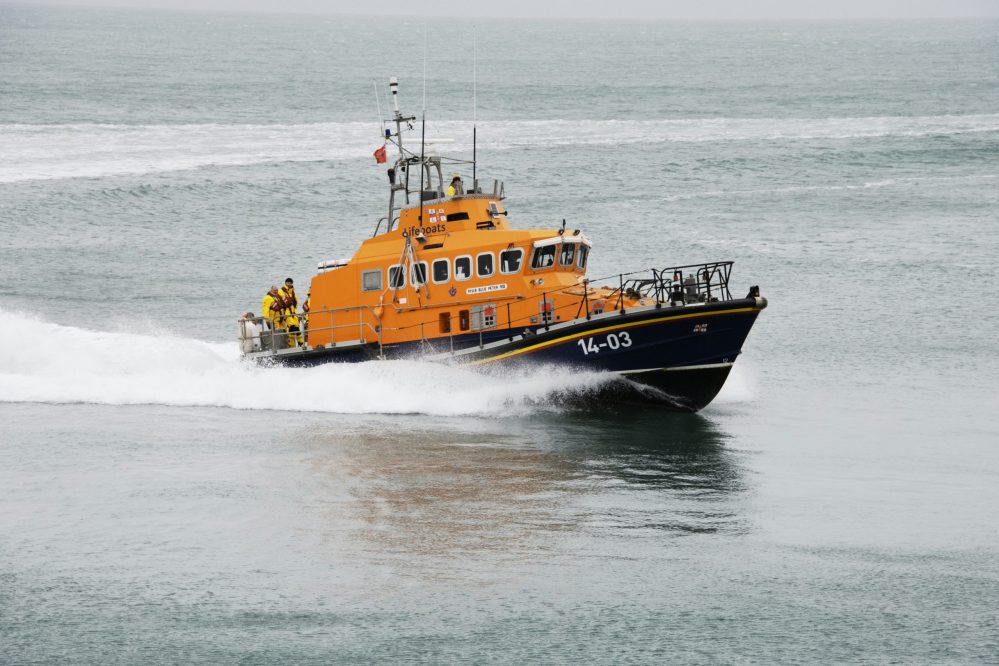
FISHGUARD RNLI has paid tribute to former volunteer Roy Williams following his death, describing him as a dedicated lifeboatman and respected figure within the local community.
The station announced the sad news on Friday (May 15), saying Roy had given many years of service to the RNLI in Fishguard, spanning several decades.
Roy served as a crew member and Second Mechanic at Fishguard Lifeboat Station from the 1950s through to the 1970s, helping to protect lives at sea during a period of significant change for the service.
In 1979, he took on the role of Honorary Secretary — a position now known as Lifeboat Operations Manager — and continued in the role beyond the naming ceremony of Fishguard’s current all-weather lifeboat, Blue Peter VII.
A 1972 County Echo feature, preserved by Fishguard and Goodwick local history group Hanes Abergwaun, described Cllr Roy Williams, of Commercial House, Goodwick, as the oldest serving member of the crew at that time, with nearly 20 years’ service.
The article said he was a native of Pencaer, an agricultural engineer by profession, Second Mechanic and radio operator on the lifeboat, and also active with the Wales Tourist Board, Fishguard and Goodwick Swimming Club, and Harmony Chapel, Pencaer.
Paying tribute, Fishguard RNLI said Roy had made an important contribution not only to the lifeboat station but to the wider community.
A spokesperson said: “Over the years as a councillor, lifeboat crew and other local clubs he truly was a man of the community.
“Our thoughts are with his family and friends during this time.”

As a mark of respect, the flag at Fishguard Lifeboat Station is being flown at half mast.
Roy is remembered as one of the dedicated volunteers whose commitment helped shape the RNLI presence in north Pembrokeshire over many years.

Welsh Water says wider environmental factors, including private systems and run-off, can affect bathing water quality
HENRY TUFNELL MP has demanded urgent answers from Welsh Water following concerns over water quality at Tenby and Lydstep Haven.
The Mid and South Pembrokeshire MP has written to Roch Cheroux, chief executive of Dŵr Cymru Welsh Water, after reports that a young boy had been hospitalised with sickness and diarrhoea after swimming in the sea at Tenby.
He also referred to a Natural Resources Wales no-swim alert at Lydstep Haven on Wednesday (May 6), with warning signs still reportedly in place on Monday (May 11).

Mr Tufnell described the situation as “extremely concerning” and said pollution incidents could affect public health, local businesses and Pembrokeshire’s tourism economy.
He said: “A situation like this has serious implications for our local economy, which relies heavily on tourism, particularly during the summer months when visitors rightly – and wisely – come to enjoy Pembrokeshire’s beaches.”
He added that such incidents could prevent residents from safely enjoying local bathing waters and deter visitors from coming to the county.
Welsh Water response
Welsh Water said water quality was affected by a range of environmental sources, and said there had been no storm overflow spills in the North Tenby area in the weeks leading up to the sample dates which led to its bathing water classification moving from Excellent to Good.
A Welsh Water spokesperson said: “At North Tenby, the classification moved from Excellent to Good following the results of samples taken during July and August.
“These samples are collected by NRW and test for two different types of bacteria. These bacteria can originate from a range of environmental sources, and it is important to note that there were no storm overflow spills in this area in the weeks leading up to the dates those samples were taken.
“Improving water quality is a shared challenge, and progress will only come through coordinated action across sectors. Factors such as rural land use, urban runoff, industry, soil erosion, illegal misconnections and private septic systems all play a part.
“We are committed to playing our role. We are currently investing more than £2.3 million a day to improve our services, including £2.5 billion between 2025 and 2030 to deliver environmental improvements across Wales.”
The Herald understands Welsh Water has previously indicated that the Lydstep issue relates to a private sewer and is not connected to Welsh Water assets or operations.

Wider concern
The intervention comes amid growing concern over the condition of Pembrokeshire’s rivers and bathing waters.
As The Herald has reported, volunteers involved in The Cleddau Project were recently given a stark warning over the decline of the Cleddau rivers at a meeting in HaverHub.
Professor Paul Withers, of Lancaster University, presented two years of citizen science monitoring data gathered across the Cleddau catchment, with those present told that major changes would be needed to restore the rivers to good ecological health.
The issue has become increasingly sensitive in Pembrokeshire, where clean seas and rivers are central not only to public health and wildlife, but also to tourism, hospitality and the wider coastal economy.
Mr Tufnell’s letter now places further pressure on Welsh Water and other agencies to explain what is being done to protect residents, visitors and businesses ahead of the summer season.

VOLUNTEERS and supporters gathered at HaverHub on Thursday (May 14) for a major update on the health of the Afonydd Cleddau catchment.
The Cleddau Project presented two years of citizen science water quality data, collected by volunteers from sites across the rivers and their tributaries.
Professor Paul Withers, of Lancaster University, who has authored key reports on the catchment, including the CCAP 2 report, gave a detailed analysis of the findings.
The message from the meeting was stark: Pembrokeshire’s iconic rivers have suffered a serious decline in water quality and wildlife, and major change will be needed to restore them to good ecological health.
Volunteers have spent the past two years monitoring water quality across the Cleddau system, gathering information on nutrients including phosphates and nitrates, as well as other indicators of river health.
The project says the data provides an important grassroots picture of the pressures facing the Western and Eastern Cleddau.
Local residents, environmental campaigners and community members filled the room, reflecting growing concern about the future of rivers which are central to Pembrokeshire’s biodiversity, tourism and heritage.
The meeting heard that pressures including agricultural diffuse pollution, wastewater discharges and nutrient enrichment continue to affect the catchment, with concerns over impacts on fish populations, habitats and species such as salmon, trout and otters.
The Cleddau Project works with partners including the West Wales Rivers Trust and contributes to wider efforts linked to the Afonydd Cleddau Nutrient Management Board.
A full report setting out the findings is expected to be released in the coming days.
One volunteer who attended said the evening brought both pride in the work carried out and renewed determination to push for action.
They said: “This data shows we can’t afford to wait.”
The Cleddau Project is continuing to welcome new volunteers and supporters as it moves into the next stage of advocacy and practical restoration work.
The group has previously organised community events and exhibitions, including My River at HaverHub, aimed at raising awareness of the importance of the Cleddau rivers to Pembrokeshire life.
The Herald will publish further details when the full report is released.


Local Government14 hours ago
Pembrokeshire County Council welcomes new chairman
CLLR DELME HARRIES has been elected chairman of Pembrokeshire County Council for the coming municipal year. Cllr Harries, who was...


News15 hours ago
From Milford Mercury to County Hall for Pembrokeshire’s first female leader
Late councillor Mike Stoddart helped hold power to account for decades — now his daughter Tessa Hodgson leads the council...

Business18 hours ago
Port reports record turnover, but debt, emissions and senior pay also rise
Annual report shows strong growth and major investment, but underlying figures reveal a more complex picture THE PORT OF MILFORD...


Community20 hours ago
DARC radar: Campaigners ask Welsh Government to call in planning application
PARC AGAINST DARC has submitted an official request asking the new Welsh Government to call in the planning application for...


News3 days ago
State Opening overshadowed by Starmer leadership crisis
KING CHARLES has arrived at Parliament for the State Opening as Sir Keir Starmer faces the most serious crisis of...


News4 days ago
Rhun ap Iorwerth becomes Wales’ new First Minister
PLAID CYMRU TAKES POWER AFTER HISTORIC SENEDD VOTE PLAID CYMRU leader Rhun ap Iorwerth has become Wales’ new First Minister...

News4 days ago
Hotel was hit during a Luftwaffe bombing raid
THE COMMEMORATION, held on Tuesday (May 12), marked the anniversary of the wartime attack, with members of the community gathering...


News4 days ago
Starmer fights for survival as Labour civil war erupts
Cabinet split, ministers resign and MPs revolt as pressure mounts on Prime Minister after disastrous election losses KEIR STARMER is...


News5 days ago
Starmer accused of ignoring Wales in major ‘reset’ speech
Prime Minister pledges EU reset, British Steel nationalisation and youth jobs guarantee — but critics say Wales was left out...


Community5 days ago
Concern grows after child hospitalised following Tenby sea swim
PARENT SAYS BOY BECAME SERIOUSLY ILL AFTER SWIMMING DURING FAMILY VISIT CONCERN is growing in Pembrokeshire after a parent claimed...
-
 Crime3 days ago
Teenager banned from roads after being caught six times over drug-drive limit
-

 Crime3 days ago
Man threatens to torch Silverdale Lodge through ‘demon drink’, court hears
-

 Crime3 days ago
Man sentenced for stalking women and threatening to torch home
-

 Crime7 days ago
Police standoff ends after four-hour incident in Pembroke Dock
-

 Crime3 days ago
Violent man jailed after ‘Banksy’ claims and campaign of domestic abuse
-

 News10 hours ago
Palestine pledge backed by 36 new Senedd Members
-
Community5 days ago
Concern grows after child hospitalised following Tenby sea swim
-

 Local Government5 days ago
Council leadership hopeful responds after anti-Tory rally photos surface