


News
UKIP win ‘an extraordinary result’

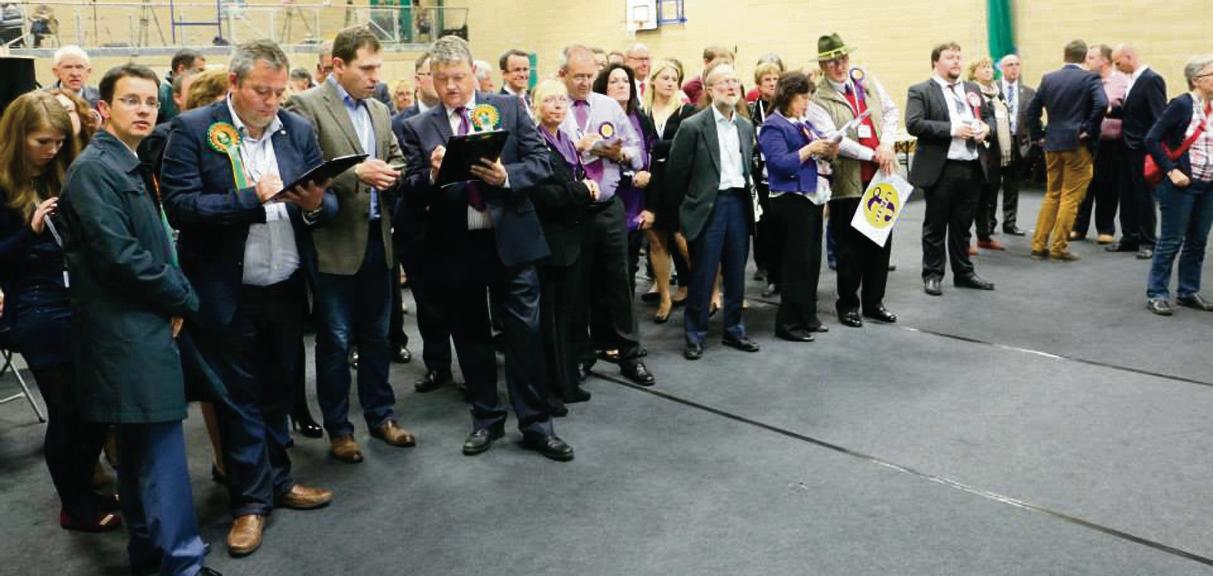
 PEMBROKESHIRE VOTERS sent a clear message to the main parties this week that they are not satisfied with business as usual, as UKIP came within 285 votes of the Conservatives, who again topped the poll in our County.
Overall, Wales voted for Labour who gained 28.2% of the vote in the region, however, UKIP was closely behind in second place with 27.6% of the vote, only just over half a percentage point from Labour. The Conservatives were third with 17.4% of the vote and Plaid Cymru came fourth with 15.3%. As a result, Wales have elected Nathan Gill (UKIP), Dr Kay Swinburne (Conservative), Jill Evans (Plaid Cymru) and Derek Vaughan (Labour) to represent us as MEPs on the European Parliament. The picture, nationally in the UK, was even more alarming for the main parties as UKIP actually won the popular vote with 27.5% of all votes polled. Labour came second with 25.4% and the Conservatives were a short distance off in third with 23.9% of the votes. The Liberal Democrats had a catastrophic result, coming fifth behind the Green Party with a mere 6.9% of the vote. The Herald spoke with the four elected Welsh MEP’s who gave us their reaction to this week’s results. A very upbeat Nathan Gill of UKIP said: “I’m over the moon with the result. We really wanted to come first, we were 5,000 votes short of that, but we have more than doubled our vote from the last election. The people of Wales really have spoken. We want out of this European Union and we will raise the profile of what is going on in Brussels as people need to be aware of what’s happening with their money. “We came either first or second in every constituency in Wales. That is amazing. We now have to win seats in Westminster.” He went on to confirm for The Herald that he would be standing to become an MP in the next General Election. Conservative MEP Dr Kay Swinburne, whose party topped the European poll in Wales five years ago and finished third this time, said: “We are very pleased, overall, with the vote we have maintained. We are just 3% down on 2009. It’s looking good for 2015 for the Conservative vote and our Welsh MPs.” Jill Evans of Plaid Cymru told the Herald: “Based on the issues, and the real facts, people do understand how important it is for Wales to be represented in Europe. I wouldn’t change the way I work, but I do think we have to create much more of a real debate about our future in Europe.” Labour MEP, Derek Vaughan, responding to the question as to whether he was disappointed to have only won one seat, said: “Welsh Labour is delighted to have topped the poll. We would have liked two seats but we knew this would be very difficult. This is the best campaign ever for European elections (by Labour). We will be making sure every constituency is acting and campaigning to get the message out. “We will build on this result and it is vital for Wales and the UK that we have a Labour Government next year. There was a protest vote against the main parties. We will campaign to explain the importance of EU membership. Hopefully those that have supported UKIP will come back to Labour.” The results show a significant shift towards UKIP from all the main parties, leaving pollsters in uncertain as to what might happen in next year’s General Election. There is mounting pressure on the Liberal Democrat’s leader and deputy Prime Minister, Nick Clegg, to stand down as leader after his party’s disastrous results. Speaking about the result he acknowledged that they were a huge ‘setback’ but has vowed to go on as leader stating he would, ‘finish the job’. The Liberal Democrats lost all but one of their seats in the election and were pushed into fifth place in the UK by The Green Party. UKIP’s controversial leader Nigel Farage said that his party intends to build on what he described as ‘the most extraordinary result’ in British politics in the past century, and he went on to say that his party now appealed to all social classes and had made significant inroads in Wales and Scotland as well as winning the most votes in England. Mr Farage said: “It is over 100 years since a national election has been won by a party other than the Conservatives and Labour. Our game is to get this right, to find the right candidates, and focus our resources on getting a good number of seats in Westminster next year. “If UKIP do hold the balance of power, then indeed there will be a (EU) referendum.” He also claimed that Labour would come under enormous pressure to offer the voters a referendum on Europe, and he said he did not believe Nick Clegg would still be Liberal Democrat leader at the General Election. He finished by saying: “The three party leaders are like goldfish that have been tipped out of their bowl onto the floor and are gasping for air.” Labour leader, Ed Milliband, claimed that Labour’s second place in these elections showed the party was making progress, though he acknowledged that they had further to go. He went on to say that there was deep discontent in the UK and that the Labour Party must show it could answer the call for change. However, Mr Milliband was unwavering on his party’s position on not offering a referendum on EU membership. On a relatively disappointing night for the Conservatives, who were pushed into third place, leader and Prime Minister, David Cameron said: “I think the results give a clear message that people are deeply disillusioned with the European Union and in the way it is working for Britain, and they want change. The challenge is now for my party to demonstrate that we have the plan to deliver that change; to renegotiate Britain’s place in Europe, to get a better deal to change Europe and then put the choice to the British people in an ‘in out referendum’ before the end of 2017. “That is what we will do and the real test for that plan will come at the next General Election. People use elections like this to send messages to Government. I see this as a demand for us to deliver. They want to see us complete our long term economic plan. Tackling immigration, reforming Welfare and getting Britain’s place right in Europe are all part of our economic plan. I believe we can win the next election outright. We are going to have to convince more people.” To put matters in perspective, however, the low turnout in the Euro-poll means that UKIP’s victory in the popular vote amounts to fewer than 10% of the overall electorate. With the two largest parties bound to concentrate their resources on mobilising their core vote and targeting undecided voters on issues such as the economy, welfare and health for next year’s general election, UKIP’s ability to maintain momentum when having to campaign on more than one issue has to be called into question.



Defence says there was no motive or intention to kill as judge reviews competing accounts of classroom knife incident
LIVE FROM SWANSEA CROWN COURT
A JURY has heard the final arguments in the trial of a teenage pupil accused of attempting to murder a teacher during a knife incident at Milford Haven School.
The 16-year-old defendant, who was 15 at the time and cannot be identified for legal reasons, denies attempting to murder Vicki Williams on February 5.
He also denies causing grievous bodily harm with intent and unlawful wounding. He has admitted possessing a knife on school premises.
During closing speeches at Swansea Crown Court, the prosecution alleged the teenager deliberately selected a large kitchen knife, concealed it in his school bag and waited until Mrs Williams was alone before attacking her.
The defence said the teacher’s injuries were caused accidentally during a struggle after she saw the knife and attempted to confiscate it.

Mrs Williams sustained a one-centimetre wound to her scalp and cuts to her hands, which forensic pathologist Dr David Rouse said were characteristic of defensive injuries.
Prosecution alleges planned attack
Christopher Rees KC, prosecuting, told jurors the central question was whether they accepted the account given by Mrs Williams or that of the defendant.
He said emotion and sympathy should play no part in their decision and that the case had to be determined on the evidence.
“This was no accident,” Mr Rees said.

The prosecutor alleged the defendant brought the largest knife he could find into school and kept it hidden throughout the day.
The teenager has told the court he wanted to show the knife to his friends, but Mr Rees questioned why he had not shown it to anyone.
“The only person who saw the knife that day was his victim, Vicki Williams,” he said.

Mr Rees argued that the weapon had been concealed because the defendant did not want anyone to intervene or alert a teacher.
The prosecution alleged the teenager waited until the end of the school day, followed Mrs Williams into her classroom and closed the door so the incident could not be seen or heard.
Mr Rees said the defendant then moved behind the teacher and deliberately struck her in the head.
He described the teenager’s account as “a lie from start to finish” and said Mrs Williams had been his intended target.
Jurors were also reminded of CCTV footage showing the defendant approaching the classroom, walking away and returning later.
The prosecution said this showed he had waited until Mrs Williams was alone.
Mr Rees referred to an incident two days earlier in which one of the defendant’s friends kicked Mrs Williams’ classroom door while pupils were seen running away and laughing.
He said it was “no coincidence” that the teacher was injured two days later.
The prosecution acknowledged that there was no clear explanation for why the alleged attack happened but said it was not required to prove a motive.
Mr Rees reminded jurors that Mrs Williams said the defendant had a look of “pure hatred” on his face and that she believed she was going to die.
“She fought for her life,” he said.
The prosecutor argued that the defendant intended to kill Mrs Williams when the knife struck her head and urged the jury to convict him of attempted murder.
Defence says no motive established
Matthew Roberts KC, defending, said the prosecution had failed to prove that the incident was deliberate or that the teenager intended to kill.
“There’s a range of uncertainty and anything less than sure is a not guilty verdict,” he told jurors.
Mr Roberts said the defendant was considerably larger and stronger than Mrs Williams and argued that he could have killed her if that had genuinely been his intention.
He described the location and nature of the head injury as “curious” and said the wounds could equally, if not more convincingly, be explained by the defence account.
Jurors were reminded that Mrs Williams told one police officer shortly after the incident that she was unsure whether she had been struck with the handle because she had initially seen no blood on the blade.
She told other officers she had been stabbed.
The defence said there had been a genuine reason for the teenager to approach Mrs Williams because he was in an examination year and wanted to ask about his work.
Mr Roberts argued that if the defendant had planned an attack, he would have concealed the knife somewhere more accessible, such as beneath his coat, rather than keeping it inside his school bag.
He also said police had found nothing on the defendant’s phone suggesting the incident had been planned in advance.
The defence placed considerable emphasis on the absence of any apparent motive.
The court has heard there was no previous history of conflict, hostility or ill feeling between Mrs Williams and the defendant.
“There is no motive in this case,” Mr Roberts said.
“If you plan something, you usually have a reason for doing it.”
He argued that the incident had not involved a sustained attack and said jurors must decide whether Mrs Williams’ injuries were caused deliberately or accidentally during the struggle.
Mr Roberts also reminded the jury that the knife made contact with the skull, one of the hardest parts of the human body, despite there being other more vulnerable areas that could have been targeted.
The teenager’s grandmother previously told the court that he arrived at her home after the incident and said “something went in my head”.
The prosecution said the remark was an attempt to justify what had happened, while the defence argued it was inconsistent with planning or a settled intention to kill.
Mr Roberts acknowledged that taking a knife into school was “highly unwise” and said the defendant’s behaviour during his final school year had not been good.
However, he argued that poor behaviour did not establish an intention to murder.
Jurors were also reminded that the teenager answered “no comment” during his police interviews.
The defence said he had acted on legal advice and that it was hardly surprising for a frightened 15-year-old to follow the instructions given by his solicitor.
Mr Roberts said the defendant had no history of violence and had remained calm despite being subjected to lengthy cross-examination.
Concluding his speech, he said jurors could not look inside the defendant’s mind and that there was insufficient evidence to prove an intention to kill.
“Assume nothing, evaluate everything,” he told them.
Judge reviews teacher’s evidence
Judge Paul Thomas KC then began summing up the evidence heard during the trial.
He reminded jurors that his role was to review the evidence and explain the law, but that they alone were responsible for deciding the facts.
Turning to Mrs Williams’ account, the judge said she told the court that the defendant entered her classroom carrying a worksheet and asked whether the work he had completed was correct.
Mrs Williams said this raised concerns because it was unusual for the pupil to approach her in that way.
The teenager closed the classroom door, telling her he felt cold, and continued pointing to different parts of the worksheet.
Mrs Williams said he began moving around her desk and that his behaviour made her increasingly uneasy.
She told the jury that the teenager continued looking through his bag despite being reassured that his work was correct.
Mrs Williams said she asked him four or five times whether he was all right.
She became particularly uncomfortable when he closed the door because teachers were not supposed to remain alone in classrooms with pupils.
According to her evidence, the teenager then produced the knife and lunged towards her without saying anything.
Mrs Williams described his mouth as being in a straight line and said his eyes appeared full of hatred.
She told the court that her immediate thought was that she was going to die.
The teacher said she grabbed the knife and attempted to prevent the defendant from moving it towards her again.
She fell against a chair and raised her feet in an attempt to kick him away.
Mrs Williams described herself as “screaming blue murder” as she struggled to gain control of the weapon.
After taking possession of the knife, she went into a neighbouring classroom and asked a colleague whether she was bleeding.
Witnesses described her as looking extremely distressed, with the colour drained from her face.
She repeatedly asked whether her head was all right and whether she was going to die.
Mrs Williams told the court she believed the defendant had been trying to kill her, although she said there had never previously been any serious disagreement between them and she did not understand why the incident had happened.
The judge reminded jurors that the wound to her scalp was described as superficial, although evidence had also been heard about the pressure she felt when the knife made contact with her head.
Defendant’s account reviewed
Turning to the defendant’s evidence, Judge Thomas reminded jurors that the teenager said he entered the classroom to ask Mrs Williams for help with his work.
He said he was looking through his bag for a rubber when the teacher saw the knife and instructed him to hand it over.
The defendant said he refused because he feared getting into trouble.
According to his account, Mrs Williams then attempted to take the knife from him with both hands and the weapon “went everywhere” during the struggle.
He said he did not realise the knife had made contact with the teacher’s head.
The defendant told the court that Mrs Williams’ screaming became too much for him, causing him to drop everything and leave the classroom.
He denies deliberately stabbing her or intending to cause any injury.
The jury was told that the tip of the knife was damaged, but Judge Thomas said there was no evidence establishing how or when that damage occurred.
He warned jurors not to speculate about its condition.
Judge Thomas reminded the jury that he was summarising the competing evidence and was not expressing a view about which account should be accepted.
Jurors must decide whether Mrs Williams’ injury was caused deliberately and, if it was, whether the defendant intended to kill her or cause serious harm.
The jury is expected to begin considering its verdicts after the judge completes his summing-up.
The trial continues.

Strategic proposal calls for temporary suspension of rates to support shops and businesses during town centre regeneration
A PROPOSAL for Haverfordwest to become the Welsh Government’s national pilot for the temporary suspension of business rates has been presented to local politicians and business representatives.
Councillor Randell Izaiah Thomas-Turner unveiled the 24-page strategic report following 18 months of work and more than two years of discussions with residents and traders.
He said business rates had repeatedly been identified as one of the greatest obstacles facing Haverfordwest town centre, particularly while major regeneration work is taking place.
The proposed pilot would temporarily suspend business rates during the regeneration programme, with the aim of attracting new investment, supporting existing traders and bringing vacant premises back into use.
Councillor Thomas-Turner said the initiative could also create jobs, increase footfall and help the town maximise the economic benefits of projects including the redevelopment and reopening of Haverfordwest Castle.
The proposal was discussed at a meeting attended by Henry Tufnell MP, Paul Davies MS, county councillor Dai Clements, Plaid Cymru representative Billy Shaw, Deputy Mayor Councillor Adam Benson-Davies, Hedi Lewis of Haverfordwest Business Circle and independent business owner Ben Evans.
Councillor Thomas-Turner said Paul Davies MS had pledged his support, while representatives from Labour and Plaid Cymru had also engaged positively with the proposal.
He said: “This is not about party politics. It is about securing the best possible future for Haverfordwest and ensuring businesses are supported while the town undergoes significant regeneration.
“A temporary suspension of business rates could encourage new businesses to invest, protect existing traders, create jobs and help fill empty shops.
“Today was not the finish line. It was the beginning of the next stage of the campaign.”
He added that the proposal would require support from residents, businesses, Haverfordwest Town Council, Pembrokeshire County Council, Members of the Senedd, the local MP and the Welsh Government.
No representative from Reform UK attended the meeting.
CAPTION:
Political representatives and members of Haverfordwest’s business community met to discuss the proposed business rates pilot.
Four people were arrested after the seriously injured man arrived at hospital during the early hours of Wednesday
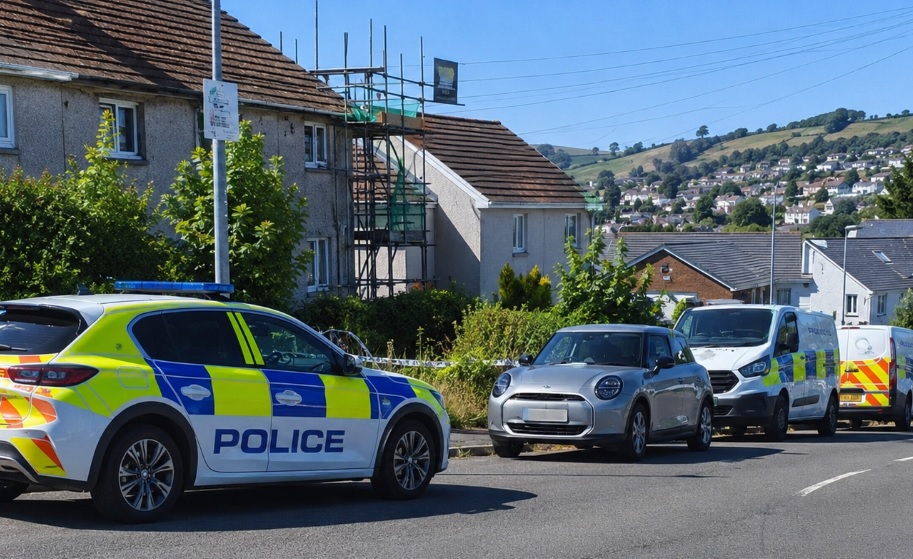
A MAN who suffered serious injuries in a suspected assault in Carmarthen has now been discharged from hospital, police have confirmed.
Dyfed-Powys Police launched an attempted murder investigation after hospital staff contacted officers when the injured man arrived for treatment during the early hours of Wednesday (July 15).
Initial police enquiries indicated that the man may have been assaulted at a property in the Brynmeurig area of the town.
Officers attended the address and established a cordon while detectives investigated how the man had sustained his injuries.
Four people were subsequently arrested on suspicion of attempted murder.
In an update issued on Friday (July 17), police confirmed that the injured man had been released from hospital.
The investigation into the circumstances surrounding the incident remains ongoing.



Crime4 hours ago
Milford Haven teacher ‘fought for her life’ during alleged knife attack
Crown says teenage pupil planned classroom assault and intended to kill, as attempted murder trial reaches closing speeches LIVE FROM...

News4 hours ago
Andy Burnham becomes Labour leader and prepares to enter No 10
Former Greater Manchester mayor promises an ‘unashamedly Labour’ government after completing extraordinary return to Westminster ANDY BURNHAM has been formally...


News5 hours ago
Motorcyclist dies following collision near Narberth
Police appeal for witnesses and footage after fatal crash on B4313 at Redstone A MOTORCYCLIST has died following a collision...


Local Government1 day ago
Stepaside school saved as council abandons closure proposal
Governors welcome decision but maintain original plans were based on outdated information STEPASIDE Community Primary School will remain open after...

Crime1 day ago
Footballer given 200 hours’ unpaid work for eye-gouging assault during match
Magistrates heard Robert Hedley put an opposing player in a headlock before gouging at his eyes during a match in...


Community1 day ago
Tenby Summer Spectaculars brought to an end after harbour licence revoked
Round Table says it was willing to make major safety changes but could not secure the access controls needed to...

Local Government3 days ago
Catapult attacks suspected after wildlife deaths at Pembroke Mill Pond
Wildlife Crime Officers are investigating after the town council said around five animals showed signs of deliberate injury WILDLIFE found...


Crime3 days ago
Narberth retailer speaks of shoplifting toll after ‘collectable bear’ stolen
Independent shop owner said rising costs meant businesses could not afford to absorb losses caused by theft A NARBERTH retailer...


Crime3 days ago
Teen accused of attempting to murder teacher says she lied about stabbing
Defendant accepts teacher was terrified and that a knife wound to the head could kill, but denies deliberately attacking her...


Local Government5 days ago
Calls grow for independent investigation into Manorbier school closure
Councillor alleges misleading figures, inadequate insurance and poor treatment of staff CALLS for an independent investigation into the controversial closure...
-
 News7 days ago
Milford Haven Coastguard coordinates rescue of injured paddleboarder
-

 Crime3 days ago
Letterston footballer guilty of eye-gouging assault during match
-

 Crime7 days ago
Ann Widdecombe: Welsh politicians pay tribute as murder probe launched
-

 Business3 days ago
Former St Davids GP surgery to holiday let and home conversion conditionally approved
-

 Education7 days ago
Saundersfoot graduate secures teaching job before completing degree
-
 Education6 days ago
Welsh Government under fire to spend extra £340m on ALN
-
Community4 days ago
Call for investigation into Manorbier school closure as councillor seeks apology
-

 Climate6 days ago
Minister denies plan to cut livestock numbers over ‘left-wing ideological climate targets’