


Health
Ward closures at Prince Philip Hospital, Llanelli as norovirus cases rise

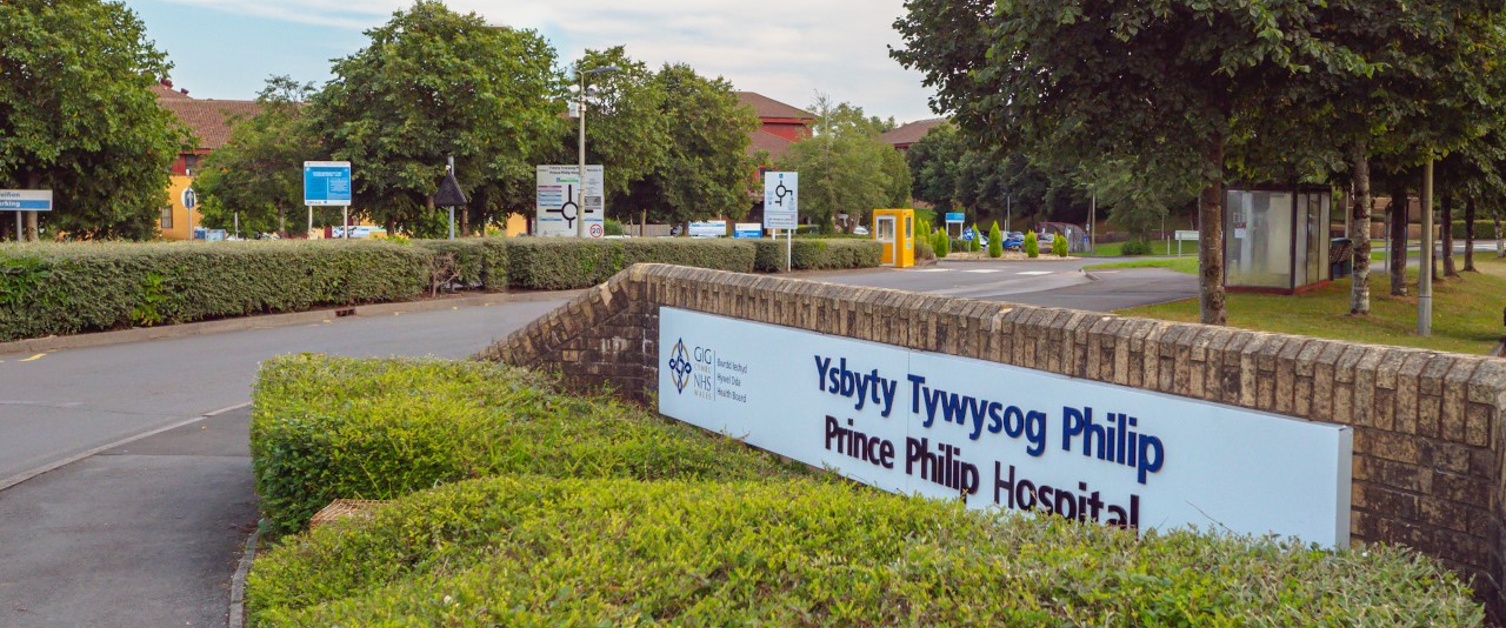
FOUR wards at Prince Philip Hospital in Llanelli have been temporarily closed and visiting restrictions introduced after cases of norovirus were confirmed on the site and in the wider community.
Hywel Dda University Health Board said the measures came into force on Tuesday (Jan 13) and apply to the whole hospital, even though four wards are currently affected.
Visiting has been limited to essential visits only, with the health board asking members of the public not to attend the hospital “until further notice”. Essential visiting may be permitted in exceptional circumstances, and families are being advised to contact wards directly or the hospital switchboard for guidance.
Norovirus is a highly contagious virus that can cause vomiting and diarrhoea, and outbreaks often lead to ward closures to help prevent further spread.
Sharon Daniel, Hywel Dda’s Director of Nursing, Quality and Patient Experience said: “We have taken the decision to restrict all but essential visiting to Prince Philip Hospital in order to keep patients and staff safe and to halt the spread of norovirus, which is currently circulating in our local community.

“I know this will be difficult for those who have loved ones in hospital and we will re-open the wards as soon as it is safe to do so. Please keep an eye on our website or social media for further updates.”
The health board said other hospital sites across Hywel Dda are operating as normal, but urged people not to visit friends and relatives if they have symptoms of flu, sickness or diarrhoea, and to wear a face covering when attending clinical sites.
Ms Daniel added: “You should only come to our sites if you are feeling well. This helps us limit the spread of viruses and protect our most vulnerable patients. It also helps us to keep staff well, so that they can look after those in greatest need of our care.”
Hywel Dda also encouraged eligible people to take up flu vaccinations, and said information on flu jabs — including RSV and COVID-19 boosters where applicable — is available via the health board’s website or its vaccination helpline.

For further information, the public can call 0300 303 8322 (option one) or email [email protected].


A PETITION signed by more than 4,000 people has thrust Wales’ breast cancer screening programme into the spotlight amid low take-up and “massive” disparities across the country.
On Monday January 12, Senedd Members considered the 4,254-signature petition on improving the national Breast Test Wales screening programme run by Public Health Wales.
The Senedd’s petitions committee heard only 69% of women invited for screening attended their appointment in 2022/23, below a 70% minimum standard and an 80% target.
The petitioners wrote: “If the 80% target was met, 15,871 more women would have been screened and an estimated 154 more breast cancers detected.”
Breast Cancer Now, which organised the petition, pointed to latest uptake data for the UK – showing England at 70%, Northern Ireland at 74% and Scotland at 75%.

Highlighting an awareness campaign launched in England in 2025, the charity urged the Welsh Government to similarly promote potentially life-saving breast screening.
Plaid Cymru’s Lindsay Whittle was taken aback: “I would say this is certainly the most alarming statistic I have read in possibly the past 35-40 years I’ve been involved in politics.
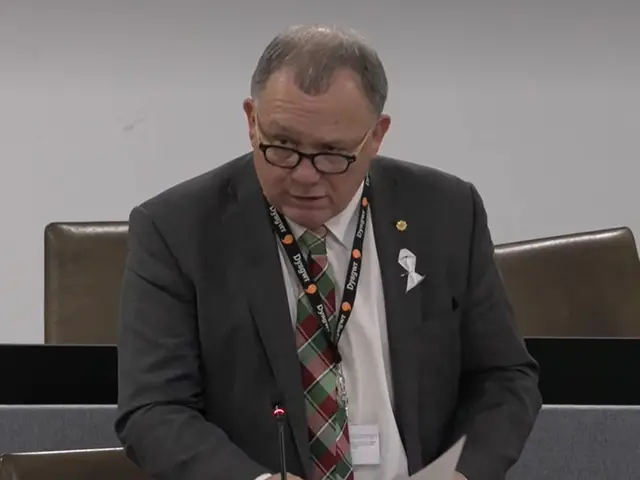
“To think that 15,000 women are walking around Wales not being screened and 154 of those women probably have early signs of breast cancer is alarming.
“And we have to send out a 999 message to women in all corners of Wales: please use this facility, it is absolutely vital. If this facility was taken away, we would probably have demonstrators outside this building – and rightly so.”
Calling for a communications campaign to save lives, Caerphilly MS Mr Whittle added: “The low take-up in many areas of Wales is a matter of national concern.”
He urged colleagues on the cross-party petitions committee to write to health secretary Jeremy Miles, seeking answers on breast cancer screening.
The politician questioned: “What is England doing differently to Wales because they seem to be more successful? Well, that shouldn’t be right obviously.”

Mr Whittle stressed: “We have to ensure that women’s lives are protected and they’re given this help as fast as possible. Early detection is vital.”
Vaughan Gething, the former First Minister and health secretary, supported calls to ask the Welsh Government for an update on plans for a new wider screening equity strategy.

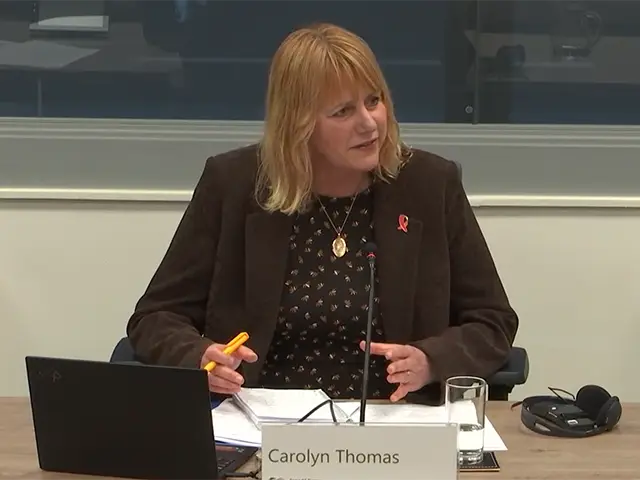
Labour’s Carolyn Thomas, who chairs the committee, explained people continue to go every three years if they attend their first screening, “so it’s getting them there in the first place”.
Ms Thomas, who had to rearrange her own appointment last week due to a family medical emergency, said early detection could save the NHS as much as £100m.
A Public Health Wales report showed significant disparities, with uptake ranging from more than 70% in Carmarthenshire to 40% on Anglesey in 2021/22.
Rhys ab Owen, who sits as an independent, suggested a debate in the main chamber but recognised the clock was ticking on the Senedd term with an election in May.
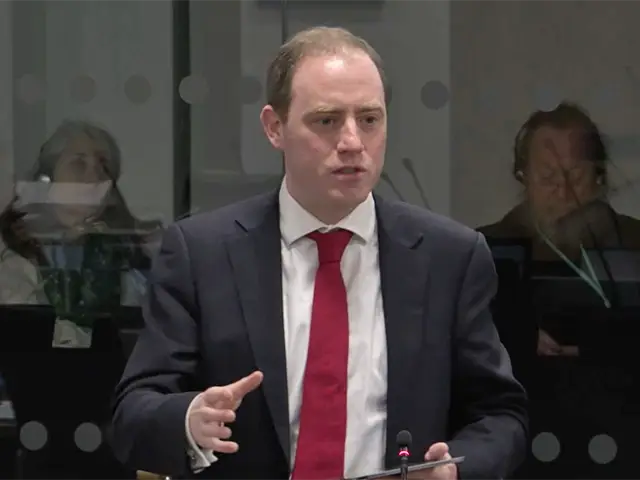
He said: “I was unaware of this issue before the petition and I’d be very interested to know the reason behind the difference between different local authorities. There must be a reason: why is Ynys Môn so low at 40%? It’s a massive outlier.”
The committee agreed to write to health secretary Jeremy Miles about the forthcoming screening equity strategy and the use of 11 mobile centres in Wales.
Breast Cancer Now also expressed concerns about delays in data reporting, with a 2023/24 annual report set to be published a year after the equivalent English data.
The charity stressed: “Timely annual statistical reporting, in line with the timescale of other UK nations, increases transparency and accountability within Wales’ breast screening programme, and supports evidence-based decision making and long-term planning.”
In an earlier letter to the committee, Mr Miles told the committee uptake rates can vary across regions, age groups and socioeconomic backgrounds.
He wrote: “The reasons women choose not to take up the offer are complex. Factors may include lack of awareness, fear or anxiety about the screening process and results, cultural and language barriers, access issues, and the impact of misinformation.
“We are committed to maximising breast screening uptake across all communities, recognising its vital role in early cancer detection and improved outcomes.”


HOSPITAL PRESSURE IN SWANSEA BAY COULD HIT PATIENTS FROM PEMBROKESHIRE WHO RELY ON SPECIALIST SERVICES
CONCERNS have been raised about pressure on hospitals in Swansea Bay after the health board declared its highest level of escalation for the second time in a week — a move that could have knock-on effects for patients from Pembrokeshire who rely on Swansea hospitals for specialist treatment.
Swansea Bay University Health Board’s escalation, known as a Business Continuity Incident, is triggered when demand and capacity pressures reach a critical level, allowing extra internal measures to be put in place to manage patient flow, staffing pressures and bed availability.
While the health board serves Swansea and Neath Port Talbot, its hospitals also provide specialist services used by patients from across west Wales. Pembrokeshire residents are regularly referred to Morriston Hospital and Singleton Hospital for a range of care, including nuclear medicine and other specialist investigations and treatments not always available locally.
The Welsh Liberal Democrats said the latest escalation underlined what they claim is a deeper system-wide issue: shortages in social care leaving patients unable to leave hospital when medically fit, which in turn blocks beds and adds pressure across emergency and planned services.
The party said: “The crisis declared by Swansea Bay University Health Board is further proof that Wales’ NHS cannot be fixed without urgent action on social care.”
Powys example cited
The party pointed to Powys, where the council is led by the Welsh Liberal Democrats, claiming hospital discharge delays have been cut by a third after additional funding was used to recruit more social care staff.
They said the funding was secured by Welsh Liberal Democrat leader Jane Dodds MS during last year’s budget negotiations and directed into expanding community care capacity.
“Social care failure as much as an NHS one”
Responding to Swansea Bay’s decision to declare its highest escalation level again, Jane Dodds MS said the hospital pressures were being driven in part by the lack of care available in the community.
“When hospitals are full and patients are stuck in beds because the care they need at home isn’t available, that is a social care failure as much as an NHS one,” she said.

“What we are seeing in Swansea Bay is exactly what happens when social care is underfunded and overstretched – hospital backlogs, delayed discharges and staff pushed to breaking point.
“Labour has run social care in Wales into the ground, and the consequences are now being felt in hospitals like Morriston and Singleton.
“The lesson is clear: fixing social care fixes the NHS. Wales needs sustained investment in community and social care, not endless crisis management once hospitals are already full.”

Local candidate: “People see it every day”
Sam Bennett, a Swansea councillor and Senedd candidate for Gŵyr Abertawe, said residents were seeing the impact of care shortages daily.
“People across Swansea are seeing the impact of social care shortages every day, whether that’s loved ones stuck in hospital or pressure on frontline staff,” he said.
“Investing properly in care isn’t optional, it’s essential if we want our local hospitals to cope, and it will be my priority should I be elected to the Senedd this May.”
Wider impact
Escalations of this kind are generally introduced to manage periods of exceptional pressure and can involve steps to prioritise urgent care, support discharge planning and manage demand across services.
For Pembrokeshire, any sustained disruption in Swansea Bay can cause concern because of the region’s reliance on specialist appointments and procedures carried out in Swansea. Patients and families are often already travelling long distances for care, and delays or rescheduling can have significant practical and emotional impact.
Health boards have repeatedly urged the public to use NHS services appropriately during periods of high demand and to support timely discharge where it is safe to do so, as blocked beds can quickly intensify pressure across the system.
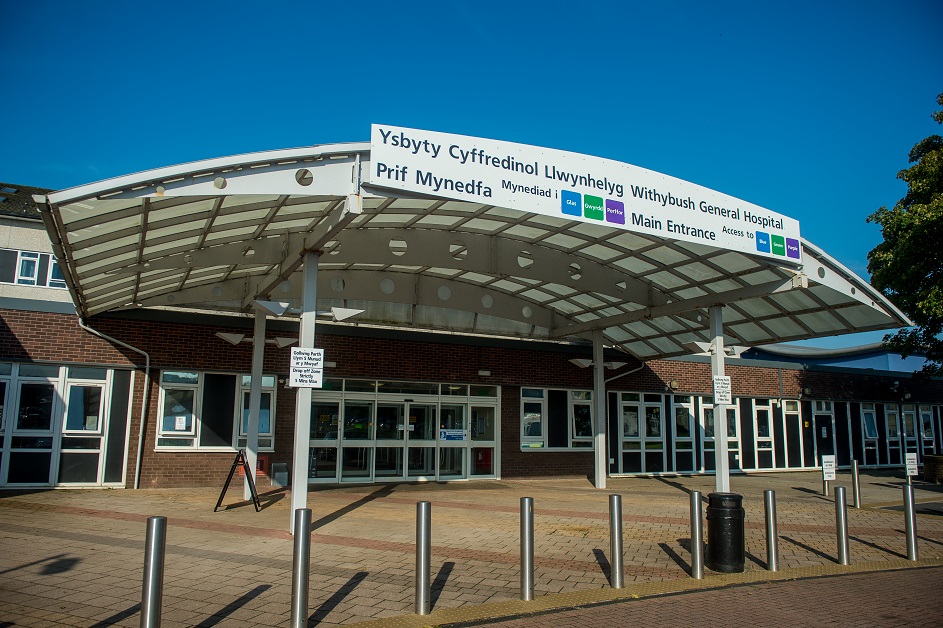
Health board urges public to use NHS 111 and alternative services as demand surges at Withybush and Glangwili
PRESSURE on accident and emergency departments across west Wales continued on Monday (Jan 12), with Hywel Dda University Health Board urging the public to use the most appropriate services for their needs.
The health board said its Emergency Departments across all sites were under significant strain, with Withybush Hospital and Glangwili Hospital experiencing particularly high demand.
In a public message, the health board asked people to “help us to help you” by seeking the right care in the right place, where it is safe to do so.
Residents who are unwell but unsure where to go are being advised to contact NHS 111 Wales, which is staffed by trained healthcare professionals and can offer advice and direct patients to the most appropriate service. The service is available online or by telephone.
The health board stressed that anyone experiencing a serious or life-threatening emergency should continue to call 999 without hesitation.
People needing urgent mental health support can access help 24 hours a day by calling NHS 111 and selecting option two, while those with minor injuries or illnesses that need same-day treatment but are not life-threatening are encouraged to use Minor Injury Units where appropriate.
Community pharmacies were also highlighted as a first point of contact for a range of common ailments, with many offering walk-in advice, assessment and treatment without the need for an appointment.
The health board also appealed for help from families where possible to support the discharge of relatives who are medically fit to leave hospital but are waiting for homecare or community health arrangements to be put in place. It said family support, where available, can help speed up the discharge process and free up hospital beds.
With cold weather continuing, residents were also encouraged to follow winter health advice from Public Health Wales to help reduce illness and pressure on NHS services.
The health board thanked the public for their cooperation and support as services continue to deal with sustained winter pressures.



Man jailed after samurai sword brandished in Pembroke Dock street brawl
15-month sentence after “ugly” disturbance left members of the public fearing for their safety MICHEL VALMONT has been jailed for...

Pembrokeshire Learning Centre placed in special measures following Estyn inspection
PEMBROKESHIRE LEARNING CENTRE has been placed in special measures after inspectors raised serious concerns about standards and leadership at the...


Father jailed for 35 years after baby hurled at television
Court hears infant suffered catastrophic, life-changing injuries after violent attack in Ceredigion home A COURT has heard how a two-month-old...


Former Tory chancellor Zahawi defects to Reform UK
NADHIM ZAHAWI has defected from the Conservative Party to Reform UK, becoming Nigel Farage’s highest-profile political recruit to date and...


Ancient New Year celebrations still ring true in hidden corner of Pembrokeshire
WITH New Year celebrations safely packed away with the tinsels and baubles for another 12 months, a quiet corner of...


Search of River Teifi continues as police scale back multi-agency response
Family kept informed as officers urge public to avoid unsafe independent searches A POLICE search of the River Teifi in Cardigan will continue over...


Man pleads guilty after £150k drugs haul found in Pembroke traffic stop
Routine police check led to discovery of cocaine and cannabis in car boot A MAN has pleaded guilty after a...

Council refuses to reveal cost of replacing roof on nine-year-old Tenby school
A primary school built in 2016 is facing a full roof replacement after years of leaks and structural deterioration —...

Council re-approves £14.3m contract for Haverfordia House redevelopment after costs rise
Delays, inflation and expired contractor pricing blamed as scheme timetable slips to 2027 PEMBROKESHIRE COUNTY COUNCIL has re-approved a £14.3m...


Storm Goretti causes widespread disruption across Pembrokeshire
SEVERE winter weather brought by Storm Goretti caused widespread disruption across Pembrokeshire on Thursday evening ( Jan 8 ), with...
-
Crime1 day ago
Father jailed for 35 years after baby hurled at television
-

 Crime7 days ago
Pembrokeshire stalker to be sentenced after two-year campaign of harassment
-
Crime4 days ago
Man pleads guilty after £150k drugs haul found in Pembroke traffic stop
-
Education1 day ago
Pembrokeshire Learning Centre placed in special measures following Estyn inspection
-

 Crime7 days ago
Prolific shoplifter jailed after stealing nearly £300 of goods from Cardigan store
-

 Crime1 day ago
Milford Haven man, 65, convicted of sexual assault on teenage girl
-
 Crime7 days ago
Pembroke Dock motorist elects Crown Court trial over serious injury collision
-

 Crime7 days ago
Motorist given interim ban after crash leaves passenger with serious neck injury