


News
Tough choices for 21st century schools


In an exclusive interview with The Pembrokeshire Herald, Council Leader Jamie Adams shares his vision for the future of Pembrokeshire’s schools
A COLD grey day slowly fades into twilight as Jamie Adams sits at a desk opposite me in an office tucked away in a maze of corridors at County Hall.
We are here to talk about the 21st Century Schools programme: the ambitious and wide-ranging plans that are a significant and potentially controversial part of the County Council’s plans for the future of education in Pembrokeshire.
 In short, local authorities have been told to look at schools with low numbers and consolidate them, to look at their estate and ways to improve it and offered the chance of limited time funding to do both. The policy gained a high-profile casualty when the former Welsh Government Education Minister, Leighton Andrews, resigned after fighting locally a policy he promoted nationally.
The Pembrokeshire Herald wanted to find out what the Council’s plans were and, in a wide-ranging interview, spoke to Jamie Adams – who chairs the authority’s 21st Century Schools Management Board – about them.

“I would not say that the position in Pembrokeshire is any more challenging than it is in other counties,” Jamie Adams begins.
“I would rather regard it as an opportunity to shape the provision of education, and to address the problem of surplus places in our schools.
“We have twenty percent more school spaces than we have pupils to fill those spaces. Now, there are counties – I won’t name them – in which difficult decisions have been avoided in favour of the status quo. That is the easy route to take.
“For now, however, Pembrokeshire has the chance to obtain the funding to provide new buildings and new schools and to build for the future. This is a once in a generation chance to do this and I think that we should take up the challenge to shape education in our county for the better.”
He pauses and looks reflective, before continuing: “In order to build new schools, we must make some other choices. We have the opportunity to rationalize the Council’s estate. We cannot afford to operate surplus buildings or surplus space. It ties up capital.
“A good example would be youth centres, day centres, family centres: we cannot afford to keep these as single use buildings used only part of the time. We must ‘sweat the assets’ to get the most out of them. That means combining buildings’ uses to keep services affordable and buildings viable.
“We must do this in order to get the funding we need. The original 21st Century Schools scheme provided for a 70-30 split between central government and central government inputs. That is now 50-50. We have to find forty percent more of the funding than originally planned. As we are the second highest recipient of central government funding in Wales, our challenge is that much greater in terms of capacity for capital projects. We have got off to a good start and have a lot of the money in place. I am confident that within two years we will be one third of the way to our funding target in terms of releasing capital.

“As a council, our challenge over the next two to three years is to release the money tied up in existing assets that can be realised. That can only be done by a collective effort. My challenge is to convey the message that we need to move away from holding too much in buildings to do more with services.”
But what of specific schools: Johnston, for instance?
“When we first sent our exploratory bids in, they were prepared to a tight timescale as aspirational expressions of what we wanted to achieve. There was a narrow window provided by the Welsh Government. Some other Welsh councils decided not to stick their necks out, we were prepared to take the chance given.
“Since our initial expressions, we have taken the opportunity think both generally and strategically at schools and our education system in Pembrokeshire. We are focusing on three things: growth, outcomes and quality of build. We must also consider Welsh medium provision and special educational needs.
“So in terms of Johnston School, we looked again at the site. The present site is a nightmare for traffic twice a day. The streets around the school are simply not built to handle the number of cars going back and forward there. In addition, the buildings are ‘tired’ and need updating/replacing.
“While we looked originally at developing on the existing site, we decided that it was rather like trying to fit a size eight foot in a size six shoe. It is simply not going to fit. So, we have decided to find out if there are chances to develop elsewhere in Johnston.
“Secondly, we have identified an additional need for further support for special educational needs covering the area between Haverfordwest and Milford Haven and stretching inland and toward the coast. If you look at a map of the County, one location stands out as the sensible place to locate that provision: Johnston.
“In light of that revised thinking, our original proposal for Johnston School’s present site has been replaced by our wish to look at the opportunities for building a new school on a new site.”
What about Hakin and Hubberston schools?
“That’s an ongoing consultation, and I don’t want to prejudge its outcome. I point out, however, that for pre-eleven education, Estyn is looking for a single site school. Now Hakin is a split site already and Estyn want that point addressed.
“In terms of Hubberston, I do not doubt that we could make do with the existing buildings for a few more years, but the opportunity to develop our options is now. I think this is a unique chance to develop a new school on a single site.
“There are, of course, other issues: I am particularly pleased that the revised proposals incorporate the opportunity to retain faith-based education; that is to be welcomed. I am pleased that this area is bucking the trend across the county and that there is a growing young population there. In order to address that issue, we really ought to future-proof our provision now, when we have the chance. Finally, as it stands, we have three schools in very close proximity to each other and a new school on a single site makes more sense.
“At Broad Haven School we have the chance to provide a nursery and additional capacity. To an extent that is a less complicated project, as it is a much smaller school. But it fits into our strategic plan for the future provision of school places across Pembrokeshire.
“Make no mistake: we will have to make tough choices in the future as well. The Council will be moving on to consider the Angle Peninsula and the area south and west of Pembroke town. We need to consider how viable our current provision is and whether there are opportunities to use resources more efficiently there.

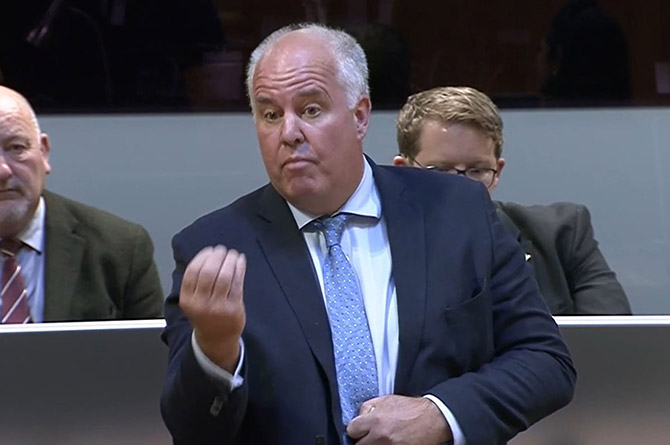
Davies attacks ‘Nation of Sanctuary’ policy after asylum seeker jailed for child rape
A SENIOR Welsh Conservative has called for the Welsh Government’s “Nation of Sanctuary” policy to be scrapped after an Afghan asylum seeker was convicted of abducting and raping a 12-year-old girl.
Andrew RT Davies, leader of the Welsh Conservatives in the Senedd, said the case highlighted what he described as the “dangers” of the current approach to asylum and migration in Wales.
Ahmad Mulakhil, who arrived in the UK by small boat from France in March 2025, was convicted of the attack just four months later.
The case, reported nationally this week, has prompted renewed political debate over the Welsh Government’s stance on supporting asylum seekers and refugees.
Political row reignites
Mr Davies said: “This appalling case demonstrates the dangers of importing violent criminals into Britain.
“Plaid Cymru and Labour’s decision to make Wales a Nation of Sanctuary for asylum seekers is a pull factor, encouraging more people to enter our country illegally.
“I reiterate my calls for this dangerous policy to be scrapped.”
The comments directly target the Welsh Government’s “Nation of Sanctuary” plan, launched in 2019, which aims to make Wales a welcoming place for refugees and people seeking asylum, with support for housing, education and integration.
The policy, backed by Labour ministers and supported in principle by Plaid Cymru, focuses on community support rather than border control, which remains the responsibility of the UK Government.

Under the programme, local authorities and charities across Wales work to provide English lessons, school places and basic support for asylum seekers dispersed to towns and cities.
Pembrokeshire and Carmarthenshire have both housed asylum seekers in recent years through Home Office accommodation contracts, with some placed in hotels or temporary housing while claims are processed.
However, immigration enforcement, background checks and decisions on who can enter or remain in the UK are controlled by the Home Office in Westminster, not by the Senedd Cymru.
Critics argue that the branding risks sending the wrong message at a time when small-boat crossings are rising. Supporters say the vast majority of those seeking sanctuary are law-abiding families fleeing war and persecution.
The Welsh Government has previously defended the policy, saying it reflects “Welsh values of compassion and fairness,” and stressing that responsibility for border security lies with the UK Government.
Meanwhile, the UK Government has introduced tougher measures aimed at reducing small-boat crossings and speeding up removals of those with no right to remain.
The latest case is likely to intensify scrutiny of how asylum accommodation and safeguarding are managed across Wales.
For many residents, the debate now centres on how to balance humanitarian support with public safety and confidence in the system.
As Mr Davies’ intervention shows, the political argument over Wales’s role as a “Nation of Sanctuary” is far from over.

DECISIONS on the future of nine frontline hospital services across west Wales will be made later this month when Hywel Dda University Health Board holds a special two-day Board meeting.
The Extraordinary Board will meet on Wednesday (Feb 18) and Thursday (Feb 19) to determine the next steps for critical care, dermatology, emergency general surgery, endoscopy, ophthalmology, orthopaedics, stroke, radiology and urology services.
Health chiefs say the proposed changes are aimed at tackling staffing shortages, improving clinical standards and cutting waiting times for diagnosis and treatment.
More than 4,000 people responded to a public consultation on the plans. Feedback was gathered through questionnaires, public meetings, staff sessions and discussions with stakeholder groups.
An independent consultation report compiled by Opinion Research Services will form part of the evidence considered by Board members. It will sit alongside updated data on workforce pressures, estate condition, clinical standards and how services link together across hospitals.

All documents to be considered by the Board have now been published online ahead of the meeting.
Alternative ideas assessed
During the consultation, communities also submitted 190 alternative proposals.
Each idea was tested against “hurdle criteria” to check whether it was safe, practical and capable of delivery before being taken forward.
Of those, 22 met the criteria and have been developed into full options. These will be considered alongside the Health Board’s original proposals.
Board members will assess whether each option is clinically sustainable, deliverable, accessible to patients, aligned with the Health Board’s long-term strategy and financially viable. They will also decide whether further engagement or evidence is needed before any final changes are introduced.
Some changes, if approved, could be phased in over time.
Dr Neil Wooding, Chair of the Health Board, said: “At our meeting next week, the Board will carefully consider the consultation feedback alongside the latest clinical evidence, workforce insights, updated impact assessments and the alternative options that were put forward during the consultation.

“Our responsibility is to consider the full range of evidence and ensure we make decisions that ensure that our services are sustainable for the future. No decisions have been made ahead of the Board. We are committed to a thorough and transparent process, ensuring each option and alternative options are considered in the round, and focused on improving services for the people who rely on them.”
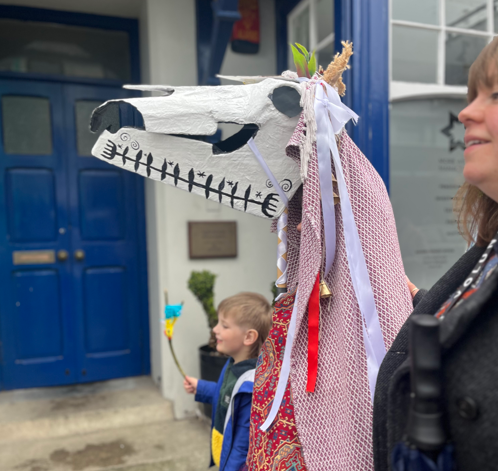
FAMILIES across Pembrokeshire are being invited to enjoy an afternoon of music, stories and traditional festivities when a colourful half-term celebration of Welsh culture comes to Narberth next week.
The community-focused event, taking place on Wednesday (Feb 18), promises a relaxed and welcoming day out, with hands-on workshops, live entertainment and plenty of opportunities for people to drop in and take part at their own pace.
Organisers say the aim is to create a warm, inclusive atmosphere where all ages can explore Welsh heritage through creativity, craft and food.
At the heart of the programme is the Dewi Sant Promenade Parade, a lively procession through the town featuring traditional music and some of Wales’ best-loved folklore characters, including a dragon and the Mari Lwyd. The parade will be accompanied by music from Reel Rebels, encouraging families to join the celebration as it winds through the streets.
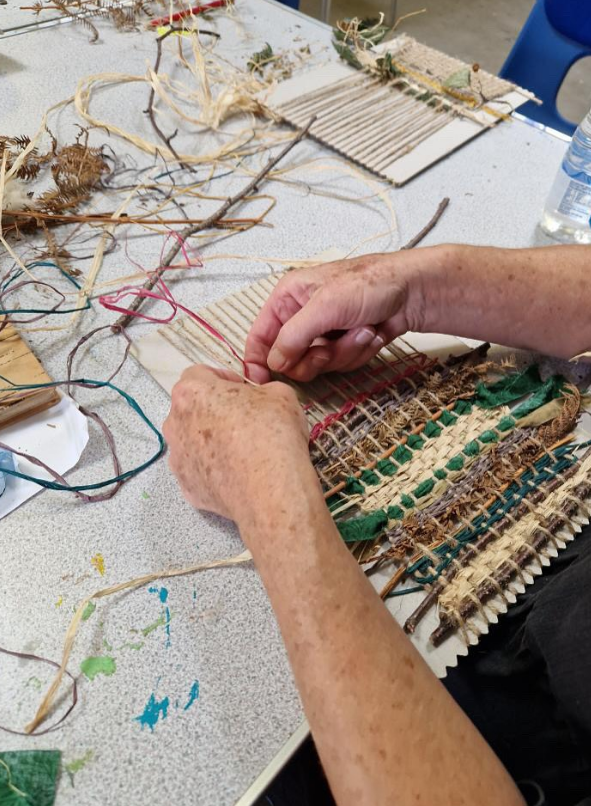
Elsewhere, adults can try their hand at a calming weaving workshop with artist Daisy Buckle at SPAN Arts, while younger visitors can enjoy storytelling and craft activities led by Hedydd Hughes and Luci Saunders at the Narberth Scout Hut.
The day will finish with a traditional family Twmpath, complete with live music, dancing, cawl and Welsh cakes, offering a sociable close to the festivities and a taste of classic Welsh hospitality.
Organisers say the event has been designed to be accessible and affordable, welcoming both local residents and visitors looking for a low-cost half-term activity.
Event highlights include:
• Adults’ weaving workshop with Daisy Buckle at SPAN Arts
• Children’s storytelling and craft session at Narberth Scout Hut
• Dewi Sant promenade parade with music, dragon and Mari Lwyd
• Family Twmpath with cawl and Welsh cakes
Event details:
Date: Wednesday (Feb 18)
Locations: Narberth Scout Hut and SPAN Arts, Narberth
Time: 1:30pm to 5:00pm
Pricing: Pay what you can, from £3
Booking: span-arts.org.uk
Accessibility enquiries: [email protected]



Crime4 hours ago
Publican admits supplying cocaine and cannabis at Crown Court
Admits cocaine and cannabis supply but denies intent and cash allegations A MILFORD HAVEN pub landlord has admitted supplying cocaine...


Local Government5 hours ago
Plaid win in Fishguard North East by-election
PLAID CYMRU has taken the Fishguard North East seat on Pembrokeshire County Council following this week’s by-election. Billy Shaw was...


News1 day ago
Man to return to court over alleged harbour collision
Three charges relate to navigation of vessel in Milford Haven A NEWPORT man is due to return to court later...


Business2 days ago
Computer Solutions Wales under fire from customers
Claims of unreturned devices, unpaid refunds and small claims court cases as company blames landlord dispute CUSTOMERS across west Wales...


News2 days ago
Starmer under fire as aides quit and Scottish Labour leader calls on him to resign
Two senior Downing Street exits in 24 hours as Anas Sarwar breaks ranks, but ministers insist the Prime Minister is...


News2 days ago
Fresh concerns over £60m A40 scheme after resurfacing works just months after opening
QUESTIONS are being asked about the condition of the newly-opened A40 Llanddewi Velfrey to Redstone Cross carriageway after sections of...


Charity2 days ago
RSPCA looks back at the Sea Empress oil tanker disaster 30 years on
Charity reflects on one of the biggest environmental disasters to hit UK IN just a few days time it will...


Crime4 days ago
Pembroke Dock man admits threatening to hack woman’s head off with sword
Court imposes strict bail conditions and bans contact with named individuals ahead of sentencing A PEMBROKE DOCK man has admitted...

Crime4 days ago
Teenager remanded after teacher injured in knife incident at Milford Haven school
Fifteen-year-old charged with Section 18 grievous bodily harm and possession of a bladed article appears before Swansea magistrates A FIFTEEN-YEAR-OLD...

Crime4 days ago
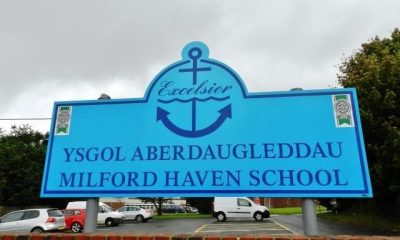
Police confirm teacher was stabbed at school as teenager appears in court
15-year-old charged with Section 18 GBH with intent and possession of a bladed article on education premises POLICE have confirmed...
-
 Health6 days ago
Health board targets rise in steroid and gym drug use across west Wales
-

 Crime7 days ago
Sex offender jailed after living off grid in Pembrokeshire and refusing to register
-

 Crime6 days ago
Teacher injured and teenager arrested for attempted murder at Milford Haven School
-
Business2 days ago
Computer Solutions Wales under fire from customers
-
 Business5 days ago
Six-figure negligence victory leaves retired builder trapped in divorce limbo
-

 News6 days ago
Reform appoints Dan Thomas to lead party in Wales
-

 Sport6 days ago
Wales name squad for Six Nations opener against England
-

 Business4 days ago
Minimum alcohol price to rise by 30 per cent as retailers warn of border impact