


Politics
‘Lack of clarity’ in Wales Bill

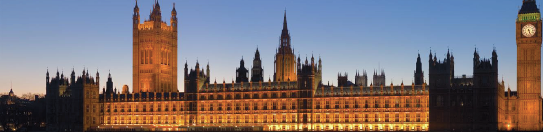
 A REPORT on the Wales Bill, published by the House of Lords Constitution Committee, has stated that the lack of clarity over the demarcation of powers between the UK Parliament and Welsh Assembly not only risks future litigation, but the need for further legislation to clarify the settlement.
The report welcomes the move from a ‘conferred powers’ model (where the Welsh Assembly can only legislate on matters specifically devolved to it) to a ‘reserved powers’ model (where Welsh Assembly can legislate on any subject not explicitly ‘reserved’ by the UK Parliament). The reserved powers model offers a relatively clear and simple division of powers, as well as allowing the Welsh Assembly ‘constitutional space to legislate’. However, the Committee say that the way the Wales Bill implements the reserved powers model undermines these key advantages.
The complexity of the settlement set out in the Wales Bill, in which numerous legal tests interact with hundreds of matters reserved to the UK Government and Parliament, risks the courts being asked to make decisions about whether the National Assembly for Wales has the power to make laws in certain areas. The Committee contrasts this with the simpler settlement set out in the Scotland Act 1998, where the subjects reserved to Westminster are relatively limited, ensuring greater clarity about the devolution of powers.
The Committee also point out that in some areas, the list of reserved matters is so extensive, and the number of legal tests that must be met for the Assembly to use its powers are so vague, that the switch to a reserved powers model is likely to actually result in a return of power from the Welsh Assembly to Westminster.
The Committee call on the Government to explain whether the Wales Bill is actually intended to reduce the legislative competence of the Welsh Assembly in some areas and, if not, what steps they plan to take to ensure that the competence of the Assembly is not inadvertently reduced.

The Committee notes, for example, that absolute restrictions on the Assembly’s ability to modify criminal law in relation to sexual offences may affect its ability to exercise its legislative competence in relation to the protection and well-being of children and young adults.
The Committee notes that there is ‘no evidence of a clear rationale’ for the powers devolved by the Wales Bill and calls on the Government to explain the principles which underpin the devolution proposals set out in the Bill.
The Committee points out that in its recent report, The Union and Devolution, it recommended that further devolution should be managed in a coherent way based on sound principles and clarity about the purpose of the proposed devolution. It says the Government has failed to provide a clear rationale for the scope of powers devolved by the Wales Bill.
Lord Lang of Monkton, Chairman of the House of Lords Constitution Committee, said: “My Committee have taken a long and serious look at devolution within the UK in the last year and we bring that experience with us in examining the Wales Bill.

“We welcome the Wales Bill’s move from a ‘conferred powers’ to a ‘reserved powers’ model of devolution. However, the list of reservations is so extensive, and the legal tests that govern the Assembly’s powers so complex and vague, that it could be a recipe for confusion and legal uncertainty. The outcome is likely to be increased litigation as the courts are asked to decide exactly where the boundaries of the Assembly’s authority lies.
“We are disappointed that there is no clear explanation from the Government as to the rationale for the scope of the powers being devolved under the Wales Bill. As we noted in our report, The Union and Devolution, devolution must take place on the basis of appropriate principles to ensure that the devolution settlements evolve in a coherent way, rather than in a reactive, ad hoc manner.
“The Bill also risks, in some areas, actually reducing the powers of the Welsh Assembly. We have asked the Government whether that was their intention, and if not, how they intend to avoid unintentionally diminishing the Assembly’s powers.

“The Wales Bill starts Committee Stage in the House of Lords next week. This is the first stage where amendments can be made and debated and where the detail of the Bill is examined closely. I hope our report will be helpful to the House in informing that debate.”
This week, the Director of the Welsh Governance Centre, Professor Richard Wyn Jones, also raised concerns that the Wales Bill was being ‘rammed through Parliament’, and suggested that it could be blocked by the Welsh Government. Speaking to the BBC, he said: “It is genuinely hard to find people who aren’t directly involved on the UK government side with a good word to say about this legislation, certainly in terms of the detail,” he said.
“What was striking, we did have a consensus, an all-party consensus, in terms of moving to a reserved powers model.
“What’s particularly depressing is, in the enactments of that good intention, we’ve reached a stage where everybody who is looking at this in a relatively dispassionate way is pointing to some fundamental problems.
“I don’t think that anybody is going into this wanting it to fail, in terms of the critics. This is the only piece of legislation on the table, there is a sense the status quo is unsatisfactory and so people want this to work.
“There have been lots of constructive suggestions for change from the Welsh Government, from the National Assembly presiding office, and yet the legislation is being rammed through Parliament with, so far, only very small changes being conceded.”
However, the Leader of the Welsh Conservatives, Andrew RT Davies, described the ‘landmark’ legislation as offering ‘greater clarity and accountability than ever before in the devolved era’.
“Labour had 13 years in power to address concerns over where power resides and made no meaningful attempt to establish a lasting settlement. Whereas Conservatives have delivered a significant breakthrough, demonstrating our party’s commitment to devolution and the place of Wales as a full partner in the UK,” he added after the MPs gave the Bill an unopposed third reading in September.
“We now have an opportunity to move on from constitutional affairs, and the Welsh Government must now make best use of the tools at its disposal and deliver for Welsh communities; creating jobs, developing the Welsh economy and improving our public services.”


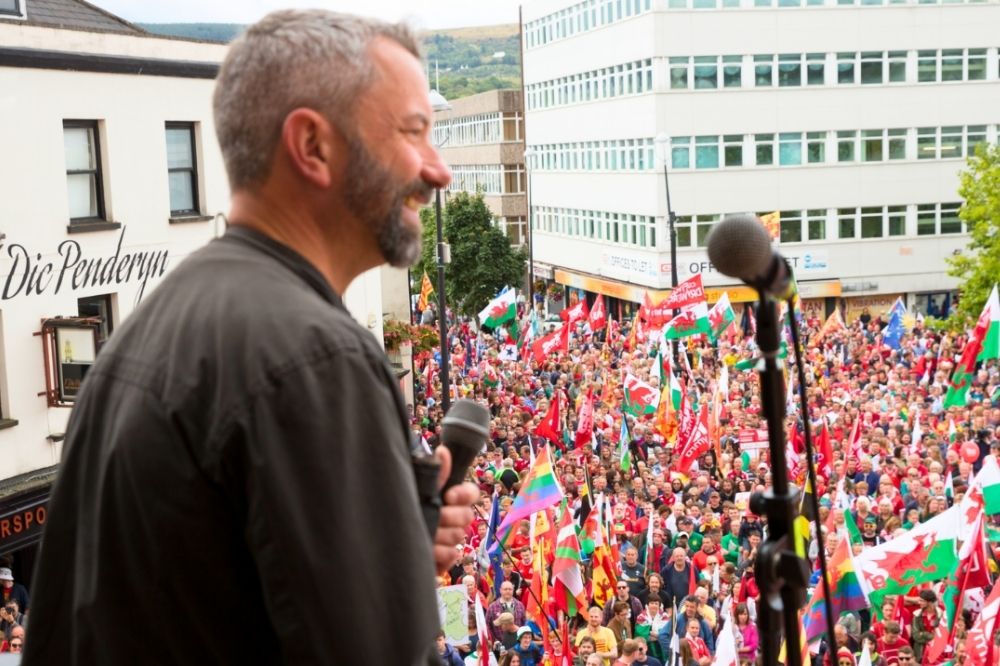
Phyl Griffiths steps down from the leadership role but will remain on the board
YESCYMRU has appointed Rob Hughes as the new Chair of its Board following the decision by Phyl Griffiths to step down because of increased work commitments.
Mr Hughes, who represents the South-East region on the board, was elected to lead the non-party-political campaign for Welsh independence. Sam Murphy, director for the South-West, has been chosen as Vice-Chair.
Mr Griffiths, who became Chair in 2024, will remain a director of the organisation.
YesCymru said his two years in the role had seen the campaign broaden its activities and record substantial membership growth during 2026.
Paying tribute to his predecessor, Mr Hughes said: “Phyl’s ability to connect with people has helped create a harmonious and united organisation, leading YesCymru forward to the position of strength in which we find ourselves today.
“He will be greatly missed as our Chair, but we are delighted that he will continue in his role as a fellow director for the South-East.
“He is a huge asset as we help move Wales towards independence.”
Mr Griffiths established a local YesCymru group in Merthyr Tudful in 2017 before later joining the organisation’s board and becoming Chair.
He said: “When I set up my local group of YesCymru in Merthyr Tudful back in 2017, I didn’t imagine for a second that I’d be on the Board of Directors just a few years later, let alone become Chair of the movement I love so dearly.
“I’ve long felt that Wales needs cross-party thinking if we’re to become an independent nation and, during my time as Chair, I’ve been immensely proud of the work of the Board in ensuring that YesCymru is a home for all who share that view.”
He thanked members and supporters for their work and encouraged those who support Welsh independence to take part in a planned march in Aberystwyth on September 26.
Mr Griffiths said the decision to step down had been difficult, adding: “I’ve had an amazing time as Chair, superbly supported by a brilliant Board, and I look forward to giving my full support to Rob as the new Chair.”

Nerys Jenkins, who served alongside Mr Griffiths on YesCymru’s National Governing Body, praised his leadership at what she described as a crucial period for the movement.
She said: “His commitment to YesCymru has been unwavering. He took on the role of Chair at a crucial time for the movement and has worked tirelessly to provide steady, thoughtful leadership.
“His ability to bring people together and listen to different viewpoints has been invaluable.”
Former Chair Barry Parkin, now director for the Outside of Wales region, described Mr Griffiths as a gifted and motivational speaker who had made a significant contribution to both YesCymru and the wider independence movement.
He added: “I am proud to have worked alongside Phyl and am delighted that we will be able to continue working together as directors of YesCymru, striving for an independent Cymru.”

CMA calls for new regulatory regime after households faced cancelled orders and sharp price increases
BEN LAKE MP has welcomed proposals for stronger protections for households that rely on heating oil, following a major investigation by the Competition and Markets Authority.
The Ceredigion Preseli MP said people living in rural and off-grid communities should receive protections comparable to those available to customers connected to the mains gas and electricity networks.
Around 1.5 million UK households depend on heating oil. Customers currently lack several protections available elsewhere in the energy market, including consistent support for vulnerable people and access to independent dispute resolution when complaints cannot be settled directly with suppliers.
The CMA launched its investigation after conflict in the Middle East disrupted supplies and caused heating oil prices to rise sharply earlier this year.
Its final report found that the market remained generally competitive and that suppliers had not profited materially from the crisis. Most of the increase was attributed to higher wholesale costs.
However, the regulator concluded that customers remained particularly exposed during periods of disruption, with uncertainty over prices, deliveries and the support available when problems arose.
In Wales, the average retail price rose from 64p per litre in February to 106p in March, an increase of 42p. Across the UK, prices peaked at 123p per litre in April, 92% above February’s average.
The CMA has recommended a proportionate regulatory regime requiring heating oil suppliers to register and meet minimum standards.
Proposed protections would cover the way prices are quoted, how cancellations are handled and access to independent dispute resolution. Suppliers could also be required to explain available payment plans and minimum purchase quantities more clearly.
A register of vulnerable customers has also been proposed, alongside a review of minimum-order rules to determine whether households should be allowed to buy smaller quantities.
Heating oil is generally purchased in bulk, leaving households facing bills of £500 or more at a time. The CMA said allowing smaller orders could make the fuel more accessible to customers experiencing financial difficulties.
Ben Lake old The Herald: “I welcome the Competition and Markets Authority’s call for a new regulatory regime for heating oil suppliers, together with action to compensate households affected by last-minute order cancellations earlier this year.

“Requiring suppliers to meet minimum standards, clearly explain payment plans and minimum purchases, and maintain a register of vulnerable households would help protect off-grid customers during sudden price increases or periods of crisis.
“These recommendations are welcome, but I will also be pressing for similar protections to be introduced for households that rely on LPG.”
The CMA estimates that around 1,700 customers may have had orders cancelled in circumstances that breached their contracts.
Although those customers received refunds, some were forced to place replacement orders at much higher prices, potentially leaving them between £150 and £350 worse off. Others were unable to obtain replacement fuel.
Several suppliers have agreed to compensate affected customers. Those who paid more for a replacement delivery are expected to receive the difference, while customers who did not purchase replacement oil should have their original orders honoured at the agreed price.
The CMA said some suppliers had not yet agreed to provide compensation and warned that it was preparing possible court enforcement action.
Mr Lake said the regulator’s findings reflected concerns raised by constituents across Ceredigion Preseli.
He said: “The conclusions of the CMA’s report will not surprise residents of Ceredigion Preseli.
“Many saw the price of their regular fuel deliveries changing at very short notice during the Middle East fuel crisis. I am also aware of cases where customers were not told the final price until the delivery lorry had arrived at their property.
“Ceredigion Preseli has one of the highest proportions of households in Great Britain that are not connected to the mains gas network. The crisis therefore had a disproportionate effect on the amount many residents were forced to pay to heat their homes.”
Mr Lake welcomed the commitment to compensate affected households but said further information was needed about how eligible customers would receive payments.
He added: “I welcome the announcement that compensation will be paid, but the eligibility and process remain unclear.
“I have asked for further details about how customers can make sure they receive the money they are owed. I am determined that constituents in Ceredigion Preseli should receive every penny of compensation to which they are entitled.”
The CMA will now work with the UK and devolved governments, regulators and the heating oil industry to consider how its recommendations should be implemented.

Aberafan Maesteg MP promises to champion Welsh interests and work closely with governments and institutions across Wales
STEPHEN KINNOCK has begun work as Secretary of State for Wales after being appointed to Prime Minister Andy Burnham’s new Cabinet.
The Aberafan Maesteg MP was appointed Welsh Secretary on Monday, July 20, having previously served as a Minister of State at the Department of Health and Social Care.
Mr Kinnock said he would provide a strong voice for Wales within the UK Government and promised an open and collaborative approach to the role.
He said he would work with the Welsh Government, local authorities and institutions across the country to support economic growth and deliver improved outcomes for Welsh communities.
Mr Kinnock said: “It is the privilege of my life to be appointed Welsh Secretary, and to serve the people of Wales as part of Prime Minister Andy Burnham’s new Cabinet.
“Wales succeeds when we all pull in the same direction, and I will work across all levels of government to deliver the best possible outcomes for our communities as a dynamic and confident country in a dynamic and strong United Kingdom.
“As Welsh Secretary, I will ensure that the Wales Office continues to champion Wales within the UK Government and that the needs of the Welsh people are prioritised.
“This is about building a strong Wales within a strong United Kingdom, where everyone has the opportunity to reach their full potential, with good growth in every Welsh postcode and communities that are in control and supported by government at every level.
“I am truly honoured to be taking on this role at such a pivotal time for Wales and for the UK, and I am clear that there is no limit to what we can achieve by working together.”
Mr Kinnock is now expected to begin a programme of meetings and visits as he develops the UK Government’s agenda for Wales and represents Welsh interests in Westminster and across Whitehall.



Local Government7 hours ago
Pembroke Dock councillor rejects claim he spent six months living in Portugal
Cllr Joshua Beynon says he remains active in his ward and has made only normal-length visits to see his Portuguese...


Health1 day ago
More than 3,000 people have their say as Hywel Dda stroke consultation closes
Final decision on proposals, including a central 24-hour stroke unit at Glangwili and treat-and-transfer services at Withybush, is expected in...


Crime1 day ago
James McKenna guilty of attempted murder after Carmarthen Park knife attack
Jury rejects defendant’s claim he only intended to cause serious injury after ambush attack on former partner SPECIAL REPORT FROM...

Community2 days ago
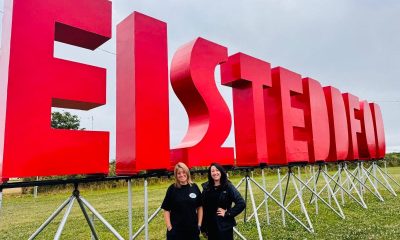
New creative team transforms the Maes ahead of Eisteddfod y Garreg Las
Festival site in Llantwd is taking shape ahead of the National Eisteddfod’s arrival in Pembrokeshire from August 1 to 8...


Community2 days ago
From Tenby to Llandudno: Wales’ seaside towns face the same signal crisis
Businesses in two of Wales’s busiest resorts say unreliable mobile coverage is disrupting payments, bookings and everyday life TWO of...


Crime2 days ago
Judge orders Dyfed-Powys Police review after £3,912 fraud error
Force responsible for policing Pembrokeshire criticised after an officer understated the amount stolen from a vulnerable care-home resident A JUDGE...


Community3 days ago
Narberth bursts into colour as carnival brings Civic Week to spectacular close
Crowds lined the streets for an afternoon of floats, fancy dress, music and family entertainment at one of Pembrokeshire’s longest-running...


Community3 days ago
More than 100 racers take to Castle Pond for Paddle West’s inaugural regatta
Successful community event raised money for Forever11 and launched three consecutive weekends of waterside activity in Pembroke MORE than 100...


News3 days ago
NASA chief meets west Wales scientist helping search for life on Mars
Aberystwyth-led technology will guide Europe’s first Mars rover as it drills beneath the planet’s surface, while the proposed DARC radar...

News4 days ago
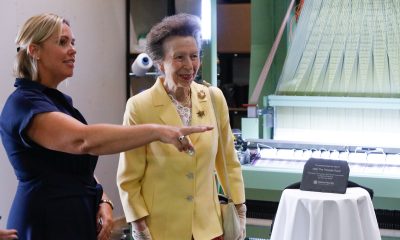
Princess Royal celebrates Pembrokeshire craftsmanship at family-run weaving mill
A Pembrokeshire business that began after a mother grew tired of waiting three weeks for her children’s name tapes has...
-

 News8 hours ago
Welsh-made Raspberry Pi board found in Russian attack drone used against Ukraine
-

 Community1 day ago
Huge water main burst sends geyser over Fishguard town centre
-

 Crime24 hours ago
Man in custody accused of intentionally strangling woman in Haverfordwest
-
 Crime2 days ago
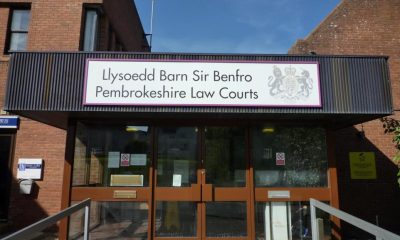
Steynton man fined after breaching dog mess and anti-social behaviour notice
-

 Community6 hours ago
TikTok seller removed after Haverfordwest woman’s home swamped with parcels
-

 Business1 day ago
Former Tenby coffee shop conversion to healthcare clinic approved
-

 Community1 day ago
Narberth Library partnership celebrates ten years of community service
-

 Sport1 day ago
Penally bowls club invites public to free open day