


News
Tank drill procedures changed following Castlemarin deaths

AN INQUEST has heard how a fatal explosion in a British Army tank was the result of the absence of a seal used to stop highly unstable gases escaping into a tank crew’s turret.
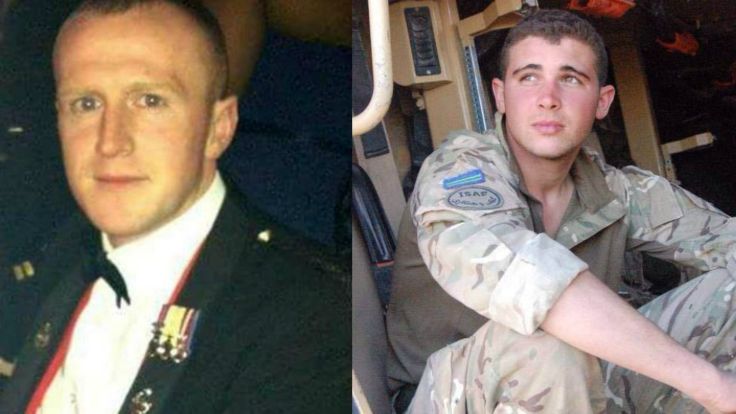
The incident at Castlemartin Range, Pembrokeshire on June 14 2017 resulted in the deaths of Royal Tank Regiment corporals Matthew Hatfield, 27, and Darren Neilson, 31. Two others were injured in the blast involving a Challenger 2 tank.
The inquest heard the two corporals were only in the tank because they were taking another soldier for a ‘guest shoot’.
Monday (Jul 2) saw the inquest resume, with Louise Hunt, the Senior Coroner for Birmingham and Solihull, saying a crew of four, including the two deceased, took the tank to the British Army range’s firing point without written permission.
Another team had used the tank earlier that morning, but the bolt vent axial (BVA), which is normally fitted to the rear of the tank barrel, had been removed for cleaning. The BVA would have stopped 3,000C high-explosive gases from shell charges escaping into the tank crew’s turret.

Police investigators said the removal of the BVA was standard practice, as it required post-firing inspection, and it was placed in a box within the tank turret called the ‘brew bin’.
Evidence was also heard the tank shell’s ammunition, known as ‘bag charges’, may have been ‘incorrectly stowed’ outside boxes within the turret.
Detective Sergeant Matthew Briggs, of Dyfed Powys Police, told the hearing in Solihull: “As there was no BVA, there would be no gas-tight seal and the force of the bag charge would have come back into the turret.”
Ms Hunt went on to read a statement setting out what then happened: “At around 15:30, a hissing sound was heard and noises and smoke.

“Corporal Neilson was seen to be climbing out of the commander’s turret and there was an explosion. He was projected out the turret, landing some distance away.”
The Coroner heard that the tank had only been taken out because the deputy safety training officer, Warrant Officer Stuart Lawson, had asked permission to go out and fire a tank.
Major John Poole, who was in command of Castlemartin Range, told the inquest that according to Ministry of Defence rules in pamphlet 21, it needed ‘two-star written authorisation’, effectively from a brigadier rank officer, to allow a non-trained soldier into a tank.

Major Poole told Ms Hunt permission had come from the Royal Tank Regiment’s Commanding Officer, Lieutenant Colonel Simon Ridgway.
Warrant Officer Lawson and another soldier, Trooper Michael Warren, were injured in the tank, but survived the blast.
Major Poole said: “Whether they were trying to show off to Mr Lawson, or trying to get through it [firing] as quickly as possible, I don’t know.”
When asked if he was aware of the practice by other crews, Poole responded: “Well, we’re here because somebody else hasn’t stored charges correctly.”
Family and colleagues of the deceased were also heard at the inquest. Cpl Hatfield, from Amesbury, Wiltshire, had served in Iraq and Afghanistan, being described as ‘truly dedicated to the British Army’, whose greatest achievement in life was said to have been becoming a father.
His fiancée Jill McBride said: “To say that his loss has had a massive impact on us is an understatement.”
Cpl Neilson, of Preston, Lancashire was described as ‘Army through and through’.
His wife Jemma said: “He adored the Army…he served in Iraq and Afghanistan. He was my world, my soul mate and hero. He was an amazing husband and daddy.”
Both men served with the Royal Tank Regiment in Tidworth, Wiltshire.
The inquest were told on Tuesday (Jul 3) that such an explosion had never happened before in the history of the tank model’s 20 year service, even during combat operations in Iraq.
Army training officer and tank specialist Sergeant Alexander Ahtom told the hearing that he was ‘not aware of any former incident like this before’ yet agreed with Ms Hunt that a ‘misunderstanding’ was possible when a new crew took over a tank.
Sgt Ahtom conceded that there was no regulation in place to recheck the tank barrels after use, but also said that ‘absolutely no-one’ had raised any concerns.
Despite this, the inquest heard training procedures had changed in the six weeks prior, including checks for the barrel and BVA as part of more frequent gun-proving drills.
Sgt Ahtom went on to tell Ms Hunt that he was ‘concerned’ that drills were not being conducted as expected.
Simon Antrobus QC, representing tank-maker BAE, described: “A whole series of rigorous development trials to look at reliability, firing and manoeuvres. During which thousands of rounds were fired and it saw direct action in Iraq against Iraqi tanks.”
Sgt Ahtom also said that he ‘completely’ disagreed with the Ministry of Defence (MoD) joint service inquiry panel’s conclusion into the explosion. The panel proposed that it could be possible if checking another key part that the presence of the BVA could be missed.
With the tank’s earlier crew, Lance Corporal Thomas Gough had acted as loader, and explained that he had cleaned the BVA, and then stored it in the ‘brew bin’. Yet he had earlier conceded that it was ‘common practice’ to take the BVA for engineering inspection at the tower.
When asked by Ms Hunt why he had not taken it to the tower, Gough said he ‘thought they’d be busy’.
Ms Hunt then went on to ask: “How would anyone know it was in the brew bin?”
Gough, who had been with the regiment six years, then replied: “Well, they wouldn’t, unless I told them.”
Normally, he would tell the crew commander Sergeant Paul Mitton that the tank was completely ‘stripped down’ but he had been busy that day with many tasks and ‘forgot’.
Barrister Mike Rawlinson QC, for Mr Lawson, asked Sgt Mitton: “There’s no system here of knowing where any BVA is, at any particular time, is there?”
Mitton, with the Royal Tank Regiment for 18 years, replied: “That’s correct.”
Mr Rawlinson then asked: “There’s no system for making sure the incoming crew know what’s happened to the BVA, is there?”
Sgt Mitton said: “No there’s no system.”
Mr Rawlinson then went on to ask: “This is chaos, isn’t it?”
Mitton replied: “On ranges, there can be quite a lot of pressure and I think sometimes the pace of life on the range is quite fast.”
Army tank drills have now been changed to check the BVA is present, the inquest was told.
The inquest, which is set to last three weeks, continues.










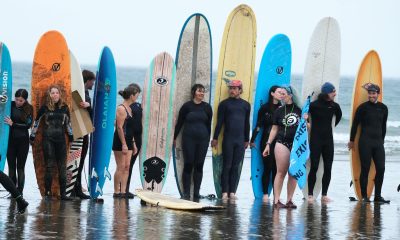
CAMPAIGNERS took to the sea at Broad Haven today in a colourful protest demanding urgent action over sewage pollution in Welsh waters.
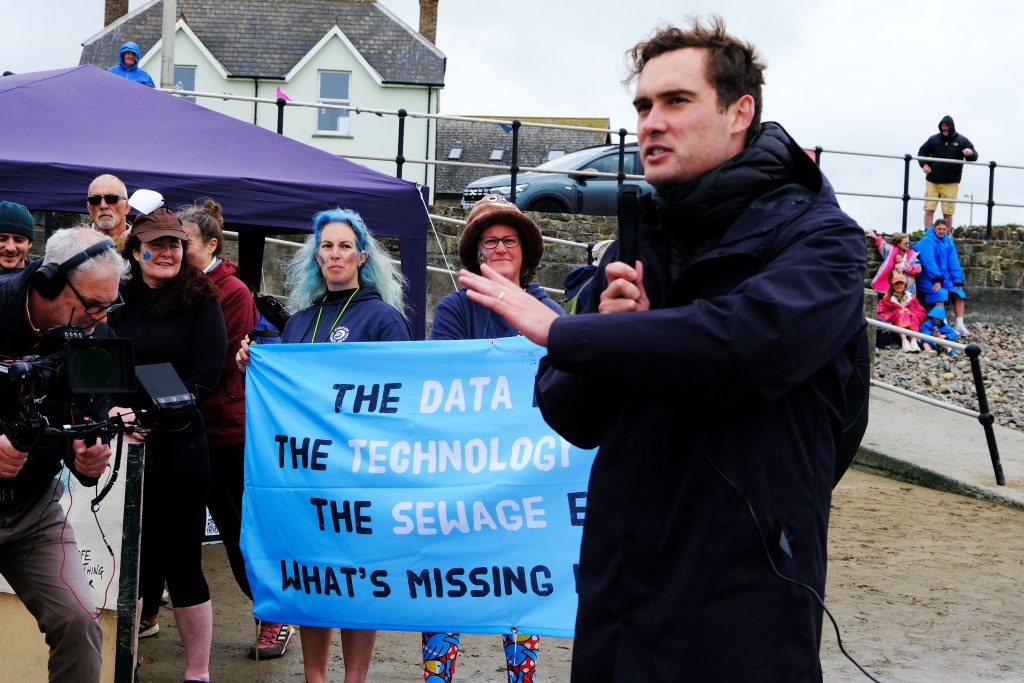
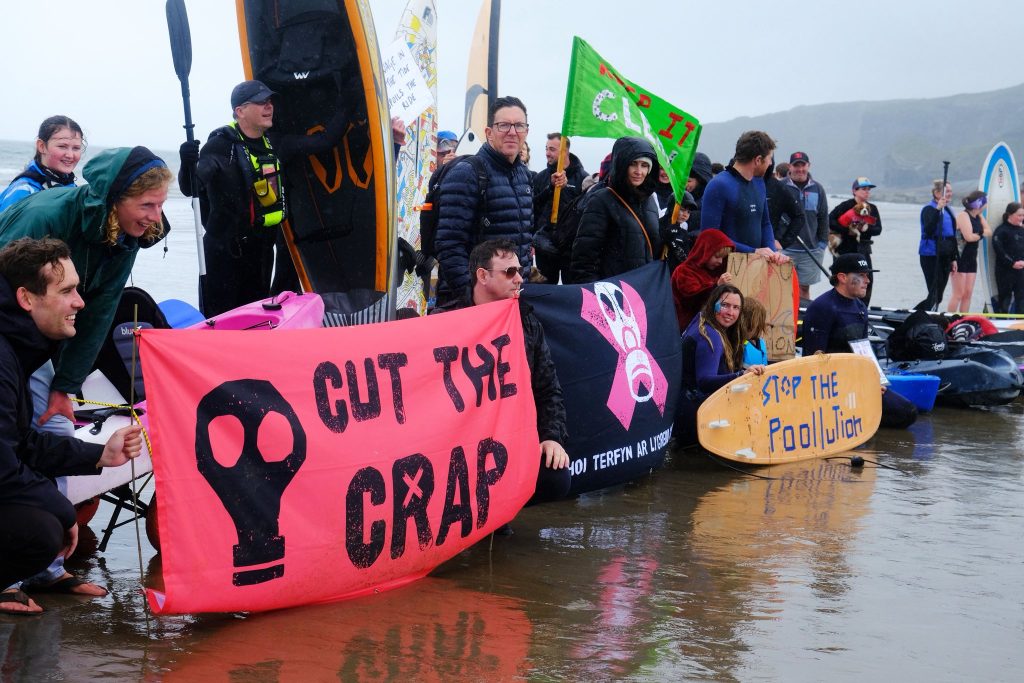
Surfers, paddleboarders, swimmers and families gathered on the beach on Saturday, with banners calling for cleaner seas and an end to pollution incidents affecting rivers and coastal waters.
The protest was part of the Surfers Against Sewage campaign, with demonstrators carrying placards reading “Keep the sea clean”, “Stop the pollution” and “Cut the crap”.
Mid and South Pembrokeshire MP Henry Tufnell attended the demonstration and made a speech supporting calls for tougher action. He has also recently written to Welsh Water raising concerns about pollution and water quality in the Tenby area.
Local community councillor Jeff Tierney, who works on and in the water at Abereiddy, said he fully supported the campaign.
Cllr Tierney said: “As a surfer, local community councillor and someone who works on and in the water at Abereiddy, I fully support the Surfers Against Sewage campaign.
“We are lucky at Abereiddy our water is excellent, but it’s clear the water companies have failed to invest adequately in ageing infrastructure over the past decades, allowing unregulated sewage discharges, poorly maintained drains and outdated treatment systems to become the norm.
“The result is that some of the treatment works are completely overwhelmed with sewage now effectively bypassing the treatment process, resulting in some rivers and coastal areas at times becoming unsafe and hazardous for swimmers, surfers, fishermen and other water users.
“Clean water should not be viewed as a luxury. It’s essential for public health, tourism, local livelihoods and the environment.
“The more this issue is brought into the public domain to make the public aware and put pressure on Natural Resources Wales to do their job properly, the better.”
Campaigners said the issue is no longer just an environmental concern, but one affecting public health, tourism, local businesses and confidence in Wales’ coastal waters.
Broad Haven, like many Pembrokeshire beaches, is central to the county’s identity and visitor economy.

Saturday’s protest showed the strength of feeling among those who use the sea regularly and believe not enough is being done to protect it.

Health bosses promise better joined-up care — but patients will want assurances over Withybush and travel distances
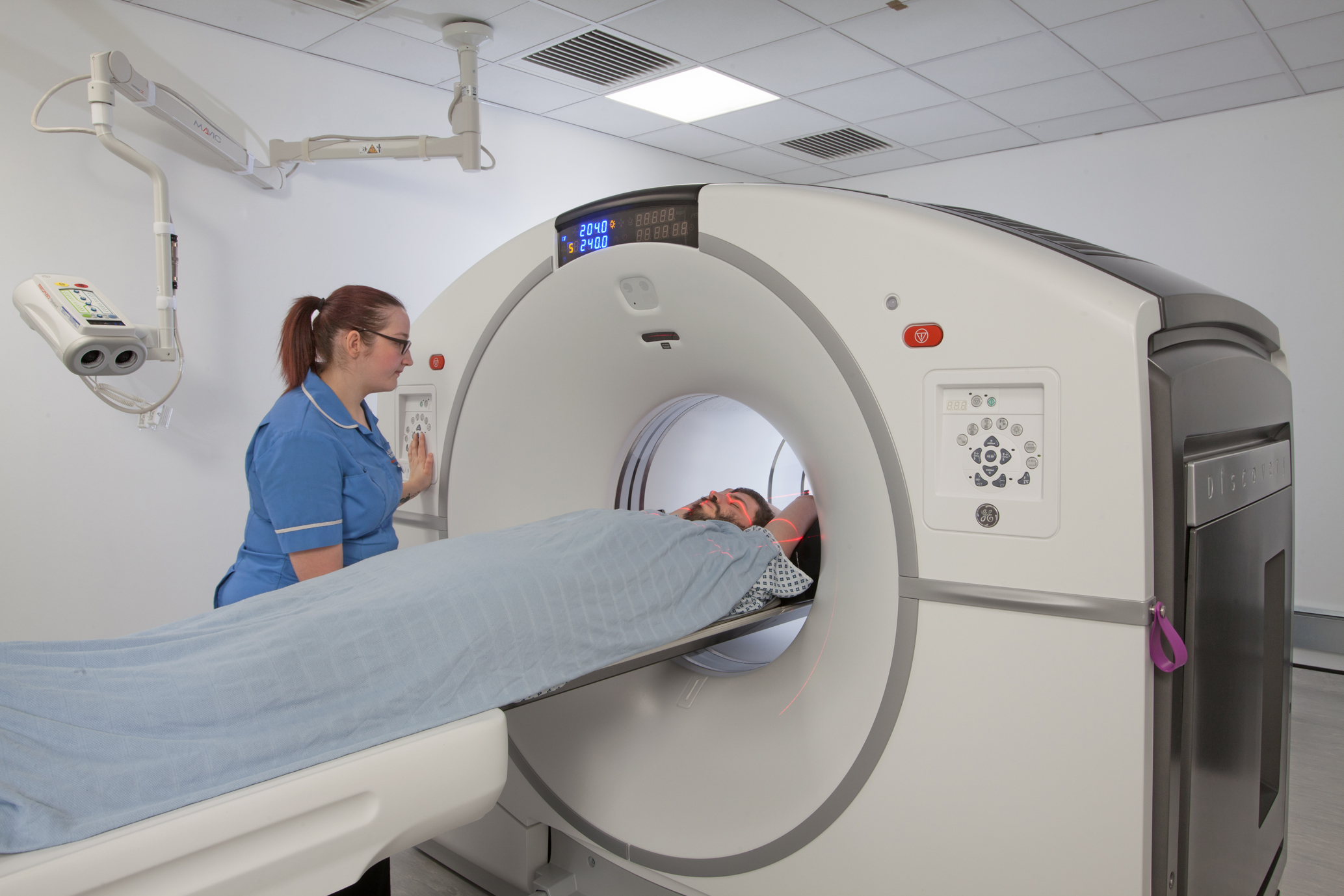
PEMBROKESHIRE patients are likely to be asking what a major NHS shake-up means for the future of hospital services closer to home after a new regional health body formally took over planning across south west Wales.
Health chiefs this week confirmed that regional working has formally transferred from ARCH (A Regional Collaboration for Health) to the South West Wales Regional Joint Committee (RJC), bringing together Hywel Dda and Swansea Bay university health boards under a new leadership structure.
The move is being presented by NHS leaders as a way to improve coordination, reduce waiting times and strengthen specialist healthcare across the region.
Key programmes expected to continue under the new body include cancer care, stroke services, vascular treatment, orthopaedics, pathology and eye care.
But for many in Pembrokeshire, the announcement may trigger familiar concerns about whether “regional working” could eventually mean more services being delivered further east, requiring patients to travel longer distances to Carmarthen or Swansea.
Withybush Hospital remains fiercely valued by local communities, and previous changes to hospital services have often sparked strong public reaction.
For patients in more rural parts of Pembrokeshire — including St Davids, Fishguard, Newport, Crymych and Tenby — access to healthcare can already involve journeys of 40 to 60 miles or more for appointments and treatment.
While health officials insist the new structure is about improving care and making better use of expertise across the region, questions are likely to be asked locally over how Pembrokeshire’s voice will be represented in decisions affecting frontline services.
Among the issues patients may want clarified are whether services currently provided at Withybush could be affected, how travel difficulties for rural communities will be considered, and whether the new regional approach will improve care locally or lead to greater centralisation.
The Regional Joint Committee replaces ARCH, which since 2015 brought together Swansea Bay University Health Board, Hywel Dda University Health Board and Swansea University to support healthcare innovation and service planning.
Health leaders say the new committee will continue to support research, technology and partnership working, while involving patients and communities in shaping services.
But in here Pembrokeshire, many will this plan weaken Withybush, not strengthen it.



A 41-YEAR-OLD man has been given a suspended prison sentence after using a vulnerable man’s bank card at Tesco Extra in Milford Haven.
Mark Anthony Hambrook, of Keeston, admitted fraud by false representation when he appeared before magistrates.
The court heard that Hambrook dishonestly used the card on April 29, 2025, spending £220.
Magistrates said the offence crossed the custody threshold because it involved a breach of trust, a vulnerable victim, and was committed while Hambrook was on post-sentence supervision.
He was sentenced to 16 weeks in prison, suspended for 12 months.
Hambrook was also ordered to pay £220 compensation, together with a £154 surcharge and £85 costs.


Community3 hours ago
Surfers take sewage protest to Broad Haven beach
CAMPAIGNERS took to the sea at Broad Haven today in a colourful protest demanding urgent action over sewage pollution in...

Health15 hours ago
New NHS regional body raises questions over future hospital services in Pembrokeshire
Health bosses promise better joined-up care — but patients will want assurances over Withybush and travel distances PEMBROKESHIRE patients are...


Local Government1 day ago
Pembrokeshire County Council welcomes new chairman
CLLR DELME HARRIES has been elected chairman of Pembrokeshire County Council for the coming municipal year. Cllr Harries, who was...


News1 day ago
From Milford Mercury to County Hall for Pembrokeshire’s first female leader
Late councillor Mike Stoddart helped hold power to account for decades — now his daughter Tessa Hodgson leads the council...


Business2 days ago
Port reports record turnover, but debt, emissions and senior pay also rise
Annual report shows strong growth and major investment, but underlying figures reveal a more complex picture THE PORT OF MILFORD...


Community2 days ago
DARC radar: Campaigners ask Welsh Government to call in planning application
PARC AGAINST DARC has submitted an official request asking the new Welsh Government to call in the planning application for...


News4 days ago
State Opening overshadowed by Starmer leadership crisis
KING CHARLES has arrived at Parliament for the State Opening as Sir Keir Starmer faces the most serious crisis of...


News4 days ago
Rhun ap Iorwerth becomes Wales’ new First Minister
PLAID CYMRU TAKES POWER AFTER HISTORIC SENEDD VOTE PLAID CYMRU leader Rhun ap Iorwerth has become Wales’ new First Minister...

News4 days ago
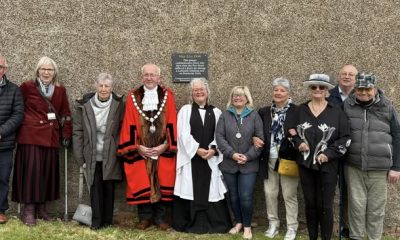
Hotel was hit during a Luftwaffe bombing raid
THE COMMEMORATION, held on Tuesday (May 12), marked the anniversary of the wartime attack, with members of the community gathering...


News5 days ago
Starmer fights for survival as Labour civil war erupts
Cabinet split, ministers resign and MPs revolt as pressure mounts on Prime Minister after disastrous election losses KEIR STARMER is...
-

 News1 day ago
Palestine pledge backed by 36 new Senedd Members
-

 Crime3 days ago
Teenager banned from roads after being caught six times over drug-drive limit
-

 Crime4 days ago
Man threatens to torch Silverdale Lodge through ‘demon drink’, court hears
-

 Crime3 days ago
Man sentenced for stalking women and threatening to torch home
-

 Crime3 days ago
Violent man jailed after ‘Banksy’ claims and campaign of domestic abuse
-

 Community6 days ago
Concern grows after child hospitalised following Tenby sea swim
-

 Local Government5 days ago
Council leadership hopeful responds after anti-Tory rally photos surface
-

 Crime4 days ago
Man denies exposure in Pembrokeshire town