


Business
Wales faces ‘postcode lottery’ in care home fees, say sector representatives


ALL local authorities in Wales should standardise payments for care home places, according to Care Forum Wales, the organisation representing the sector. The current system, where fees are set by individual councils, has led to stark discrepancies across the country, creating what the forum describes as a “postcode lottery”.
A significant variation in weekly charges for basic care has emerged between neighbouring counties, with some care home owners warning that the situation could force more closures. In two adjacent counties, the fees can differ by as much as £70 per week.
The Welsh government has acknowledged the issue, stating that its new National Office for Care and Support is considering measures “to bring about consistency”. However, it has also indicated that fee rates will continue to differ due to “local factors like land values for care homes”.
The Welsh Conservatives criticised the current approach as a “false economy”, arguing that social care and health services should not be competing for resources. Plaid Cymru echoed the need for change, calling for a “transformational change” in the health service.
Orme View care home in Llandudno, Conwy county, has seen its fees rise this year, following a decision by Conwy council to break away from the system where all councils in north Wales set their fees collectively. Instead, the council has adopted a new fee structure based on recommendations from an independent assessor, resulting in significantly higher payments.

Steffan Robbins of Orme View welcomed the change, calling it “an amazing, positive step forward.” Speaking to Politics Wales, he said, “Conwy have taken that step to really assess the true cost of care and make sure they deliver a fee that’s affordable to them, but also a fee that reflects the true costs that we’re seeing in the sector.”
In contrast, the Old Vicarage care home in Llangollen, Denbighshire, is receiving thousands of pounds less per resident each year compared to Orme View because it relies on the fees set by Denbighshire council. Although there has been an increase in fees this year, it remains substantially lower than the rates in neighbouring Conwy.
Currently, the fees for basic care in Conwy are £846 per week, while in Denbighshire they are £774. The disparity means that some care homes, like the Old Vicarage, are forced to charge residents additional top-up fees to stay afloat.
“It’s very disappointing,” said Bethan Mascarenhas, who runs the Old Vicarage. “As somebody who’s very invested in the work that they do, we really strive to give the absolute best level of care… Unfortunately, the divide between the fees will make that difference in what you can provide.”

A call for change
Care Forum Wales, the umbrella organisation for Welsh care homes, has warned that the current system is undermining facilities in areas where the fees do not reflect the actual costs. Chairman Mario Kreft emphasised the need for uniformity, stating, “The new National Office for Care and Support needs to ensure we have parity across Wales, that there is at least an understood basic level of funding across all local authorities and health boards. We’ve got to move away from a postcode lottery.”
Denbighshire council responded by asserting that it is striving to balance financial constraints while ensuring the sustainability of the care sector in the county. “We have worked hard to strike the delicate balance between navigating challenging financial constraints and ensuring that we are maintaining a sustainable future for the care sector in the county,” a spokesperson said. The council also noted that it has not seen evidence to suggest that differing fee rates are affecting the solvency of care homes in Denbighshire.

Speaking to BBC Politics Wales, Welsh Conservative MS Sam Rowlands urged the Welsh government to ensure that local authorities receive adequate funding to properly compensate care homes. “It’s kind of a false economy pitching social care against health services, because we know that there are hundreds and hundreds of beds in our hospitals at the moment which are blocked because people cannot access the care services that they need,” he said.
Plaid Cymru MS Mabon ap Gwynfor also called for a significant shift in the approach to care services. “We need to see a transformational change within the care service,” he said. “We need to see the Welsh government actually put this first and foremost as a priority… and to deliver that national care service so that care is free for individuals, that people working in the sector are paid properly, so that we know that our loved ones get that care.”
The National Office for Care and Support is currently exploring the possibility of introducing national fee methodologies to standardise care home fees. However, it has indicated that this does not necessarily mean a single national fee rate, as fees will still vary according to local factors such as land values for care homes.
The debate continues as stakeholders await the government’s next steps in addressing the inequalities in care home funding across Wales.



THE PEMBROKEHIRE HERALD is launching a recruitment drive to bring in two new sales executives as the newspaper continues to grow its commercial operations across the county.
The move comes as the Herald strengthens its position as the leading independent news platform in West Wales, with increasing demand from local businesses looking to advertise both in print and online.
The expansion is being driven in part by the rapid growth of Milford Haven and the wider energy sector, with major investment in green energy projects, port activity and associated industries creating new opportunities for local businesses.
As the area continues to develop as a key energy hub, more companies are seeking to reach customers, partners and the wider community through trusted local media.
The successful candidates will work directly with Pembrokeshire businesses, helping them promote their services to a growing audience through the Herald’s expanding digital reach and established print readership.

Editor Tom Sinclair said the recruitment reflects both the changing local economy and the Herald’s increasing audience.
He said: “Milford Haven is expanding rapidly, particularly with new energy and green projects coming forward, and that’s creating real opportunities for local businesses.
“At the same time, our audience continues to grow across both our website and social media platforms, meaning we can now offer advertisers a much bigger and more effective platform than ever before.”
The new roles will focus on building relationships with local firms, developing advertising campaigns, and identifying new opportunities across sectors including tourism, retail, trades, energy and professional services.

The Herald has continued to invest in its digital platforms, including Herald.Wales, alongside its well-established print edition, offering advertisers a multi-platform approach to reaching customers.
The recruitment drive also comes at a time when many local businesses are looking for cost-effective ways to promote themselves amid ongoing economic pressures.
Mr Sinclair added: “Local advertising matters. When businesses advertise locally, that money stays in the local economy. It helps create jobs, supports families and helps communities grow alongside the businesses within them.”

The roles are expected to appeal to motivated, target-driven individuals with strong communication skills and an interest in media, sales or marketing.
Both positions are based in Pembrokeshire, with opportunities for training and career progression within the Herald’s growing media group.
Anyone interested in applying is encouraged to email [email protected] with a CV and covering letter before Tuesday (Apr 1, 2026).

Employment down by 124 year-on-year with further monthly decline recorded in February
EMPLOYMENT in Pembrokeshire has fallen over the past year, with new figures showing a drop of 124 jobs compared with the same period in 2025.
Data for February 2026 reveals that 47,801 people were on payroll across the county, representing a 0.3% decrease year-on-year.
The latest monthly figures also show continued pressure on local businesses, with payroll numbers falling by 82 compared to January — a 0.2% drop.
The data, based on analysis of Office for National Statistics payroll figures by employment app WageSight, paints a mixed picture for the county’s labour market.
Compared with other Welsh local authorities, Pembrokeshire ranks 12th out of 22 for employment change, placing it in the lower half of performers.
The Herald understands that while some parts of Wales have seen modest job growth, others — including Pembrokeshire — continue to experience a squeeze on employment levels.
Paul Hebden, Director at WageSight said: “The latest figures underline the continued pressure on employment in Pembrokeshire. Payroll remains down compared with last year, and recent month-on-month data suggests employers are still cutting back.”
Nationally, employment trends remain uncertain, with fluctuations across different regions and sectors creating an unpredictable backdrop for businesses.
It remains unclear whether the recent decline marks the beginning of a longer-term trend or simply a short-term dip, but the figures suggest that employers in Pembrokeshire are continuing to act cautiously in the current economic climate.

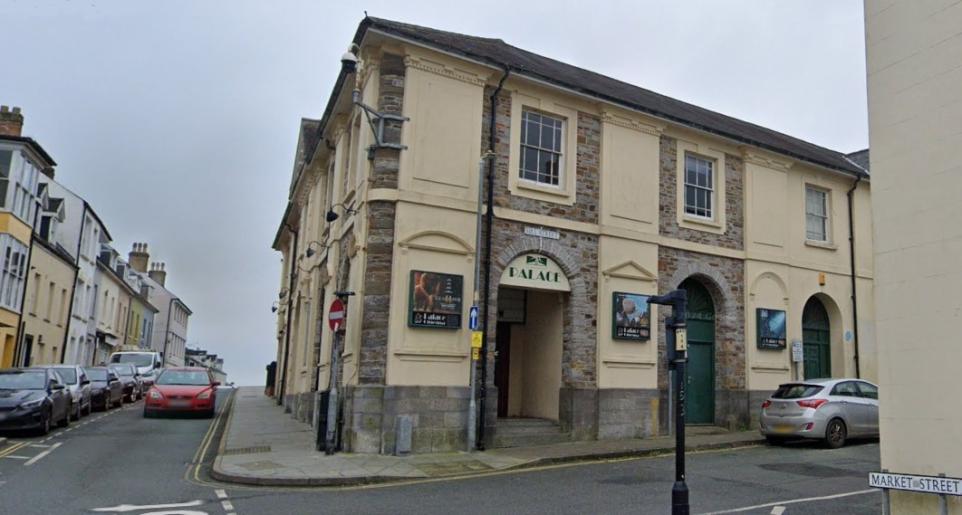
SIX COUNCIL-owned properties in Pembrokeshire, including Haverfordwest’s Palace Cinema, a boatyard, and a former social services premises in Tenby, are to be put up for sale following a decision by senior councillors.
At the March 16 meeting of Pembrokeshire County Council’s Cabinet, members were asked to back the disposal of six properties in the county’s portfolio as well the earmarking of four properties for other purposes.
A report for members said: “The Property Department has recently undertaken a review of the council’s estate to identify underused or vacant properties that are no longer required for service delivery and could be transferred internally or disposed of to generate capital receipts.”
The report listed six assets which members were asked to declare surplus for disposal by freehold sale.
Those assets were: Iveston Farm, Maidenwells; land east of Cleddau Reach School, Llangwm; Palace Cinema, Haverfordwest; St Asaph, Trafalgar Road, Tenby – social services premises; land at East Llanion Marine, Pembroke Dock – boat yard area; and land at Maidenwells – development plot.
For those six properties, it said of Iveston Farm: “Farm homestead in need of extensive renovation. An approach to local agents will begin to market the homestead and surrounding land. The remainder of the land areas are to be re-let as part of the County Farm Estate.”
For the land east of Cleddau Reach School, it said: “Areas of land parcels that no longer form part of the school demise and offer no opportunity to the authority and is therefore to be declared surplus for disposal.”
For Palace Cinema, it said: “Freehold of property to be sold. The property is listed and requires significant investment.”
For St Asaph, Trafalgar Road, Tenby, it said: “The property is not required or suitable for other internal services and is therefore to be declared surplus for disposal.”
For East Llanion Marine, it said: “Freehold of the property to be sold. This is an area of land (0.29 acres) adjacent to Port owned land. Both parcels are leased to East Llanion Marine. The property is not required or suitable for other internal services and is therefore to be declared surplus for disposal.”
For the land at Maidenwells, it said: “The property is not required or suitable for other internal services and is therefore to be declared surplus for disposal.”
It also listed three assets in which cabinet was asked to declared surplus to the requirements of one council department and appropriated to another use within the council.

Those were: Portfield Social Activity Centre, Haverfordwest – for future education project; Eastgate Centre, Pembroke – for future re-development project; and land west of Cleddau Reach School, Llangwm – for future education project.
Members were also asked to remove one property declared surplus to council requirements, appropriated for a particular use within the council: Pembroke Dock Watersports Centre – Watersports centre in occupation.
Members backed the 10 recommendations.



Education10 hours ago
Milford Haven school plans unveiled but funding not yet secured
PLANS for a new £100 million school in Milford Haven have been unveiled, but the project has not yet secured...


News11 hours ago
Council unveils plans for new state-of-the-art secondary school in Milford Haven
PEMBROKESHIRE COUNTY COUNCIL has revealed plans for a new state-of-the-art school in Milford Haven, promising modern, inspiring learning spaces for...


Health14 hours ago
NHS waiting list falls — but cancer delays and diagnostic backlog worsen
Record progress claimed by Welsh Government as critics warn key targets are still being missed THE NHS in Wales has...


Crime2 days ago
Rapist jailed after ‘abhorrent’ attacks on woman and children
Haverfordwest man told police “women won’t have sex without force” A HAVERFORDWEST man who raped a woman and a young...


News2 days ago
Reform secures first Pembrokeshire councillor in Hakin by-election win
Late Reform candidate takes seat as independent surge and Labour withdrawal shape contest REFORM UK candidate Scott Thorley has won...


News2 days ago
Scott Thorley elected as Pembrokeshire’s first Reform councillor
REFORM UK candidate Scott Thorley has won the Hakin by-election after securing 179 votes. The full result is as follows:...


News2 days ago
Police confirm man has died after being recovered from River Cleddau
Major emergency response in town centre after concerns raised for man in water A MAN has died after being recovered...


Community2 days ago
Davies and Kurtz urge groups to seek employability funding
Community organisations in Pembrokeshire encouraged to apply for new grants supporting skills and job access LOCAL Senedd Members Samuel Kurtz...


News2 days ago
Emergency services flood Haverfordwest after reports of person in river
Town centre sealed off as multi-agency response continues A MAJOR emergency response is underway in the centre of Haverfordwest after...


News2 days ago
Detectives receive surge of new information in bid to identify man found at Powys reservoir
Public response follows release of facial image as officers pursue fresh lines of enquiry DETECTIVES investigating the identity of a...
-

 Health7 days ago
Welsh Ambulance Service to host bi-monthly Board meeting
-

 News6 days ago
Rayner and Lammy visit Wales to discuss justice and community safety
-

 News5 days ago
Fishguard linked to allegations in Many Tears Animal Rescue investigation
-
News2 days ago
Emergency services flood Haverfordwest after reports of person in river
-

 Local Government6 days ago
Investigation confirmed after inspectors visit Many Tears Animal Rescue
-

 Community7 days ago
Local charity hosts cancer awareness event in Cardigan
-
 Business7 days ago
Work set to begin on £50m hydrogen plant in Milford Haven
-

 Farming7 days ago
Plea to remove decades old ‘unviable’ planning conditions from property