


Politics
Drakeford criticises ‘Mystic Meg’ motion on UK budget

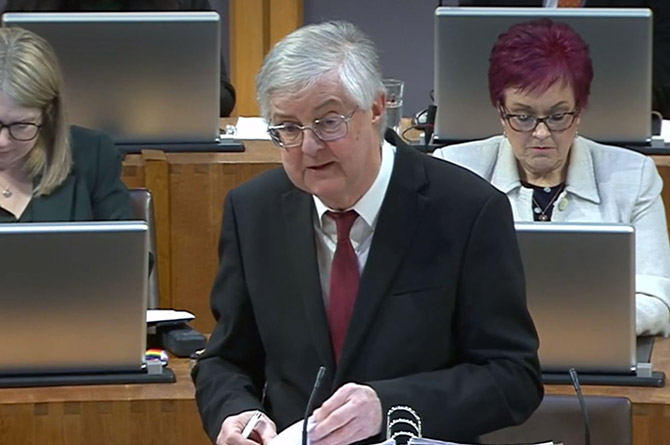
MARK DRAKEFORD criticised a “Mystic Meg”-style motion on next week’s UK budget.
Wales’ finance secretary responded to a Plaid Cymru debate held in the Senedd exactly a week before the new Labour UK Government’s first budget announcement on October 30.
He said: “I lost count of the number of times in which Plaid Cymru members used the word ‘demand’ as though the volume of our voice mattered more than the quality of our argument.
“And, alongside that student union approach to debating, you have a sort of Mystic Meg approach to the construction of propositions for debate.
“We don’t know, and actually you don’t know, what is going to be in the budget next week – yet your motion tells us already that it’s let Wales down.”

But Heledd Fychan, Plaid Cymru’s shadow finance secretary, stressed that the premise of the debate was to try to influence rather than predict the budget.
Her motion called for £4bn from HS2, devolution of the Crown Estate, a new funding formula for Wales, a U-turn on the winter fuel allowance, and an end to the two-child benefit cap.
Ms Fychan said: “In the run-up to the general election, Wales was promised change. For years, we have heard government ministers in this place say time and time again, ‘once we have a Labour government in Westminster, it will be different for Wales’.
“To date, the so-called partnership in power has underdelivered.”

She criticised the Welsh Government for “watering down” previous demands and seeking to delete all five calls from the motion.
Raising the example of HS2, she said the Welsh Government is now “requesting a commitment to further discussion” rather than reiterating previous calls for £4bn.
Peter Fox agreed with much of the Plaid Cymru motion, aside from the devolution of the Crown Estate which he argued would not be in the best interests of Wales.

The Conservatives’ shadow finance secretary said next week’s “long-awaited” budget will follow in the “incredibly disappointing” footsteps of the first 100 days of Labour.
He said: “We have seen nothing but spin, deception and U-turns from Labour ministers in Westminster and, sadly, their colleagues in the Senedd seem to be jumping into line.”
Mr Fox raised a warning from the older people’s commissioner for Wales that cutting universal winter fuel payments could lead to 4,000 excess deaths.
He also accused Rachel Reeves of backtracking on a manifesto pledge, with the UK chancellor expected to raise employers’ National Insurance contributions.
Luke Fletcher said Crown Estate assets generate hundreds of millions yearly “but none of that wealth actually stays in Wales” as he called for devolution of powers.
His Plaid Cymru colleague Peredur Owen Griffiths focused on HS2, which he described as the “great Welsh train robbery”, and Labour’s previous calls for Wales to receive billions.
And Rhun ap Iorwerth, the Plaid Cymru leader, accused Labour of putting its own interests before those of the people of Wales.
Jane Dodds, the Liberal Democrats’ leader in Wales, criticised Labour’s “appalling, head-in-the-sand” attitude toward the “cruel” two-child benefit cap.
Calling for taxes on the rich to fund public services, she said the burden of clearing up the Conservatives’ legacy of economic devastation should not fall on ordinary people.
Alun Davies, a Labour backbencher, said: “It’s certainly good to see Plaid Cymru registering their disappointment at a budget that hasn’t yet been delivered.
“I would certainly advise anybody today to listen to the budget before they condemn it.”
Responding to the debate on October 23, Prof Drakeford agreed with Ms Dodds on the “collective amnesia” of the Conservatives.
The former First Minister said: “I think the budget next week will make a start on repairing the damage of those 14 years of the starvation of our public services.”
The Senedd voted against Plaid Cymru’s motion and the Conservative amendment.
The Welsh Government’s “delete-all” amendment was also rejected, 28-27, with David Rees, the deputy speaker or Dirprwy Lywydd, using his casting vote in line with convention.



PARKING charge increases in Pembrokeshire, which include part of Tenby’s multi-storey and the new Haverfordwest interchange moving to a 24-hour charging model, have been backed by senior councillors.
At the March meeting of Pembrokeshire County Council’s Cabinet, members were asked to back a number of amendments to the current Pembrokeshire County Council parking charges.
For parking permits the changes proposed, to take effect from April 1, were: Y Penfro, parking across any long stay car park all year, from £240 a year to £300; The Puffin, which allows non-vehicle specific parking in a specific named car park all year round, from £180 to £240; Coastal, a transferable permit to allow a vehicle to park in specific seasonal car parks, up from £120 season to £160; Parking Permit Passport, a weekly permit transferable across all long stay car parks, from £35 to £40 a week.
These changes are expected to net an extra £25,000 a year.
At the Haverfordwest Interchange, changes, moving from a 9am-7pm charging to 24 hours, include the first hour now being free, with additional charges to the current rates of 10 hrs at £3.50 and 24 hrs at £4.50, along with a new dedicated motorcycle bay charge of £1 per 24 hours.

At Tenby multi-storey, to take effect from May 1, the proposal is to introduce 24 hours charging on floors 1–3. The ground floor would remain as charging between 9am and 7pm, this floor is short stay only, maximum stay two hours.
The main additional summer charges are: 10 hours £6, 24 hours £10, and weekly £50, up from the current £30; winter rates see 10 hours £3, 24 hours £5, and weekly £25, the latter up from £15.
From March 2027, Tenby Harbour Resident Permits see no cost changes, but a maximum of two vehicle registrations allowed, but a Tenby Harbour visitors permit will be introduced at a cost of £60 per vehicle.
These would be via a Variation Order which involves consultation. It is proposed to bring back any comments to Cabinet prior to implementing.

In Haverfordwest, a new four-hour charge, at £3, for Perrots Road is proposed alongside the current one and two-hour stay charges.
The town’s Hole in the Wall Car park is proposed to be revoked.
Two sites at Gelliswick Seafront currently have no enforceable parking restrictions. Due to recurring issues including overnight camping, it is proposed to introduce: Gelliswick Seafront – free parking, and Gelliswick – free parking.

Many of these changes will be require variation orders.
Other general cincreases proposed included: on street resident permit, £46 a year (to £48); on street visitor permit £52.50 (£60); compound £200 a week (£250); charity £50 (£65) free if all funds to charity; events, on a sliding scale dependent on the percentage capacity of the car park used from less than 50 per cent £100 (£150), 50-75 per cent £175 (£225) and over 75 per cent £225 (£275).
Members backed the changes, also agreeing to undertake a full review of parking services operations to include parking charges, charging periods, seasonal charges, license opportunities, in line with full cost recovery, with a report back to Cabinet in June 2027 – any changes to be implemented from September 2027.

REFORM UK has gained its first county council seat in Pembrokeshire following a seven-way battle for a ward made vacant following the death of veteran councillor Mike Stoddart.
Cllr Mike Stoddart, who passed away in January, represented Milford Haven’s Hakin ward, and had been a county councillor for more than two decades, having first been elected in 2004, with wife Vivien and daughter Tessa Hodgson also having county seats, Hubberston and Lamphey respectively, with Tessa also serving as Cabinet Member for Adult Social Care.
The late Cllr Stoddart was well-known as an outspoken councillor, critical of failings and injustices, as he had been when he set up the Milford Mercury newspaper with his family before he became a councillor.
In later years, Cllr Stoddart also held an often-critical mirror to council and councillor activities through his popular Old Grumpy website.
Following his death a by-election was held for the Hakin ward, with the count taking place on March 17, initially with an eight-way fight for the seat.
That eight-way fight was reduced to seven when Labour candidate Nicola Harteveld, who set up charity foundation the Megan’s Starr Foundation, withdrew her candidacy after allegations a family member was harassed during her campaigning.
Those standing for the ward included parties the Welsh Liberal Democrats, Welsh Conservatives, Reform, the Green Party, and three independents.
Results for the ward, which saw a 32.7 per cent voter turnout were: Derrick William Charles Abbott, Independent, 11 votes; Samuel Robert Booth, Wales Green Party, 85; Lee James Bridges, Independent, 106; Duncan Ritchie Edwards, Independent, 52; Brian Kelvin Taylor, Welsh Conservative Party, 144; Samuel Warden, Welsh Liberal Democrats, 57; Scott Michael Thorley, Reform UK, 179.
Nicola Catherine Harteveld, Welsh Labour, who withdrew her candidacy, still attracted 27 votes.

Winner Scott Thorley had previously unsuccessfully stood as a Reform candidate for the Prendergast Haverfordwest ward seat made vacant following the resignation of local county councillor Andrew Edwards.
He was later co-opted on to Haverfordwest Town Council.
Speaking after his Hakin ward win, the-now Cllr Thorley said: “It was a massive honour to win last night and I’m more than aware I’ve got some massive shoes to fill in Hakin.
“I’ve already started work this morning and have responded to four residents first thing.
“People in Hakin just want the basics done right and someone they can reach out with any issues they have; I will be that person.”
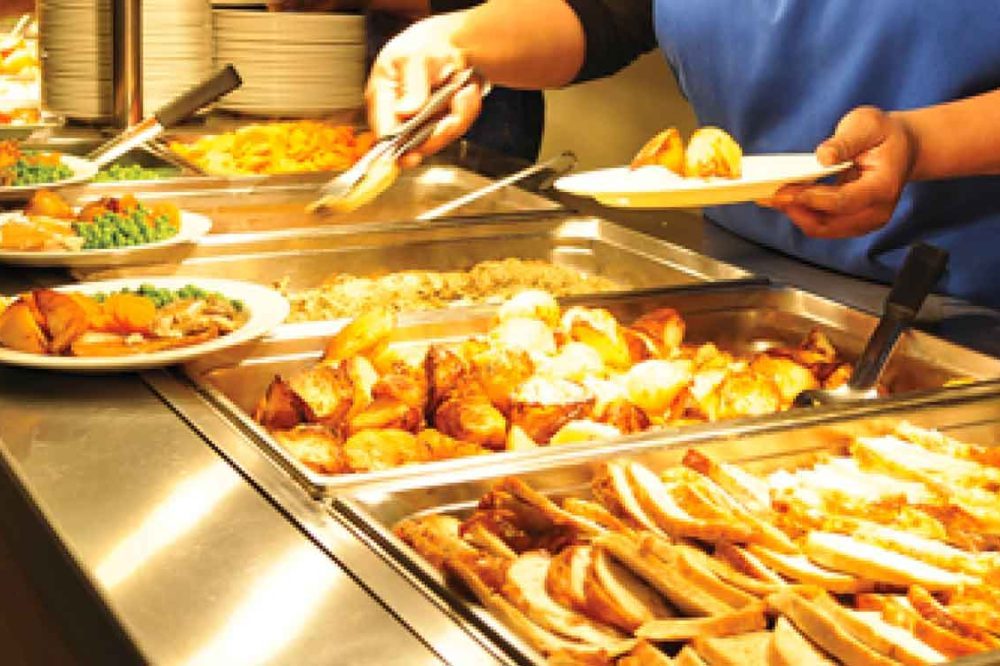
THE PRICE of school meals in Pembrokeshire is to rise after senior councillors heard their current costs can no longer be sustained without financial losses to the authority.
At the March meeting of Pembrokeshire County Council’s Cabinet, members were asked to back increases to the price of paid school meals in primary and secondary schools from September 1.
A report for members said prices “have remained unchanged for seven years and can no longer be sustained due to rising operational and staffing costs”.
It said the School Meals Service is experiencing significant financial pressure as a result of food price inflation and National Living Wage increases, rising to £12.21 per hour, adding: “While the service currently maintains an overall surplus, recent analysis shows that the secondary school catering service will enter a deficit in 2026/27 without a price adjustment.”
For primary schools, the service provides approximately 6,500 meals per day across 53 schools, adding: “The unit cost of producing a paid for primary school meal now exceeds the costs of production (this include ingredients and additional overheads). This misalignment has created a structural deficit for each meal served.
“As we are managing to a total cost recovery model rather than a static unit price, the £3.40 Universal Primary Free School Meals rate is the most reliable proxy for current production costs for a primary pupil meal.”
Members were recommended to increase paid meals by 20p and adult meals by 49p.
For secondary schools, the service provides 3,500 meals daily across eight secondary schools, where a cafeteria style- model is used.
The report said: “Meal prices have been frozen since 2019. Despite efficiency measures such as supply chain reviews and menu consolidation, food inflation and wage increases now exceed what can be absorbed operationally. It is no longer possible to provide a high quality, nutritionally balanced two- course meal within the current pricing structure.”

As part of a proposed service saving of £200,000 for this financial year it was recommended to increase the price of individual menu items by some 11 per cent.
It added: “Despite maintaining static meal prices for seven years, the Council’s proposed rates remain competitive when compared with neighbouring authorities. Recent benchmarking shows widespread variation, with many councils planning further price increases before September 2026.”
Members backed recommendations that the price of a paid primary school meal increases from £2.55 to £2.75, with adult meals rising from £3.51 to £4.

They also backed increasing the price of individual secondary school meal menu items by 11 per cent, subject to targeted increases rather than a blanket rise.



Health25 minutes ago
NHS waiting list falls — but cancer delays and diagnostic backlog worsen
Record progress claimed by Welsh Government as critics warn key targets are still being missed THE NHS in Wales has...


Crime24 hours ago
Rapist jailed after ‘abhorrent’ attacks on woman and children
Haverfordwest man told police “women won’t have sex without force” A HAVERFORDWEST man who raped a woman and a young...


News1 day ago
Reform secures first Pembrokeshire councillor in Hakin by-election win
Late Reform candidate takes seat as independent surge and Labour withdrawal shape contest REFORM UK candidate Scott Thorley has won...


News2 days ago
Scott Thorley elected as Pembrokeshire’s first Reform councillor
REFORM UK candidate Scott Thorley has won the Hakin by-election after securing 179 votes. The full result is as follows:...


News2 days ago
Police confirm man has died after being recovered from River Cleddau
Major emergency response in town centre after concerns raised for man in water A MAN has died after being recovered...

Community2 days ago
Davies and Kurtz urge groups to seek employability funding
Community organisations in Pembrokeshire encouraged to apply for new grants supporting skills and job access LOCAL Senedd Members Samuel Kurtz...


News2 days ago
Emergency services flood Haverfordwest after reports of person in river
Town centre sealed off as multi-agency response continues A MAJOR emergency response is underway in the centre of Haverfordwest after...

News2 days ago
Detectives receive surge of new information in bid to identify man found at Powys reservoir
Public response follows release of facial image as officers pursue fresh lines of enquiry DETECTIVES investigating the identity of a...

News2 days ago
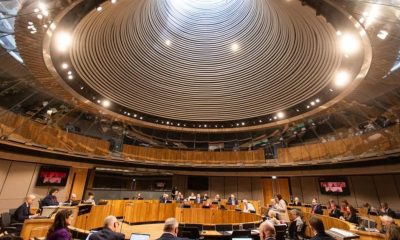
Senedd committee urges next Welsh Government to prioritise Wales–Ireland links
A SENEDD committee has called on the next Welsh Government to continue prioritising Wales’s relationship with Ireland, describing it as...

Education3 days ago
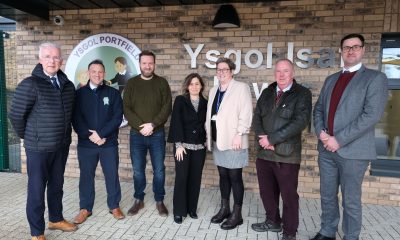
New facilities open at Portfield School as redevelopment reaches key milestone
THE FIRST phase of a major redevelopment programme at Portfield School in Haverfordwest has been completed, marking a significant step...
-

 Health6 days ago
Welsh Ambulance Service to host bi-monthly Board meeting
-
 News5 days ago
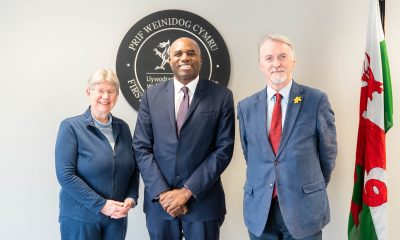
Rayner and Lammy visit Wales to discuss justice and community safety
-
 News4 days ago
Fishguard linked to allegations in Many Tears Animal Rescue investigation
-
News2 days ago
Emergency services flood Haverfordwest after reports of person in river
-

 Charity7 days ago
Many Tears Animal Rescue visited by inspectors as police attend in support role
-

 Farming7 days ago
Farmers’ Union warns proposed lamb welfare changes risk unintended consequences
-

 Community7 days ago
Choir performs for residents at Kensington Court
-
 Local Government5 days ago
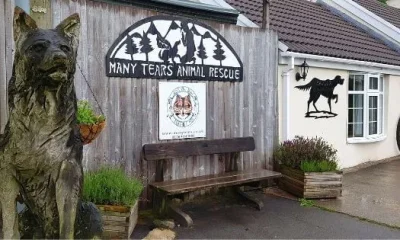
Investigation confirmed after inspectors visit Many Tears Animal Rescue