


News
‘Stark’ choices for Pembrokeshire


Cllr Jamie Adams: Simpson says he is ‘a capable boy with bad judgement’
A MEDIA meeting on Friday Oct 3) allowed media to quiz Council Leader Jamie Adams about the council’s public consultation of its services and budget planning. In conjunction with the council’s Finance Director, Jon Haswell, Cllr Adams delivered a ‘stark’ assessment of the choices facing local government in Pembrokeshire. Jamie Adams told the press that the effect of cuts on the grant to local government will mean around 25% of funding will disappear over the next four years.
With Pembrokeshire’s annual budget running currently at about £207m a year, that figure will shrink to £150m by 2017/18. According to Jon Haswell: “It is difficult to see how previously protected services such as education can retain their ‘protected’ status.’ ‘Protected’ elements of the budget amount to – arguably – £170m, while other services have been cut.” Jamie Adams continued by remarking that he regarded the current grants system as inefficient and bureaucratic, particularly with regard to specific grants given for defined projects.
Calling on government ministers to ease the bureaucratic burden, Cllr Adams suggested that the time had come for specific grants to be included in the total grant settlement to prevent duplication of work and waste of scarce cash. Cllr Adams stated that he was keen to strip away excess costs from the delivery of services and pointed out that he was keen to communicate that buildings were separate entities from the services provided within them. “Year on year I am pleased to have been able to announce that we are one of the few authorities without resorting to compulsory redundancies. I can no longer give that guarantee now. We are at a tipping point in local government finances.
We will consider all options, and will be looking to flexible opportunities to reduce some staff hours. We have to look at that in relation to service provision. “But I have to praise staff for the willingness and skills in delivering services outside their comfort zone, for example at Fishguard Library, where several services are delivered and more hours are now devoted to individual services than was previously the case.” He added: “Costs associated with buildings are impacting upon the level of service, in that they drain the budget.
We are looking at a rationalisation of buildings which hopefully will not mean a rationalisation of services but that the same number of services will be delivered from fewer building. “We are at a fundamental juncture in local government where we need to significantly reduce the costs of the services we provide. Taking the Youth Service as an example, 40%-50% of the cost of providing that service is tied up in the specific building. Those buildings provide nothing. People provide the service. The family centre, youth centre, older persons’ centre, adult education centre become one and instead of being used, perhaps, sixteen hours a week, they are used sixteen hours a day.

What you have in communities is an attitude that the building is the service. But that is not the case. Luncheon clubs, for example, meet in specific buildings but why not elsewhere. We need to focus our expenditure on services and people, not on maintaining buildings. It is a difficult argument to get across. I hope more communities will step forward and follow the example of Fishguard at Theatr Gwaun, and become involved in delivering services and taking on funding of them their selves. I want to be clear, however, that we will not allow communities to take on providing services which they cannot afford to maintain.”
He went on to explain: “Look at Narberth Pool: there is great enthusiasm to retain Narberth Pool within that community. I hope and think they will get there and show they have the financial capacity to maintain the Pool as a going concern.” “There will be inevitably be services which are delivered at low cost now, which will attract a higher cost in the future. Some things that are provided free, will be charged for in order to retain services. There are different ways to deliver services; there is a huge capacity in the third sector, but there is also a chance of losing uniformity across the whole county.”
Speaking about secondary education, Cllr Adams told the meeting: “There are eight secondary schools in Pembrokeshire with 1,000 empty places. In five years time there will be 2,000 empty places. Maintaining schools that are not at or near capacity is a wasted resource. “21st Century Schools is an opportunity to rebuild the school estate and provide more efficient buildings to reduce the costs of running school buildings.” In relation to the pressure being applied to Welsh councils to merge, Jamie Adams said: “We are prepared to look at the advantages for Pembrokeshire of some sort of formal arrangement with another Council.
We are to discuss this in Council on October 16. But I have not seen any evidence that larger councils to perform well financially, in fact the largest council in Wales is not doing very well at all. “Partnership working is already happening. We are already working with Carmarthenshire on elements of the education service. But there is the important matter of democratic oversight;

there is a risk of the creation of a democratic deficit if councils become too large and services too remote. “In terms of the financial carrot offered by the Minister, I have seen no detail and I suspect that councils might find it a very mouldy carrot indeed, especially if they have to find the money to fund mergers themselves out of existing budgets. “That said, I do see an opportunity for councils to become commissioners of services, rather than providing all those services themselves.
Legal services are provided via a consortium-type arrangement. “I have no problem commissioning a service from another council or another provider but I think it is important that people and councillors can hold me to democratic account about the decisions I make. “It would be quite comfortable, I think, being the head of a large authority. You can avoid direct engagement, in a way that I seem unable to at the moment!”

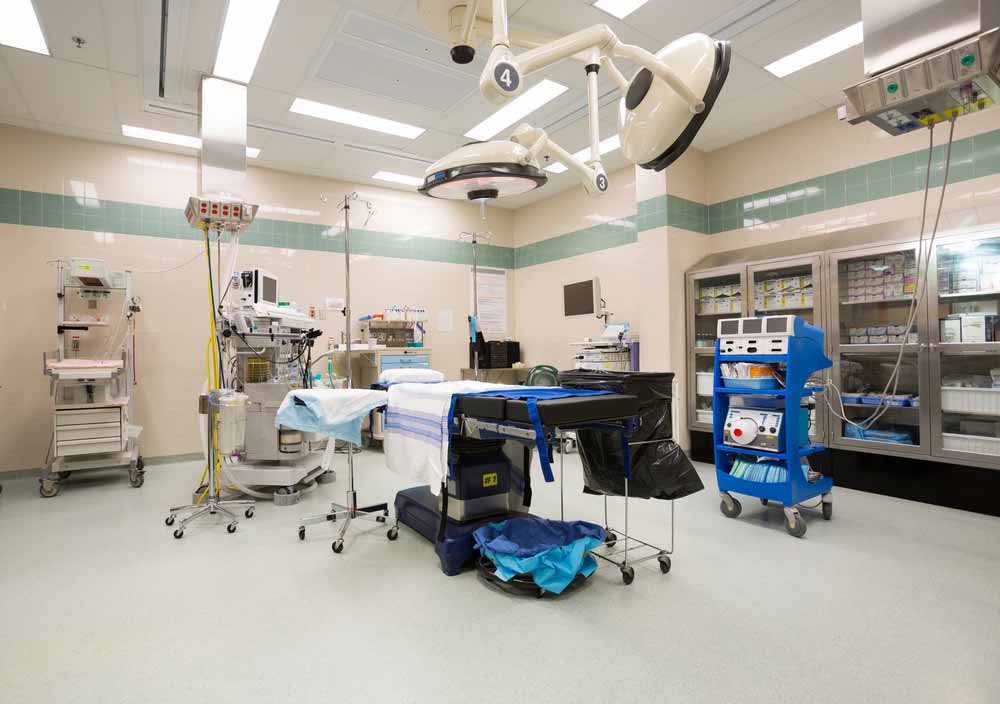
Senedd election promises collide with the harsh reality of ageing hospitals, fire safety concerns and a maintenance crisis stretching across the country
WALES’ NHS is facing a repair and maintenance crisis of almost £1bn, with some of the country’s biggest hospitals burdened by ageing buildings, serious safety concerns and growing pressure on already stretched budgets.
New figures covering 210 NHS sites show that the backlog of work classed as high risk or significant risk has now reached £917m — up 71% in just four years.
The data, published for 2024-25 by NHS Wales Shared Services Partnership, shows more than £616m of the total relates to serious problems at 12 of Wales’ 13 main hospitals.
Ysbyty Gwynedd has the biggest backlog of high and significant risk repairs at £110.5m, followed closely by University Hospital of Wales in Cardiff, where the figure stands at £106.8m.
The scale of the problem is not just financial. Three hospitals — Bronglais, Prince Philip and Ysbyty Gwynedd — have 40% or more of their space rated as not fire safety compliant. At Ysbyty Gwynedd, 35% of space is also not regarded as health and safety compliant.

Aging estate
The figures highlight the deep-rooted problem of an ageing NHS estate across Wales.
More than 30 NHS sites have buildings where over half the estate predates the creation of the NHS in 1948. Another 17 sites, including University Hospital of Wales and Bronglais Hospital, are mainly made up of buildings between 50 and 60 years old.
Only one major hospital in Wales — the Grange Hospital near Cwmbran — is said to have no maintenance backlog. But even that project, which cost £350m, was first proposed in 2004 and only opened during the Covid pandemic, showing how long major hospital developments can take.
When the wider risk-adjusted backlog is considered across all NHS buildings in Wales, focusing on problems where safety may be at risk, the total cost rises to more than £1bn.

The largest overall figure is in the Betsi Cadwaladr health board area, where the backlog stands at nearly £278m.
Despite the Grange being one of the newest hospitals in Wales, Aneurin Bevan health board still faces a backlog of almost £233m, much of it linked to older sites including the Royal Gwent and Nevill Hall hospitals.
In Hywel Dda, where hopes of a new west Wales hospital remain some way off, the total backlog has reached £221m. Among the worst affected sites is Glangwili Hospital in Carmarthen, where high and significant risk repairs and maintenance amount to £82m.

West Wales pressure
FOR west Wales, the figures are especially troubling.
Hywel Dda residents have already faced years of uncertainty over the future of hospital services, and the scale of the maintenance bill raises fresh questions about how long ageing buildings can continue to serve local communities safely and effectively.
Bronglais Hospital is among the sites with major fire safety compliance concerns, while Glangwili carries one of the largest repair backlogs in the region.
The growing cost of patching up older hospitals will inevitably intensify the political argument over whether ministers should prioritise maintaining existing buildings or push ahead with long-promised new developments.
The chair of Cardiff and Vale health board recently acknowledged that the age and condition of University Hospital of Wales was affecting morale and efficiency, describing the quality and upkeep of buildings as an ongoing concern.
Expert warning
Mark Dayan, a policy analyst at the Nuffield Trust, said Wales had a worryingly large maintenance backlog by any standard.
He warned that poor infrastructure could directly affect the way care is delivered, making it harder for the NHS to reorganise services, improve patient flow or create safe, modern working environments.
The issue is not unique to Wales. NHS England is facing its own enormous repair backlog, estimated at £16bn. But in Wales, where budgets are tighter and hospital plans often move slowly, the pressure is especially acute.
Election battleground
WITH the Senedd election set for Thursday, May 7, parties are offering different solutions to the growing crisis.
Labour has pledged a £4bn Hospitals of the Future fund, promising new hospitals including replacements for Wrexham Maelor Hospital and University Hospital of Wales, as well as a major development in west Wales.
Plaid Cymru says Labour’s sums do not add up, and argues urgent high-risk repairs should come first.
Reform UK says the Welsh Government should concentrate its capital budget on clearing the maintenance backlog rather than making promises on multiple new hospitals.
The Conservatives say they would declare a health emergency and expand capacity through new community hospitals, diagnostic centres and surgical hubs.
The Liberal Democrats say they would upgrade the worst parts of the NHS estate while backing a replacement for University Hospital of Wales, linking investment to wider reform of social care and community services.
The Green Party has called the backlog a disgrace and says it would launch a multi-year programme to bring NHS facilities up to a safe and modern standard.
Whatever the result in May, the next Welsh Government will inherit a stark reality: before it can deliver a new generation of hospitals, it must first confront the spiralling cost of keeping the current estate from falling further into decline.
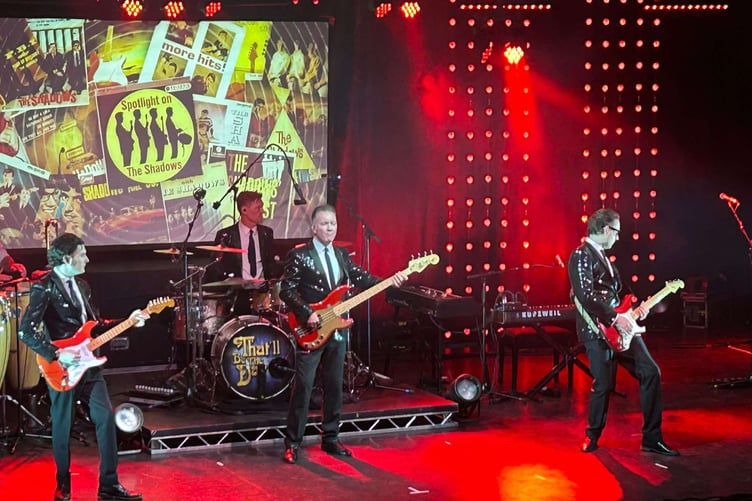
A MUCH-LOVED theatrical tradition returned to Folly Farm on Friday and Saturday, October 24 and 25, 2025, as That’ll Be the Day celebrated its ruby anniversary in memorable style, raising £5,469 for The Paul Sartori Foundation.
The charity performances were filled with celebration and significance. Saturday night marked the 40th performance of the show at Folly Farm’s Follies Theatre, staged in the 40th year of That’ll Be the Day itself — a remarkable double milestone that was warmly received by the audience.
The anniversary weekend captured everything people have come to love about the production, from its crowd-pleasing musical numbers and toe-tapping hits to its trademark comedy sketches and strong sense of community.

There was also an emotional note to the occasion, as the weekend was billed as Trevor’s final on-stage performance with the show. Or was it? Although retirement had been suggested, Phil Thompson has since confirmed that Trevor will be back this year — to the delight of fans.
As one chapter closes, another begins, and excitement is already building for the future. That’ll Be the Day will return in 2026, with performances confirmed for October 30 and 31. Tickets are now on sale.
Audiences can expect new voices, a refreshed format, and the same talent and showmanship that Pembrokeshire audiences know and love.
Supporters keen to see the next chapter of this musical extravaganza can buy tickets through the Paul Sartori website, by calling the events team on 01437 763223, or in person at Dale’s Music in Tenby or Rock ‘n’ Rolla in Narberth.
If the ruby anniversary weekend proved anything, it is that That’ll Be the Day continues to shine, shimmy and entertain — all while helping to support hospice-at-home care in Pembrokeshire.
If you want, I can also turn this into a more polished newspaper-style piece with a headline and subheading.


NEW six-part BBC One programme is looking for five to eight-year-olds across Wales who are finding it hard to make friends
A NEW BBC television series is looking for children across Wales aged between five and eight who are finding it hard to make friends.
Will You Be My Friend? is a new six-part series for BBC One and iPlayer from Five Mile Films, the makers of Channel 4’s The Dog House. The programme will focus on children who are struggling socially, whether through shyness, feeling left out, or finding it difficult to connect with others their own age.
The series will centre on what producers call The Friendship Centre, where a team of psychologists will help children build confidence and social skills to form real and lasting friendships.
Each child will then be sensitively matched with a potential new friend from their local area for a play date. Six weeks later, the programme will return to see how their new-found confidence has helped them at school, in the playground and beyond.
The production team says the series aims to explore the challenge of friendship in modern childhood, at a time when many families remain concerned about loneliness, social confidence, screen time and the lingering effects of the Covid pandemic.
Emma Loach, Interim Head of Commissioning, Documentaries at the BBC, said: “The longing to connect, to be seen, and to belong is universal.
“Whether you’re five or fifty-five, I defy anyone to watch these children without seeing a little bit of themselves reflected.
“In a world that can feel increasingly disconnected, this series shows that the simplest gestures – a smile, a shared joke, a tentative ‘will you be my friend?’ – still have the power to change everything. Five Mile Films has brought us something very special, and we couldn’t be prouder to give it a home on the BBC.”
Nick Mirsky, CEO of Five Mile Films, said: “I don’t think there’s a commission I could be more thrilled to bring to Five Mile. Will You Be My Friend? will be joyful, warm and funny, but it also does something genuinely new – inviting us to look closely at the challenge and art of making friends.”
Filming is due to take place in July and August, and producers are now inviting applications from families in Wales who feel their child could benefit from taking part.
The series is being made by Five Mile Films for BBC One and iPlayer, with All3Media International acting as international partner.

Parents or guardians who would like more information or wish to apply can visit: bemyfriend.tv
Based on the press release and fact sheet you uploaded.


Health11 hours ago
Crumbling NHS faces £1bn repairs bill in Wales
Senedd election promises collide with the harsh reality of ageing hospitals, fire safety concerns and a maintenance crisis stretching across...

News20 hours ago
Emergency services respond to incident in Haverfordwest town centre
EMERGENCY SERVICES were called to an incident in Haverfordwest town centre on Saturday morning (Apr 4), with police and ambulance...
News20 hours ago
Teenager intervenes after bridge incident
A TEENAGER was left shaken after stepping in to help a young woman in distress on Clay Lanes bridge in...


Crime3 days ago
Driver spared jail after crash killed young couple
A PEMBROKE DOCK driver who caused the deaths of a young couple in a road crash has been given a...

Entertainment3 days ago
BBC unveils major new Welsh dramas with Tenby set for prime-time spotlight
New crime series Old Town Murders and supernatural thriller The Witch Farm will both be filmed and set in Wales...


Health3 days ago
No jobs for new paramedics in Wales as graduates told to apply for technician roles
Students trained at public expense urged to take lower-grade jobs as anger grows over NHS workforce planning NEWLY qualified paramedics...

News4 days ago
Health minister refuses to act on Withybush despite 15,000-signature petition
Senedd pressure grows as Welsh Government declines to intervene over surgery fears THE WELSH GOVERNMENT has refused to step in...

Business4 days ago
Fishguard to Wexford rail tunnel plan backed by Elon Musk firm
Six-hour London to Dublin service proposed in £32bn project ahead of Senedd election PLANS for a rail tunnel linking west...

Charity5 days ago
Milford Haven charity honoured with King’s Award for voluntary service
A PEMBROKESHIRE charity supporting vulnerable young people has received one of the highest honours in the UK for voluntary work....

News6 days ago
Plaid Cymru launches bid to lead next Welsh Government
Party positions itself as ‘government-in-waiting’ ahead of May election PLAID CYMRU has formally launched its campaign for the 2026 Senedd...
-
 News2 days ago
Accommodation providers in Wales will be required to register under new law
-
Business4 days ago
Fishguard to Wexford rail tunnel plan backed by Elon Musk firm
-
 Entertainment2 days ago
From Milford Haven to the world: The story of The Evolution Experience
-
Entertainment3 days ago
BBC unveils major new Welsh dramas with Tenby set for prime-time spotlight
-

 Charity6 days ago
RSPCA calls for stronger animal welfare measures as Welsh Labour launches manifesto
-
 Crime7 days ago
Gunshot fired by police during incident in Milford Haven
-
 Community6 days ago
Pembrokeshire school allows Sikh pupil to wear Kirpan
-

 News5 days ago
Labour promises 48-hour GP access as manifesto faces questions over delivery