


News
Labour’s refusal to compensate WASPI women sparks outrage

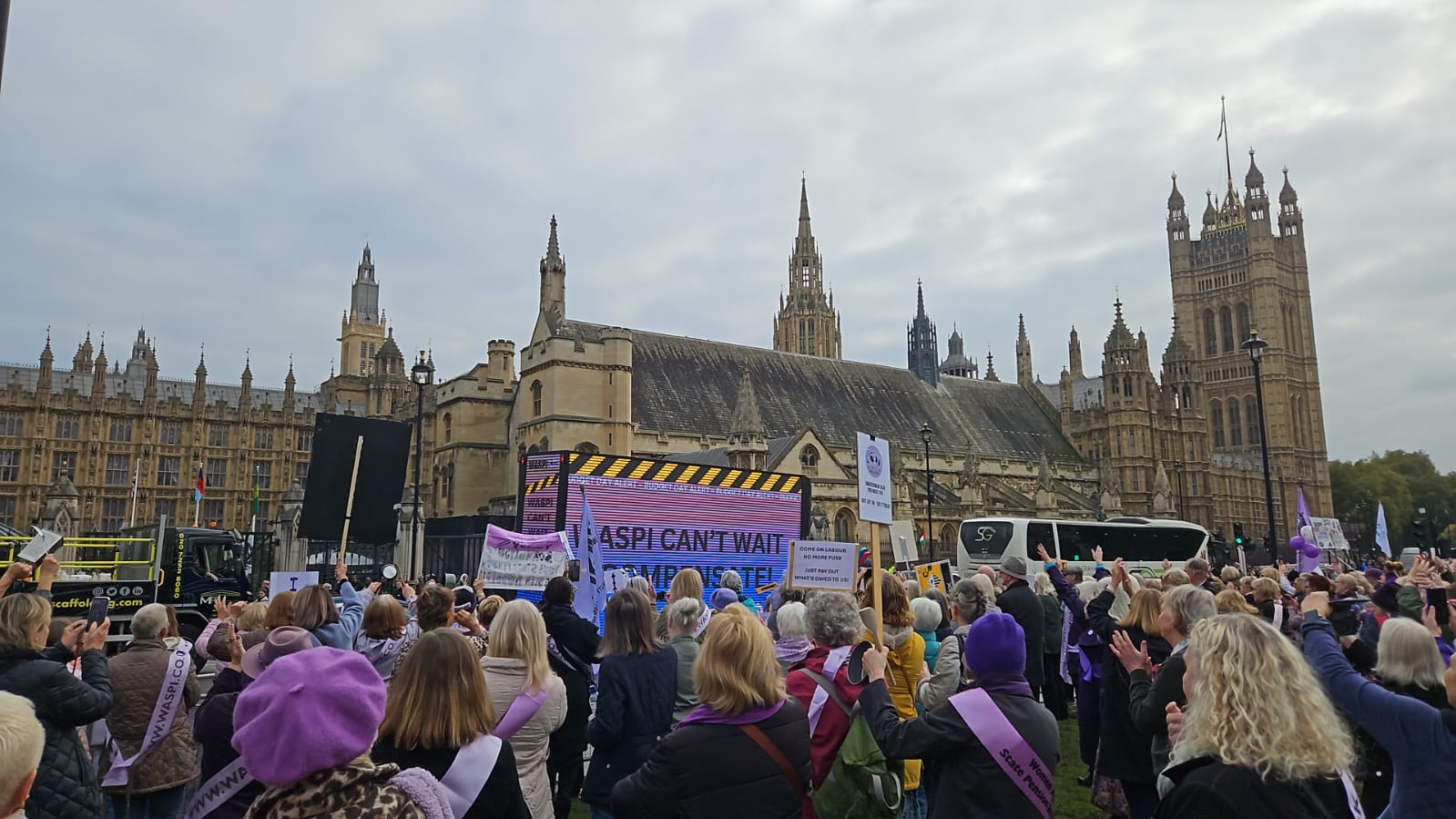
THE UK LABOUR GOVERNMENT has ignited controversy by refusing to compensate the 3.8 million Women Against State Pension Inequality (WASPI) campaigners affected by changes to the state pension age. The decision has drawn fierce criticism from opposition figures and campaigners, who accuse Labour of breaking election promises made to these women.
The WASPI women are campaigning because they believe they were unfairly impacted by changes to the state pension age, which were poorly communicated and left many born in the 1950s financially unprepared. The sudden shift from receiving pensions at 60 to later ages caused significant hardship, as many were unable to adjust their retirement plans in time. They argue the changes disproportionately affect them due to limited financial opportunities earlier in life, and the lack of transitional arrangements or compensation exacerbates the harm caused. WASPI women seek fair redress for the financial and emotional distress they have endured.
Andrew RT Davies, Senedd Member for South Wales Central and former Welsh Conservatives leader, condemned the decision. Speaking to The Herald, he said: “This decision shows what a bunch of shameless opportunists Labour are. Many of the Labour great and good, including Eluned Morgan, said their party would compensate WASPI women when they were trying to get votes, and now haven’t kept up their end of the bargain.
“People across Wales will see this decision and conclude that they cannot trust Labour again.”
The controversial decision
The announcement follows a long-standing campaign by WASPI women, who argue that the government failed to notify them adequately about changes to the state pension age. These changes left many women facing financial hardship.

The Parliamentary and Health Service Ombudsman (PHSO) previously recommended compensation ranging from £1,000 to £2,950 per affected individual. However, the Labour Government has rejected providing financial redress, citing financial constraints.
Key points from the decision include:
- Work and Pensions Secretary Liz Kendall described compensation as “unfair and poor value for taxpayers’ money.”
- Chancellor Rachel Reeves defended the move, claiming most women were aware of the pension age changes and suggesting the reforms had “significant awareness.”
- Ministers argued there was no evidence of “direct financial loss” and that compensation could cost up to £10.5 billion, which they deemed disproportionate.
- The government plans to introduce an action plan addressing issues raised in the Ombudsman’s report, aiming for clearer communication in future pension reforms.
Backlash from campaigners

The WASPI campaign group condemned the decision as “bizarre and totally unjustified.” A spokesperson said: “This is a devastating blow for the millions of women who have been waiting for justice. It raises serious questions about the government’s commitment to fairness and accountability.”
Liberal Democrat Welsh Affairs Spokesperson David Chadwick MP called the decision a “day of shame” for Labour.
“The new government has turned its back on millions of pension-age women who were wronged through no fault of their own. Ignoring the Ombudsman’s recommendations is disgraceful.
“For years, Liberal Democrats have pushed the government to fairly compensate WASPI women. Today’s heartless decision cannot be allowed to stand, and we will press ministers to give those affected the fair treatment they deserve.”
Political ramifications in Wales
In Wales, where Labour has traditionally held strong support, the decision has caused outrage among affected women.

“We trusted Labour to stand up for us,” said a WASPI campaigner in Cardiff. “They promised us compensation, and now they’re turning their backs. How can we ever trust them again?”
Andrew RT Davies warned of potential long-term political consequences. “Labour’s actions send a clear message to voters: when push comes to shove, they cannot be trusted to deliver on their promises,” he said.
Financial and social impact
The refusal to compensate exacerbates the financial struggles faced by many WASPI women. Campaigners argue the decision undermines their financial stability and fails to acknowledge the harm caused by the sudden changes.
“This isn’t just about money,” said another campaigner. “It’s about fairness. Many of us lost years of financial stability and retirement dreams. That’s not something you can sweep under the rug.”
Next steps for campaigners

Jim Scott, a prominent local campaigner, has voiced his outrage over what he describes as Labour’s “despicable betrayal” of the Women Against State Pension Inequality (WASPI) movement.
Posting on social media, Scott said: “I would say I’m ‘shocked and appalled’ by Labour’s despicable betrayal of the WASPI women. However, it comes as absolutely no surprise whatsoever from Starmer and Kendall.”
Scott expressed his sympathy for the many women and campaigners who have fought tirelessly for justice, particularly praising dedicated activists like Gilderdale Jackie, Moira Jenkins, and Olivia Atkinson, the latter of whom has sadly passed away.
He added: “We’ve worked with the Pembrokeshire WASPI Group and other campaigners over the years who must feel utterly let down by this disgusting decision. Labour politicians who previously supported the cause, such as Henry Tufnell MP, Marc Tierney, Joyce Watson, Eluned Morgan, Philippa Thompson, and Thomas Baden Tudor, must be feeling deeply ashamed.”
Scott called for solidarity among campaigners and urged Labour to reverse their decision, saying: “We hope this fight is not over and that Labour are forced to U-turn on their U-turn.”
Scott also shared photos highlighting the support WASPI received from Labour representatives over the years, reinforcing the sense of betrayal among campaigners.
The WASPI group vowed to continue fighting for justice, with plans for legal challenges and further demonstrations to keep the issue in the public eye.
As Labour faces backlash, particularly from older voters, the decision could have significant repercussions in the next general election, especially in battleground areas like Wales. The plight of WASPI women remains a stark reminder of the challenges facing today’s pension system.

Council admits demand exceeds supply as housing issues contribute to hospital discharge delays
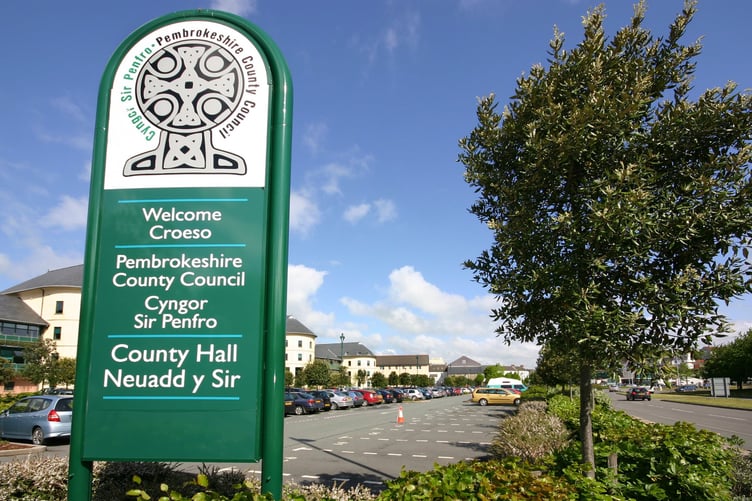
PEMBROKESHIRE COUNTY COUNCIL has acknowledged that there is not enough suitable accessible housing in the county to meet demand, with more than 400 people currently waiting for accommodation that meets their needs.
The admission came in response to questions from The Pembrokeshire Herald about housing, health and accessibility in Pembrokeshire.
The council revealed that 403 people are currently registered on the Pembrokeshire Accessible Housing Register waiting for accessible social housing.
Of those, 81% are in the highest-priority gold band, while 62% require one-bedroom accessible accommodation.
The authority also disclosed that 111 cases are currently awaiting occupational therapy assessment through to approval of assessed works under Disabled Facilities Grants and discretionary disabled assistance grants.
The figures highlight growing pressure on housing services in a county with an ageing population and increasing demand for homes that can accommodate people with disabilities, mobility problems and long-term health conditions.
A council spokesperson said: “Within Pembrokeshire, we recognise that there are challenges around unsuitable housing, often linked with an ageing housing stock across all tenures of accommodation.
“We recognise that poor and inaccessible housing can be a contributing factor to ill health and increased demand on housing, health and social care services.”
Hospital discharge concerns
The council also confirmed that housing-related issues can affect hospital discharge planning.
Officials said there had been an increase in housing-related discharge delays in recent years, often because people leaving hospital require home adaptations or alternative accommodation that better suits their needs following changes in their health or mobility.
The spokesperson said: “There are concerns related to housing-related delays which impact hospital discharge planning locally.
“There has been an increase in housing related delays due to a range of factors, including the need for suitable accommodation following changes in an individual’s health or functioning, which subsequently can lead to a need for home adaptations, or alternative accessible accommodation sourced.”

The council stressed that housing-related factors still represent a relatively small proportion of overall discharge delays in Pembrokeshire.
Shortage recognised
Asked whether enough suitable housing exists locally for older residents and people with disabilities or long-term health conditions, the council accepted that current provision falls short of demand.
The spokesperson said: “Given the numbers we have on our Accessible Housing Register as well as the ageing population in the county, we acknowledge that there is insufficient suitable accessible housing to currently meet demand.”
The authority said the issue has already been identified within the Local Housing Market Assessment 2023 and the Pembrokeshire Housing Strategy 2024-2027.
Working to improve provision
The council said its Occupational Therapy Service works closely with housing providers across Pembrokeshire to assess needs and support the delivery of appropriate housing solutions, including adaptations to existing homes and the development of adapted properties.
For social housing tenants requiring adaptations, needs are assessed by occupational therapists, with work either carried out by landlords or, where necessary, alternative accommodation sought.
The authority also said that new social housing developments are designed to meet Lifetime Homes standards under Welsh Government housing requirements.
Housing and social care teams work together to help shape the type and design of new homes being developed in the county, using information from the Accessible Housing Register to identify future demand.
The comments come amid growing national concern over the impact of unsuitable housing on health, independence and demand for public services, particularly as Wales’ population continues to age.
This is a cleaner local government/housing story that stands on its own and avoids repeating the earlier Welsh Government/NHS-focused piece.

Cancer treatment targets missed again as opposition says Plaid must share responsibility for health service performance
NHS WALES is facing renewed pressure after the latest performance figures showed waiting lists rising, cancer treatment targets being missed again and more patients waiting over 12 hours in emergency departments.
The figures come as the Welsh Government announced an additional £145m for NHS Wales, including £100m to reduce waiting times and £25m for new surgical hubs.
In April, performance against the 62-day target for patients starting cancer treatment fell to 56.7%, well below the 75% target.
In Swansea Bay, just 48.4% of cancer patients began treatment within the target time.
Treatment waiting lists also increased, with 680,003 patient pathways recorded in April. The estimated number of individual patients waiting for treatment stood at 536,500.
Two-year waits rose to 3,694. In England, the comparable figure was 191.
Emergency care also came under further strain in May. The proportion of patients spending less than four hours in Welsh emergency departments fell to 64.4%, against a target of 95%.
A total of 11,066 patients waited 12 hours or more before being admitted, transferred or discharged, up from 10,287 in April. The target is zero.
Ambulance performance remained under pressure. For red calls, the median response time improved to nine minutes and 12 seconds, but the 90th percentile increased to 22 minutes and 39 seconds, meaning response time targets were still not met.
Welsh Conservative criticism
The Welsh Conservatives said the figures showed a “worrying backslide” in NHS performance and accused Plaid Cymru of sharing responsibility for the state of the health service.
Natasha Asghar MS, Welsh Conservative Shadow Cabinet Secretary for Health and Social Care, said: “These figures show a worrying backslide in NHS performance in Wales. Cancer treatment times have fallen, waiting lists have risen, two-year waits are up and more patients are being left waiting over 12 hours in emergency departments.
“Plaid Cymru cannot escape responsibility for this. They propped up the previous Welsh Labour Government by backing their budgets and are now in Government themselves. Patients across Wales need action, not more talk of improvement.
“Whilst any extra funding for the NHS is welcome, £145m will not be enough unless it is accompanied by urgent reform, a comprehensive workforce strategy and real delivery for patients.
“The Welsh Conservatives have been clear that the Welsh Government needs to declare a health emergency in our NHS. We need more beds in our hospitals, a robust NHS workforce and a serious plan to cut waiting lists and to support our emergency departments.”
Funding announced
The Welsh Government says the extra £145m will support work to reduce waiting times and improve access to treatment.
Of that, £100m has been allocated to reducing waiting lists, while £25m will be invested in new surgical hubs.
Health leaders have welcomed the additional funding, but warned that money alone will not solve the pressures facing hospitals, GP services, social care and emergency departments.
The latest figures are likely to increase pressure on ministers to show clear progress before the winter, when demand on the NHS is expected to rise further.
Welsh Government response
The Welsh Government said the figures related to April, before the new administration took office, and showed that both treatment waiting lists and the longest waits had increased.
Health and Care Minister Mabon ap Gwynfor said too many people were waiting too long for treatment, and said emergency care performance was not yet at the level patients and staff should expect.
He said: “Our focus is clear — cut waiting times, prioritise those who have been waiting the longest, improve access to services and build an NHS that can keep up with demand in the long term.
“To bring waiting times down and keep them down, we need to change the way the NHS works — making sure patients move through the system more smoothly, from their first referral all the way to treatment.
“We’ve got a plan to do this, working with the fantastic NHS staff right across Wales. The £145 million we’re announcing today will be important in tackling the waiting list and waiting times and helping people be seen quicker.”
The Welsh Government said £100m would be used to help reduce waiting lists and waiting times, £25m would be invested in new surgical and diagnostic hubs, and £20m would go towards essential maintenance across the NHS estate.
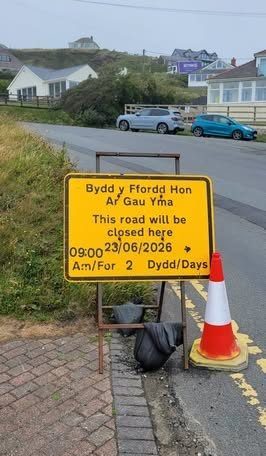
A STRETCH of road at Newgale will close for two days next week while resurfacing works are carried out.
The closure is planned for Tuesday (Jun 23) from 9:00am to 3:30pm, and Wednesday (Jun 24) from 9:00am to 4:00pm.
The affected section runs from Penycwm to just above Beachcroft bungalow in Newgale.
Traffic will be diverted via Roch Bridge and Eweston, between the Victoria Inn and Penycwm.
Businesses including the campsite, Landsker Line, Newsurf, Sands Café and the hardware shop are expected to remain open as normal. The car parks and the Welsh Road will also remain accessible, but traffic will not be able to travel up the hill towards Solva after the shop.
School buses are expected to run as normal, but the T11 service will operate to a special timetable between Haverfordwest and Roch. There will be no T11 service from Newgale to St Davids during the works. The 400 service will run as normal, but via the diversion route.
Cllr Mark Carter said he had asked for signs to be placed at Haverfordwest and St Davids, advising larger vehicles and those towing to consider using the A40 via Letterston, Mathry and St Davids instead.
An alternative route is via Crowhill, Hayscastle and Llandeloy crossroads, before rejoining the A487 at the top of Solva Hill.
Cllr Carter warned that the diversion route is likely to be busy, adding that drivers may need to reverse in places. He said the route had been cut back and overhanging branches removed.
Motorists are being urged to follow the signage and not to enter any road marked with a no-entry sign.
The closure times are a guide only, as resurfacing may take longer if the tarmac is slow to set in hot weather or if there is a mechanical breakdown.



News5 hours ago
Motorcyclist, 22, dies in A4075 crash in Pembrokeshire
A 22-year-old woman remains in hospital after two-vehicle collision A MOTORCYCLIST has died following a serious two-vehicle crash on the...


Community6 hours ago
Why police will be visiting every home in Pembrokeshire
New operation aims to knock on more than 257,000 doors across Dyfed-Powys over the next three years DYFED-POWYS POLICE has...


Crime9 hours ago
Prisons at breaking point: MPs warn Wales is paying the price of a failing system
Frozen healthcare budgets, overcrowded jails, homelessness on release and mounting pressure on staff are undermining rehabilitation across Wales, according to...


News23 hours ago
Brexit at 10: How Britain was sold a dream that cost us dearly
A decade after the referendum, the promised benefits remain hard to find while the economic costs are increasingly difficult to...


Crime1 day ago
Worcestershire man jailed after violent attack on woman in Tenby
Defendant was already serving a suspended sentence when serious assault took place A WORCESTERSHIRE man has been jailed for more...


Climate1 day ago
Offshore wind ‘could bring new generation of jobs to Milford Haven’
Pembrokeshire ports and Celtic Sea projects placed at centre of Wales’ green energy ambitions MILFORD HAVEN and Pembroke Dock could...


Community2 days ago
Police officer hailed hero after midnight sea rescue in Milford Haven
PC swam 100 metres offshore to save distressed woman heard calling for help in darkness A DYFED-POWYS POLICE officer has...


Local Government2 days ago
Security privately arranged by Mayor at Beating of the Bounds
HAVERFORDWEST TOWN COUNCIL has confirmed that security personnel seen at this year’s Beating of the Bounds were privately arranged and...


Business3 days ago
Celtic Freeport five-year plan puts Milford Haven at centre of green energy future
Strategy promises investment, skilled jobs and new supply chains, but major barriers remain over grid connections, planning and delivery THE...


Education3 days ago
Closure of Ysgol Clydau approved after emotional council debate
COUNCILLORS WARNED RURAL COMMUNITIES WILL REMEMBER DECISION PEMBROKESHIRE councillors have voted to close Ysgol Clydau following an emotional debate over...
-

 Community4 days ago
Pembrokeshire Chess Club crowned Welsh champions
-
Local Government2 days ago
Security privately arranged by Mayor at Beating of the Bounds
-

 Crime10 hours ago
Milford Haven man jailed for breaching domestic violence protection order
-

 Education6 days ago
Diocese threatens legal action as Manorbier school closure battle intensifies
-

 Crime2 days ago
Man wanted by court after failing to attend hearing over alleged shop thefts
-

 Local Government6 days ago
Taxi suspended after county-wide licensing checks
-
 Crime2 days ago
Man banned from roads after drink-driving offence
-

 News5 hours ago
Crash on Freeman’s Way causes school-run chaos across Haverfordwest