


Crime
Dyfed-Powys police precept was increased despite ‘transparency concerns’

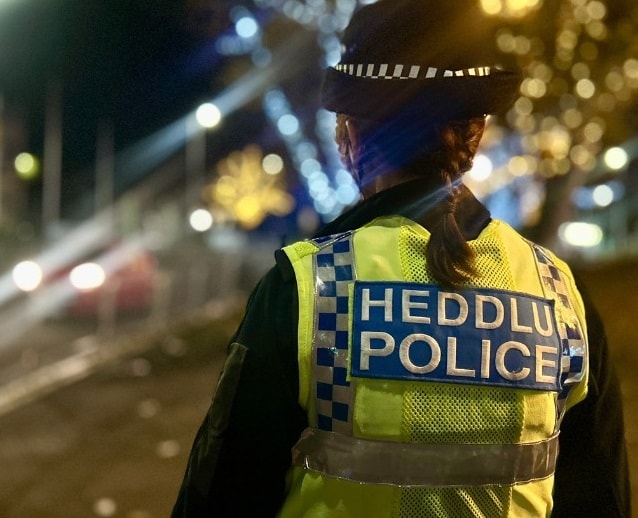
Panel backs 8.6% rise as funding pressures mount, but questions remain over spending priorities
THE DYFED-POWYS POLICE and Crime Panel unanimously approved an 8.6% increase in the police precept for the 2025-26 financial year, a decision that will see Band D households paying an additional £28.65 per year.
The move, backed at a meeting in County Hall, Haverfordwest, last week came amid mounting financial pressures on the force, which Commissioner Dafydd Llywelyn said was “struggling to maintain services in the face of inflation, increased demand, and declining central government support.”
With the rise, Dyfed-Powys remains the cheapest force in Wales in terms of council tax contributions, but concerns over transparency, recruitment struggles, and the force’s ability to deliver improvements have led to debate among councillors and the public.

PUBLIC CALLS FOR CLARITY ON PRECEPT-SETTING PROCESS

One of the most contentious issues raised at the meeting was the public’s lack of understanding of how the precept is set and spent.
A public question submitted to the panel challenged the clarity of police funding, stating that many council tax premium payers—who contribute three times the standard rate—feel left in the dark about how their money is allocated.
Commissioner defends process, blames Home Office for lack of transparency
Commissioner Dafydd Llywelyn defended the process, highlighting that his office had presented a detailed budget report and that public consultations had taken place.

However, he admitted that the Home Office funding formula remains opaque, stating:
“The way policing is funded in the UK is deeply complex. At present, 56% of Dyfed-Powys Police’s budget comes from local council tax precepts, while central government funding has steadily declined over the past decade.”
Despite efforts to explain the precept-setting process, several panel members acknowledged that more needs to be done to simplify public communications about how and why tax increases are necessary.

WHY IS THE INCREASE NECESSARY?
Llywelyn outlined several key financial pressures necessitating the 8.6% increase, including:
- Officer pay rises and inflation – Increased salary costs for officers and staff, driven by national pay settlements and rising employer contributions to National Insurance and pensions.
- Loss of Welsh Government grants – The school liaison programme, previously funded by Welsh Government, is now being covered by Dyfed-Powys Police’s own budget, requiring additional local funding.
- Workforce modernisation – Increased investment in frontline policing, with efforts to free up officers by relying more on police staff and AI-driven automation tools.
- Rural crime concerns – A growing issue in the Dyfed-Powys region, particularly the theft of agricultural vehicles (ATVs), with £500,000 earmarked for enhancing rural crime prevention strategies.
- Investment in AI and digital policing tools – The force is trialling AI-driven software to assist in areas such as redacting sensitive case files, processing victim reports, and even fireworks licensing.

COMPARISONS WITH OTHER WELSH FORCES
Llywelyn pointed out that, even with the increase, Dyfed-Powys residents will still pay the lowest police precept in Wales.
Band D council tax comparisons for 2025-26 (estimated):
Dyfed-Powys: £360.68
Gwent: £374.20
North Wales: £385.50
South Wales: £395.80
Despite this, some panel members raised concerns that cost-of-living pressures could make even small increases difficult for struggling households.
PANEL BACKS INCREASE BUT SCRUTINISES SPENDING PLANS

The precept was approved following a presentation by Councillor Keith Evans, who led the Finance Sub-Group’s scrutiny of the proposed 2025-26 police budget.
Panel members questioned several aspects of the spending plans, including:
- Recruitment and retention – are officers staying?
While 245 officers were recruited in 2023/24 and 213 in 2024/25, the force is struggling to retain staff, with many leaving within three to seven years. A retention officer has been appointed to understand why officers are leaving and improve working conditions. Llywelyn admitted that pay, workload, and a lack of career progression were major factors in officer departures.
- Police station closures – fewer public contact points
Concerns were raised over the accessibility of policing services, with only two stations—Haverfordwest and Pembroke Dock—offering front desk services. Llywelyn defended the shift toward digital and phone-based policing, stating that 101 call response times have improved and that more people now contact police via social media or online portals.
- Rural crime – a growing concern
Theft of ATVs, livestock, and fuel has been rising, particularly in Carmarthenshire and Powys. Llywelyn stated that the Rural Crime Team is expanding to advise farmers on crime prevention and increase visibility in rural areas. A new crime prevention initiative will see officers working with insurance companies to mark vehicles and equipment to deter theft.
- AI and digital policing – how much is being spent?
The force is investing in AI to speed up administrative tasks, such as:
- Redacting case files before submission to the Crown Prosecution Service.
- Using automated translation tools for victim and witness statements.
- Developing digital contact tools for low-risk domestic abuse cases.
Some panel members questioned whether AI investments would reduce officer workload or simply divert funds from frontline services.

COST-OF-LIVING CONCERNS – HOW WILL HOUSEHOLDS COPE?
Despite approving the increase, some panel members raised concerns about the impact on households already struggling with higher energy bills, food prices, and mortgage rates.
Llywelyn acknowledged the financial strain but stressed that without the increase, police services would be forced to cut back.
“To maintain the same level of service, we need an additional £6 million in funding. This precept increase ensures we can keep officers on the streets and continue tackling crime effectively.”
WHAT HAPPENS NEXT?

With the 8.6% precept increase now approved, Dyfed-Powys Police will move forward with:
- Officer recruitment and retention initiatives.
- Expanding rural crime prevention efforts.
- AI and digital policing trials.
- New scrutiny structures, including quarterly Strategic Performance Meetings and deep dives into key policing issues.
While the panel supported the rise, it is clear that public scrutiny of police spending remains high, particularly regarding whether the promised improvements materialise.
The next Dyfed-Powys Police and Crime Panel meeting will assess whether these investments have delivered tangible results.













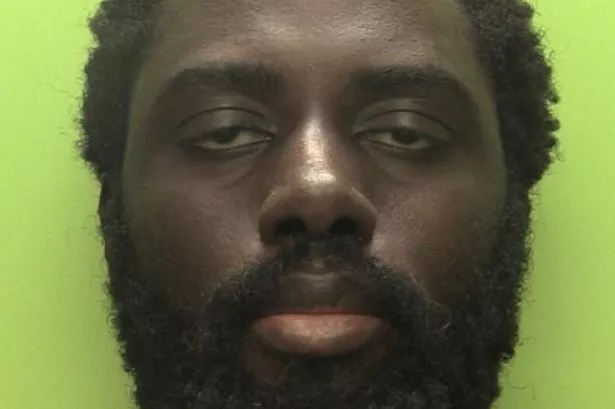
FRESH details have emerged about Nottingham attacker Valdo Calocane, linking him to a previously reported incident in Pembrokeshire involving alleged violence towards an animal.
Calocane carried out a fatal knife attack in Nottingham in the early hours of Tuesday, June 13, 2023, killing University of Nottingham students Barnaby Webber and Grace O’Malley-Kumar, both aged 19, along with 65-year-old Ian Coates. He also attempted to kill three others.
The then 31-year-old was later given a hospital order in January 2024 after admitting three counts of manslaughter on the grounds of diminished responsibility, as well as three counts of attempted murder.
It had previously been established that Calocane was diagnosed with paranoid schizophrenia in 2020 and had been detained under mental health legislation on multiple occasions. Reports also indicated he experienced auditory hallucinations, which he said caused him difficulties.
He had been discharged from the care of Nottinghamshire Healthcare NHS Foundation Trust in September 2022, less than a year before the killings. That decision was later criticised in a Care Quality Commission report.

Now, an inquiry hearing on Tuesday, March 18 has been told of a possible earlier incident during Calocane’s time in Pembrokeshire.
Evidence presented to the inquiry stated that a former housemate, who lived with Calocane while he was attending Pembrokeshire College, contacted police following the Nottingham attacks. She claimed he had a history of mental health problems dating back several years.
The witness also described an incident involving alleged violence towards an animal, although full details were not disclosed during proceedings.
The inquiry further heard that Calocane’s mother had previously spoken about him being bullied both in Portugal and the UK, where the family lived in what was described as a predominantly white community.
A consultant forensic psychiatrist who assessed Calocane while he was in custody noted unusual behaviour during evaluations, including inappropriate smiling and a refusal to engage with questions about hearing voices.
The inquiry into the circumstances surrounding the Nottingham attacks is ongoing.
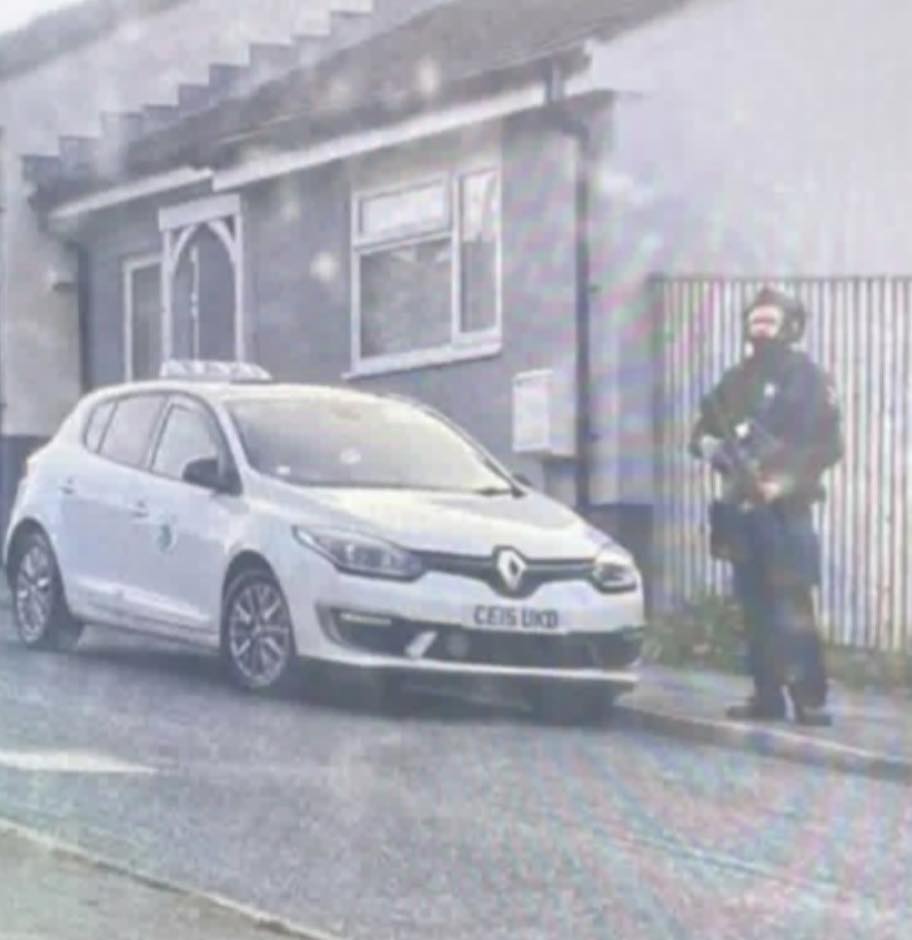
ARMED police were deployed to a residential street in Fishguard this evening following reports of a teenage boy with a knife.
The incident happened in the Dan y Bryn area on Sunday evening (Mar 23).
Armed police negotiated with the suspect, persuading him to hand over the weapon. He was subsequently detained, handcuffed, and taken away in an ambulance.
The situation was brought under control without any reported injuries.
The police told The Herald: “Officers attended the Dan Y Bryn area, Fishguard on the evening of Sunday, March 22 following concerns of an individual reported to be in possession of a knife.
Officers have attended the location and secured the knife.
“The incident cleared with the individual taken to receive further care in hospital.
“Enquiries are ongoing.”


Registered sex offender Wayne Evans, who moved to Carmarthenshire for a fresh start, was caught after the National Crime Agency flagged activity linked to a Kik account
A CONVICTED child rapist who moved to rural west Wales in an apparent attempt to start over was found with indecent images of children on his phone after his online activity was flagged by the National Crime Agency.
Wayne Evans, 59, of Pentrecourt Road, Llandysul, appeared before Swansea Crown Court after officers discovered the images during an investigation triggered by the NCA.
The court heard that in January last year, the NCA alerted Dyfed-Powys Police to a Kik messaging account involved in downloading indecent images of children. The email address linked to the account was already known to police and belonged to Evans, a registered sex offender.
Officers went to his home on January 28 and arrested him. Evans told police he had not downloaded the images himself and claimed they had appeared in a Kik group he was part of, adding that the group had since been shut down.
Police seized six devices from the property and Evans handed over the pin numbers for his phones and tablets. He later answered “no comment” to questions in interview and was released under investigation while the devices were examined.
A forensic analysis of his Samsung Galaxy phone uncovered 13 Category A images, eight Category B images and two Category C images. The material involved children aged between four and 12.
Category A images are considered the most serious and involve the gravest forms of sexual abuse.
The court was told Evans has six previous convictions covering 23 offences. In 1990, he was convicted of gross indecency with a child and indecent assault of a child. In 2002, he was jailed for 15 years for raping a child under 16, attempted rape, gross indecency and five further counts of indecent assault. He was placed on the sex offenders register for life and released from prison in 2011.
Evans had admitted three counts of making indecent images of children, covering Categories A, B and C.

Emily Bennett, representing Evans, said her client knew the court would view the offences in the “dimmest of lights”. She said he had moved to a rural part of Wales where he kept himself to himself and had taken steps to reduce his contact with females.
She also told the court Evans accepted that he still had an inappropriate sexual attraction to children, and said he was in a long-term stable relationship with a partner who knew about his past offending.
Sentencing Evans, Recorder Mark Powell KC said he accepted that the defendant had taken some steps to change his life, but said it was clear he continued to have a sexual interest in children.
The judge said his priority was to pass a sentence which reduced the risk Evans posed. He said an immediate prison term available under the guidelines would be relatively short, could be destabilising, and might even increase the danger to the public.
With credit for his guilty pleas, Evans was sentenced to 16 months in prison, suspended for 18 months. He was also ordered to complete a rehabilitation activity requirement, a Building Choices programme, and 100 hours of unpaid work.
A Sexual Harm Prevention Order was imposed for 10 years, and Evans will remain on the sex offenders register for life.
Photo caption:
Wayne Evans was sentenced at Swansea Crown Court after indecent images of children were found on his phone



Business19 hours ago
Could Primark be coming to Haverfordwest? Major retailer in talks for former Wilko site
Council confirms advanced discussions as speculation grows over high street boost HAVERFORDWEST could soon see a major high street revival,...


Business19 hours ago
Rail investment ‘could unlock 40,000 jobs and £11bn for Wales’ says new report
RAILWAY stations across Wales could help unlock around 40,000 jobs and more than £11 billion for the economy by 2036,...


Local Government20 hours ago
Milford Haven set for £200m investment with schools, leisure centre and rail upgrade
Council outlines major plans for town with backing from Welsh Government MILFORD HAVEN is set for a major transformation with...


Community2 days ago
Broad Haven volunteers secure ‘national asset’ status for nature reserve
A SMALL stretch of woodland and former opencast coal mine has been transformed into a nationally recognised biodiversity site, in...


Entertainment3 days ago
Tenby steams up in spectacular style as crowds flock to festival
Colourful parade, towering creations and Victorian flair bring town centre to life TENBY was transformed into a vibrant Victorian fantasy...


Crime4 days ago
Publican jailed for six years for supplying cocaine and cannabis
Milford Haven man sentenced at Swansea Crown Court following drug dealing operation A MILFORD HAVEN publican has been jailed for...


Local Government4 days ago
Poverty summit highlights support efforts across Pembrokeshire
A SUMMIT bringing together key organisations from across Pembrokeshire has highlighted both the scale of local poverty and the work...


Education5 days ago
Milford Haven school plans unveiled but funding not yet secured
PLANS for a new £100 million school in Milford Haven have been unveiled, but the project has not yet secured...


News5 days ago
Council unveils plans for new state-of-the-art secondary school in Milford Haven
PEMBROKESHIRE COUNTY COUNCIL has revealed plans for a new state-of-the-art school in Milford Haven, promising modern, inspiring learning spaces for...


Health5 days ago
NHS waiting list falls — but cancer delays and diagnostic backlog worsen
Record progress claimed by Welsh Government as critics warn key targets are still being missed THE NHS in Wales has...
-

 News7 days ago
Emergency services flood Haverfordwest after reports of person in river
-

 Crime6 days ago
Mother given community order after admitting child cruelty offence
-
Health5 days ago
NHS waiting list falls — but cancer delays and diagnostic backlog worsen
-

 News7 days ago
Senedd vote to ban greyhound racing hailed as ‘landmark moment’ by charities
-

 News7 days ago
Senedd votes to ban Greyhound racing in Wales to protect animal welfare
-

 News6 days ago
Reform secures first Pembrokeshire councillor in Hakin by-election win
-

 Crime6 days ago
Woman stole from pharmacy despite ban, court hears
-

 Crime5 days ago
Illegal workers found at Cardigan takeaway after immigration raid