


Education
Councils spend £78 million on supply staff amid teacher shortage


WELSH GOVERNMENT FACES SCRUTINY OVER AGENCY SPENDING
A RECENT investigation has revealed that 16 out of 22 Welsh councils spent over £78 million on agency staff for supply teachers and teaching assistants during the 2023/24 academic year. The data, obtained through Freedom of Information requests by the Welsh Conservatives, highlights the growing reliance on temporary staff in schools across Wales.
Pembrokeshire County Council spent £1,833,915, according to the data.
The Welsh Conservatives have criticized the Labour-led Welsh Government for not tracking this expenditure and argue that funds would be better invested in recruiting and retaining permanent teaching staff. Shadow Education Secretary Natasha Asghar MS stated, “The staggering costs incurred by councils across Wales on agency staff makes it difficult to see any value for money from the taxpayers’ perspective.”

Challenges in recruitment and retention
An Estyn report from earlier this year underscores the challenges in teacher recruitment and retention, particularly in secondary schools and Welsh-medium education. The report notes a significant decline in the number of applicants for teaching positions, with some schools needing to advertise multiple times to fill vacancies. This shortage has led to situations where staff are teaching outside their areas of expertise, potentially impacting the quality of education.

Government initiatives and responses
In response to these challenges, the Welsh Government has implemented measures to support supply staff and address recruitment issues. A new national framework contract for agency staff was established in September 2023, aiming to enhance professional learning opportunities and employment safeguards for supply teachers .
Additionally, the government has initiated a pilot National Supply Pool in Ynys Môn, allowing supply teachers to be directly employed by local authorities, granting them access to the Teachers’ Pension Scheme. While this model shows promise, its broader implementation across Wales faces logistical challenges .
Union perspectives
Teaching unions have expressed concerns over the high expenditure on agency staff. A representative from a teaching union described the £78 million spent as a “shocking waste of money,” emphasizing the need for sustainable solutions to staffing shortages.
Local authority views
Local councils, responsible for staffing in schools, have defended the use of agency staff as a necessary measure to cover absences and maintain educational continuity. A Cardiff Council spokesperson noted that schools employ agency staff for various reasons, including covering short-term absences and meeting temporary demands during recruitment processes.

Conclusion
The significant expenditure on agency staff highlights the ongoing challenges in teacher recruitment and retention in Wales. While the Welsh Government has taken steps to address these issues, including new frameworks and pilot programs, the effectiveness of these measures remains to be seen. Stakeholders across the education sector continue to call for comprehensive strategies to ensure sustainable staffing and high-quality education for students.


Pupils at Ysgol Glannau Gwaun have been celebrating after their school became one of only nine in Wales to achieve Gold Active Travel status
The Fishguard school recently travelled to the Senedd in Cardiff to receive its prestigious Walk, Wheel, Cycle Gold Active Travel Award, recognising the work pupils and staff have done to promote walking, cycling and scooting.
It was the second time pupils from Ysgol Glannau Gwaun had travelled to the capital to present their active travel projects to a range of audiences.
The school now has a fleet of 60 scooters and 40 bicycles, allowing children from Nursery through to Year 6 to build their confidence and skills.



Through a range of grants and funding opportunities, weekly cycling and scooter sessions are now offered to all pupils, regardless of age or ability.
In 2023, only 11 of 41 pupils were able to complete their Level 1 and 2 cycle training, as many did not have access to a bicycle.
Since then, the school has worked hard to change that. Thanks to investment in school bikes, every pupil can now take part in cycle training.
Older pupils have also taken on leadership roles, supporting younger children with balance bike and scooter sessions.
Progression Step 3 pupils have designed a 1.5km community scooter trail, beginning at Fishguard Library and finishing in Goodwick. The route has been created not only for pupils, but for the wider community.
To further encourage active travel, the school also loans scooters to families, helping to ensure everyone has the opportunity to take part.
Staff help run a walking bus to after-school music activities at the secondary school, while the School Senedd regularly develops new ideas to promote active travel.
One recent initiative was a six-hour scootathon, which raised £1,000 for the RNLI.

To mark the Gold award, the school held a special celebration day for all pupils. Fusion Extreme delivered BMX workshops, while British BMX champion Matti Hemmings impressed pupils with a spectacular display of skills.
Pupils also presented their journey to achieving Gold status to parents, governors and community partners, including Transition Bro Gwaun, which helped fund the school’s bicycle fleet.
Headteacher Mrs Mari Jones said: “I am incredibly proud of our pupils, whose enthusiasm, leadership and commitment have driven many of the initiatives that contributed to this award.”
Deputy Headteacher Mrs Sharon Osborne added: “We are extremely grateful to the Pembrokeshire Road Safety Team, Alice from the Walk, Wheel, Cycle Trust, Transition Bro Gwaun and the Catrin Vaughan Foundation for their support.
“Their funding and resources have enabled our pupils to develop exceptional cycling and scooting skills, alongside valuable leadership and communication skills.
“This has culminated in pupils confidently presenting their achievements to a wide range of audiences.”
Pupils say their active travel journey does not end with the Gold award, with more ideas already being planned.
As they proudly put it, nothing stands still at Ysgol Glannau Gwaun.


WALES’ education minister has vowed to tackle the “root causes” of antisocial behaviour in schools.
Plaid Cymru’s Anna Brychan was pressed on the Welsh Government’s plans to fix the issue by Reform MS Paul Marr on Wednesday July 1.
Referencing Plaid’s 100 day plan, Ms Brychan said the government will address the root causes of behavioural challenges, including “attendance, wellbeing and wider needs”, through a “co-ordinated whole system approach.”
She noted the importance of early intervention and aligning support services to “enhance learning environments”.
Welcoming Ms Brychan’s commitment to early intervention, Mr Marr said parents in his Ceredigion Penfro constituency want to know “why schools are increasingly being expected to deal with the threat of knife crime without proper resources.”
Calling on the Welsh Government to commit to funding preventable security measures and emergency response training, he noted: “Policies and plans, with respect, Minister, do not stop blades.”

Mr Marr also referred to his experience working in the prison service, where he said attacks on staff with bladed instruments became “a regular occurrence”.
He called for assurances for teachers from Ms Brychan that, with rising numbers of incidents, these attacks are “not expected to be their new norm”.
She said: “Every learner has the right to feel safe and know they belong in a school, are able to attend, participate and achieve.
“And the same is true of members of staff, and ensuring the safety and wellbeing of our school workforce is equally a priority for us.”
Labour’s Shav Taj spoke of the importance of correctly framing the debate around antisocial behaviour in schools.

She said: “While challenging behaviour is obviously a real concern, we’re hearing very clearly from unions but also staff on the ground, that it is actually increasingly linked to unmet needs, particularly around mental health and additional learning needs as well.”

Ms Taj went on to emphasise the importance of ALN reforms and ensuring the right level of support is in place through “a person-centred, needs-led system”.
She continued: “What teachers and teaching assistants are continuously telling us is that too often they’re being left to manage increasingly complex needs without it.
“So while some may frame this purely as an issue of discipline, isn’t the reality that where needs aren’t being met early, those pressures are simply playing out and compounding in the classroom?”
Ms Taj asked how the Welsh Government plans to ensure mental health provision in schools is properly resourced, including school counselling and wider ALN support.
Ms Brychan responded saying her points are “exactly the reasons” the programme will look at “wellbeing, attendance, and wider needs through a co-ordinated whole-system approach.”
She added: “She [Ms Taj] touches on ALN; that is a wider issue in our system, and that’s precisely why we want to bring all of these areas together and to recognise the barriers to learning that are part of this area of concern for us, and that’s why we have framed our response in this way.”
Ms Brychan was also pressed for an update on the progress made so far towards introducing a foundational literacy and numeracy plan.
Reform MS David Mills told the Siambr that Estyn found roughly 20% of pupils leave primary school functionally illiterate – a figure he described as “frightening”.

He called for the minister to set out “a clear timetable” for bringing the plan forward, and how it will deliver “measurable improvements” in both literacy and numeracy.
Ms Brychan stressed the problem is not with Welsh learners, and said: “Our learners are able to achieve and have potential comparable to anywhere in the world. It isn’t the lack of a willing workforce either.
“It is, I think, a lack of understanding of the expectations around progression in literacy and numeracy, and that’s precisely why we are introducing this literacy and numeracy foundational plan.”
Ms Brychan reassured the member that she is working “at pace”, noting that on her second day in the job she wrote to schools to outline the Welsh Government’s work on the plan, promising an update at the end of the summer term, before the framework is introduced in the autumn.
Natasha Asghar, of the Welsh Conservatives, questioned the deputy minister on what steps the Welsh Government is taking to boost the number of apprenticeships in Wales.
Noting that university isn’t “for everyone”, Ms Asghar stressed the importance of apprenticeships as a route into the workplace for “those who want to earn and learn at the same time”.

Recalling a commitment from Plaid’s election manifesto, she noted the party promised to expand both work experience and apprenticeships.
However, Ms Asghar went on to share a conversation she had recently with Jane Blackwell – a franchisee of five McDonald’s restaurants in the Newport area – who noted that despite wanting to take on more apprenticeships she is limited to due to the strict criteria of the apprenticeship levy.
Ms Asghar said: “We have a situation here where a business owner with multiple sites is contributing towards the apprenticeship fund, but isn’t able to access it to take on her own apprentices; it is, frankly, absurd”.
She called on the deputy minister to commit to meeting with Jane to discuss the issue and “iron out the problems” to start getting more young people into work.
In response, Cefin Campbell – the deputy minister for skills and tertiary education – said the Welsh Government is currently investing £151 million in apprenticeships to support delivery across Wales.

He said: “We believe that apprenticeships are a cornerstone of Wales’s post-16 skills system and a key policy, as you mentioned, for economic growth, fair work and productivity.
“They provide high-quality routes into employment, supporting people of all ages and helping employers develop the workforce they need.”
The deputy minister agreed with Ms Asghar that the current apprenticeship offer needs changes to reflect both “changing economic needs and the needs of businesses”.
He added: “A new apprenticeship programme from August 2027 will deliver a more flexible and responsive model for employers and delivery partners, shaped by extensive engagement, led by Medr.
“Now, this reform should be seen as part of a wider drive to create clearer pathways, improve parity of esteem with academic routes, and strengthen alignment between skills and economic growth.”
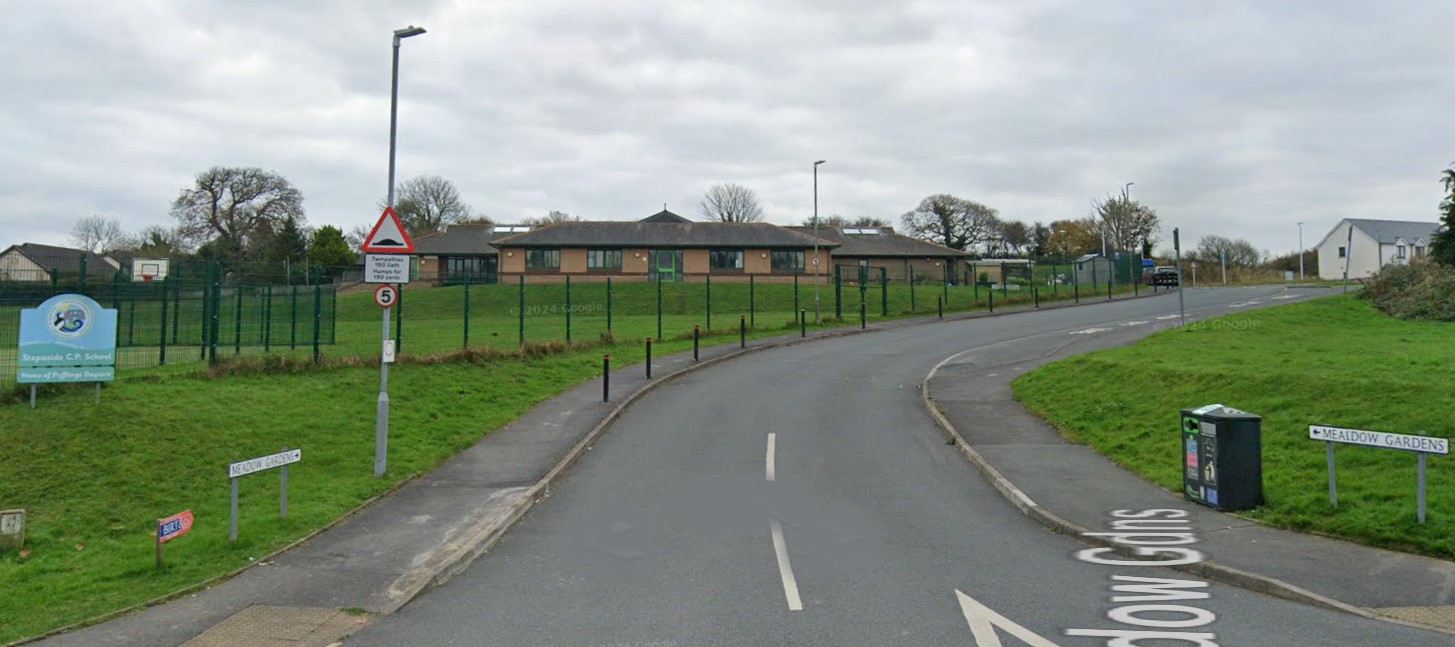
A PEMBROKESHIRE school at threat of closure as part of education reorganisation in the south of the county is now expected to remain open following a call from the council’s deputy leader.
Stepaside CP School was being earmarked for closure by Pembrokeshire County Council, as part of proposals to establish a new 3-11 primary school on the Saundersfoot School site, discontinuing both Saundersfoot School and Stepaside school.
The Stepaside proposal was based on surplus places for all the schools in the proposals, with Stepaside having a surplus capacity of over 50 per cent, councillors had previously heard.
An e-petition on the council’s own website, started by Angela Robinson, called upon Pembrokeshire County Council “to Save Stepaside School and work with local communities to look at alternative solutions” attracting nearly 2,000 signatures.
In March, a vote at a full meeting of Pembrokeshire County Council reaffirmed the decision of last December, that the Director for Education be authorised to commence statutory consultation to discontinue Stepaside and Saundersfoot schools and establish the new three-11 primary school.
Since then, Pembrokeshire’s deputy leader, who has recently taken on Cabinet member responsibility for education, is now recommending the school doesn’t close.
That takes the form of a notice of motion, due to go before full council meeting on July 16 which, if approved by, rescinds the earlier December 2025 decision.
Cllr Miller said: “Following a thorough review, I have decided to recommend to Council that it not proceed with the closure of Stepaside School. I believe the school is providing good educational outcomes for its local population and is sustainable in its current form.”
The statement was welcomed by Angela Robinson of Standing Together for Stepaside School, who said: “After months of challenges for our dedicated staff, students, families, and the Kilgetty community, we’re thrilled to share that Stepaside School is here to stay!
“With 1,952 signatures backing our cause, we’ve shown just how vital our school is to the community. We’ve held meetings with council members and engaged our Senedd and Parliament representatives, resulting in countless discussions, reports and late nights trying to challenge an unfair process.
“Our community has truly rallied together, building stronger relationships along the way.”
Local county councillors Alistair Cameron and Alec Cormack, who both battled to keep the school open, said they were delighted by the decision, indicating their support for the motion.
Cllr Cameron said: “We owe a huge debt of gratitude to Mr Jones, Headteacher at Stepaside School, and all of his colleagues at the school for their continued dedication and hard work to the school children during this very unsettling time.
“Thank you also to the parents, governors and local residents for their magnificent support for our local school. I never believed it was right to consider closing Stepaside School with its modern building, stable pupil numbers of over 100 and excellent report from the school inspectors, Estyn.
“The school staff can now concentrate on what they do best, which is to provide excellent education in a caring and nurturing environment.”
Cllr Cormack welcomed the Cabinet decision: “This decision removes the cloud of reorganisation hanging over both Saundersfoot and Stepaside/Kilgetty. Now both head teachers, staff and governing bodies can continue to deliver excellent education to their local communities.”



News5 hours ago
A40 closed near Llandeilo following collision
A SECTION of the A40 in Carmarthenshire has been closed in both directions following a collision. The road is currently...


Local Government5 hours ago
Award-winning Saundersfoot sauna faces refusal over location concerns
PLANS to allow an award-winning outdoor sauna to remain permanently at Saundersfoot Harbour have been recommended for refusal by Pembrokeshire...


Health8 hours ago
NHS at 78: A moment to give back to the service Wales helped create
As the health service marks its 78th birthday, people in Pembrokeshire are being urged to support local NHS charities helping...


Community23 hours ago
Saundersfoot Harbour regeneration project wins national planning award
SAUNDERSFOOT HARBOUR’S redevelopment has been named Best Project at the RTPI Cymru Awards for Planning Excellence 2026. The award recognises...


Business1 day ago
Pembrokeshire-based Ascona Group expands UK portfolio with Truckhaven acquisition
PEMBROKESHIRE-BASED Ascona Group has completed the acquisition of Truckhaven (Carnforth) Ltd, a major trunk road services area in Lancashire. The...


Health2 days ago
Wales begins early NHS winter planning after long waits and ambulance pressure
Ministers say health boards and councils must act now to ease pressure on hospitals, ambulances and social care before winter...


Crime3 days ago
Judge calls pensioner a ‘dirty old man’ as he avoids jail for exposing himself to women
Judge says 75-year-old Stewart Laugharne behaved ‘disgracefully’ as he avoids jail but is ordered to sign sex offenders register A...
Health3 days ago
Stroke services consultation reaches halfway point as public urged to have say
HYWEL DDA University Health Board is urging people to take part in its consultation on the future of stroke services,...


Business3 days ago
Welsh firms eye share of £5bn defence drone boom
WELSH defence and aerospace firms could be in line for a share of billions of pounds in new military spending...


Community5 days ago
Thousands line Cardigan streets for Lord Rhys homecoming parade
THOUSANDS of people lined the streets and quayside in Cardigan on Saturday as the town marked 850 years since Lord...
-

 Crime6 days ago
Dyfed-Powys Police rated only ‘Adequate’ in organised crime inspection
-

 News4 days ago
Biker dies and woman seriously injured in Black Mountain crash
-

 Crime6 days ago
Swansea man jailed for 16 years after attacking vulnerable woman
-
Community5 days ago
Thousands line Cardigan streets for Lord Rhys homecoming parade
-

 Community5 days ago
Civic service brings Pembrokeshire towns together in Haverfordwest
-

 Crime3 days ago
Estate agent banned after drug-drive crash in Milford Haven
-

 Local Government4 days ago
Flood defence scheme moves closer as community invited to view plans
-

 Crime3 days ago
Eight guilty over ‘industrial scale’ cocaine conspiracy into Pembrokeshire and Carmarthenshire