


Politics
Commission quizzed on home working, GB News, and Senedd costs

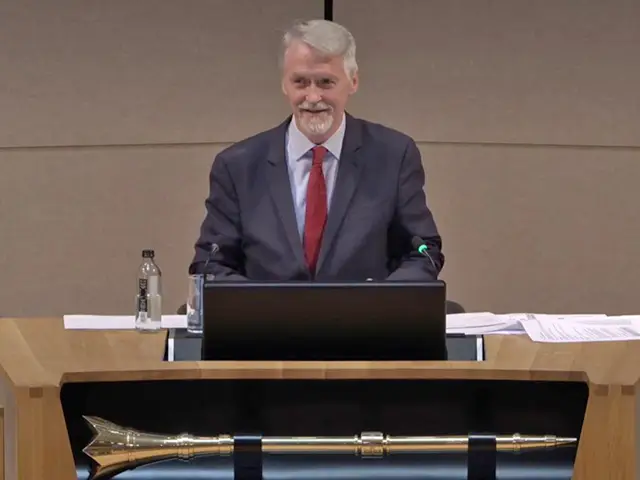
THE SENEDD Commission faced questions on hybrid working, GB News, and the cost of running the Welsh Parliament during its first scrutiny session of the new term on Wednesday 1 July.
The commission, chaired by Llywydd Huw Irranca-Davies, defended its policies after members challenged it on broadcasting rules, home working arrangements and spending at the Senedd estate.
Conservative Andrew RT Davies, Welsh Labour’s Vikki Howells, Reform’s Laura Anne Jones, and Plaid Cymru’s Peredur Owen Griffiths also serve on the commission.
The members appointed to the commission act as the “governing board” for the Welsh Parliament, and are responsible for overseeing the delivery of its aims.
As such the Senedd commission takes questions on its work once every four week in the Siambr.

Catherine Cullen, Reform MS for Blaenau Gwent Caerffili Rhymni, questioned the commission on access to GB News across the Senedd estate.
Mr Irranca-Davies responded by clarifying that a “wide range” of television channels and radio stations, including GB News, can be accessed using the Senedd IT network on laptops and other Senedd commission-issued devices.
He noted that the main function of the internal TV system on the Senedd estate is to “broadcast feeds of the Siambr and committee rooms, so that staff can follow business proceedings.”
Adding: “Under our existing policy, only those channels which have public service obligations, as set out in the Communications Act 2003, can be accessed, with the one addition of Sky News to ensure plurality of news programmes.”

Declaring an interest as a member of the Free Speech Union, Ms Cullen told the Siambr that the decision to “evict” GB News sets a “dangerous precedent”.
She said: “It’s simply not good enough to say that we can access it using our own personal devices.
“The commission, in my opinion, should allow free and equal access to all major broadcasters across the Senedd estate.

“Freedom of the press and speech is not about agreeing with every opinion that is aired, but is about defending the principle that people should be free to access competing perspectives.”
She called on the commission to consider “a fair and reflective approach to all news channels, for the sake of fairness, free speech and the free expression of the media.”
In response, Mr Irranca-Davies reiterated that competing perspectives can be accessed, by all members, on the devices provided to them.
He said: “The purpose of monitors around the building are not to watch either news or daytime TV or whatever. They’re to follow the business of the chamber and committees.”
Jane Dodds, leader of the Welsh Liberal Democrats, said it was important to “be clear” about why GB News was banned from the Senedd estate in 2023.
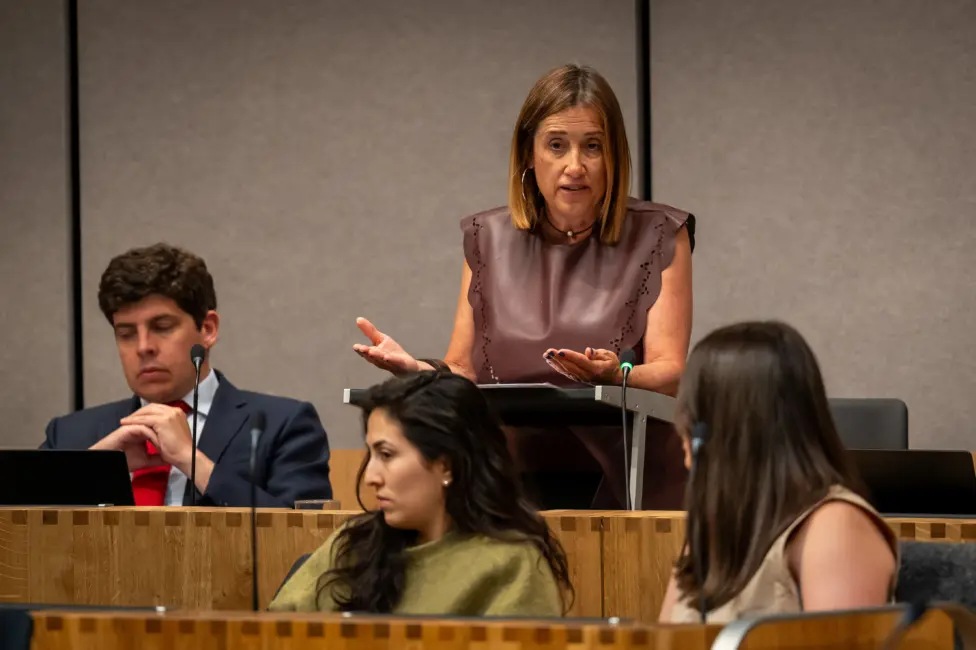
She said: “It was following comments made by presenter Laurence Fox asking what, and I quote, ‘self-respecting man’ would ‘climb into bed’ with journalist Ava Evans.
“And he then went on to say, quote, ‘Who’d want to shag that?’”
Ms Dodds continued: “That went unchallenged. The situation was further worsened when Conservative Member Andrew RT Davies commented live on GB News that former Llywydd, Elin Jones, was too busy doing her hair to appear on the show.”
She told the Siambr that she finds it “perplexing” that members might want to the lift the ban, given it was “not about its political stance, but about misogyny and sexism”.
Mr Irranca-Davies noted that he had “little to add” to Ms Dodds contribution, but noted that GB News was “originally removed from the Senedd Commission’s internal TV network, following a broadcast that was deemed by Ofcom to break broadcasting rules, to protect viewers from offensive content.”
He told his Senedd colleagues that the broadcast was deemed “deliberately offensive to women in public life, in particular, and to dignified public debate more generally.”
Reform MS Jason O’Connell followed Ms Cullen’s question by pressing the Senedd Commission on its plans to reduce operating costs and provide “better value for taxpayers”.

Responding, Mr Irranca-Davies noted the commission is “tightly managing costs while protecting the services the Senedd needs”.
Commenting that the Senedd Commission is “not known for its fiscal efficiency”, Mr O’Connell drew attention to its lease on Tŷ Hywel – the red-brick building next to the Senedd which houses MSs and staff
He said: “The lease on the building is due to expire, with planned renovations costing the commission several million pounds to complete. This comes at great cost to the taxpayer, who we all answer to.”
Mr O’Connell called on the commission to reveal what action it is taking to keep costs down, including whether it is negotiating the rent.
Mr Irranca-Davies noted that while the commission does not have “an explicit efficiency target” it does set its budget in accordance with the needs of the Senedd in “full transparency”.
On Tŷ Hywel, he said commissioners are “fully focused” on making sure costs involved in things like renovations and leasing buildings are “fully factored into decisions” that can be debated in “full transparency”.

He added: “We all have an interest in making the most effective use of the money available to us, and you can rest assured that that’s what we’re seeking to do.”
Janet Finch-Saunders, of the Welsh Conservatives, raised concerns about commission staff working from home.
Ms Finch-Saunders asked the commission how many of its staff work five days a week on the Senedd estate.

Noting the commission does not collect information on daily rates of working from home by its staff, Mr Irranca-Davies told the Siambr it does actively manage and review the performance of staff against “strategic goals, service requirements, and individual objectives”.
He added that, with the exception of those who cannot work outside of the estate such as security, porters, and front of house staff, all other roles can work from home when it “supports service delivery and management agreement”.
Ms Finch-Saunders said she has “seen differences […] where a number of staff are working from home”, and claimed staff are “harder to contact”.
She continued: “We’ve now got 96 Members, and £2.7 million is paid by the Senedd Commission on the rent of Tŷ Hywel alone.
“Apart from Tuesdays and Wednesdays, it’s fair to say that this building sometimes seems relatively empty. Often, only a handful of cars are in the car park, especially on a Friday.”
The Conservative MS asked what the commission is doing to encourage staff to return to working on the Senedd estate, adding: “Frankly, we need to see our staff coming back to work.”
In response, Mr Irranca-Davies said: “This place will not only be operating on Tuesday and Wednesday.
“It has already started work on Monday and Thursday with the committees. And some poor members are on two committees, so they will be here four days a week. The staff required to service those committees and the work they’re doing will be available.”
He continued: “If members feel that the operational effect is affecting them, let us know.
“But I have to say that the feedback we have consistently is that our ways of working, where staff can work, for example, with hybrid working, or here onsite, but making themselves available to the outcomes that members need, are very effective indeed.”

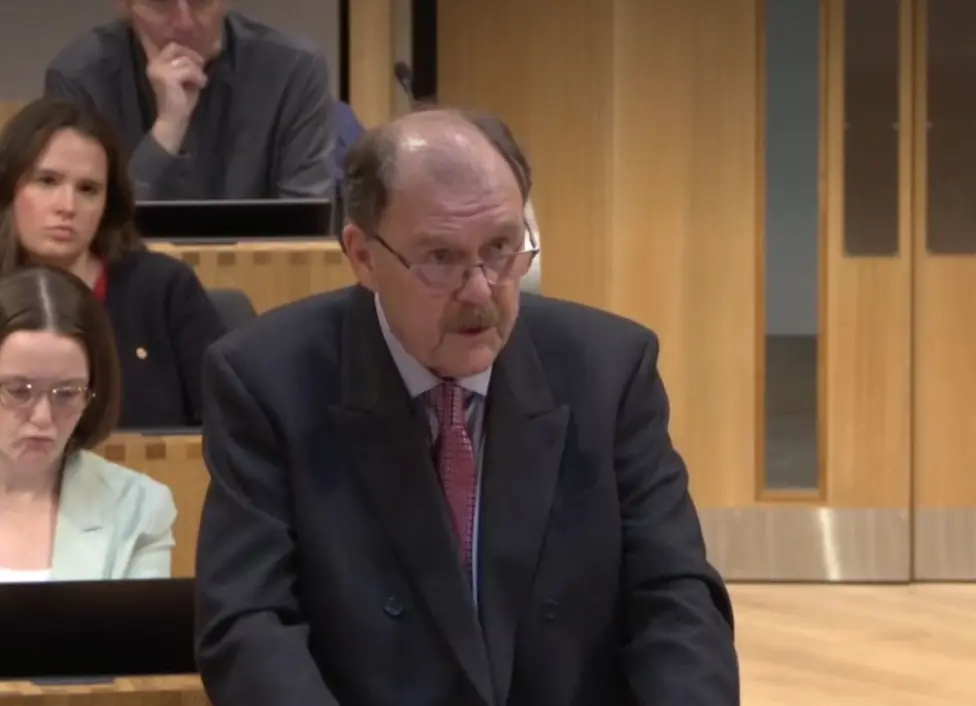
WALES’ new counsel general made his first appearance at Senedd questions, defending his political impartiality while facing scrutiny over grooming gangs, the deteriorating state of court buildings and cross-border NHS care.
Elfyn Llwyd, a former Plaid Cymru MP, was quizzed by Senedd Members on Tuesday June 30.
The counsel general is the Welsh Government’s law officer, as well as the government’s chief legal advisor and representative in the courts – and takes questions from MSs once every four weeks.
His opposite number on the Reform benches, Adrian Mason, questioned Mr Llwyd on political ambition, impartiality, and transparency.
Addressing Mr Llwyd, shadow counsel general Mr Mason said: “Your duty is not to party line, or to political ends, but to law and public interest. As shadow counsel general, my task is to test the law that this government brings forward.
“I hope our dealings can be serious, fair, and based on law, as opposed to party point-scoring.”

Mr Mason asked Mr Llwyd if he will be guided by the law on matters where “the law and political ambition point in opposite directions”.
Noting that he would be “pleased” to meet with Mr Mason to discuss his shadow brief “at any time”, the counsel general told the Siambr that he would not be “drawn into any political, oblique legal matters at this stage”.
Mr Mason also questioned the counsel general on Plaid Cymru’s constitutional aims, particularly that of independence.
He said: “I remain concerned about your party’s constitutional direction. Changes to the law, the courts, or the powers of this place must be judged by plain tests: what issues will they address, what will they cost, who will be in charge, and have the people of Wales clearly supported them?
“So, will you accept that any major change must be clear, costed, and put to the people in a way they can understand?”
Mr Mason called on the counsel general to ensure he will not support “change by legal or political stealth” and will instead be “fully open with the Welsh people in the transparent way they’re entitled to expect”.

Responding, the counsel general said: “I am here to advise government, without fear or favour.
“That is what I shall do. I shall do my best to give them the best possible legal advice, and it’s for others to decide on future policy, on the constitution, and everything else.”

Mike Hedges – who is Labour’s legislation spokesperson – questioned the counsel general for his views on the standard of court buildings in Wales.
He asked if Mr Llwyd had spoken with Lady Chief Justice Carr – the head of the judiciary of England and Wales – and with the Lord Chancellor, to discuss the state of court buildings in Wales.
Describing the state of court buildings as “absolutely appalling”, Mr Llwyd said: “It is a reserved matter, since the Lord Chancellor sends the odd pound or two to repair a leaky roof every now and then. The state of the court buildings are appalling.”
The counsel general confirmed he will be meeting with Lady Chief Justice Carr and will raise the issue in their discussion.

Welsh Conservative leader Darren Millar told the Siambr that just last week, the UK Government’s grooming gangs inquiry identified the first locations that it intends to look at – none of which were in Wales.
Mr Millar described this as “very very disappointing”, noting that previous inquiries have found grooming gang activity in the Swansea area.
He called on the counsel general to reveal what discussions he has had with those responsible for the inquiry “to make sure that no stone is left unturned in identifying the scale of these problems in Wales”.
Mr Llwyd said: “I believe that the way forward for me to answer this question properly is to say that I will engage with my colleague, who has responsibility for negotiations with the bodies that decide where inquiries take place, and that those matters can be properly and deeply investigated, and an answer forthcoming before long.”
Mr Millar highlighted the experiences of victims, sharing the story of Emily Vaughn. He said: “[She] has spoken powerfully about her awful experiences, having been raped hundreds of times by individuals involved in these gangs and having been trafficked from one place to another, and from Wales into other parts of the United Kingdom, in order to suffer that abuse that she experienced.”
Mr Millar called on Mr Llwyd to reach out to grooming gang victims to find out how they want the Welsh Government to influence the inquiry.
The counsel general replied: “The whole chamber has heard what he said, and the whole chamber is disgusted and concerned about what’s happening to these young people – there’s no question about that. But my remit does not extend to what he asks me to do.
“However, he’s been heard loud and clear, and I hope that this could be the beginning of a conversation with colleagues who are able to take it further.
“The matter that he raises is important, but I can tell him this: if I were ever asked to give any legal advice in connection with this, then it would be without fear or favour, always.”
The counsel general was also quizzed on cross-border healthcare arrangements between Wales and England.
Reform MS Andrew Griffin pressed Mr Llwyd to share what legal advice he has provided to the Welsh Government on “the extent to which cross-border healthcare arrangements between Wales and England are underpinned by administrative agreements, or by enforceable statutory or contractual obligations”.

Admitting he is aware of the problems that sometimes occur cross-border, Mr Llwyd described cross-border healthcare as a “routine and essential part of NHS delivery.”
Mr Griffin demanded clarification on whether the counsel general is “satisfied that current cross-border healthcare arrangements would withstand a change in legislative competence without requiring renegotiation”.
Mr Llwyd replied: “There is legislation in Wales and also in England that expressly allows services to be provided and also commissioned across territorial boundaries.
“NHS bodies also have powers and duties to co-operate and work jointly, supporting integrated cross-border provision, and, in practice, these statutory foundations are complemented by structured commissioning and service agreements between organisations.”
Plaid Cymru’s Elwyn Vaughan noted the financial pressures which can arise from cross-border care.

He told the Siambr that, last year, NHS England undertook a “revaluation of emergency care costs” – which led to increased fees above normal inflationary costs which are underwritten by the government.
Mr Vaughan said: “This led to an additional cost of £3.8 million last year, and it’s likely to be an extra £4 million in 2026/27.
“On top of that, Wye Valley NHS Trust is classified by NHS England as a rural area, and gets a premium. However, they then automatically expect Powys to also pay them a premium, which results, to date, to a £13 million bill.”
The counsel general reiterated that the commissioning of NHS services, including cross-border, is a matter for local health boards.
He continued: “Welsh Ministers are aware of the financial pressure facing health boards, including those arising from periodical changes to the NHS England pricing system, which is the agreed tariff for cross-border service provision.
“Decisions taken to recognise specific pressures outside the agreed cross-border mechanisms are not enforceable across borders, and are matters for Wales and England respectively, separately.
“But we continue to engage with NHS organisations and health boards on those pressures, but individual commissioning decisions between NHS bodies are matters for the organisations concerned.”
Jane Dodds, leader of the Welsh Liberal Democrats, also acknowledged the difficulty facing patients in Powys who deal with cross-border care.
She said: “You’re talking about frameworks, you’re talking about seamless services. These words mean nothing to Powys patients who are waiting to have their operations, which will relieve them of pain.”
Ms Dodds called on the counsel general to “change and challenge” the statutory frameworks that underpin cross-border care to allow Powys patients to access English hospitals in the same waiting time as English patients.
Mr Llwyd responded: “What needs to be done, in my submission, is there has to be some form of discussion and/or an official inquiry into the whole issue to see what can be done, because I am aware that it is a serious issue, and I’m aware it needs addressing.”
He continued: “I’m not batting this question away. It’s an important one. All three are. Something needs to be done. But it’s not for me, as counsel general, to say what should be done.
“Plans could come on my desk and I’d be asked whether the legality is okay or whatever – yes, fine, but there has to be some kind of a discussion leading to a new policy framework, maybe on both sides of the border.”
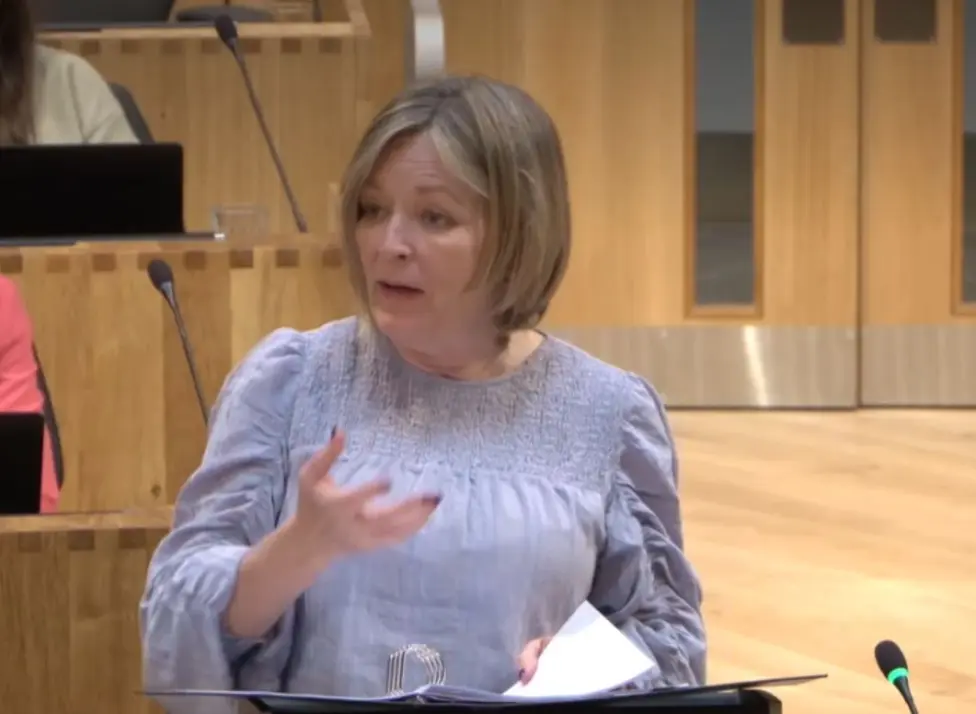
WALES’ education minister has vowed to tackle the “root causes” of antisocial behaviour in schools.
Plaid Cymru’s Anna Brychan was pressed on the Welsh Government’s plans to fix the issue by Reform MS Paul Marr on Wednesday July 1.
Referencing Plaid’s 100 day plan, Ms Brychan said the government will address the root causes of behavioural challenges, including “attendance, wellbeing and wider needs”, through a “co-ordinated whole system approach.”
She noted the importance of early intervention and aligning support services to “enhance learning environments”.
Welcoming Ms Brychan’s commitment to early intervention, Mr Marr said parents in his Ceredigion Penfro constituency want to know “why schools are increasingly being expected to deal with the threat of knife crime without proper resources.”
Calling on the Welsh Government to commit to funding preventable security measures and emergency response training, he noted: “Policies and plans, with respect, Minister, do not stop blades.”

Mr Marr also referred to his experience working in the prison service, where he said attacks on staff with bladed instruments became “a regular occurrence”.
He called for assurances for teachers from Ms Brychan that, with rising numbers of incidents, these attacks are “not expected to be their new norm”.
She said: “Every learner has the right to feel safe and know they belong in a school, are able to attend, participate and achieve.
“And the same is true of members of staff, and ensuring the safety and wellbeing of our school workforce is equally a priority for us.”
Labour’s Shav Taj spoke of the importance of correctly framing the debate around antisocial behaviour in schools.

She said: “While challenging behaviour is obviously a real concern, we’re hearing very clearly from unions but also staff on the ground, that it is actually increasingly linked to unmet needs, particularly around mental health and additional learning needs as well.”

Ms Taj went on to emphasise the importance of ALN reforms and ensuring the right level of support is in place through “a person-centred, needs-led system”.
She continued: “What teachers and teaching assistants are continuously telling us is that too often they’re being left to manage increasingly complex needs without it.
“So while some may frame this purely as an issue of discipline, isn’t the reality that where needs aren’t being met early, those pressures are simply playing out and compounding in the classroom?”
Ms Taj asked how the Welsh Government plans to ensure mental health provision in schools is properly resourced, including school counselling and wider ALN support.
Ms Brychan responded saying her points are “exactly the reasons” the programme will look at “wellbeing, attendance, and wider needs through a co-ordinated whole-system approach.”
She added: “She [Ms Taj] touches on ALN; that is a wider issue in our system, and that’s precisely why we want to bring all of these areas together and to recognise the barriers to learning that are part of this area of concern for us, and that’s why we have framed our response in this way.”
Ms Brychan was also pressed for an update on the progress made so far towards introducing a foundational literacy and numeracy plan.
Reform MS David Mills told the Siambr that Estyn found roughly 20% of pupils leave primary school functionally illiterate – a figure he described as “frightening”.

He called for the minister to set out “a clear timetable” for bringing the plan forward, and how it will deliver “measurable improvements” in both literacy and numeracy.
Ms Brychan stressed the problem is not with Welsh learners, and said: “Our learners are able to achieve and have potential comparable to anywhere in the world. It isn’t the lack of a willing workforce either.
“It is, I think, a lack of understanding of the expectations around progression in literacy and numeracy, and that’s precisely why we are introducing this literacy and numeracy foundational plan.”
Ms Brychan reassured the member that she is working “at pace”, noting that on her second day in the job she wrote to schools to outline the Welsh Government’s work on the plan, promising an update at the end of the summer term, before the framework is introduced in the autumn.
Natasha Asghar, of the Welsh Conservatives, questioned the deputy minister on what steps the Welsh Government is taking to boost the number of apprenticeships in Wales.
Noting that university isn’t “for everyone”, Ms Asghar stressed the importance of apprenticeships as a route into the workplace for “those who want to earn and learn at the same time”.

Recalling a commitment from Plaid’s election manifesto, she noted the party promised to expand both work experience and apprenticeships.
However, Ms Asghar went on to share a conversation she had recently with Jane Blackwell – a franchisee of five McDonald’s restaurants in the Newport area – who noted that despite wanting to take on more apprenticeships she is limited to due to the strict criteria of the apprenticeship levy.
Ms Asghar said: “We have a situation here where a business owner with multiple sites is contributing towards the apprenticeship fund, but isn’t able to access it to take on her own apprentices; it is, frankly, absurd”.
She called on the deputy minister to commit to meeting with Jane to discuss the issue and “iron out the problems” to start getting more young people into work.
In response, Cefin Campbell – the deputy minister for skills and tertiary education – said the Welsh Government is currently investing £151 million in apprenticeships to support delivery across Wales.

He said: “We believe that apprenticeships are a cornerstone of Wales’s post-16 skills system and a key policy, as you mentioned, for economic growth, fair work and productivity.
“They provide high-quality routes into employment, supporting people of all ages and helping employers develop the workforce they need.”
The deputy minister agreed with Ms Asghar that the current apprenticeship offer needs changes to reflect both “changing economic needs and the needs of businesses”.
He added: “A new apprenticeship programme from August 2027 will deliver a more flexible and responsive model for employers and delivery partners, shaped by extensive engagement, led by Medr.
“Now, this reform should be seen as part of a wider drive to create clearer pathways, improve parity of esteem with academic routes, and strengthen alignment between skills and economic growth.”
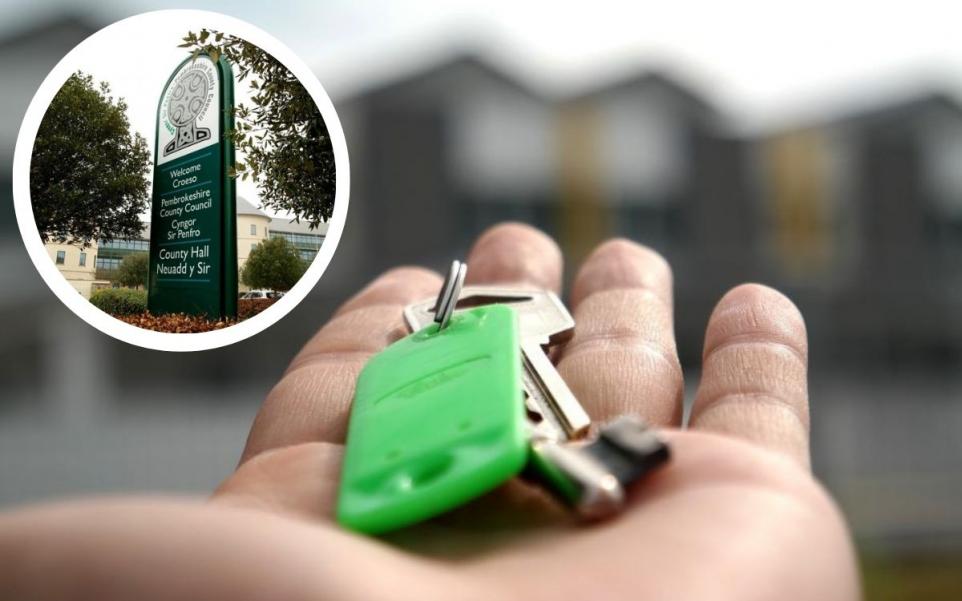
PEMBROKESHIRE’S council has made 17 purchases of housing in various sizes and a building to be used as a children’s home, amounting to just over £6.5m in just six months.
At the July meeting of Pembrokeshire County Council’s Cabinet, members are asked to note a report covering acquisitions and disposals in excess of £100,000 which have completed between November 1 of 2025 and March 31 of this year.
It lists 18 separate groups of acquisitions, totalling £6,526,967, along with one disposal of the former contact centre, Argyle Street, Pembroke Dock, at £415,000.
For those purchases, grants have been secured to the tune of £6,440,179, the report says.
These acquisitions, all for housing stock in various sizes and amounts, are: 22 The Glebe, Tenby £200,000, with a grant of £119,419; 12 Gay Lane , Marloes, £180,000 (£129,728); 5 St Mary’s Road, Pembroke Dock £125,000 (£76,764); 51 Augustine Way, Haverfordwest £105,000 (£69,126); 82 Heywood Court, Tenby £115,000 (£87,633); 19 Maes Ewan, Solva £220,000 (£165,155); 29 Heol Penlan, Goodwick £132,000 (£86,393); 1 Churchill Close, Tenby £125,000 (£83,571); 3 Westaway Park, Rosemarket £142,000 (£93,134); 22 Churchill Close, Tenby £125,000 (£83,571); 31 Haroldston Close, Merlins Bridge £110,000 (£62,318); 28 Flemish Court, Lamphey £160,000 (£114,597); 7 Precelly Place, Milford Haven £125,000 (£81,578); 17 Newell Hill, Tenby 170,000 (£120,098).
Larger acquisitions are: 3 Rose Haven, The Beacon, Rosemarket, of four two-bed houses and six three-bed houses £2,601,967 (£1,725,179); 32, 33, 34 and 35 Harcourt Close, Hook four two-bed semis £864,000; 36 and 37 Harcourt Close, Hook two three-bed semis £552,000, with a grant of £2,821,760 covering 15 units in the case of the latter two.
An additional purchase of Sentry Cottage, Jordanston for a children’s residential home at £475,000, with a £580,152 grant is also listed.
Planning permission for that scheme was granted back in February.
Last November, Cabinet members heard a similar report, covering April 1 to October 31 of 2025, which included includes the purchase of 16 properties for housing stock, to the tune of £3,470,000 and the disposal of two industrial estate plots, at some £278,400.



Community10 hours ago
Saundersfoot Harbour regeneration project wins national planning award
SAUNDERSFOOT HARBOUR’S redevelopment has been named Best Project at the RTPI Cymru Awards for Planning Excellence 2026. The award recognises...


Business16 hours ago
Pembrokeshire-based Ascona Group expands UK portfolio with Truckhaven acquisition
PEMBROKESHIRE-BASED Ascona Group has completed the acquisition of Truckhaven (Carnforth) Ltd, a major trunk road services area in Lancashire. The...

Health2 days ago
Wales begins early NHS winter planning after long waits and ambulance pressure
Ministers say health boards and councils must act now to ease pressure on hospitals, ambulances and social care before winter...


Crime3 days ago
Judge calls pensioner a ‘dirty old man’ as he avoids jail for exposing himself to women
Judge says 75-year-old Stewart Laugharne behaved ‘disgracefully’ as he avoids jail but is ordered to sign sex offenders register A...
Health3 days ago
Stroke services consultation reaches halfway point as public urged to have say
HYWEL DDA University Health Board is urging people to take part in its consultation on the future of stroke services,...


Business3 days ago
Welsh firms eye share of £5bn defence drone boom
WELSH defence and aerospace firms could be in line for a share of billions of pounds in new military spending...


Community5 days ago
Thousands line Cardigan streets for Lord Rhys homecoming parade
THOUSANDS of people lined the streets and quayside in Cardigan on Saturday as the town marked 850 years since Lord...


Crime6 days ago
Dyfed-Powys Police rated only ‘Adequate’ in organised crime inspection
A WATCHDOG has rated Dyfed-Powys Police only “Adequate” in its response to serious and organised crime, despite praise for the...


News6 days ago
Two taken to hospital after aircraft ditches in Cardigan Bay
Coastguard helicopter spotted two casualties after light aircraft came down off west Wales coast TWO people were taken to hospital...


Sport7 days ago
Long Course Weekend gets underway in Tenby as thousands head for county
Three days of swimming, cycling and running begin with The Wales Swim at North Beach THOUSANDS of athletes and supporters...
-
Crime6 days ago
Dyfed-Powys Police rated only ‘Adequate’ in organised crime inspection
-

 Entertainment7 days ago
Torch cuts children’s cinema tickets to £5.25 for summer
-

 News4 days ago
Biker dies and woman seriously injured in Black Mountain crash
-

 Climate7 days ago
Welsh waters, Westminster profits: Crown Estate row reignited in Wales
-
 News7 days ago
Reform MS: ‘I felt like shouting get out of the water’
-

 Crime7 days ago
Former Swansea Prison inmate died 48 hours after release
-
 Crime6 days ago
Swansea man jailed for 16 years after attacking vulnerable woman
-
Community5 days ago
Thousands line Cardigan streets for Lord Rhys homecoming parade