


Community
Restoring lost lichens in Pembrokeshire’s Celtic rainforest

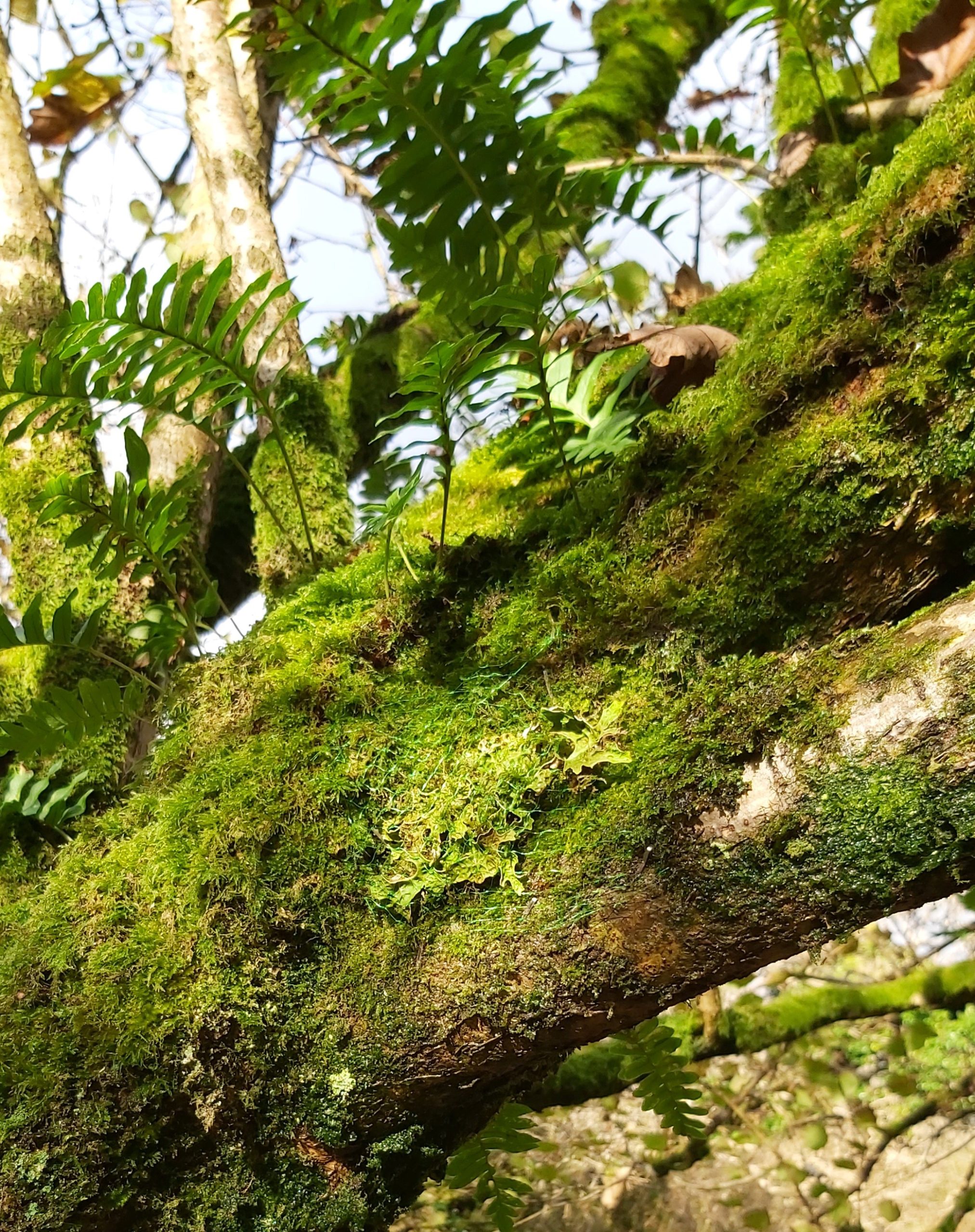
A LICHEN success story is being celebrated in an area of ancient rainforest in Cwm Gwaun thanks to the conservation efforts of the Pembrokeshire Coast National Park Authority.
Cwm Gwaun is one of the treasures of Pembrokeshire Coast National Park, renowned not only for its deep-rooted Welsh language and culture but also for its ancient Celtic rainforest. This unique landscape is home to five Sites of Special Scientific Interest (SSSIs), each nationally significant for its lichen-rich woodlands.
Lichens thrive in well-lit, humid environments with exceptionally clean air. However, in recent decades, these delicate ecosystems have declined due to changes in traditional woodland grazing practices and the impact of agriculture and industry on air quality.
One of the most striking lichens, Tree Lungwort (Lobaria pulmonaria), was recorded on only five trees in the valley in 2007. Encouragingly, recent signs suggest that conditions are once again becoming favourable for its recovery.
A breakthrough moment came in 2017 when a Pembrokeshire Coast National Park Authority Conservation Officer discovered a small fragment of Tree Lungwort on the ground following a storm at the Sychpant picnic site. Using netting from a fruit bag, they secured the fragment to a nearby ash tree, where it has since thrived. This unexpected success inspired a larger-scale effort to restore this vital species.

As part of the Cysylltu Natur 25×25 project, a lichen expert has now transplanted 46 small, windblown fragments of Tree Lungwort onto 20 trees across three carefully selected sites in Cwm Gwaun. These locations were chosen following thorough surveys, which confirmed the presence of other old-growth forest lichens with similar habitat needs.
Each tree has been mapped and labelled, allowing volunteers to monitor the progress of the transplants in the months and years ahead. The storm that once dislodged a fragment of Tree Lungwort may ultimately help breathe new life into Cwm Gwaun’s extraordinary lichen communities.
Mary Chadwick, Conservation Officer for Pembrokeshire Coast National Park, remarked, “Tree lungwort is a stunning lichen that embodies the essence of Atlantic rainforests. It’s exciting to contribute to its gradual recovery across Cwm Gwaun.
This project is funded by the Nature Networks Programme and delivered by the Heritage Fund on behalf of the Welsh Government.


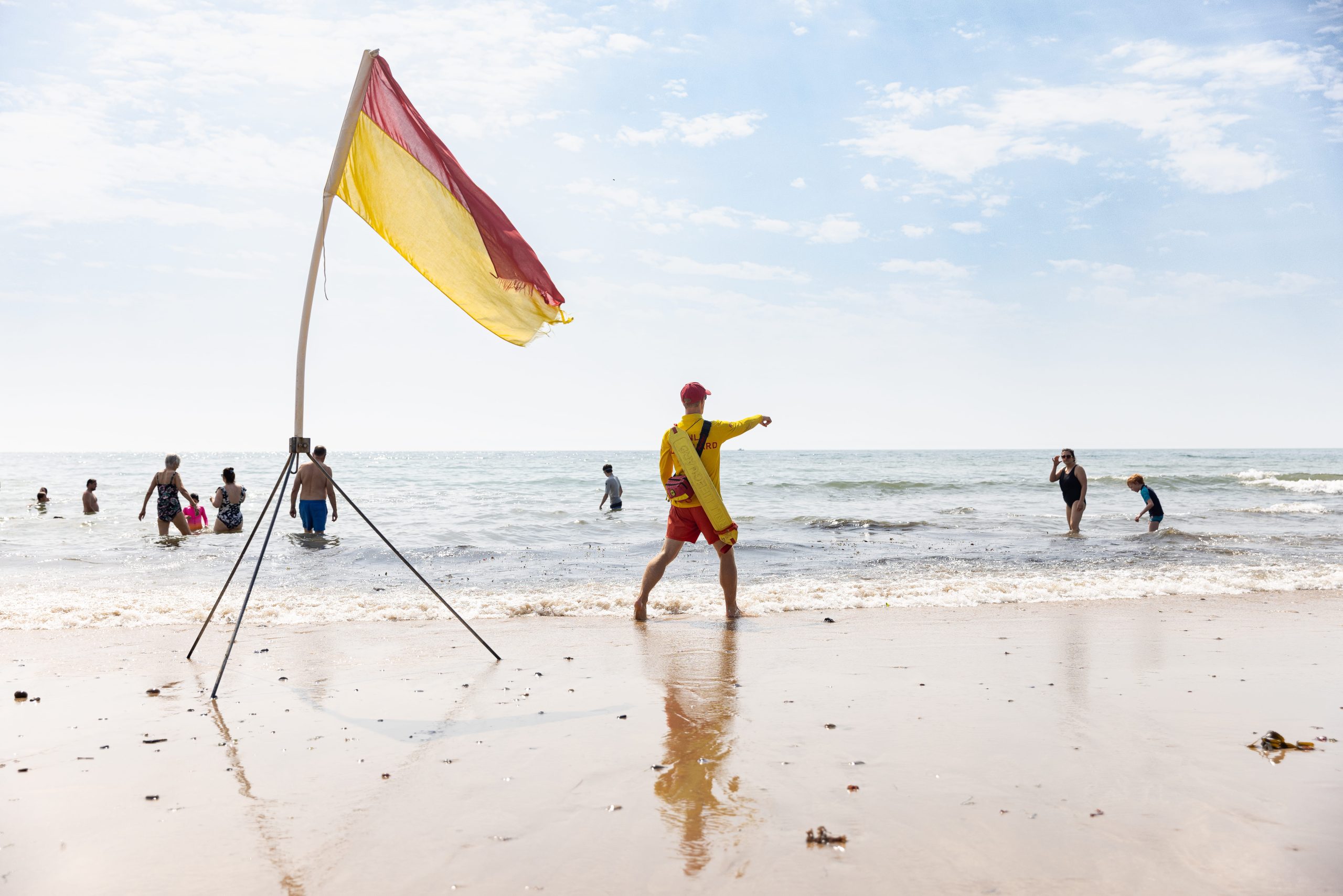
RNLI LIFEGUARDS have saved more than 300 lives in Wales since patrols were first introduced in Pembrokeshire in 2008, as the charity prepares to return to beaches for the Easter holidays.
The Royal National Lifeboat Institution said its lifeguards have saved 315 lives across Wales, aided more than 45,000 people, and responded to over 26,000 incidents. They have also carried out more than six million preventative actions to stop situations becoming emergencies.
The service, which marks its 25th anniversary this year, will see lifeguards return to key Welsh beaches from Saturday (Mar 28) as schools break up for Easter.
In Pembrokeshire, patrols will resume at Whitesands, St Davids, from March 28 to April 12, and at Tenby South from April 3 to April 6.
The RNLI said its lifeguards play a crucial role in keeping beachgoers safe, with around 95 per cent of their work focused on prevention, including advising swimmers, identifying hazards, and educating visitors.

Tom John, a Lifeguard Supervisor in Swansea who joined the service in 2009, said: “We’ve seen more people visiting our beaches each year. While the fundamentals remain the same, we are now a much more proactive service.
“Our training and equipment are excellent, and we have a brilliant team. This time of year is always special as lifeguards return with energy and enthusiasm for the season ahead.”
He added that lifeguards spend much of their time engaging with the public, offering safety advice, and helping people understand the risks before incidents occur.
Across Wales, more than 35 beaches are now patrolled by RNLI lifeguards, forming part of a wider UK network covering over 245 beaches.

The charity is urging anyone heading to the coast this Easter to choose a lifeguarded beach and to swim between the red and yellow flags.
Visitors are also advised to check weather and tide conditions, understand local hazards, and carry a means of calling for help when taking part in water activities.
The RNLI’s “Float to Live” advice remains central to its safety message. Anyone who gets into difficulty in the water is urged to float on their back, keeping their airway clear until help arrives.

In an emergency, people should call 999 and ask for the Coastguard.
The RNLI said its lifeguards will continue to play a vital role in protecting coastal communities and visitors as demand on beaches grows year on year.
A WELL-KNOWN Welsh weather presenter was spotted in Pembrokeshire as he filmed scenes for a new series celebrating the county’s coastline.
Derek Brockway, who has been a familiar face on BBC Wales since 1995, was in St Davids recently working on another instalment of his popular walking series along the Pembrokeshire Coast.
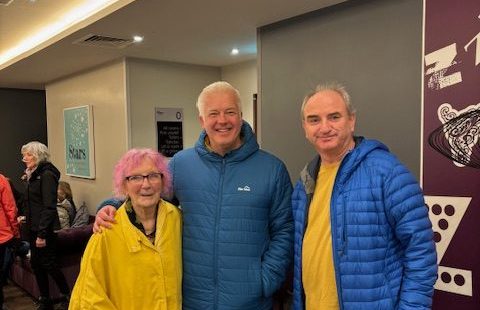
Local resident Thomas Tudor said it was “lovely” to meet the broadcaster during filming, posing for a photograph alongside his mother, Beryl Tudor, and sister, Bethan Thomas Price.
Brockway, who is based at BBC Cymru Wales in Cardiff, is widely known not only for his weather forecasts across television, radio and online, but also for his programmes showcasing Wales’ landscapes and coastal paths.
The latest filming in St Davids is expected to form part of an upcoming series highlighting the natural beauty and walking routes of Pembrokeshire, an area long regarded as one of the jewels in Wales’ tourism crown.

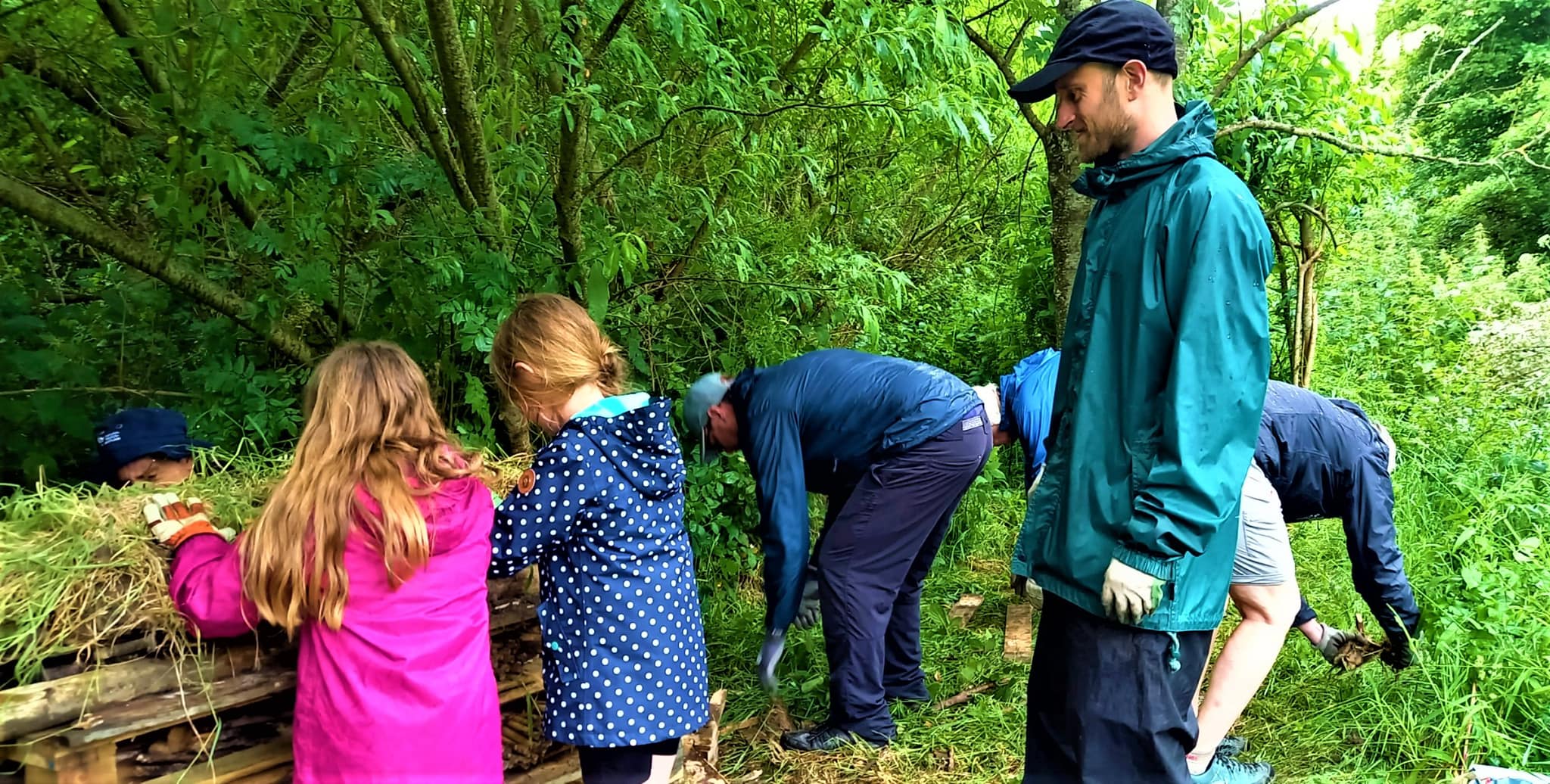
A SMALL stretch of woodland and former opencast coal mine has been transformed into a nationally recognised biodiversity site, in a major first for Wales.
The Slash Pond Community Nature Reserve has been awarded ‘Naturfa’ status, becoming the first community-managed site in Wales to receive the designation.
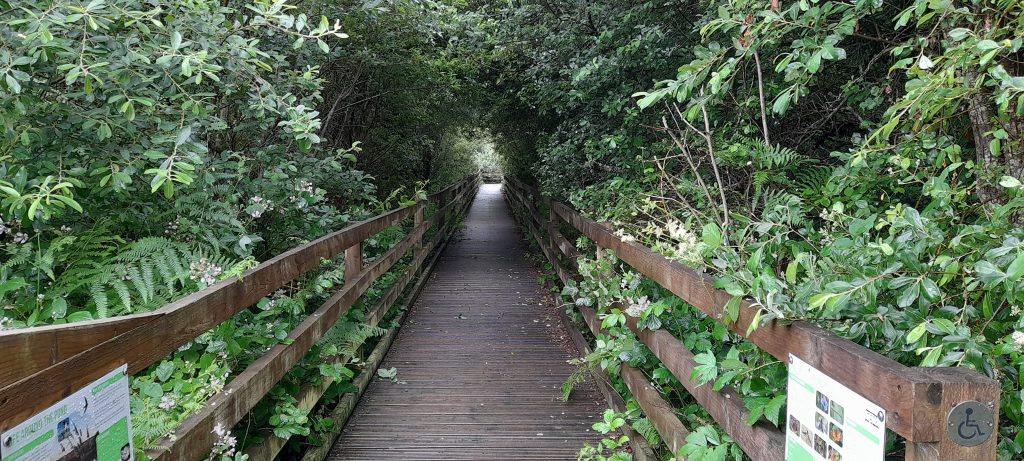
The recognition, confirmed by Deputy First Minister Huw Irranca-Davies, classifies the reserve as an “Other Effective Area-based Conservation Measure” (OECM). This means the volunteer-led work of the Support the Boardwalk group will now contribute directly to Wales’ 30×30 target – the global commitment to protect 30% of land, freshwater and sea for nature by 2030.
In a further boost, the site has also been included in the National Forest for Wales, recognising its role in strengthening a connected network of woodlands and habitats across the country.
Once a simple local walkway, the Slash Pond has developed into a thriving wildlife haven. The reserve now supports a wide range of species, including critically endangered European eels, otters, ten species of bat, and more than fifty species of birds, alongside diverse aquatic plants and insects.
Huw Irranca-Davies said: “These special places are a testament to the care and dedication of people working on the ground – securing a legacy for future generations. Nature can only thrive where habitats are resilient, protected and effectively managed.”
The new status is expected to unlock future funding opportunities, supporting long-term plans for maintaining the boardwalk, monitoring biodiversity and water quality, installing new signage, and expanding environmental education work with Broad Haven Primary School and the wider Havens community.
Andy Drumm, a volunteer with Support the Boardwalk, said: “We’ve always known how special the Slash Pond is, but this recognition puts it firmly on the map as a national asset. It’s a tribute to years of hard work and shows that local communities can lead the way in tackling the nature crisis.”
To mark the achievement, a Spring Family Fun Day will take place on Friday (May 9) from 1:00pm to 4:00pm at the Slash Pond car park.
The event will feature guided nature walks, pond dipping, a wildlife treasure trail, live music, and family activities including crafts and face painting. The official unveiling of the Naturfa certificate and new reserve branding will also take place, alongside the launch of a new book, From Culm to Calm: A History of the Slash Pond by local author David Meanwell.
Karen Riggs, a long-time volunteer, said: “This achievement belongs to everyone in Broad Haven who has supported the site over the years. We’re not just celebrating a new title – we’re celebrating what our community has built together.”
The day will also see the installation of new benches at the observation decks and the launch of a floating island habitat to support wildfowl and other bird species. Visitors will also be invited to share feedback on plans for an improved picnic area designed to withstand local flooding.

Naturfa is a Welsh Government initiative recognising areas outside traditional protected sites, such as SSSIs, that are managed in ways which deliver long-term benefits for biodiversity.
The Slash Pond Community Nature Reserve is managed by the Support the Boardwalk group in partnership with The Havens Community Council, and is maintained entirely by volunteers.
Further information and updates are available via the Support the Boardwalk Facebook page.



Business2 hours ago
Could Primark be coming to Haverfordwest? Major retailer in talks for former Wilko site
Council confirms advanced discussions as speculation grows over high street boost HAVERFORDWEST could soon see a major high street revival,...


Business3 hours ago
Rail investment ‘could unlock 40,000 jobs and £11bn for Wales’ says new report
RAILWAY stations across Wales could help unlock around 40,000 jobs and more than £11 billion for the economy by 2036,...


Local Government4 hours ago
Milford Haven set for £200m investment with schools, leisure centre and rail upgrade
Council outlines major plans for town with backing from Welsh Government MILFORD HAVEN is set for a major transformation with...

Community22 hours ago
Broad Haven volunteers secure ‘national asset’ status for nature reserve
A SMALL stretch of woodland and former opencast coal mine has been transformed into a nationally recognised biodiversity site, in...


Entertainment2 days ago
Tenby steams up in spectacular style as crowds flock to festival
Colourful parade, towering creations and Victorian flair bring town centre to life TENBY was transformed into a vibrant Victorian fantasy...


Crime3 days ago
Publican jailed for six years for supplying cocaine and cannabis
Milford Haven man sentenced at Swansea Crown Court following drug dealing operation A MILFORD HAVEN publican has been jailed for...

Local Government3 days ago
Poverty summit highlights support efforts across Pembrokeshire
A SUMMIT bringing together key organisations from across Pembrokeshire has highlighted both the scale of local poverty and the work...

Education4 days ago
Milford Haven school plans unveiled but funding not yet secured
PLANS for a new £100 million school in Milford Haven have been unveiled, but the project has not yet secured...


News4 days ago
Council unveils plans for new state-of-the-art secondary school in Milford Haven
PEMBROKESHIRE COUNTY COUNCIL has revealed plans for a new state-of-the-art school in Milford Haven, promising modern, inspiring learning spaces for...


Health4 days ago
NHS waiting list falls — but cancer delays and diagnostic backlog worsen
Record progress claimed by Welsh Government as critics warn key targets are still being missed THE NHS in Wales has...
-
 News6 days ago
Emergency services flood Haverfordwest after reports of person in river
-

 Crime5 days ago
Mother given community order after admitting child cruelty offence
-
Health4 days ago
NHS waiting list falls — but cancer delays and diagnostic backlog worsen
-

 News6 days ago
Senedd vote to ban greyhound racing hailed as ‘landmark moment’ by charities
-
 News6 days ago
Senedd votes to ban Greyhound racing in Wales to protect animal welfare
-

 News5 days ago
Reform secures first Pembrokeshire councillor in Hakin by-election win
-

 News6 days ago
Could Pembrokeshire hold the key to St Patrick’s lost birthplace?
-

 Crime5 days ago
Woman stole from pharmacy despite ban, court hears