


News
Saundersfoot to host Harbour ‘Feastival’ as part of Street Food Circus’


STREET FOOD CIRCUS will return this spring with a series of ten events celebrating food, family, and good times in spectacular coastal, castle, and woodland locations.
Marking its tenth anniversary, Street Food Circus has provided a platform for some of Wales’ best-known chefs and street food businesses over the past decade. The 2025 season will be the biggest in its history, featuring new locations and seasonal events.
One of the highlights of the year will be the return of Harbour Feastival to Saundersfoot Harbour in September. This popular event brings a diverse selection of street food traders to the coastal village, creating a vibrant atmosphere by the sea.

The season kicks off with Forest Feastival in Candleston Woods, followed by the Big Banquet at Caldicot Castle in May. Over the summer, events will include the Welsh Street Food Awards, a return to Southampton for Summer Feastival, and the launch of Pleasure Gardens in Pembrey Country Park in June. Fantastic Fete at St Donat’s Castle and a trader appearance at Big Feastival in the Cotswolds are also part of the lineup.
In addition to Harbour Feastival, a new event called Mabon will debut in September. This autumn festival, held in Candleston Woods, takes inspiration from the pagan autumn equinox festival and will focus on cooking with fire and celebrating the harvest season.

To close the year, Festive Feastival will return, bringing a mix of street food, a roller disco, and Christmas circus magic.
Street Food Circus founder and ringmaster Matt the Hat said:
“Street Food Circus has been a game-changer for the Welsh street food scene. Over the past ten years, we’ve given opportunities to some of the country’s best chefs and street food businesses to showcase their talents.
“Looking at the hundreds of businesses we’ve worked with, it’s great to see so many who’ve gone on to open permanent restaurants, launch new street food concepts, and win major UK awards.

“We’ve also made street food more accessible across Wales, supporting different locations and venues. As we celebrate our first decade, I hope everyone involved feels proud of our collective success and looks forward to a year of incredible street food events.”
The 2025 season opens with Forest Feastival, running across four weekends from April 18 to May 11. This year’s festival will introduce Barbecewi, a new area dedicated to food cooked over fire and classic Americana dishes. Traders include Westlands BBQ, Feast Pembrokeshire, Two Lads Afghan BBQ, Dough Thrower, Fire & Flank, and Acme Fried Chicken.
Forest Feastival will also welcome Keralan Karavan, Mandala, Ceylon & Beyond, Boa Selecta, and Mr Noodle in its Feast from the East zone. A new Caravan Stage will host circus performers, guest DJs, buskers, and a bubble disco for families.

The After Dark series will return on Friday nights, featuring SFC residents Pamoja Disco Club and guest bands, transforming the woodland into a late-night festival experience.
In an effort to improve sustainability, Street Food Circus is introducing reusable enamel plates, which can be pre-ordered and collected at the event. Food waste collection and washing stations will also be available.
Tickets and further details are available at streetfoodcircus.co.uk.
Events Schedule:
- Forest Feastival, Merthyr Mawr, Bridgend: April 18 – May 11 (4 weekends)
- Big Banquet, Caldicot Castle, Monmouthshire: May 23-26
- Summer Feastival, Southampton: June 6-8
- Pleasure Gardens, Pembrey Country Park, Llanelli: June 20-22
- Welsh Street Food Awards: July 12-13
- Fantastic Fete, St Donat’s Castle: August 1-3
- Big Feastival, Cotswolds: August 22-24
- Harbour Feastival, Saundersfoot Harbour: September 5-7
- Mabon, South Wales, BBQ Festival: September 26-28
- Festive Feastival, date and location TBC


THE WELSH CONSERVATIVES have tabled a Senedd debate this week setting out what they describe as a plan to “fix Wales” after nearly three decades of Labour-led government.
The party claims that, after twenty-seven years of Labour in power — supported at times by Plaid Cymru and the Liberal Democrats — Wales is falling behind the rest of the UK on key measures including health, education and the economy.
Figures highlighted by the Conservatives include one in four people currently on NHS waiting lists, with thousands waiting more than two years for treatment. Emergency departments in Wales are also said to be among the worst performing in Britain.
In education, Wales continues to rank at or near the bottom of UK league tables, with rising absenteeism and ongoing concerns over teacher recruitment and morale.
Economically, the party says Wales has some of the lowest wages in Great Britain and faces ongoing challenges in boosting productivity and employment.

Ahead of the debate, the Conservatives outlined a series of policy proposals, including:
- Cutting income tax by 1p to stimulate growth
- Declaring a health emergency to tackle NHS backlogs and increase bed capacity
- Scrapping stamp duty on primary homes
- Removing business rates for pubs, post offices and small firms
- Expanding free childcare, including allowing payments to grandparents
- Providing a £100 million boost for farmers and replacing the proposed Sustainable Farming Scheme
- Investing in infrastructure, including the M4 relief road and upgrades to the A55 and A40
- Reversing default 20mph speed limits
- Reducing bureaucracy and focusing on frontline delivery
Leader of the Welsh Conservatives, Darren Millar MS said the current system “isn’t working” and argued his party has a “credible and costed plan” to improve public services and economic performance.
He said: “We will cut taxes, boost growth, and fix our public services.
“We want to see a Wales that thrives, with a stronger economy, a properly functioning NHS, and opportunities for people in every corner of the country.”
The debate is scheduled to take place in the Senedd on Wednesday evening.
Local Government
Milford Haven set for £200m investment with schools, leisure centre and rail upgrade

Council outlines major plans for town with backing from Welsh Government
MILFORD HAVEN is set for a major transformation with nearly £200 million of public investment planned, including a new school, leisure centre and upgraded railway station, The Herald can reveal.

In an interview with this newspaper, Pembrokeshire County Council’s Deputy Leader, Cllr Paul Miller, said the town’s long-awaited regeneration was now firmly underway, with some projects already moving into delivery after years of planning.
The announcement represents one of the largest single waves of public investment ever proposed for Milford Haven.
New £140m school by 2030
The centrepiece of the investment is a £140 million co-located primary and secondary school, which is expected to open by 2030.
The Labour Group leader said the project had now passed a key Welsh Government approval stage, allowing it to move into the delivery phase.
He said: “This is not a ‘might happen’ — this is happening. We can now say with confidence that we’re going to open a new primary and secondary school in Milford Haven in 2030.”
The development will bring together English-medium primary and secondary education on a single site. While initially operating as two separate schools, the model could evolve into an all-through school for pupils aged three to sixteen.
The funding will largely come through Welsh Government’s school investment programme, with Pembrokeshire County Council contributing around 30 percent of the total cost.
The project is expected to modernise education provision in the town and replace ageing facilities.

Leisure centre plan takes shape
Alongside the school, the council has approved plans for a new leisure centre to replace the ageing Meads facility.
While still at an earlier stage, the project is expected to cost more than £50 million and will include a new swimming pool, upgraded gym facilities, and modern leisure provision for families.
Cllr Miller said: “The Meads has served its purpose, but it’s looking tired and reaching the end of its useful life. This will be a fantastic new facility for the town.”

The council is expected to fund the project directly, with leisure centres generating income through public use.
However, no firm construction start date or completion timeline has yet been confirmed, with feasibility work still ongoing.

Station upgrade to begin next month
A £16 million upgrade of Milford Haven railway station is set to begin next month, with completion expected by 2027.
The scheme will see significant improvements, including better links to Havens Head Retail Park, expanded parking, improved bus interchange, and platform extensions to accommodate longer intercity trains.
The work is also expected to enhance accessibility and modernise the station environment.
Cllr Miller said: “Starting on site next month is fantastic news for Milford Haven.”

Push to restore London rail link
Cllr Miller confirmed that efforts are ongoing to restore direct rail services between Milford Haven and London Paddington.
He said discussions are taking place with Welsh Government, including First Minister Eluned Morgan, as well as Mid and South Pembrokeshire MP Henry Tufnell.
Direct services last operated in the late 1990s, when InterCity 125 trains connected west Wales to London.
Cllr Miller said he was “hopeful and optimistic” that a deal could be reached, but stopped short of confirming a timeline.

Major retailer in talks for Wilko site
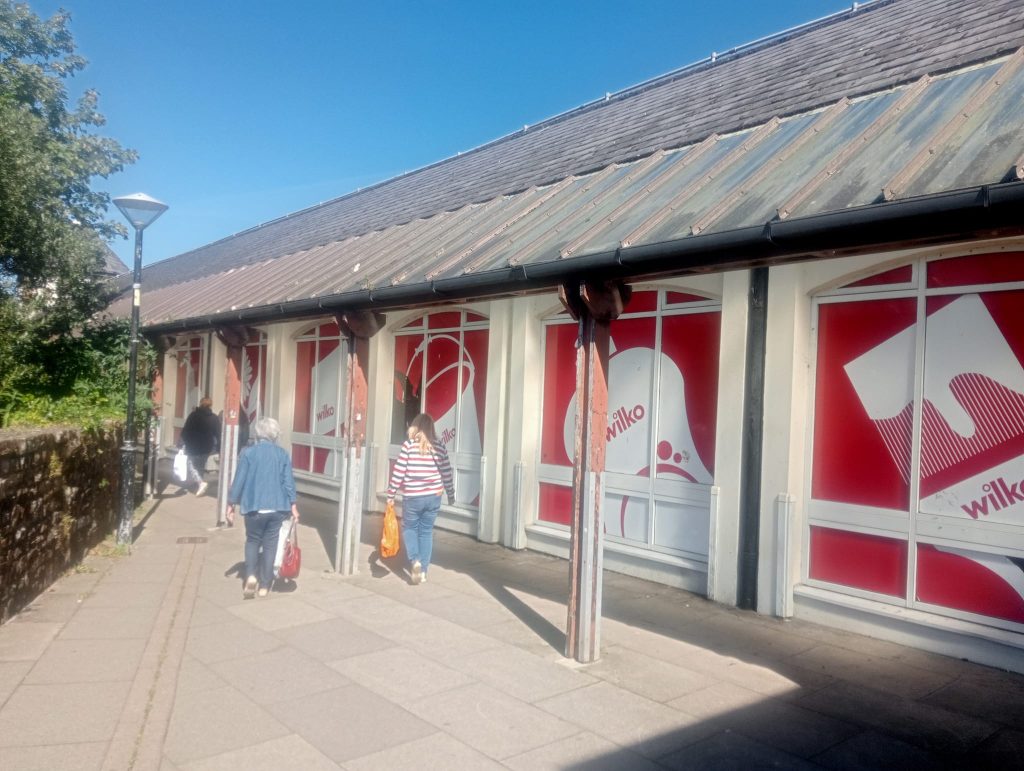
The council is also in advanced discussions with a major national retailer to take over the former Wilko building in Haverfordwest, one of the town’s most prominent vacant retail units.
Cllr Miller said a deal could be agreed within “weeks — maybe even days”.
He confirmed the council is investing in essential structural repairs, including roofing works, to prepare the building for occupation.
A new tenant would then carry out a multi-million pound fit-out before opening.
While the retailer has not been named, speculation locally has centred on Primark — something not confirmed, but also not denied during the interview.
The move is expected to provide a significant boost to footfall in Haverfordwest town centre, which has faced challenges in recent years following a number of retail closures.
‘Milford Haven’s turn’
Cllr Miller rejected suggestions the announcements were timed to coincide with upcoming elections.
He said: “These are not things we dreamed up yesterday as part of an election campaign. These are things we’ve been working on for years.”
He added: “It is Milford Haven’s turn. It is not forgotten — we are determined to invest in its future.”
The comments reflect a long-standing perception among some residents that Milford Haven has been overlooked compared to other parts of Pembrokeshire.
Questions remain
While firm commitments have been made on the school and railway station, other elements — including the leisure centre’s final cost and the return of direct London rail services — remain subject to further agreement.
With construction on the station due to begin within weeks and a major retail deal potentially days away, Milford Haven could be on the brink of significant change.
However, residents are likely to watch closely to see how quickly these ambitious plans move from announcement to delivery.

RESIDENTS across Pembrokeshire can now back the campaign to protect services at Withybush Hospital by signing a paper petition available in council offices across the county.
The initiative has been introduced to ensure those who are digitally excluded – including older residents and people without reliable internet access – are still able to have their say.
The petition, originally launched online by local resident Ajay Owens, has already attracted more than 11,000 signatures. Campaigners say the introduction of paper copies will help ensure the final total reflects the views of the whole community.

SUPPORT GATHERS PACE
Local Senedd Members Paul Davies and Samuel Kurtz, who are supporting the campaign, said it was vital that every voice is heard.
The Preseli Pembrokeshire MS, PAUL DAVIES said: “We have taken significant steps to highlight the importance of protecting services at Withybush Hospital, including gathering evidence from staff, patients and residents, and raising concerns with health leaders. It is vital that people continue to share their experiences of why local services matter.”
SAMUEL KURTZ MS added: “The community has come together before to oppose cuts to Withybush, and once again the community are showing they will not accept the closure of services at Withybush lying down. We will stand beside them every step of the way until this decision is overturned.”
Both Members have formally requested that the petition be debated in the Senedd before its dissolution, in a bid to ensure Pembrokeshire residents’ concerns are considered at the highest level.
RURAL CARE CONCERNS
Campaigners argue that maintaining services at Withybush Hospital is critical for patient safety, timely emergency care, and supporting rural communities, where travel times to alternative hospitals can be significantly longer.
Residents wishing to sign the petition can do so at their local town or community council office during normal opening hours.

Ajay Owens said: “I am incredibly heartened by the support from our local town halls and businesses. This petition is about giving every resident in Pembrokeshire a voice, and having these physical locations available ensures that everyone, regardless of their access to the internet, can stand up for what matters to our community and share their concerns.”
WHERE TO SIGN
Paper copies of the petition are currently available at locations including Fishguard and Goodwick Town Hall, Haverfordwest Town Council at the Old Wool Market, Milford Haven Cemetery Lodge, Narberth Community Library, Newport Town Council, Pembroke Town Hall, Pembroke Dock Town Council, and across Saundersfoot via local distribution.
Opening times vary depending on location.




Local Government25 minutes ago
Milford Haven set for £200m investment with schools, leisure centre and rail upgrade
Council outlines major plans for town with backing from Welsh Government MILFORD HAVEN is set for a major transformation with...


Community18 hours ago
Broad Haven volunteers secure ‘national asset’ status for nature reserve
A SMALL stretch of woodland and former opencast coal mine has been transformed into a nationally recognised biodiversity site, in...


Entertainment2 days ago
Tenby steams up in spectacular style as crowds flock to festival
Colourful parade, towering creations and Victorian flair bring town centre to life TENBY was transformed into a vibrant Victorian fantasy...


Crime3 days ago
Publican jailed for six years for supplying cocaine and cannabis
Milford Haven man sentenced at Swansea Crown Court following drug dealing operation A MILFORD HAVEN publican has been jailed for...


Local Government3 days ago
Poverty summit highlights support efforts across Pembrokeshire
A SUMMIT bringing together key organisations from across Pembrokeshire has highlighted both the scale of local poverty and the work...


Education4 days ago
Milford Haven school plans unveiled but funding not yet secured
PLANS for a new £100 million school in Milford Haven have been unveiled, but the project has not yet secured...


News4 days ago
Council unveils plans for new state-of-the-art secondary school in Milford Haven
PEMBROKESHIRE COUNTY COUNCIL has revealed plans for a new state-of-the-art school in Milford Haven, promising modern, inspiring learning spaces for...


Health4 days ago
NHS waiting list falls — but cancer delays and diagnostic backlog worsen
Record progress claimed by Welsh Government as critics warn key targets are still being missed THE NHS in Wales has...


Crime5 days ago
Rapist jailed after ‘abhorrent’ attacks on woman and children
Haverfordwest man told police “women won’t have sex without force” A HAVERFORDWEST man who raped a woman and a young...


News5 days ago
Reform secures first Pembrokeshire councillor in Hakin by-election win
Late Reform candidate takes seat as independent surge and Labour withdrawal shape contest REFORM UK candidate Scott Thorley has won...
-

 News6 days ago
Emergency services flood Haverfordwest after reports of person in river
-

 Crime5 days ago
Mother given community order after admitting child cruelty offence
-
Health4 days ago
NHS waiting list falls — but cancer delays and diagnostic backlog worsen
-

 News6 days ago
Senedd vote to ban greyhound racing hailed as ‘landmark moment’ by charities
-

 News6 days ago
Senedd votes to ban Greyhound racing in Wales to protect animal welfare
-
News5 days ago
Reform secures first Pembrokeshire councillor in Hakin by-election win
-

 Crime5 days ago
Woman stole from pharmacy despite ban, court hears
-

 News6 days ago
Could Pembrokeshire hold the key to St Patrick’s lost birthplace?