


Business
Job vacancies fall to four-year low as hiring slows and costs rise


JOB vacancies in the UK have fallen to their lowest level in nearly four years, indicating weakening demand for workers amid rising employment costs.
The number of vacancies dropped to 781,000 in the first quarter of the year, according to the Office for National Statistics (ONS). At the same time, the number of people on company payrolls fell by 78,000 in March, with figures for February also revised down.
While average pay continued to grow—up 5.9% over the year—analysts warn that recent increases in National Insurance Contributions and the National Minimum Wage, introduced this month, could put pressure on future wage growth.
Sarah Coles, head of personal finance at Hargreaves Lansdown, said: “The looming hike in employers’ taxes in April is very likely to have persuaded employers to hold back on hiring. Pausing recruitment is the simplest lever for businesses to pull when they want to slow things down. It’s far cheaper and less damaging than redundancies.”
Employment Minister Alison McGovern welcomed the continued rise in real wages, saying April’s changes would “boost people’s payslips and improve living standards.”

However, the UK employment rate for 16 to 64-year-olds remains at 75.1%, still below Labour’s target of 80%. The unemployment rate stood unchanged at 4.4%.
The ONS cautioned that its jobs data should be treated carefully due to low response rates to its labour market survey.
According to historical data, UK job vacancies had climbed steadily from 730,000 in early 2015 to a peak of 1.3 million in mid-2022. The latest figures mark the first time vacancies have fallen below pre-pandemic levels since mid-2021.
Despite strong wage growth, some economists believe the trend may not last. Yael Selfin, chief economist at KPMG UK, warned: “The short-term impact of the rise in labour costs, which came into effect in April, will likely put downward pressure on pay in the coming months.”

Recruitment firm Manpower said wider market challenges are also having an impact. “We’re seeing much broader scale cutbacks than we’d previously anticipated, as higher costs coincide with Trump-led tariffs and British Steel negotiations,” said Anna Spaul, market intelligence director at ManpowerGroup. “It’s all adding to a greater sense of uncertainty for businesses.”
The Bank of England now faces a dilemma ahead of its May interest rate-setting meeting. Wage growth could delay cuts to interest rates, which currently stand at 4.5%. However, global tariffs and slowing employment may push the Bank to consider action to stimulate the economy.


Welsh insolvency specialist says rising costs, shrinking margins and unpaid bills are continuing to place businesses under severe pressure
BUSINESSES across Wales are continuing to face a difficult trading climate as rising costs, falling profits and cashflow pressures take their toll, an insolvency specialist has warned.
Government figures released on Friday (July 17) show there were 1,845 corporate insolvencies in June 2026.
That was four fewer than the 1,849 recorded in May and 10 per cent lower than the 2,048 reported in June last year.
However, Andy McGill, restructuring and insolvency partner at business advisory firm Azets, said the figures remained a cause for concern, with many directors struggling to keep their companies afloat.
Mr McGill, who covers Wales from Azets’ offices in Cardiff, Swansea and St Asaph, said Creditors’ Voluntary Liquidations continued to dominate the figures.
He said: “While 50 fewer took place compared with last month, CVL numbers remain higher than they were before the pandemic, as directors lack the confidence and cash to keep their firms open in a trading climate dominated by rising costs, shrinking margins and political and economic uncertainty.”
Compulsory liquidations also remain higher than they were at the beginning of the year, with creditors increasingly using the courts to recover unpaid debts.

Mr McGill said the patience shown by creditors during the pandemic had largely disappeared, with businesses and public bodies now watching payment deadlines more closely and chasing overdue invoices.
“Everyone is short of money, everyone is watching their payment deadlines and chasing unpaid invoices, and it is likely this will continue in the second half of the year,” he said.
“Times are tough for Britain’s businesses. It costs more to hire staff, profits are falling and cashflow levels are under pressure.
“Firms have been fighting financial fires in one form or another since 2020.”
He said increases in rents, business rates, materials, wages, products and energy had steadily reduced profit margins over the past six years.

Energy bills remained a particular concern for businesses that were unable to pass increased costs on to their customers.
Retailers and hospitality businesses were among those facing the greatest pressure, with some reducing recruitment as they attempted to control costs.
Mr McGill said that although sales volumes may be increasing in some sectors, this did not necessarily mean businesses were making more money.
“Many businesses are having to work harder simply to stand still,” he said.
“Where they can, they avoid passing their costs on to customers, but many simply are not able to do this anymore.”
The construction industry was also being affected by delayed project starts, planning difficulties, late payments, tight margins and rising material costs.
Mr McGill said improved summer weather could help increase construction output, although it remained unclear whether this would be enough to significantly improve conditions within the sector.
He urged company directors worried about their finances to seek professional advice at the earliest opportunity.
“It is a hard call to make and an incredibly tough conversation to start,” he said.
“But doing so while your worries are still new gives you more options and more time to decide your next step than if you wait until the problem becomes more severe.
“It usually gives you a better chance of turning the situation around.”

Strategic proposal calls for temporary suspension of rates to support shops and businesses during town centre regeneration
A PROPOSAL for Haverfordwest to become the Welsh Government’s national pilot for the temporary suspension of business rates has been presented to local politicians and business representatives.
Councillor Randell Izaiah Thomas-Turner unveiled the 24-page strategic report following 18 months of work and more than two years of discussions with residents and traders.
He said business rates had repeatedly been identified as one of the greatest obstacles facing Haverfordwest town centre, particularly while major regeneration work is taking place.
The proposed pilot would temporarily suspend business rates during the regeneration programme, with the aim of attracting new investment, supporting existing traders and bringing vacant premises back into use.
Councillor Thomas-Turner said the initiative could also create jobs, increase footfall and help the town maximise the economic benefits of projects including the redevelopment and reopening of Haverfordwest Castle.
The proposal was discussed at a meeting attended by Henry Tufnell MP, Paul Davies MS, county councillor Dai Clements, Plaid Cymru representative Billy Shaw, Deputy Mayor Councillor Adam Benson-Davies, Hedi Lewis of Haverfordwest Business Circle and independent business owner Ben Evans.
Councillor Thomas-Turner said Paul Davies MS had pledged his support, while representatives from Labour and Plaid Cymru had also engaged positively with the proposal.
He said: “This is not about party politics. It is about securing the best possible future for Haverfordwest and ensuring businesses are supported while the town undergoes significant regeneration.
“A temporary suspension of business rates could encourage new businesses to invest, protect existing traders, create jobs and help fill empty shops.
“Today was not the finish line. It was the beginning of the next stage of the campaign.”
He added that the proposal would require support from residents, businesses, Haverfordwest Town Council, Pembrokeshire County Council, Members of the Senedd, the local MP and the Welsh Government.
No representative from Reform UK attended the meeting.

CAPTION:
Political representatives and members of Haverfordwest’s business community met to discuss the proposed business rates pilot.
Business
Council leader to write to Welsh Government urging review of 182-day self-catering business rules

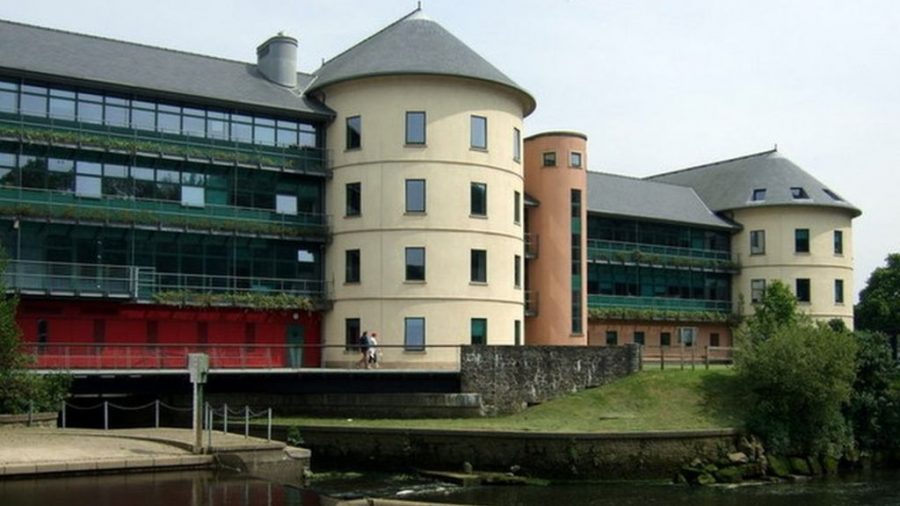
PEMBROKESHIRE’S leader is to write to Welsh Government to push for a review of the contentious 182-day rule for self-catering holiday properties which otherwise have to pay second homes tax.
Self-catering businesses not meeting the 182-day criteria end up paying the second homes council tax premium, currently 125 per cent on top of the general rate, in the county, along with similar premiums for the other elements of the overall bill such as the police precept.
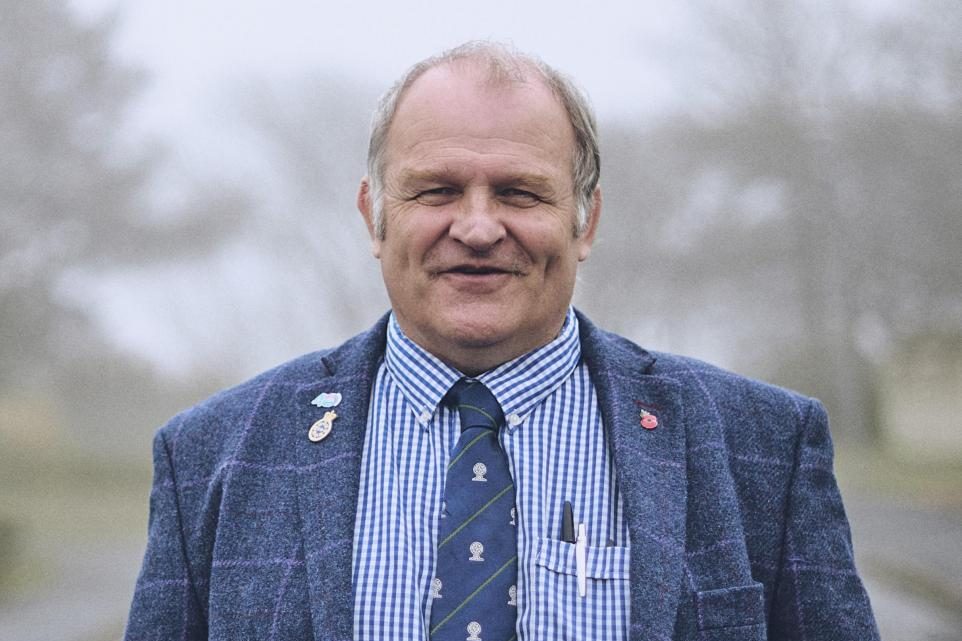
In a submitted question heard at the July 16 meeting of Pembrokeshire County Council, Cllr Huw Murphy asked: “Most councillors are aware that much of Pembrokeshire relies on tourism and hospitality for its economic success. A key element of a successful Pembrokeshire tourism industry is the self-catering sector.
“Plaid Cymru in its manifesto made several pledges for its first 100 days in office, one under the headline of ‘Unleashing Wales Economic Potential’ which made no specific mention of the 182 letting day rule that was introduced by the previous Labour Government under their co-operation agreement with Plaid Cymru.
“However, Plaid Cymru prior to Senedd elections in May 2026, stated that they would review the 182-day threshold which has been a disaster for many self-catering businesses, many of whom are in rural and coastal communities. I have raised this matter on several occasions since being elected.
“Through speaking to those operating in the self-catering sector there is a clear need to reduce the 182-day threshold. I should point out that in the past I have suggested it be reduced to 140 days and still hold that view.
“Over 50 days have now passed since the Senedd Elections, but we have not heard any details of a review of the 182-day letting rule.
“Therefore, will the Leader [Cllr Tessa Hodgson] write off to the First Minister outlining the concerns of many Pembrokeshire county councillors with regards to the 182 days letting rule and ask for a reply setting out when Welsh Government intend to commence a review of this policy, which is much needed?”

Responding to the submitted question, Cllr Hodgson said she was happy to write a letter pressing the issue, adding she understood a Welsh Government review was expected, but was not aware of the timeframe for that at the current moment.
Cllr Murphy said, since his submitted question was publicised, he had been “inundated with emails” from constituents, “confirming the urgency” of a review.
Back in 2023, Cllr Murphy submitted an unsuccessful notice of motion to full council calling for the 182-day rule in Pembrokeshire to be lowered, proposing a figure of 140 days.
At the time of the 2023 call it was instead agreed to review the situation and for the council to raise its concerns to Welsh Government.




Crime4 hours ago
Jury hears final arguments in Milford Haven teacher stabbing trial
Defence says there was no motive or intention to kill as judge reviews competing accounts of classroom knife incident SPECIAL...

News8 hours ago
Andy Burnham becomes Labour leader and prepares to enter No 10
Former Greater Manchester mayor promises an ‘unashamedly Labour’ government after completing extraordinary return to Westminster ANDY BURNHAM has been formally...


News10 hours ago
Motorcyclist dies following collision near Narberth
Police appeal for witnesses and footage after fatal crash on B4313 at Redstone A MOTORCYCLIST has died following a collision...


Local Government1 day ago
Stepaside school saved as council abandons closure proposal
Governors welcome decision but maintain original plans were based on outdated information STEPASIDE Community Primary School will remain open after...

Crime1 day ago
Footballer given 200 hours’ unpaid work for eye-gouging assault during match
Magistrates heard Robert Hedley put an opposing player in a headlock before gouging at his eyes during a match in...


Community1 day ago
Tenby Summer Spectaculars brought to an end after harbour licence revoked
Round Table says it was willing to make major safety changes but could not secure the access controls needed to...

Local Government3 days ago
Catapult attacks suspected after wildlife deaths at Pembroke Mill Pond
Wildlife Crime Officers are investigating after the town council said around five animals showed signs of deliberate injury WILDLIFE found...


Crime3 days ago
Narberth retailer speaks of shoplifting toll after ‘collectable bear’ stolen
Independent shop owner said rising costs meant businesses could not afford to absorb losses caused by theft A NARBERTH retailer...


Crime3 days ago
Teen accused of attempting to murder teacher says she lied about stabbing
Defendant accepts teacher was terrified and that a knife wound to the head could kill, but denies deliberately attacking her...


Local Government5 days ago
Calls grow for independent investigation into Manorbier school closure
Councillor alleges misleading figures, inadequate insurance and poor treatment of staff CALLS for an independent investigation into the controversial closure...
-

 Crime3 days ago
Letterston footballer guilty of eye-gouging assault during match
-

 Business4 days ago
Former St Davids GP surgery to holiday let and home conversion conditionally approved
-
 Education7 days ago
Welsh Government under fire to spend extra £340m on ALN
-
Community5 days ago
Call for investigation into Manorbier school closure as councillor seeks apology
-
 Climate7 days ago
Minister denies plan to cut livestock numbers over ‘left-wing ideological climate targets’
-

 Crime3 days ago
Woman locked naked in garden after partner kicked and stamped on her
-

 Crime4 days ago
Counter-terrorism officers take charge of Ann Widdecombe death investigation
-

 Education4 days ago
School leaders in Wales warn of action after recommended pay rise rejected