


Local Government
Stepaside school saved as council abandons closure proposal


Governors welcome decision but maintain original plans were based on outdated information
STEPASIDE Community Primary School will remain open after Pembrokeshire County Council formally reversed its earlier decision to consider closing it.
Councillors approved the change at a meeting of the full council on Thursday afternoon, July 16, bringing months of uncertainty for pupils, parents, staff and the wider Kilgetty and Stepaside community to an end.
The decision rescinds the authority’s previous instruction to begin statutory consultation on proposals to close Stepaside and Saundersfoot primary schools and replace them with a new school for children aged three to 11 on the existing Saundersfoot site.
The governing body of Stepaside Community Primary School said it was “delighted” by the outcome and described it as a major achievement for the community.
Chair of Governors Laura Burnett said: “We are delighted to share the exciting news that Stepaside Community Primary School will remain open.

“This is a tremendous achievement for the community served by the school in Kilgetty, and it means our staff can continue providing a high-quality education in the nurturing and supportive environment for which the school is known.”
However, governors said they continued to believe the original closure proposal had been ill-informed.
They raised concerns that figures relating to the school’s capacity, projected pupil numbers and finances were outdated and did not provide a reliable basis for deciding its future.
The governing body also argued that the effect of closing the school on pupils, families and the wider community had not been examined thoroughly enough.

It said there had initially been limited engagement with those who would have been most affected and expressed disappointment that some of those involved in developing the proposal had not visited the school before it was put forward.
The decision to reconsider the plans followed a change in Pembrokeshire County Council’s Cabinet responsibilities.
Deputy council leader and Cabinet Member for Place, the Welsh Language and Education Cllr Paul Miller recommended that the authority should no longer pursue Stepaside’s closure.

He previously said a review had concluded that the school was producing good educational outcomes for its local population and was sustainable in its present form.
Governors thanked Cllr Miller and the county councillors, MPs and Senedd Members who visited the school and listened to the concerns of families and campaigners.
They said the visits had allowed the school to demonstrate its educational standards, community values and the wider consequences that closure could have caused.
The school’s recent Estyn inspection described Stepaside as “a happy place where pupils feel safe and are eager to learn”.
Inspectors also praised its nurturing ethos and described the school as having a welcoming, calm and purposeful learning environment in which pupils made good progress and were proud of their achievements.
The campaign to protect the school received widespread community support, with a council petition started by Angela Robinson attracting 1,952 signatures.
Local county councillors Alistair Cameron and Alec Cormack were also among those who publicly opposed the proposed closure.
The governing body said the dispute had raised wider questions about the future of rural education in Pembrokeshire.
It said: “Closing successful schools is not the right approach to educational development.
“Rural schools are far more than places of learning. They are at the heart of their communities, and their loss has far-reaching consequences for local families and community life.
“Approaches that may be appropriate in cities should not automatically be applied to counties such as Pembrokeshire, where vibrant rural schools play a vital role in sustaining thriving local communities.”
The decision was also welcomed by Swansea City and Wales footballer Liam Cullen, a former Stepaside pupil whose family has been connected with the school across several generations.
He said: “Stepaside is a school that my family and I attended, from my mum and auntie to my nephew and niece today.
“It provided me, and so many other pupils, with an amazing education and prepared us perfectly for moving on to secondary school.
“I met many friends there who I am still in contact with today. Alongside giving me a brilliant education, the staff supported my ambition of becoming a footballer.
“My family and I could not have done it without the school allowing me to train and play while making sure I remained on top of my education.”
The governing body said it was now looking forward to welcoming pupils back in September and beginning a more settled chapter in the school’s history.
Families interested in applying for a place or arranging a visit can contact the school at [email protected].

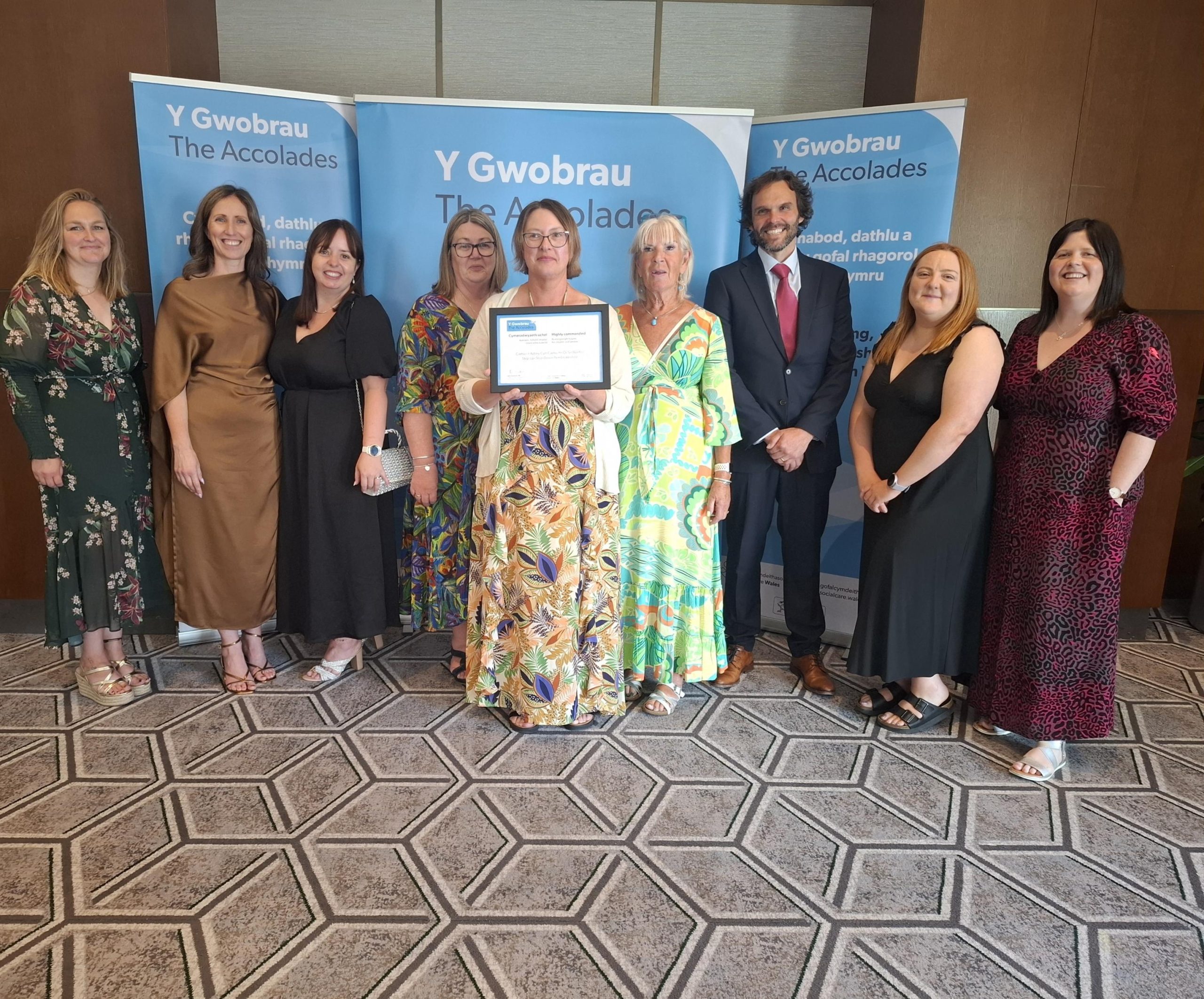
AN INNOVATIVE programme helping children remain safely with their families has received national recognition for its work in Pembrokeshire.
The Fostering Network’s Step Up, Step Down service, delivered in partnership with Pembrokeshire County Council, was highly commended and named runner-up at the recent national Social Care Accolades.
The programme was recognised for its work supporting children, foster carers and birth families, while helping to reduce the number of young people entering the care system.
Step Up, Step Down provides practical and therapeutic support to families experiencing difficulties. This includes parenting programmes, mentoring, supervision and community-based activities designed to build confidence and resilience.
Since its launch in Pembrokeshire, the service has supported more than 30 parents and carers, as well as 43 children and young people.
The programme was originally funded by the Welsh Government and the KPMG Foundation following a successful pilot scheme in Northern Ireland.
Pembrokeshire County Council said work to secure the long-term sustainability of the service had ensured the support could continue beyond the initial funding period.
Chris Frey-Davies, the council’s Head of Children’s Services, said the award reflected the dedication of everyone involved.
He said: “This award is a testament to the dedication of everyone involved, particularly our foster carers, whose compassion, skill and commitment have been instrumental in supporting children and families through challenging times.
“The Step Up, Step Down approach reflects our philosophy in Pembrokeshire that, wherever it is safe and in a child’s best interests, children should be supported to remain with their families and communities.
“By building on families’ strengths and providing the right support at the right time, we can achieve better outcomes for children while keeping important relationships and local connections intact.
“This recognition highlights the positive impact of a collaborative, strengths-based approach that is helping more families stay together and thrive.”

Cabinet Member for Young People and the Well-being of Future Generations, Cllr Marc Tierney, said the programme was making a significant difference to families across the county.
He added: “It is fantastic to see the positive impact the programme has on reducing the need for children to enter the care system.
“Helping families stay together and improving the lives of those children is at the heart of this work. Congratulations to everyone involved.”
Members of the Step Up, Step Down team are pictured with Head of Children’s Services Chris Frey-Davies.

Audit Wales says councils need earlier decisions, clearer forecasts and a full review of how billions of pounds are distributed
THE SYSTEMused to distribute Welsh Government funding to councils has not been independently reviewed for more than 20 years and still relies partly on information dating back to 1991, a new report has warned.
Audit Wales says the current arrangements do not always help Wales’ 22 principal councils secure value for money or plan essential public services effectively.
Its report, Funding Councils, calls on the Welsh Government to provide funding information earlier, offer councils greater certainty about future settlements and ensure decisions are based on accurate, up-to-date evidence.
Councils rely heavily on Welsh Government funding to pay for services including education, social care, waste collection, highways and housing support.
However, auditors found that councils are often given limited information about how much funding they are likely to receive in future years, making long-term financial planning more difficult.
The report says both councils and the Welsh Government should prepare for a range of possible funding settlements so that decisions do not have to be rushed once final figures are announced.
It also raises concerns about the formula used to distribute the majority of unrestricted council funding.
The system has not undergone a full independent review for more than two decades, while some of the indicators used to calculate allocations continue to draw on census and other information from 1991 and 2001.
Audit Wales said there had been significant demographic, economic and social changes across Wales since those figures were collected.
The report also questions the number, design and timing of specific grants handed to councils.
Some grants are announced late in the financial year, leaving authorities with little time to spend the money and increasing the risk that decisions are made quickly rather than as part of a wider strategic plan.
Five recommendations have been made to the Welsh Government, including a review of the funding formula, clearer indications of future funding levels and improvements to the administration of grants.

Auditor General for Wales Adrian Crompton said many of the problems identified reflected recurring concerns he had encountered during his time in office.
He said: “This report finds that the way the Welsh Government funds councils does not always help them to achieve value for money, particularly over the longer term.
“Addressing these themes is essential if the Welsh Government and local authorities are to navigate today’s extreme financial and demand challenges and deliver sustainable public services to the people of Wales.”
The annual local government settlement provides councils with money that is not restricted to a particular service. The amount received by each authority is calculated using a formula intended to reflect local needs and circumstances.
Councils also receive separate grants that must be used for specified purposes.
The latest findings follow previous Audit Wales reports examining the financial sustainability and capital planning arrangements of Welsh local authorities.

Urgent question follows suspension of collections in Cardiff and Carmarthenshire amid nationwide processing problems
Pembrokeshire County Council has been asked whether it could temporarily stop residents taking unwanted fridges and freezers to its waste and recycling centres.
Councillor Huw Murphy submitted an urgent question for consideration at a meeting of the full council on Thursday, July 16, following similar restrictions introduced elsewhere in Wales.
The council’s Presiding Member agreed that the late question could be raised during the meeting.

Cllr Murphy said Cardiff Council and Carmarthenshire County Council had suspended the acceptance of fridges, fridge-freezers and other cooling appliances at their recycling centres because of a reported lack of national processing capacity.
The problem has reportedly resulted in discarded appliances remaining at council facilities and taking up significant amounts of storage space while they await collection.
Cllr Murphy said Pembrokeshire’s position as a major tourism destination could mean the county handles a relatively high number of redundant fridges and other cooling appliances.
In his question, he asked the Cabinet member responsible for waste services to explain the likelihood of Pembrokeshire adopting similar restrictions.
He said: “Can the Cabinet Member inform council and residents of the likelihood of Pembrokeshire adopting this measure and suspending the ability of residents to take either a fridge, fridge-freezer or cooling appliance to a waste and recycling centre?”
Cllr Murphy also requested that, should a detailed answer not be available during the meeting, a written response be circulated to all councillors confirming whether restrictions were being considered.
Any suspension could leave residents temporarily unable to dispose of large cooling appliances through the council’s recycling centres and could increase concerns about storage and potential fly-tipping.
Pembrokeshire County Council’s response to the urgent question will be reported when it is available.


Crime25 minutes ago
Footballer given 200 hours’ unpaid work for eye-gouging assault during match
Magistrates heard Robert Hedley put an opposing player in a headlock before gouging at his eyes during a match in...


Community4 hours ago
Tenby Summer Spectaculars brought to an end after harbour licence revoked
Round Table says it was willing to make major safety changes but could not secure the access controls needed to...

Local Government2 days ago
Catapult attacks suspected after wildlife deaths at Pembroke Mill Pond
Wildlife Crime Officers are investigating after the town council said around five animals showed signs of deliberate injury WILDLIFE found...


Crime2 days ago
Narberth retailer speaks of shoplifting toll after ‘collectable bear’ stolen
Independent shop owner said rising costs meant businesses could not afford to absorb losses caused by theft A NARBERTH retailer...


Crime2 days ago
Teen accused of attempting to murder teacher says she lied about stabbing
Defendant accepts teacher was terrified and that a knife wound to the head could kill, but denies deliberately attacking her...


Local Government4 days ago
Calls grow for independent investigation into Manorbier school closure
Councillor alleges misleading figures, inadequate insurance and poor treatment of staff CALLS for an independent investigation into the controversial closure...


Community4 days ago
Neyland Carnival hailed a huge success after streets fill with colour and crowds
NEYLAND CARNIVAL organisers have thanked the community, volunteers and local businesses who helped make this year’s event a memorable success....


Community4 days ago
Tenby Summer Spectacular: Anger grows over ‘disaster waiting to happen’ warning
A growing backlash has followed police calls for the event’s licence to be revoked, with supporters questioning why authorities failed...


Charity5 days ago
RSPB secures ‘missing link’ to reconnect wildlife habitats in Carmarthenshire
RSPB CYMRU has purchased a 96-hectare upland site in Carmarthenshire, describing it as a vital step towards reconnecting one of...


Crime6 days ago
Ann Widdecombe: Welsh politicians pay tribute as murder probe launched
Prime Minister Sir Keir Starmer has praised the former minister’s “conviction and dedication”, while political figures in Wales remembered her...
-

 Farming7 days ago
Working Carmarthenshire farm opens gates to visitors with new holiday cottages
-

 Crime7 days ago
Greenacres confirms seized dogs are safe as investigation continues
-

 Crime2 days ago
Letterston footballer guilty of eye-gouging assault during match
-

 Health6 days ago
Hospital ward closed after highly contagious scabies outbreak
-
Crime7 days ago
Teacher stabbing trial: The first week of evidence
-
 Cymraeg7 days ago
Young musicians to bring National Eisteddfod to a spectacular close
-

 Entertainment7 days ago
Videos of Brits secretly filmed on spycams found being shared online
-

 Crime7 days ago
Disqualified Audi driver who evaded police given suspended jail term