


Crime
Cilgerran coracle fisherman fined after catching protected salmon

Case reignites debate over tradition, conservation and the future of Welsh river fishing
A TRADITIONAL fisherman from Cilgerran has admitted to illegally catching and selling a protected Atlantic salmon from the River Teifi — one of Wales’ most ecologically sensitive waterways.
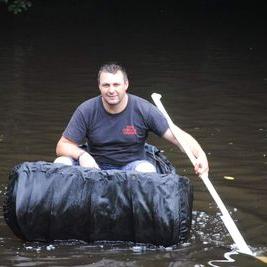
Mark Dellar, 51, of High Street, appeared at Aberystwyth Magistrates’ Court where he pleaded guilty to handling fish in suspicious circumstances, contrary to Section 32 of the Salmon Act 1986. The offence stemmed from his failure to correctly identify and release the salmon, a protected species whose numbers have plummeted in recent years.
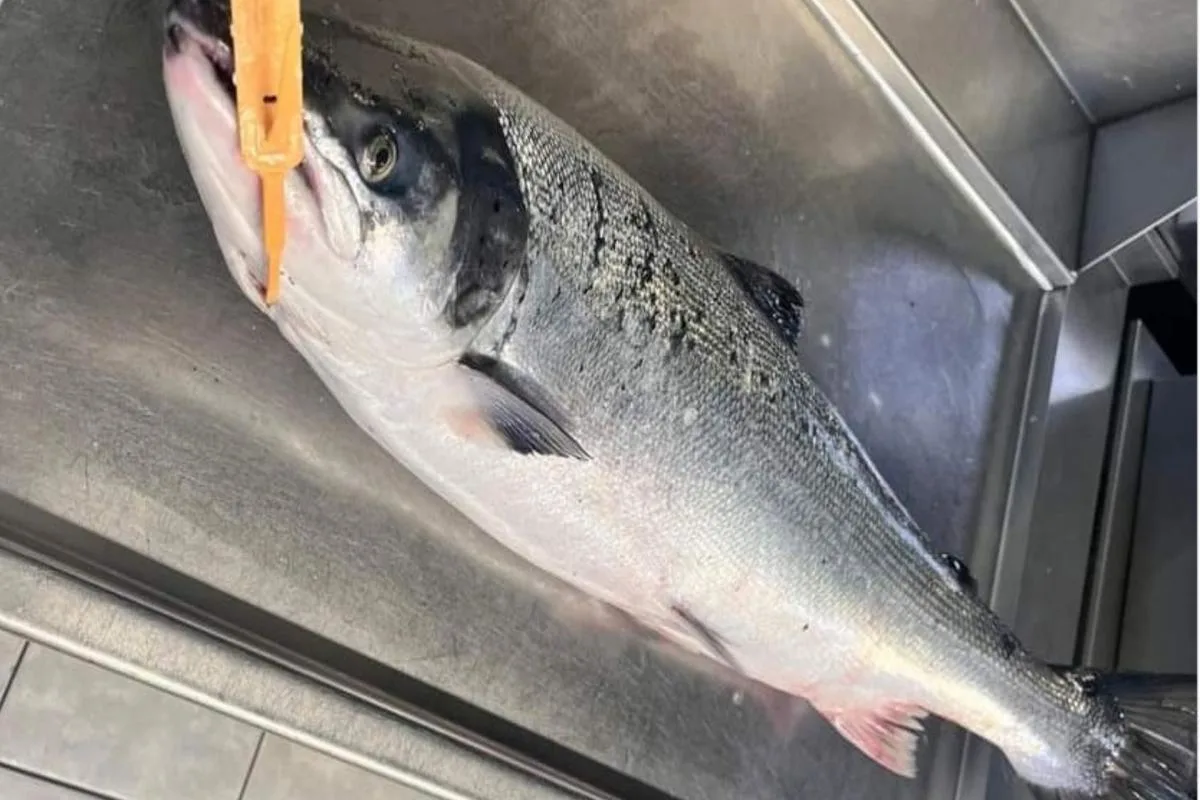
The incident came to light after a July 2024 Facebook post from the Pentre Arms pub in Llangrannog advertised a 16lb “locally caught sewin” — the Welsh name for sea trout — as a featured dish on its menu. Natural Resources Wales (NRW) enforcement officers, concerned that the fish was in fact a salmon, began investigating.
The Pentre Arms’ owner and chef fully cooperated, providing the fish cutlets, a receipt showing they had paid £135 for the fish, and a commercial carcass tag which traced the catch back to Dellar. The fish had been legally tagged — suggesting Dellar believed it to be a permitted catch — but subsequent analysis by NRW confirmed it was a salmon, not a sea trout.
Caught between law and tradition
Dellar, who has fished the Teifi for more than 20 years using a coracle — a centuries-old boat unique to west Wales — said in a voluntary police interview that he had believed the fish was a sewin when he landed it on July 5.

Magistrates imposed an absolute discharge but ordered Dellar to pay £85 in costs. While the sentence was lenient, the case has reignited a broader debate around the clash between traditional fishing practices and modern environmental protections.
Coracle fishing has been practised in Wales for generations, with fishermen using lightweight, round-bottomed boats woven from willow and covered with tar or canvas. The Teifi, along with the Tywi and Taf rivers, has long been home to this unique heritage — but fishers say the tradition is on the brink of extinction.
In 1975, there were over 50 licensed coracle netsmen on the Teifi. Today, just a handful remain. The season has been drastically reduced, now running only from May to July, and strict byelaws introduced in 2020 require all salmon — whether caught by rod or net — to be released immediately and unharmed. The sale or retention of salmon is banned altogether, a measure aimed at saving the species from collapse.
Conservation in conflict
Jeremy Goddard, who leads NRW’s enforcement team in mid Wales, said the case highlighted the importance of respecting conservation rules, regardless of fishing experience.
“The killing and sale of a prime adult salmon shows clear disregard for the law and for the health of our rivers,” he said. “Mr Dellar, with his years of experience, would know how to tell a salmon from a sea trout. With salmon numbers in serious decline, all netsmen and anglers are expected to release every salmon they catch. It’s not just a legal requirement — it’s a crucial step to protect the species. Every spawning fish matters.”
Further analysis showed the salmon had spent two years in the Teifi as a juvenile before migrating to sea, where it spent another two years feeding before returning to its native river to spawn — a journey that underscores the ecological significance of every individual fish.
Heritage under pressure
While NRW says its enforcement actions are necessary to protect the future of wild salmon, coracle fishers argue that their ancient craft is being regulated out of existence. Many say they are being punished for mistakes while industrial pollution and large-scale farming runoff continue to degrade river habitats with little consequence.

“This is our heritage — not just a job, but our way of life,” one local netsman told The Herald. “We’ve followed the rules, bought the tags, shortened the season, but now even a simple mistake can lead to court. Meanwhile, slurry pours into the river and nobody is held accountable.”
Indeed, the Teifi has suffered from repeated pollution incidents in recent years, with sewage overflows and agricultural discharge blamed for reducing oxygen levels and harming aquatic life.
The river is designated a Special Area of Conservation under the EU Habitats Directive due to its internationally important salmon population. Yet recent monitoring data from NRW shows that wild salmon numbers remain critically low, with fewer than 1,000 returning to the Teifi in some years — down from tens of thousands in the 1980s.
Is NRW focusing on the wrong target?
While NRW has emphasised the need for strict compliance from netsmen and anglers, critics argue that such prosecutions miss the bigger picture — and that the real threats to Welsh rivers come from far larger sources than a handful of coracle fishers.
Farming runoff, sewage discharges, deforestation and bank erosion have all been cited by environmental groups as leading contributors to the sharp decline in water quality across Wales. Data from NRW and third-party groups like River Action and Surfers Against Sewage show regular breaches of water safety limits, with phosphates, nitrates and slurry regularly entering protected river systems like the Teifi.
Despite this, enforcement against major polluters remains rare. According to NRW’s own reports, only a small fraction of reported incidents result in prosecution — and fines, when issued, are often minimal.
“What’s happening is a kind of environmental scapegoating,” one local conservationist told The Herald. “You’ve got ancient fishing practices with deep cultural roots being criminalised, while industrial agriculture and water companies carry on polluting with virtual impunity.”
This sense of injustice is echoed in local fishing communities. While coracle fishers have drastically cut back their activity, embraced tagging schemes, and complied with shortened seasons, they say NRW is failing to hold powerful polluters to the same standard.
A question of balance
NRW insists that its approach balances conservation with cultural heritage. Goddard said the agency would continue to inspect restaurants, fishmongers, and coastal buyers as part of its “Buyer Beware” campaign, aimed at preventing illegal salmon sales and educating businesses on the byelaws.
But for many in west Wales, Dellar’s case is a sign of a deeper unease — that a way of life is slipping away under the weight of bureaucracy and ecological crisis.
“Once the coracle netsmen are gone,” said another local, “they’ll be gone for good. And we’ll have lost something you can’t bring back — not just a fish, but a tradition.”



A SPITTAL man is to stand trial accused of assaulting a man and causing actual bodily harm.
Robert Hedley, 41, of Wesley Way, Spittal, Haverfordwest, is charged with assaulting Liam Morley-Trivett at St Clears on August 30, 2025.
The case was before Haverfordwest Magistrates’ Court on Thursday (Jun 18).
Hedley was granted unconditional bail and is due to stand trial at the same court on Monday, June 29.
The trial is listed for 10:00am and has been given a time estimate of twenty minutes.

Repeat offender stole from Tesco, Home Bargains, Food Warehouse and petrol stations in wave of offences
A MILFORD HAVEN woman who admitted a series of shop thefts committed over a matter of weeks has been handed a suspended prison sentence by magistrates.
Marion Picton, aged 46, of Hawthorn Path, Milford Haven, appeared before Haverfordwest Magistrates’ Court on Wednesday (Jun 18) and pleaded guilty to eight theft offences and a drugs-related offence.
The court heard that Picton carried out a string of thefts at stores across Milford Haven between April and June this year.
Among the offences, Picton admitted stealing meat from Food Warehouse on Apr 23, food worth £60 from Victoria Filling Station on May 29, groceries from Home Bargains on Jun 7 and Jun 8, food from Victoria Filling Station on Jun 7 and Jun 9, groceries and non-food items worth £51.09 from Tesco on Jun 16, and food worth £32.50 from Food Warehouse on the same day.
She also admitted failing to attend an initial drugs assessment after testing positive for Class A drugs, including cocaine and opiates.
Magistrates were told the offences represented persistent repeat offending and had been committed while Picton was already subject to a court order.
The bench imposed an eight-week prison sentence, suspended for 18 months.
As part of the order, Picton must complete up to 15 rehabilitation activity days under the supervision of the Probation Service.
The court ordered her to pay compensation to several of the businesses affected, including Tesco, Home Bargains, Food Warehouse and Victoria Filling Station.
In sentencing, magistrates said the offences were serious enough to justify immediate custody but suspended the sentence because there was a realistic prospect of rehabilitation and Picton appeared motivated to address her addiction issues.
Picton was warned that any further offending during the 18-month suspension period could see the prison sentence activated.

A CARMARTHENSHIRE man has appeared before magistrates accused of making a bomb hoax and assaulting police officers.
Anthony Mold, 38, of Sandy Road, Llanelli, appeared before Llanelli Magistrates’ Court on Thursday (Jun 18).
Mold is charged with communicating false information by alleging that a bomb or other explosive substance was present at Dafen Police Station.
The allegation relates to an incident on May 6 this year.
The defendant also faces charges of assaulting two police officers, damaging a police vehicle, and breaching a Community Protection Notice.
Court records show the damage charge relates to a Dyfed-Powys Police vehicle.
Mold entered guilty pleas to the offences before the court.
District Judge M Layton remanded him in custody for the preparation of reports ahead of sentencing.
The case was adjourned until Thursday, July 2, when Mold is due to be sentenced at Llanelli Magistrates’ Court.



Charity19 hours ago
Toy Story fans fill charity toy box at Haverfordwest cinema
Donations pour in for SNAP Specialist Play as families embrace Toy Story 5 launch A TOY STORY-themed charity appeal at...


Community24 hours ago
Lord Rhys emerges from the mist in St Davids
Giant puppet begins historic journey marking 850 years since the first Eisteddfod MIST swirled around St Davids Cathedral on Friday...


News2 days ago
Tragic tribute paid to Haverfordwest man after A4075 collision
FAMILY REMEMBERS “KIND AND LOVING” CALLUM HANSON THE FAMILY of a 22-year-old man from Haverfordwest who died following a road...


News3 days ago
Motorcyclist, 22, dies in A4075 crash in Pembrokeshire
A 22-year-old woman remains in hospital after two-vehicle collision A MOTORCYCLIST has died following a serious two-vehicle crash on the...


Community3 days ago
Why police will be visiting every home in Pembrokeshire
New operation aims to knock on more than 257,000 doors across Dyfed-Powys over the next three years DYFED-POWYS POLICE has...


Crime3 days ago
Prisons at breaking point: MPs warn Wales is paying the price of a failing system
Frozen healthcare budgets, overcrowded jails, homelessness on release and mounting pressure on staff are undermining rehabilitation across Wales, according to...


News4 days ago
Brexit at 10: How Britain was sold a dream that cost us dearly
A decade after the referendum, the promised benefits remain hard to find while the economic costs are increasingly difficult to...


Crime4 days ago
Worcestershire man jailed after violent attack on woman in Tenby
Defendant was already serving a suspended sentence when serious assault took place A WORCESTERSHIRE man has been jailed for more...


Climate4 days ago
Offshore wind ‘could bring new generation of jobs to Milford Haven’
Pembrokeshire ports and Celtic Sea projects placed at centre of Wales’ green energy ambitions MILFORD HAVEN and Pembroke Dock could...


Community5 days ago
Police officer hailed hero after midnight sea rescue in Milford Haven
PC swam 100 metres offshore to save distressed woman heard calling for help in darkness A DYFED-POWYS POLICE officer has...
-

 Community7 days ago
Pembrokeshire Chess Club crowned Welsh champions
-

 Crime3 days ago
Milford Haven man jailed for breaching domestic violence protection order
-

 Local Government5 days ago
Security privately arranged by Mayor at Beating of the Bounds
-

 News3 days ago
Crash on Freeman’s Way causes school-run chaos across Haverfordwest
-

 Crime5 days ago
Man wanted by court after failing to attend hearing over alleged shop thefts
-
 Crime5 days ago
Man banned from roads after drink-driving offence
-

 Crime5 days ago
Man jailed after admitting strangulation and assaults
-

 Crime5 days ago
Man sentenced over stalking campaign and lock knife offence