


News
Lifeboat crew welcomed with bacon rolls after saving sailor off Grassholm

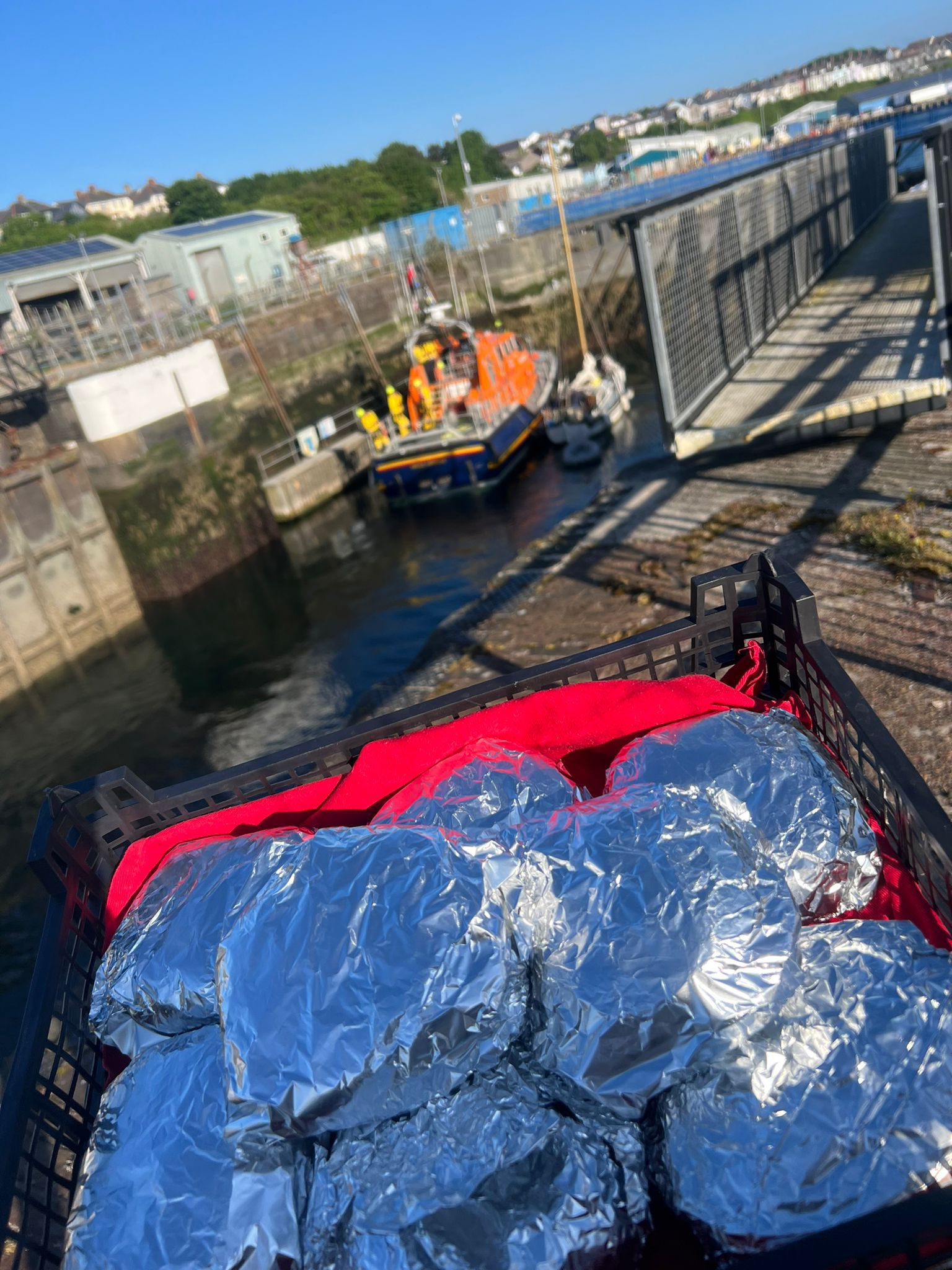
Angle crew rescue exhausted sailor in early hours
ANGLE RNLI lifeboat crew were paged in the early hours of Wednesday morning (May 22) to assist a lone sailor aboard a 25ft yacht that had suffered engine failure south of Grassholm Island.
The alarm was raised at 3:23am after the yacht, which had been drifting for hours without power, became a concern due to the sailor’s increasing exhaustion. The all-weather lifeboat launched swiftly and reached the casualty vessel approximately 35 minutes later.
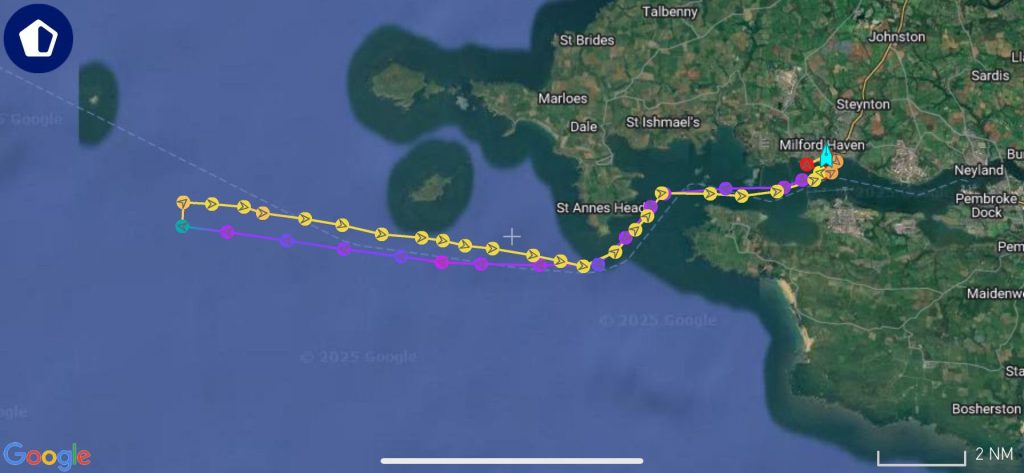
After assessing the situation, the crew deemed the safest option was to establish a tow. A line was passed and the vessel was taken under tow towards Milford Haven — a journey which took around three hours.
At the entrance to Milford Marina, the crew established an alongside tow to guide the yacht safely through the lock. The vessel was brought alongside without incident, and the sailor was left safe and well.
The crew returned to Angle station, where the lifeboat was refuelled and made ready for service again by 8:45am.

In a much-appreciated gesture, staff at the Lord Nelson Hotel in Milford Haven were waiting with hot bacon rolls for the tired crew — a small but welcome reward after a long and challenging rescue.











Court hears intoxicated caller wasted police resources after contacting officers from Penally caravan site
A MAN has been sentenced after falsely claiming he had been stabbed and making abusive comments during a 999 call to police.
Christopher Lawrence, 43, contacted the emergency services from the Oasis campsite in Penally on June 2, saying he wanted to report a crime.
“He told police that he had been stabbed, stating: ‘You f****** don’t care,’” Crown prosecutor Sian Vaughan told Haverfordwest Magistrates’ Court this week.
Lawrence then ended the call, but the police control room contacted him again.
He told the call handler that a man he described as “half bald” and drunk had arrived at the campsite and was threatening him.
“I’ve told the f****** police that if he comes here, I’ll go mental,” Lawrence said.
He also claimed to have suffered a stab wound to his side but said he did not require an ambulance.
When officers arrived, they found Lawrence heavily intoxicated.
“He told the officers that he had not been stabbed and had not made the call, but clearly that was not the case,” Ms Vaughan said.

Lawrence, of no fixed abode, pleaded guilty to sending an offensive, indecent, obscene or menacing message to police.
His solicitor, Michael Kelleher, said the offence had been driven by Lawrence’s alcohol misuse.
“What runs throughout this case is his alcohol abuse, but he is now showing a willingness to address it,” Mr Kelleher told the court.

“This functioning alcoholic wants to get to the bottom of his problem and stop offending.
“Alcohol can heighten a person’s anxiety and their perception of what is happening. There was no issue concerning his safety on this occasion, but there had been in the past, and that was playing on his mind.
“But what he did was wrong. It was a waste of police resources, and he understands how other people could have been affected by his actions.”
Lawrence was sentenced to a 12-month community order, including a nine-month alcohol treatment programme and 15 rehabilitation activity requirement days.
He was also fined £100 and ordered to pay a £114 surcharge and £85 prosecution costs.


A 56-YEAR-OLD man has admitted attempting to engage in sexual communication with a child in Saundersfoot.
Appearing before Haverfordwest Magistrates Court this week was Philip Williams, of Valley View, Saundersfoot.
The court was told that between July 20 and July 28, 2024, Williams attempted to engage in sexual communication with a 13-year-old child who was called Sam.
During his communication with the child, Williams requested snapchat images of the child’s bottom as well as images of her wearing running leggings or tights. This, the court, was told, was for his sexual gratification.
But unknown to Williams, the ‘child’ was an undercover police officer.
Williams pleaded guilty to the charge of attempting to engage in sexual communication with a child.
His sentencing will take place on August 4 to enable an all options pre-sentence report to be prepared by the probation service.

Court hears 21-year-old repeatedly grabbed steering wheel of moving Volkswagen Golf
A REAR-SEAT passenger has admitted causing serious injury by dangerous driving after repeatedly grabbing the steering wheel of a moving car.
Joseph Lawrence Jones, 21, was travelling in the back of a Volkswagen Golf being driven by Sioned Tesni Povey, 22, along the Spring Wells to Spittal road on September 30.
Haverfordwest Magistrates’ Court heard that Jones reached forward from the rear seat and pulled the steering wheel from the driver.
“He then repeated his actions, but Sioned Povey continued to drive and made no resistance to Mr Jones’ actions,” Crown prosecutor Sian Vaughan said.
“This was a deliberate decision to ignore the rules of the road.”
The court heard that Harlie-Louise Smith sustained serious injuries during the incident.
Jones, of Wesley Way, Spittal, pleaded guilty to causing serious injury by dangerous driving.
Povey, of Duncan Terrace, Maenclochog, denied the same charge, maintaining that her driving had not caused Ms Smith’s injuries.
Although magistrates accepted jurisdiction to deal with the case, Povey elected to be tried at the Crown Court.
She is due to appear at Swansea Crown Court on August 14, when Jones is also expected to be sentenced.
Magistrates imposed an interim driving disqualification on Jones.
Both defendants were released on unconditional bail.




Local Government19 hours ago
Stepaside school saved as council abandons closure proposal
Governors welcome decision but maintain original plans were based on outdated information STEPASIDE Community Primary School will remain open after...

Crime20 hours ago
Footballer given 200 hours’ unpaid work for eye-gouging assault during match
Magistrates heard Robert Hedley put an opposing player in a headlock before gouging at his eyes during a match in...


Community23 hours ago
Tenby Summer Spectaculars brought to an end after harbour licence revoked
Round Table says it was willing to make major safety changes but could not secure the access controls needed to...

Local Government3 days ago
Catapult attacks suspected after wildlife deaths at Pembroke Mill Pond
Wildlife Crime Officers are investigating after the town council said around five animals showed signs of deliberate injury WILDLIFE found...


Crime3 days ago
Narberth retailer speaks of shoplifting toll after ‘collectable bear’ stolen
Independent shop owner said rising costs meant businesses could not afford to absorb losses caused by theft A NARBERTH retailer...


Crime3 days ago
Teen accused of attempting to murder teacher says she lied about stabbing
Defendant accepts teacher was terrified and that a knife wound to the head could kill, but denies deliberately attacking her...


Local Government4 days ago
Calls grow for independent investigation into Manorbier school closure
Councillor alleges misleading figures, inadequate insurance and poor treatment of staff CALLS for an independent investigation into the controversial closure...


Community5 days ago
Neyland Carnival hailed a huge success after streets fill with colour and crowds
NEYLAND CARNIVAL organisers have thanked the community, volunteers and local businesses who helped make this year’s event a memorable success....


Community5 days ago
Tenby Summer Spectacular: Anger grows over ‘disaster waiting to happen’ warning
A growing backlash has followed police calls for the event’s licence to be revoked, with supporters questioning why authorities failed...


Charity6 days ago
RSPB secures ‘missing link’ to reconnect wildlife habitats in Carmarthenshire
RSPB CYMRU has purchased a 96-hectare upland site in Carmarthenshire, describing it as a vital step towards reconnecting one of...
-

 Crime3 days ago
Letterston footballer guilty of eye-gouging assault during match
-
 News7 days ago
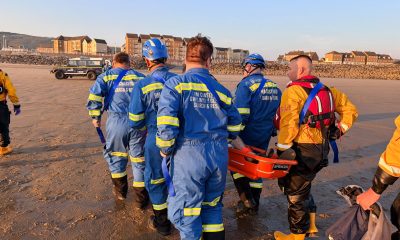
Milford Haven Coastguard coordinates rescue of injured paddleboarder
-

 Health7 days ago
Hospital ward closed after highly contagious scabies outbreak
-

 Charity7 days ago
Lifesaving charity could get over £60,000 from Snowdon hike
-

 Crime7 days ago
Ann Widdecombe: Welsh politicians pay tribute as murder probe launched
-

 News7 days ago
Solardo pulls out of Haverfordwest show as organisers offer full refunds
-

 Business7 days ago
Call to expand nature retreat with more lodges, a sauna and padel courts
-

 Education7 days ago
Saundersfoot graduate secures teaching job before completing degree