


Politics
Welsh Government plans ‘business-as-usual’ budget


MARK DRAKEFORD confirmed the Welsh Government will publish a “business-as-usual” budget in the autumn as the next Senedd election nears.
Wales’ finance secretary said the 2026/27 budget will restate this financial year’s spending plans, plus an increase in line with inflation, ahead of the May 2026 election.
He told the Senedd: “This will not be a budget which focuses on new priorities or fresh policies. That, I believe, will be for political parties to put before the Welsh electorate.”
The former First Minister said: “I don’t believe… it would be democratically consistent for a Senedd, in the final weeks of a five-year term, to constrain the newly elected parliament…. Those horizons lie beyond us – that opportunity will be for others to grasp.”
But the Labour politician said the Welsh Government would remain open to the possibility of working with other parties to deliver a more ambitious budget.

Prof Drakeford confirmed the Welsh Government will publish an outline draft budget on October 14, 2025, with a more detailed draft to follow on November 4.
In previous years, the draft budget has been published in mid-December – just before the Senedd breaks for Christmas, prompting concerns about scrutiny being curtailed.
The earlier timeframe will pose its own challenges with the UK Government autumn budget, which is likely to affect funding for Wales, expected in late October or early November.
Prof Drakeford will be presenting his sixth and final budget to the Senedd before standing down at the next election after decades at the centre of Welsh politics.

He told the Senedd: “We cannot let uncertainty over the UK Government’s autumn budget drive our own timelines and plans.”
Giving a statement on June 1, Prof Drakeford said the politically neutral budget will make hundreds of millions available to get the next Senedd off to a stable and ambitious start.
He stated he would have liked – ideally – to bring forward a multi-year budget but the cabinet decided on a single-year “business-as-usual” budget due to the election.

Sam Rowlands, the Tories’ shadow finance secretary, welcomed an earlier-than-usual timeline, recognising the driver as next year’s poll.

But he expressed concerns with the “roll-over” budget, saying: “I think it’s fair to say the meat of the statement… is pretty unprecedented and actually very significant.”
Mr Rowlands added: “What is being presented is a reflection of the political reality that the [Welsh] Government finds itself in,” with a “significant risk” of next year’s budget not passing due to Labour lacking the numbers without support from at least one other Senedd Member.
Prof Drakeford told the Senedd he was acutely aware of the danger of the budget not being agreed, warning it would have a catastrophic impact on public services. He said the restated budget is designed to maximise the chances of avoiding the risk.
Labour’s Mike Hedges supported a single-year budget in the final year of the term, with a new voting system set to “make it almost impossible” for a single party to win an election.
He said: “We don’t want teachers to be losing their jobs, we don’t want social workers not to be available to care for people because we were unwilling to pass a budget.”
South Wales East MS Peredur Owen Griffiths, the Plaid Cymru chair of the Senedd’s finance committee, welcomed a return to a two-stage budget process for the first time in seven years.

Following scrutiny in the Senedd, the final 2026/27 budget will be published on January 20, with a debate and key vote to follow on January 27.


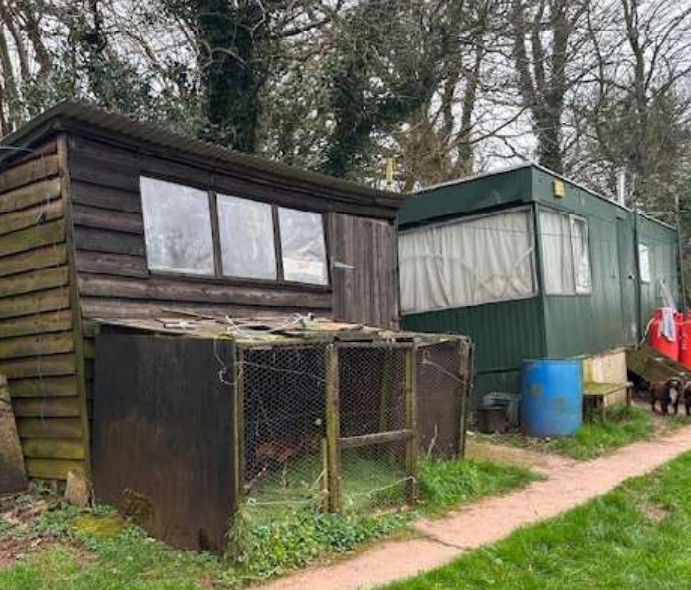
A CALL to allow a caravan occupied without permission for 30 years to remain a home has been given the go-ahead by county planners.
In a certificate of lawful development application to Pembrokeshire County Council, Wendy Campbell, through agent Preseli Planning Ltd, sought permission to keep the caravan and associated buildings at Warreston Lodge, Cosheston, the caravan having been on site since 1996.
An application for a certificate of lawfulness allows an applicant to stay at a development if they can provide proof of occupancy over a prolonged period.
The caravan site forms part of a 40-acre holding owned by Wendy Campbell who resides at nearby Warreston Farm; the caravan being occupied by Clive Hetherington who has been a tenant of the caravan since 1996, prior to Ms Campbell purchasing the holding in 2003.
A supporting statement said: “The caravan has been openly used, and no attempt has been made to conceal the development at any time since its occupation as a residential unit in 1996.”
As evidence of continual usage, it said the caravan was connected to mains electricity, with invoices to Mr Hetherington and the ‘Caravan,’ and also had an independent Royal Mail postal address which reinforces it forming a residential unit.
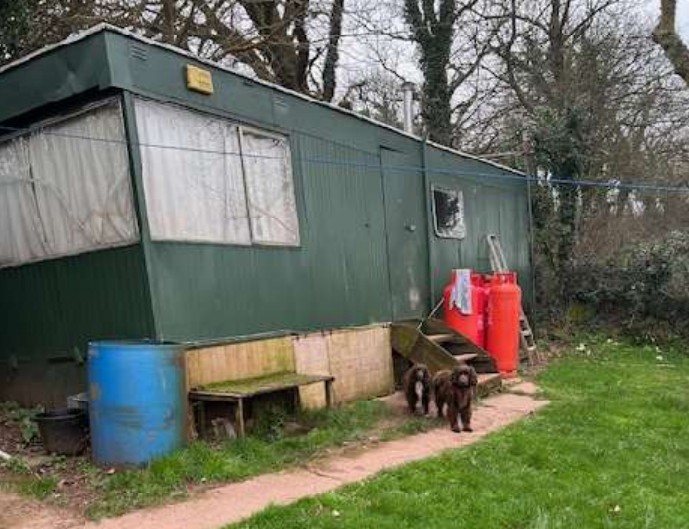
It also said Pembrokeshire County Council had confirmed Mr Hetherington has been registered as a resident at the Caravan, Warreston Lodge since the April 1, 1996, along with rental books showing continuous occupation and rental payments from August 2003 up until March 2026, along with aerial photographic images showing structures and a caravan being in situ since 1996.
It went on to say: “The affidavits accompanying the application clearly refer to living in the caravan, with no mention to a functional link to the main house. Furthermore, the caravan has only ever had one occupier whom is not a relative of the applicant and has resided in the caravan for residential purposes prior to Ms Campbell owning the land, thereby there is no link to the caravan being occupied in connection with Warreston Farm.
“The use has existed continually for a period of over 10 years with no intervening uses.”
An officer report recommending the granting of a certificate said: “Whilst the rent book evidence does not extend to the full period claimed, it nonetheless demonstrates occupation over a period significantly exceeding 10 years. The pattern and consistency of the entries, together with site observations, support the conclusion that the use has not been abandoned or interrupted.”
In granting approval, it said the relevant immunity period is 10 years, and the application demonstrates the caravan “had a continuous residential use for a period of time in excess of 10 years and the sheds have been on site for a period of time in excess of four years”.

A CALL to convert a ticket office to a home at a former Pembrokeshire railway line which closed more than 60 years ago has been lodged with county planners.
In an application to Pembrokeshire County Council, Mr James, through agent Harries Planning Design Management seeks permission for the conversion of a ticket office into a dwelling, at the old Ticket Office, Station Road, Crymych.
A supporting statement says: “The building used to serve as the ticket office for the Crymych Arms Railway Station serving both the Whitland and Cardigan Railway. The station closed in 1962, with this building becoming disused.
“Since its closure the building has been used as temporary storage by the owner, who has continued to maintain, fix and repair the building to a state where conversion is possible. The ticket office is semi-detached with a dwelling to the north. The ticket office building comprises faced stone elevations and a slate roof.
“Externally, it is served by overgrown green space to the south and concreted areas to the east and west. There are no known environmental or historical designations on site.”
It goes on to say: “The dwelling will retain the existing form, with no external extensions proposed. Internally, it is proposed to convert the building into a two-bed dwelling, with an open plan kitchen/living/dining area to provide ample space for modern habitation. Garden space is to be provided to the south and west, with lawned gardens and native beech hedging. External materials will remain as existing for the most part, with the windows replaced with heritage style UPVC sash and the existing chimney removed.”
It concludes: “The proposal seeks to retain the external form of the building to conserve its historic impact within the landscape. The proposal seeks to comply with [planning policy] which places open market housing within the settlement boundary of a service village and for the conversion of a historic building which is not being utilised. Therefore, the principle of development is considered acceptable and will contribute to a positive conversion within the landscape.”
The application will be considered by county planners at a later date.
The 27-and-a-half-mile-long Whitland and Cardigan Railway branch line, initially called the Whitland and Taf Vale Railway before becoming the Whitland and Cardigan, reached Crymych in 1874 though a passenger service didn’t start until the following year, with an extension to the edge of Cardigan opening in 1886.
A proposal to close the line, known locally as the Cardi Bach, came a little before the infamous ‘Beeching Axe’ which saw many stations in Wales and elsewhere close; the line closing to passengers in 1962, the last being the 5.45 Cardigan Mail, remaining open to freight traffic for a short while before a final closure in 1963.
CALLS for a new negotiating body for school support staff, and an end to term-time only pay, has been backed in the Senedd.
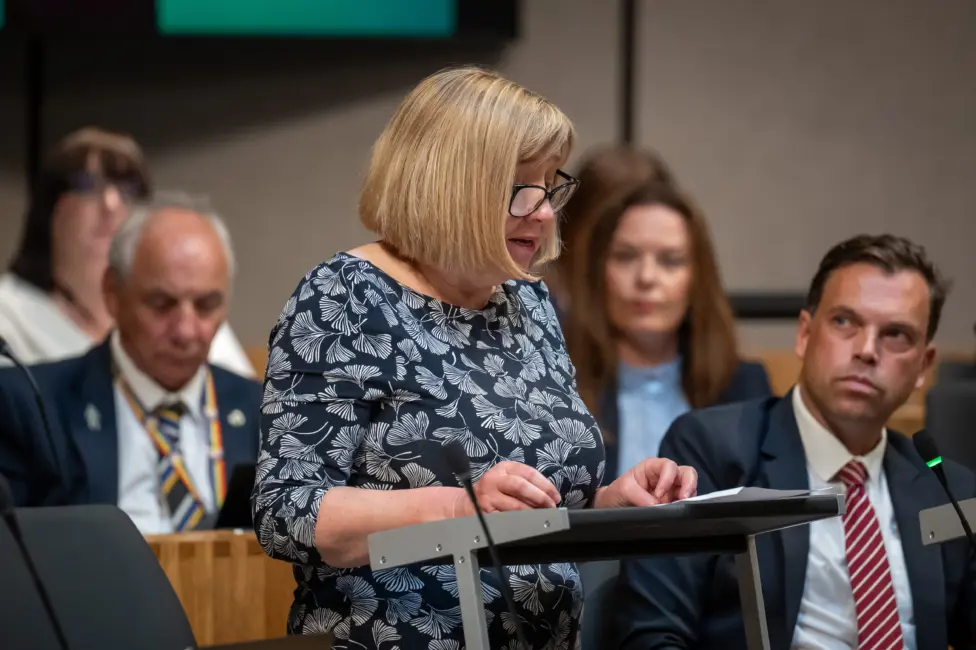
A motion, put forward by Labour’s education spokesperson Lynne Neagle, was supported by Senedd Members on Wednesday June 10.
Ms Neagle said support staff “build strong relationships with children and young people, which are crucial for their wellbeing, so that they can learn and reach their potential”.
Pointing to the fact support staff are now the majority of the school workforce in Wales, Ms Neagle said: “Our schools simply couldn’t function without them. They are quite simply the glue that holds our schools together.”
The Sir Fynwy Torfaen MS highlighted the extent of in-work poverty facing support staff, referencing a Unison survey of more than 1,400 school support staff showing 8% of support staff take home less than £1,000 a month.
Ms Neagle also described it as an equality issue, noting more than 90% of support staff are women.
Concluding her speech to the Siambr, Ms Neagle called on the Plaid Cymru government to commit to bringing forward new legislation and to end term-time only pay for school support staff – a pledge featured in the Labour election manifesto.
She said: “Our calls are supported by the Welsh trade union movement, including Unison Cymru and the GMB. But valuing school support staff is not just the right thing to do for the staff; it’s the right thing to do for our schools, our communities and every learner in Wales.”

Paul Rock, Green Party MS for Caerdydd Fynnon Taf MS, supported the motion, and spoke of the “tireless dedication” provided by school support staff.
Mr Rock, whose wife works as a teaching assistant, said: “I don’t need to remind members of the important work that school support staff do: one-to-one interventions to support children with additional learning needs or children who are simply falling behind.
“They work with small groups, they cover for teachers and look after whole classes at a time, they run breakfast clubs and after-school clubs, they supervise children at lunch times and play times, they work unpaid overtime daily, and the pressures of the job mean they cannot always take the breaks they are entitled to.”
Mr Rock described this as an issue of “fairness, safety, and wellbeing” and said the lack of year-round pay is “directly contributing” to the gender pay gap in Wales.

He outlined his party’s commitment to treating school support staff fairly and ensuring they are “fully represented” in discussions about their pay.
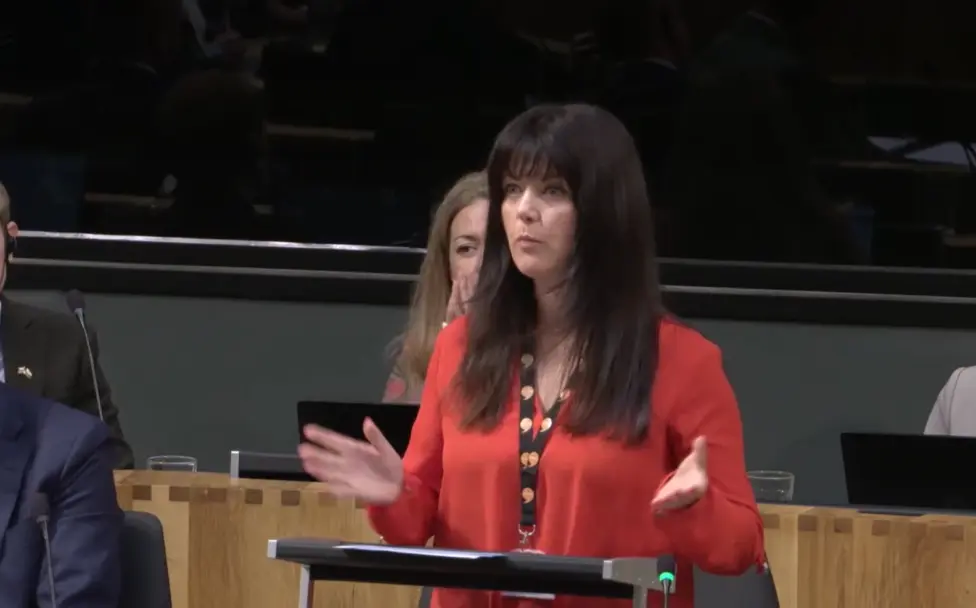
Reform’s deputy leader, Helen Jenner, said she recognised the importance of school support staff but opposed the creation of “yet another quango”.
She said: “We in Reform want to see quangos brought in-house to save taxpayers’ money and reduce the tax burden on Welsh people. We don’t want to see new ones created.
“While we have sympathy for the proposals for year-round pay for school support staff, there will, of course, be financial implications to implementing that policy and we would not like to see more money diverted from our schools.”

Sam Rowlands, the Conservative education spokesperson, also weighed in on the debate discussing the “inconsistency” built into the current system.
He said: “Pay and conditions can vary from one local authority to another quite significantly, even for staff doing very much the same roles. That means recognition and reward for their work depends too heavily on where they happen to be employed, rather than the value of what they do.”
Mr Rowlands also hit out at Welsh Labour and Plaid Cymru, saying: “This is not a new problem. It’s been developed over 27 years of Labour in government here in Wales, propped up by Plaid Cymru, during which these structural issues in our education workforce were allowed to persist.”
Describing the system as “fragmented, under pressure and increasingly reliant on goodwill rather than proper structure”, Mr Rowlands said it is “not credible” for Plaid and Labour to “now present themselves as discovering these problems for the first time or to claim ownership of a solution only once they are no longer solely responsible for fixing it.”

Education minister Anna Brychan began by recognising the “value and contribution” made by support staff in schools across Wales.
She said: “Teaching assistants, administrative officers, technicians, lunch-time supervisors, caretakers – roles that have been referred to by many of the contributors this afternoon – are the backbone of our schools across Wales, and I do recognise the crucial role of school support staff in Wales and very much appreciate their contribution to our education system as a whole. They are crucial and their contribution is priceless.”
Ms Brychan however then addressed the practicality of the motion.
The minister clarified the Welsh Government currently does not have the power to set the pay, terms and conditions for support staff, noting that this responsibility lies with local authorities or schools as the employers.
She acknowledged the benefits of introducing a statutory body for Welsh support staff, as is being introduced in England, but said this “would take time to establish” and said she is “eager” to see what can be done without legislation to make a difference more swiftly in the short term.
Concluding her response, the cabinet minister said: “I look forward to working with colleagues across this chamber to support and appreciate our school support staff.
“It is clear that there is support for and an understanding of their work across the chamber, and that is something valuable that we can build upon, and to help them give the best possible experience to our learners, as they already do, but also to provide an attractive career for them as individuals and as a profession too.”
The motion was agreed with 17 in favour, 74 abstentions, and none against.



Education12 hours ago
Diocese threatens legal action as Manorbier school closure battle intensifies
Church says council could face judicial review over fire-hit school A BITTER row over the future of Manorbier Church in...


Health14 hours ago
Baby loss charity calls for urgent action after latest Wales figures published
Sands says Welsh Government must set clearer targets to reduce stillbirths and neonatal deaths A BABY loss charity has called...

Health14 hours ago
Cancer delays worsening as west Wales hospitals struggle to recruit specialists
Health board admits standards are difficult to meet as doctors warn of “extremely dangerous” shortages PATIENTS in west Wales are...


News16 hours ago
Rhun ap Iorwerth highlights first 25 days in office as First Minister
Plaid Cymru leader says government is moving quickly on NHS, farming and economic priorities FIRST MINISTER Rhun ap Iorwerth has...


Crime2 days ago
Man accused of six rapes including alleged Haverfordwest offence
A MAN has been sent to Crown Court accused of six rapes, including an alleged offence at a Haverfordwest campsite....


News2 days ago
Childcare row erupts as Plaid faces questions over costs and delivery
Opposition parties clash over flagship pledge as Senedd debate exposes growing divisions PLAID CYMRU’S flagship promise to create what it...


Crime2 days ago
Farmers fined in bovine TB scandal face fresh court action
Hartt family members listed at Haverfordwest Magistrates’ Court over unpaid penalties linked to major cattle prosecution TWO PEMBROKESHIRE farmers convicted...


Crime3 days ago
Pembrokeshire child killer stabbed to death in prison cell, murder trial hears
Kyle Bevan, jailed for the murder of Haverfordwest toddler Lola James, was allegedly stabbed 25 times and left ‘as if...


News3 days ago
Pendine cliff fall victim recovering after major emergency response
A 22-YEAR-OLD man who suffered serious injuries after falling from cliffs overlooking Pendine Beach is recovering well following emergency surgery....


Community3 days ago
Commissioner launches free course to help tackle ageism in Wales
A NEW free learning course has been launched to help people across Wales recognise and challenge ageism. The Older People’s...
-

 Crime7 days ago
Milford Haven man admits harassment and assault
-

 News6 days ago
Community appeal for privacy after serious emergency in Pendine
-

 Crime5 days ago
Sex offender in senior role at Tenby family hotel
-

 Crime4 days ago
Haverfordwest pair accused of £80,000 rogue trading frauds
-

 Community5 days ago
Forgotten wartime archive found in Pembroke Dock attic after 80 years
-

 Crime4 days ago
Families condemn failed appeal by paddleboard boss jailed over Haverfordwest tragedy
-
 Crime4 days ago
Knife blankets call as school staff face rising violence fears
-

 Business7 days ago
Call for gym and Padel courts at Kiln Park Farm unanimously backed