


News
Community appeal for privacy after serious emergency in Pendine


A COMMUNITY appeal has been issued in Pendine after a serious emergency incident prompted a large response from the emergency services.
The incident happened in the Carmarthenshire coastal village on Saturday, with witnesses reporting that a casualty was transferred from an ambulance to a helicopter in view of the beachfront.
Pendine Community Council has now urged residents and visitors not to share photographs, videos or unverified information online.
Council chair Andrew Shaw said: “Following the emergency incident within the village today, I would like to respectfully ask members of our community to refrain from sharing photographs, videos, or unverified information on social media.
“Our thoughts are with all those affected, along with their families, friends, and everyone involved in responding to the incident.

“At a time like this, privacy, compassion, and respect are especially important.”
Mr Shaw added that people should consider the impact online posts may have on those directly affected, and allow the relevant authorities to provide information where appropriate.
The appeal was echoed by local business owner Julia Rea, of Bistro on the Bay, who said she had witnessed the emergency response from the beachfront.
She said: “Whilst we appreciate people are concerned and interested, what I can’t understand is filming, photos etc.

“I witnessed a large public interest where the injured person was transferred from the ambulance to the helicopter.
“The amount of people filming and photographing what was so sensitive, life-altering and hopefully not final moments of an individual, someone’s family, was awful.
“I hope and pray that sensibility and privacy prevails and nothing is shared online.”

No official details about the nature of the incident, or the condition of the person involved, have yet been released.
The council’s appeal has been widely shared locally, with many residents supporting the call for restraint.
Pendine Sands is a popular visitor destination, and emergency service responses in the area can quickly draw public attention because of the open beachfront and busy public spaces.
The Herald understands the appeal is not intended to restrict legitimate concern, but to remind people that those involved in emergency incidents are entitled to dignity and privacy at one of the most difficult moments of their lives.
Residents are being asked to avoid speculation and wait for any updates from official sources.
Our thoughts are with the person involved, their family, and all emergency personnel who responded.


A national secularist organisation has backed Pembrokeshire County Council’s plans for Cilgerran school, while the Church in Wales continues to oppose the proposed change and has warned of possible legal action
PLANS to replace Cilgerran Church in Wales VC School with a community school have prompted sharply differing responses from education and religious organisations.
Pembrokeshire County Council has proposed discontinuing the existing voluntary controlled school and establishing a new 3-11 community school on the site.
The authority has argued that changing the school’s status could provide greater flexibility when considering its long-term future, including the possibility of federation with other nearby community schools.
However, the proposal has faced strong opposition from the Church in Wales, the Diocese of St Davids and members of the school community.
The Church has questioned the council’s justification for the change and says the overwhelming majority of responses submitted during the statutory consultation opposed the proposal.
It has also raised concerns about the future use of the school buildings and land, which are owned by the Diocese of St Davids.
The Church in Wales has issued formal notice that legal action may follow if the council proceeds and has said the diocese would not agree to the premises being used for a community school without the relevant legal and property matters being resolved.
Pembrokeshire County Council has said no change would be implemented until questions surrounding land ownership and occupation rights had been addressed in accordance with legal and statutory requirements.
The National Secular Society has now entered the debate, welcoming the council’s proposal.
The organisation, which campaigns for the separation of religion and the state, said community schools were more inclusive and better reflected the religious diversity of modern Wales.
It said: “Inclusive schools which educate pupils together are one of our best means of promoting community cohesion.”
The society also argued that publicly funded schools should be managed in the interests of families from all religious and non-religious backgrounds.

Its intervention is unlikely to resolve the disagreement surrounding the future of the school, with the council, the Church and local stakeholders continuing to hold significantly different views.
The proposal concerns the legal status and governance of the school. It does not mean that pupils or families with Christian beliefs would be excluded from attending the proposed community school.
Equally, opponents of the change argue that Cilgerran school’s Church in Wales identity is an important part of its history and relationship with the local community.
Any final decision will need to take account of the consultation responses, the council’s education strategy, the interests of pupils and staff, and the unresolved legal and property issues surrounding the site.
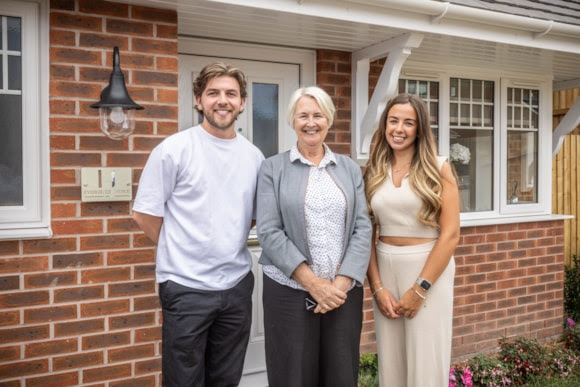
Help to Buy Wales, Help to Stay Wales and the Empty Homes Grant will continue until March 2027
HUNDREDS of households across Wales are set to benefit after the Welsh Government announced extensions to three schemes designed to make housing more affordable.
Help to Buy Wales, Help to Stay Wales and the Empty Homes Grant will all continue until March 31, 2027.
The extensions could help up to 400 additional households purchase a newly built home, while funding will be available to renovate as many as 300 empty and neglected properties.
Help to Buy Wales allows eligible buyers to purchase a new-build property with a smaller deposit, supported by a shared-equity loan from the Welsh Government.
The scheme has provided a route into homeownership for many first-time buyers who might otherwise struggle to raise a deposit or secure an affordable mortgage.
Help to Stay Wales will also continue for another year, providing support to homeowners who are experiencing difficulty meeting their mortgage repayments and are at risk of losing their homes.
Meanwhile, the Empty Homes Grant will continue to support the renovation of long-term empty properties, bringing neglected buildings back into use as safe and energy-efficient homes.
The Welsh Government said the three schemes would support people at different stages of homeownership, from those purchasing their first property to existing homeowners facing financial difficulties.
Cabinet Minister for Local Government, Housing and Planning Siân Gwenllian announced the extensions during a visit to Hollybrook Park in Connah’s Quay, where she met residents who had purchased homes through Help to Buy Wales.
She said: “This government is committed to the principle that every family deserves a safe and affordable home in which to live.
“Increasing the supply of social homes is one way of achieving this, and we have announced our target of delivering 20,000 additional homes.
“We are also offering targeted support for those who own or wish to own their homes, an option that is not affordable or accessible for many as prices continue to grow beyond the reach of local people across many parts of Wales.

“Today I am announcing the extension of three schemes that support people buying their first home, help families avoid losing their homes and help renovate empty properties so they can be brought back into use.
“The cost-of-living crisis has hit hard, and these extensions are about helping families and young people to buy and keep their homes through challenging times.
“I am hugely grateful to our partners, including homebuilders, local authorities, mortgage lenders and the Development Bank of Wales, whose commitment makes all of this possible.
“Together, we will keep pushing to make homeownership a reality for more people right across Wales.”
Louisa Edwards, marketing manager at Edwards Homes Ltd, welcomed the continuation of Help to Buy Wales.
She said: “This is excellent news for first-time buyers, providing continued support to help them purchase a new home in Wales.
“To date, 45 per cent of Edwards Homes’ sales have been made through the Help to Buy Wales scheme, demonstrating just how important and valuable it has been in helping people take their first step onto the property ladder.”


Max Dangerfield will be sentenced at Swansea Crown Court after collision involving a BMW and Toyota Prius
A YOUNG driver has admitted causing serious injury in an early-morning collision on the A48 after his BMW failed to stop for police.
Max Dangerfield, aged 20, of Cwmllethryd Ganol, Felinfoel, appeared before Llanelli Magistrates’ Court on Thursday, July 23.
Dangerfield indicated a guilty plea to causing serious injury to Imran Ilyas by driving dangerously on the A48 at Cross Hands.
The offence involved a BMW M140i and happened on January 25, 2025, when Dangerfield was 18.
The collision occurred at around 4.20am on the westbound carriageway between Cross Hands and Pont Abraham.
The Herald reported at the time that the crash involved a black BMW and a white Toyota Prius.
Dyfed-Powys Police said four people were taken to hospital following the collision. Their injuries were initially described as not believed to be life-threatening or life-changing.
Police also confirmed that the BMW had failed to stop for officers before the collision.
Because of the police contact before the crash, the force notified the Independent Office for Police Conduct and began a formal referral process.
The A48 was closed in both directions between Cross Hands and Pont Abraham for much of the day while collision investigators examined the scene.
Diversions were put in place, with motorists advised to avoid the area as emergency services and investigators continued their work.
Dangerfield has now admitted that his driving caused serious injury to Mr Ilyas.

District Judge Mark Layton committed the case to Swansea Crown Court for sentence.
A pre-sentence report was ordered and Dangerfield was placed under an interim driving disqualification.
He was released on unconditional bail and is due to appear at Swansea Crown Court on Thursday, August 13.



Health5 hours ago
More than 3,000 people have their say as Hywel Dda stroke consultation closes
Final decision on proposals, including a central 24-hour stroke unit at Glangwili and treat-and-transfer services at Withybush, is expected in...


Crime8 hours ago
James McKenna guilty of attempted murder after Carmarthen Park knife attack
Jury rejects defendant’s claim he only intended to cause serious injury after ambush attack on former partner SPECIAL REPORT FROM...


Community23 hours ago
New creative team transforms the Maes ahead of Eisteddfod y Garreg Las
Festival site in Llantwd is taking shape ahead of the National Eisteddfod’s arrival in Pembrokeshire from August 1 to 8...


Community1 day ago
From Tenby to Llandudno: Wales’ seaside towns face the same signal crisis
Businesses in two of Wales’s busiest resorts say unreliable mobile coverage is disrupting payments, bookings and everyday life TWO of...


Crime1 day ago
Judge orders Dyfed-Powys Police review after £3,912 fraud error
Force responsible for policing Pembrokeshire criticised after an officer understated the amount stolen from a vulnerable care-home resident A JUDGE...


Community2 days ago
Narberth bursts into colour as carnival brings Civic Week to spectacular close
Crowds lined the streets for an afternoon of floats, fancy dress, music and family entertainment at one of Pembrokeshire’s longest-running...

Community2 days ago
More than 100 racers take to Castle Pond for Paddle West’s inaugural regatta
Successful community event raised money for Forever11 and launched three consecutive weekends of waterside activity in Pembroke MORE than 100...


News2 days ago
NASA chief meets west Wales scientist helping search for life on Mars
Aberystwyth-led technology will guide Europe’s first Mars rover as it drills beneath the planet’s surface, while the proposed DARC radar...


News3 days ago
Princess Royal celebrates Pembrokeshire craftsmanship at family-run weaving mill
A Pembrokeshire business that began after a mother grew tired of waiting three weeks for her children’s name tapes has...


Local Government3 days ago
Burger King could be coming to Haverfordwest as plans submitted
Plans have been lodged for a Burger King outlet at the Morrisons petrol station on Bridge Meadow Lane BURGER KING...
-

 Community5 hours ago
Huge water main burst sends geyser over Fishguard town centre
-
Community2 days ago
More than 100 racers take to Castle Pond for Paddle West’s inaugural regatta
-

 Health1 day ago
Welsh NHS executive pay revealed as patients face lengthy waits
-

 News1 day ago
Landmark rural law could reshape public services across west Wales
-

 News2 days ago
Welsh Government renews call for justice and policing powers to be devolved
-
Community2 days ago
Narberth bursts into colour as carnival brings Civic Week to spectacular close
-

 Health2 days ago
Mental health crisis ‘place of safety’ could be centralised in Carmarthen
-

 Business1 day ago
Pure West Parlour opens in the heart of Haverfordwest