


News
Bus operators urge Welsh Government to tackle congestion and clarify funding


Industry welcomes Senedd report but warns legislation needs detail to succeed
THE BODY representing Welsh bus companies has welcomed a Senedd committee report on proposed new transport legislation — but warned that without clear funding plans and action on congestion, the Welsh Government’s ambitions risk stalling.
The Confederation of Passenger Transport (CPT Cymru), which speaks for operators across Wales, issued a formal response to the Climate Change, Environment, and Infrastructure Committee’s scrutiny of the Buses Services (Wales) Bill.
The draft legislation, introduced earlier this year, aims to give local authorities and Transport for Wales greater control over bus services, with the goal of creating a more integrated, reliable, and affordable public transport system. It proposes a franchising model that would allow councils to determine routes and timetables — similar to recent reforms in Greater Manchester.
The Senedd committee broadly welcomed the Bill but raised concerns over its practical delivery, especially regarding funding, procurement processes, and the capacity of local authorities to implement reforms.
Responding to the report, CPT Cymru Director Aaron Hill said bus operators supported the aims of the legislation but emphasised that significant barriers remain.

“Bus operators welcome the Senedd Committee’s conclusions which echo many of the concerns expressed by the industry,” he said. “We support the Welsh Government’s focus on improving bus services nationwide. But to deliver lasting improvements in public transport, the Government needs to tackle chronic road congestion which is slowing down buses. That means investing in bus priority and in better co-ordination of streetworks.”
Mr Hill said operators were committed to working with both the Welsh Government and Transport for Wales, but stressed the urgent need for greater transparency on how services will be funded and managed under the new system.
“We need a much greater level of detail on funding and the procurement of the future bus network if the Bill is to be a success,” he said.
He added that the reforms must keep passengers at the centre of planning: “As legislation progresses through the Senedd, the Welsh Government must remain focused on customers and on value for money so that every journey in Wales counts.”

The Buses Services (Wales) Bill forms part of a wider transport strategy, aiming to reduce car dependency, lower emissions, and improve access to essential services — particularly in rural and underserved areas.
However, bus operators have warned that unless wider infrastructure issues such as congestion, roadworks, and unreliable journey times are addressed, the reforms risk failing to deliver on their promises.
The Bill is currently moving through the Senedd’s legislative process, with amendments and detailed scrutiny expected over the coming months.



THE CEREDIGION Penfro Green Party has warned that rising global tensions are driving up energy costs and leaving households across west Wales increasingly exposed to price shocks.
In a statement issued on Wednesday (Mar 18), the party said the ongoing conflict in the Gulf is pushing up fuel prices, with knock-on effects on the cost of living, including food and household bills.
The Greens argue that decades of reliance on cheap oil have left the UK vulnerable, particularly in rural areas. They highlighted that around 72 per cent of households in the Ceredigion and North Pembrokeshire constituency rely on oil for heating.
The party is now calling for an urgent transition to electrified heating systems, supported by a major expansion of renewable energy, including wind and solar power.
Lead candidate Amy Nicholass said communities must be properly involved in decisions about new energy infrastructure.

“Consultations feel meaningless if people can’t see that their voices are being heard,” she said.
Plans for windfarms and new electricity pylons across Carmarthenshire, Ceredigion and Powys have faced opposition from some residents and landowners. However, the Greens said these developments are part of the Welsh Government’s long-term strategy set out in the Future Wales National Plan 2040.
The party suggested it is inconsistent for political parties to support the strategy at a national level while opposing specific planning applications locally.
It also addressed concerns over alternatives to pylons, such as underground cable trenching, warning that these options are significantly more expensive and have not been widely used for high-voltage, long-distance transmission. Pylons, it added, are also more resilient during severe weather.

The Greens say planning decisions should be taken at the lowest appropriate level, giving local councils a stronger voice, while accepting that the Welsh Government should retain final authority over major strategic projects.
The party believes that greater community involvement, along with tangible local benefits such as improved transport, upgraded facilities, and access to renewable technologies, will be key to gaining public support.
The statement concludes that the conversation around energy infrastructure must shift quickly to reflect both the urgency of the crisis and the potential benefits for local communities.

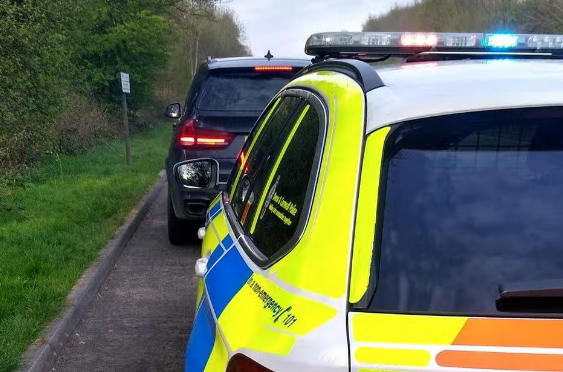
A woman who was reported to police for drink-driving from a Narberth pub has been banned from the roads
A COURT has heard how a motorist was arrested by police officers following a call stating that she was drink-driving from the Ivy Bush in Narberth.
The call was made just after 10pm on February 22.
“The caller stated that Tanya Hanna was drinking-driving from the Ivy Bush in a Mercedes,” Crown Prosecutor Linda Baker told Haverfordwest magistrates this week.
When Hanna, 36, was apprehended by officers at Kiln Park Road, a roadside breath test proved positive while further tests at the police station showed she had 47 mcg of alcohol in her system, the legal limit being 35.
Hanna, who has no previous convictions, pleaded guilty to the drink-driving charge. She was represented in court by Michael Kelleher.
“It wasn’t the most pleasant situation when someone took umbrage with Tanya and phoned the police,” he said. “As a result, she has lost her job.
“She knows she’s let herself and her family down, because without a driving licence, it’ll be very difficult for her to keep in regular contact with them, having to rely on public transport.”
Hanna, of Beach Hotel, Marsh Road, Pendine, was disqualified from driving for 14 months. She was fined £120 and ordered to pay £85 court costs and a £48 surcharge.

A MILFORD HAVEN motorist has been banned from the roads after being caught driving on Cleddau Bridge when he was over the drink-drive limit.
Andrew Evans, 36, was stopped by officers just before 1am on February 25 as he drove his Nissan Qashqai northwards towards Neyland.
After providing a positive roadside breath test, subsequent tests carried out at the police station showed he had 42 mcg of alcohol in his system, the legal limit being 35.
This week Evans, of Great North Road, Milford Haven, pleaded guilty to the offence when he appeared before Haverfordwest magistrates. He was represented in court by solicitor Michael Kelleher.
“He believed he’d allowed enough time for the alcohol to pass through his system but that, unfortunately for him, was a dreadful mistake although his alcohol levels were decreasing all the time,” said Mr Kelleher.
Evans, who has no previous convictions, was disqualified from driving for 13 months. He was fined £461 and ordered to pay a £184 court surcharge and £85 costs.



Crime8 hours ago
Rapist jailed after ‘abhorrent’ attacks on woman and children
Haverfordwest man told police “women won’t have sex without force” A HAVERFORDWEST man who raped a woman and a young...


News10 hours ago
Reform secures first Pembrokeshire councillor in Hakin by-election win
Late Reform candidate takes seat as independent surge and Labour withdrawal shape contest REFORM UK candidate Scott Thorley has won...


News21 hours ago
Scott Thorley elected as Pembrokeshire’s first Reform councillor
REFORM UK candidate Scott Thorley has won the Hakin by-election after securing 179 votes. The full result is as follows:...


News1 day ago
Police confirm man has died after being recovered from River Cleddau
Major emergency response in town centre after concerns raised for man in water A MAN has died after being recovered...


Community1 day ago
Davies and Kurtz urge groups to seek employability funding
Community organisations in Pembrokeshire encouraged to apply for new grants supporting skills and job access LOCAL Senedd Members Samuel Kurtz...


News1 day ago
Emergency services flood Haverfordwest after reports of person in river
Town centre sealed off as multi-agency response continues A MAJOR emergency response is underway in the centre of Haverfordwest after...


News1 day ago
Detectives receive surge of new information in bid to identify man found at Powys reservoir
Public response follows release of facial image as officers pursue fresh lines of enquiry DETECTIVES investigating the identity of a...


News2 days ago
Senedd committee urges next Welsh Government to prioritise Wales–Ireland links
A SENEDD committee has called on the next Welsh Government to continue prioritising Wales’s relationship with Ireland, describing it as...


Education2 days ago
New facilities open at Portfield School as redevelopment reaches key milestone
THE FIRST phase of a major redevelopment programme at Portfield School in Haverfordwest has been completed, marking a significant step...


News2 days ago
£377m spent saving blast furnaces months after Port Talbot closure
Government intervention keeps UK’s last primary steelmaking furnaces running THE UK GOVERNMENT spent £377 million to prevent the closure of...
-

 Health5 days ago
Welsh Ambulance Service to host bi-monthly Board meeting
-

 News4 days ago
Rayner and Lammy visit Wales to discuss justice and community safety
-

 News3 days ago
Fishguard linked to allegations in Many Tears Animal Rescue investigation
-
News1 day ago
Emergency services flood Haverfordwest after reports of person in river
-

 News6 days ago
Calls grow for water industry overhaul after Welsh Water faces £44.7m fine
-

 Education6 days ago
Manorbier school closure approved while insurance claim still unresolved
-

 Local Government4 days ago
Investigation confirmed after inspectors visit Many Tears Animal Rescue
-

 Charity6 days ago
Many Tears Animal Rescue visited by inspectors as police attend in support role