


News
Cardiff Council backs motion to divest pension fund over Gaza conflict


57 councillors support move to withdraw investments linked to alleged breaches of international law
CARDIFF COUNCIL has passed a motion calling for the divestment of its pension fund from companies allegedly complicit in breaches of international law in Gaza, following a strong show of public support and a heated debate at City Hall.
The motion, passed by 57 votes to four, follows the submission of a petition signed by 1,200 Cardiff residents, demanding that the council stop investing in firms accused of facilitating what campaigners describe as Israel’s genocide and apartheid policies towards Palestinians. The petition was jointly backed by the Cardiff Palestine Solidarity Campaign (PSC) and the Muslim Council of Wales.
The proposal was brought by Cllr Andrea Gibson (Plaid Cymru, Pentyrch and St Fagans), who said the council’s move reflects a growing public desire for ethical investment and international accountability.
“Cardiff has an opportunity to lead Wales by becoming the first local authority to take a stand on this issue,” she said. “This is a practical step towards more ethical public policy and shows solidarity with Palestinians suffering in Gaza.”
Motion outlines concerns over war crimes
The approved motion notes that the ongoing conflict in Gaza has resulted in a “significant loss of innocent life” and expresses a belief that public sector pension funds should not invest in companies linked to war crimes, human rights violations, or the breaking of international law, regardless of profit.

The Council resolved that it “does not wish to be associated with companies potentially complicit in war crimes.”
According to the Cardiff PSC, the city’s pension fund currently holds £117 million—around 3.7% of its total pot—in 52 companies they allege are linked to violations of international law, including the construction of illegal settlements and military activity in the Occupied Palestinian Territories.
List of ‘complicit’ companies named
The PSC’s research includes investments in:
- £4.9m in four Israeli banks (Leumi, Hapoalim, Mizrahi Tefahot Bank and Israeli Discount Bank), which finance illegal settlements.
- £2.3m in Israeli real estate operating on Palestinian land.
- £5.5m in Barclays, which raises funds for weapons manufacturers.
- £1.1m in Palantir, partnered with the Israeli Ministry of Defence.
- £29m in Alphabet (Google’s parent company), which co-develops cloud computing for Israel’s military.
- £3m in BAE Systems, which supplies components for weapons used by the IDF.
The PSC says the full divestment of these companies is financially viable and has offered its findings to the council’s Pension Fund Committee to support implementation.

Councillors express strong views
During the debate, Labour councillor Dan De’Ath described the Gaza conflict as “an abomination,” comparing the global reaction to South African apartheid in the 1980s. Cllr Imran Latif warned that the horrors in Gaza are “beyond comprehension,” citing the International Court of Justice’s statement that the situation may constitute genocide.
Independent Cllr Emma Reid Jones said the Council’s focus “remains firmly centred on Gaza,” while Labour’s Ali Ahmed spoke emotionally of children being bombed while queuing for water, saying: “If this keeps going, no one will be left in Gaza.”
However, there was opposition from the Conservative group. Cllr Calum Davies argued that the Boycott, Divestment and Sanctions (BDS) movement is antisemitic and opposed the motion on that basis.

Support from campaigners
Farooq Toor, of the Muslim Council of Wales, who submitted the petition, said: “This is the greatest human catastrophe of our generation. The international community has failed to act—Cardiff Council has now taken a vital moral stand.”
Clive Haswell, Co-Chair of Cardiff PSC, added: “This bold decision sends a powerful message. The Council must now move quickly to apply the policy and cut ties with companies facilitating crimes against Palestinians.”
Cardiff now becomes the first Welsh council to pass such a divestment motion, joining a growing number of institutions in the UK reconsidering their financial ties with firms connected to military actions in the region.


THE SPOTLIGHT will be on the Senedd election in May and the development ofa new Apprenticeship Programme for Wales, starting in August 2027, when work-based learning practitioners gather for their annual conference in March.
‘Shaping Skills for a New Era’ is the theme of the conference organised by the National Training Federation for Wales (NTFW), which represents work-based learning providers across the country, at Cardiff City Stadium on March 10.
Bookings are now open for the conference which marks a pivotal moment for the future of apprenticeships, with the Senedd election and the next phase of the new apprenticeship programme on the horizon.
“The strength of our sector lies in collaboration,” said Lisa Mytton, NTFW strategic director. “By bringing providers, employers and stakeholders together, we can design a future-ready apprenticeship programme that responds to industry needs, supports learners from every background, and builds a resilient workforce for a changing world.”
There will be speakers from Medr, the tertiary education regulator in Wales, Coleg Cymraeg Cenedlaethol, Cavendish Cymru, Agored Cymru – conference headline sponsor, and City & Guilds.
Cavendish Cymru will preview how the Senedd will change following the May 7 election, review recent polling and speculate about the likely composition of the new Welsh Government.
“Agored Cymru is delighted to continue its headline sponsorship of the NTFW Conference,” said Darren Howells, Agored Cymru chief executive. “By creating world class bilingual vocational qualifications and apprenticeship frameworks, it is our aim to drive economic growth and ensure the future skills needs in Wales are met through engagement, foresight and innovation.
“We are proud to work with such committed and passionate providers to ensure individuals, whatever their background or circumstances, have the knowledge and skills to achieve their career aspirations and to contribute to a prosperous and thriving economy.”
Delegates will also be able to participate in a series of eight workshops, including the future Apprenticeship Programme for Wales, which will be run by Medr. They will hear about key projects that are shaping the programme to be more responsive when addressing skills priorities for a changing economy.

In their workshop, Qualifications Wales will explore how to build meaningful, sustained relationships with employers, so that post-16 vocational regulated qualifications are matched to the evolving skills needed.
Resilient Futures Coach will lead an interactive workshop, giving practitioners a set of resilience-boosting tools they can use for themselves and with their learners, while Careers Wales will explore how impartial careers guidance empowers young people to make informed decisions about their future.
As Artificial Intelligence (AI) reshapes skills across Wales, apprenticeships are on the frontline. Jisc’s workshop theme is ‘AI and skills for the future Welsh workforce’.

The Education Workforce Council will explore the role of professional registration and regulation in work-based learning, Estyn will explore literacy and numeracy skills support for apprentices and Regional Skills Partnership chairs will share the latest regional intelligence, emerging skills priorities and future plans.
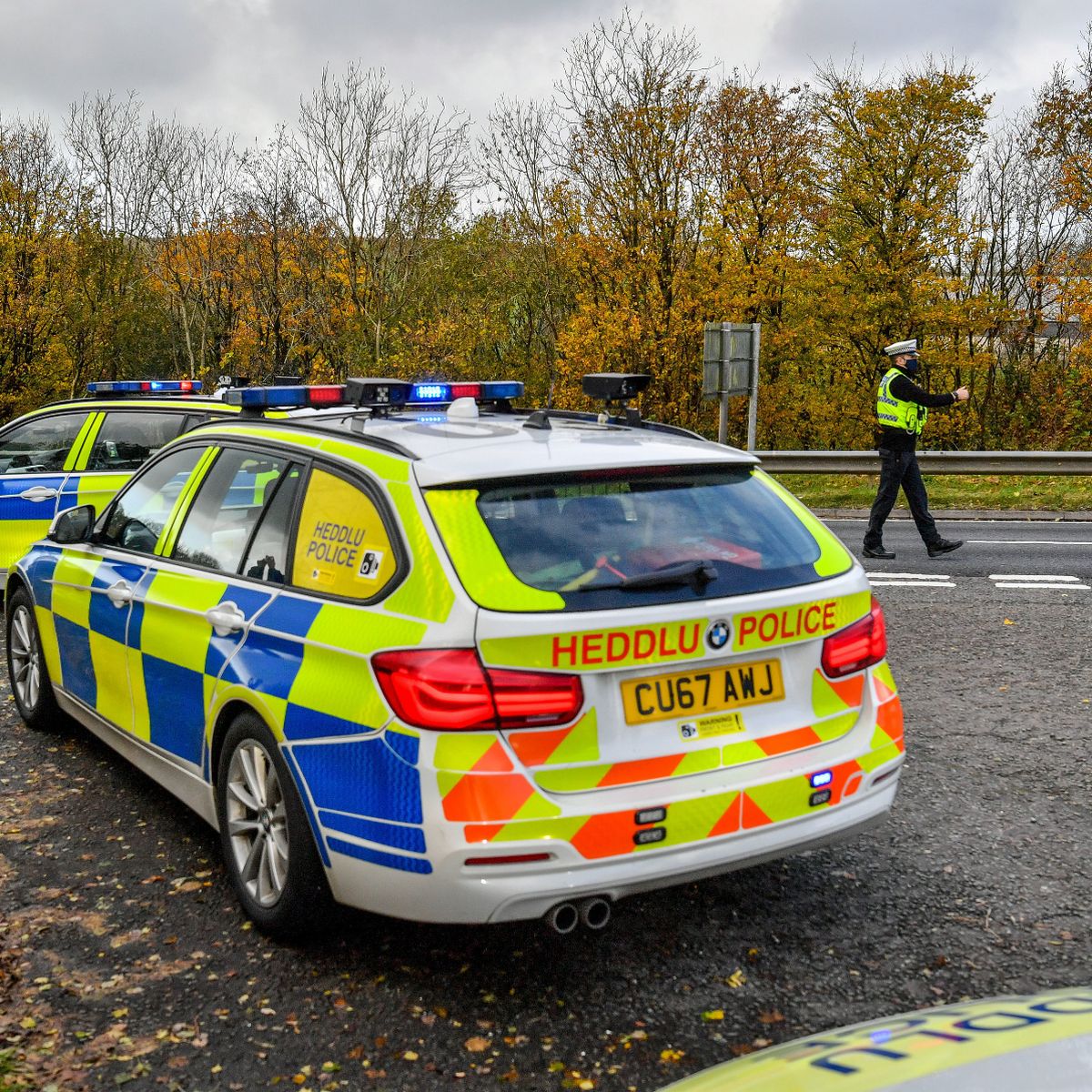
Lorry seen on wrong side of road before multi-force stop
A DISQUALIFIED driver has been charged after an HGV was reportedly driven erratically along the A40 between Narberth and St Clears in the early hours of Thursday (Jan 29).
Dyfed-Powys Police confirmed that 22-year-old Tajinder Singh, of Tudor Road, Southall, has been charged with driving whilst disqualified and using a motor vehicle on a road without insurance.
He was remanded in custody to appear at Llanelli Magistrates’ Court today (Friday, Jan 30).
The incident began when an off-duty police officer reported seeing the heavy goods vehicle being driven on the wrong side of the carriageway on multiple occasions, raising serious concerns for the safety of other road users.
Roads Policing Unit officers carried out immediate checks and traced the vehicle travelling eastbound along the A48 between Carmarthen and Cross Hands.
Specialist Tactical Pursuit and Containment (TPAC) tactics were authorised, with support requested from South Wales Police and the National Police Air Service due to the scale of the risk and the vehicle’s route.
The lorry was kept under constant observation as it continued along the A48 and onto the M4 before eventually stopping at an industrial estate in the Fforestfach area of Swansea.
Officers detained the driver at the scene. The vehicle was seized under Section 165A of the Road Traffic Act.
A spokesperson for Dyfed-Powys Police said officers will continue to take action against dangerous driving.
Anyone with concerns about unsafe or reckless driving is urged to report it to police.

Police say suspect known to victim as attempted murder investigation continues
A MAJOR police manhunt is under way after a woman was seriously injured in a stabbing at Carmarthen Park on Thursday afternoon (Jan 29).
Dyfed-Powys Police confirmed the incident is being treated as attempted murder and officers are searching for a named male suspect who is known to the victim.
Emergency services were called to the popular town park shortly after 4:00pm, where the woman was found with stab wounds to her torso and hand. She was taken to hospital for treatment and is understood to be in a stable condition.
The attack happened in broad daylight in one of the town’s busiest public spaces, a park regularly used by families, joggers and visitors from across west Wales, including Pembrokeshire.
Officers say the assault was not random.
Detective Superintendent Anthony Evans, who is leading the investigation, said: “I wish to assure the local community that our officers are following all possible lines of enquiry to locate and arrest the suspect as quickly as possible.
“You will continue to see police in the areas around Picton Terrace, Carmarthen Park and other addresses as we investigate this appalling incident.
“Our enquiries so far have led us to understand that this was not a random attack, and that the suspect and victim were known to each other.”
Police activity remained visible on Friday (Jan 30), with cordons in place around parts of the park and nearby Picton Terrace. Specialist officers have been carrying out house-to-house enquiries and reviewing CCTV footage from the surrounding area.
Residents reported an increased police presence throughout the day.
One local told The Herald: “It’s frightening to think something like this can happen here in the middle of the afternoon. It’s usually such a safe place.”
Although Carmarthenshire generally records lower crime levels than larger Welsh cities, incidents involving knives continue to be a concern for police across the region. Dyfed-Powys Police has repeatedly urged the public to report concerns early to help prevent serious violence.

Officers are now appealing for witnesses or anyone with information to come forward.
Police are particularly keen to speak to anyone who was in Carmarthen Park around 4:00pm on Thursday or who may have seen someone acting suspiciously or leaving the area quickly.
Information can be provided by calling 101, emailing [email protected], or contacting Dyfed-Powys Police via social media. Anonymous reports can be made to Crimestoppers on 0800 555 111.
Anyone affected by the incident can seek support through Victim Support Cymru or other local services.
The Herald will provide updates as the investigation develops.

Crime29 minutes ago
Manhunt intensifies after woman seriously injured in Carmarthen park stabbing
Police say suspect known to victim as attempted murder investigation continues A MAJOR police manhunt is under way after a...

Health23 hours ago
Consultation reveals lack of public trust in health board
EARLIER this week, Hywel Dda UHB published the results of a consultation into the future configuration of its clinical services....

Community24 hours ago
Specialist team searches River Teifi in ongoing hunt for missing man
A SPECIALIST search team has carried out a renewed and highly technical search of the River Teifi in Cardigan as...


News2 days ago
Wales’ first minister keeps distance from Starmer before May vote
Senedd race not Westminster THE FIRST MINISTER has moved to draw a clear dividing line between the Welsh Labour campaign...

News2 days ago
Kurtz raises Gumfreston flooding in the Senedd as petition deadline nears
LOCAL Senedd Member Samuel Kurtz has raised the long-running flooding problems affecting the B4318 at Gumfreston in the Senedd, as...

Community3 days ago
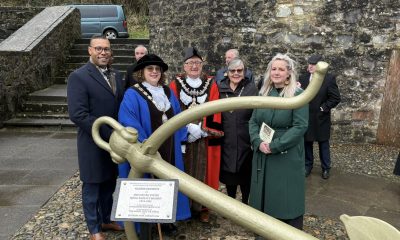
Anchor re-dedicated to mark 30 years of US–Haverfordwest ties
Service honours shared history, service and friendship on the Quayside A SYMBOL of Haverfordwest’s wartime and Cold War connections with...


Business3 days ago
Senedd urged to act as Welsh pubs fall further behind England on business rates
Industry leaders warn of closures and job losses as pressure mounts on ministers to pass on funding PUBS across Wales...


Crime3 days ago
Haverfordwest man jailed for online death threat
A Haverfordwest man has been sentenced to a year in prison after sending a threatening message online. Michael Carruthers, 34,...

Community3 days ago
Storm Chandra: Morning impacts across Pembrokeshire
HEAVY overnight rain and strong winds brought by Storm Chandra have caused disruption across Pembrokeshire, with fallen trees and localised...


Business4 days ago
Business voices heard as Kurtz and Davies urge action on business rates
LOCAL businesses from across West Wales have voiced serious concerns about the impact of business rates at a dedicated roundtable...
-
Health6 days ago
Health Board to decide on future model for nine clinical services
-
Health23 hours ago
Consultation reveals lack of public trust in health board
-

 News2 days ago
Caldey still unsafe, survivors warn — despite Abbey’s reform claims
-

 Health7 days ago
Pembroke Corn Store footpath overlooking castle closed after landslip
-

 Climate6 days ago
Petition opposing climate emergency reaffirmation and ‘tax hikes’ to be heard
-

 Entertainment7 days ago
Pembrokeshire star-struck as Olivia Dean gets call from Sir Elton John while camping
-

 Community2 days ago
Pembrokeshire students speak at national Holocaust Memorial Day event
-
 Crime7 days ago
Police force mergers could ‘separate communities from policing’, watchdog warns