


Farming
AI tool automates plant fruit measuring to breed better crops


ABERYSTWYTH UNIVERSITY scientists are developing new artificial intelligence tools that automatically measures plant seed and seed pods in order to breed better crop varieties.
Led by researchers in the Institute of Biological, Environmental and Rural Sciences and in Computer Science at the University, the study demonstrates the power of targeted applications of artificial intelligence to improve the quality of our crops.
Traditional ways of recording the traits of a plants’ fruit, such as their shape and size, are very labour-intensive, time-consuming, and prone to human error.
Researchers have addressed the challenge with a new AI powered tool that analyses images to recognise seed pods and measure them with high accuracy.
The new tool can measure a range of characteristics, including pod length, width, area and volume, all of which contribute to yield and therefore to profitability.

The research links these physical traits to specific genetic regions that influence pod shape and size, helping scientists pinpoint genes.
Identifying these genes helps scientists better understand how plants grow and develop. Such discoveries provide valuable targets for crop breeding, making it possible to improve traits like yield, shape, and resilience.
These new AI tools could in principle be applied to any plant’s fruit, and researchers have been testing it on the seeds of many crops including, oil seed rape, cabbages, and even cereals such as oats, barley and wheat.
Kieran Atkins, PhD researcher and project lead from IBERS in Aberystwyth University, said:
“AI tools like the one we have developed have the potential to revolutionise how we can develop new varieties of crops. It really is a game changer. Our algorithm collected data on over 300,000 individual fruits – underscoring the capability of deep learning as a robust tool for phenotyping very large populations.”
“One of the most exciting aspects of this work is how accessible it makes large-scale phenotyping. By removing technical and time barriers, deep learning enables more researchers to explore plant traits at a scale that wasn’t practical before. It’s about unlocking new possibilities for discovery and innovation in plant science.”
Professor John Doonan, Director of the National Plant Phenomics Centre, added:

“The results demonstrate that deep learning AI can provide data with the quality and accuracy required for genetic analysis and breeding. This shows how advanced imaging and AI can transform the way we connect plant form to genetic function. Initially we developed the tools for a small weedy plant that’s often used as a model in labs around the world, but very similar approaches work extremely well on brassica crops. This is an important step toward scalable, data-rich phenotyping that not only accelerates research but also supports more predictive approaches to crop improvement.”
The team has made their MorphPod tool available online, enabling researchers around the world to replicate or adapt the system for use with other plant species.
Photo: Kieran Atkins from the Institute of Biological, Environmental and Rural Sciences

A MAN from Llandysul has pleaded guilty to food safety offences following an investigation into the illegal trade of so-called “smokies”.
Carmello Gale, aged 71, admitted the offences at Isleworth Crown Court after an investigation by the Food Standards Agency’s National Food Crime Unit.
Gale pleaded guilty to conspiring to place unsafe food on the market, specifically “smokie” meat, in breach of food safety regulations and the Criminal Law Act.
He was granted bail ahead of sentencing, which will take place at a later date.
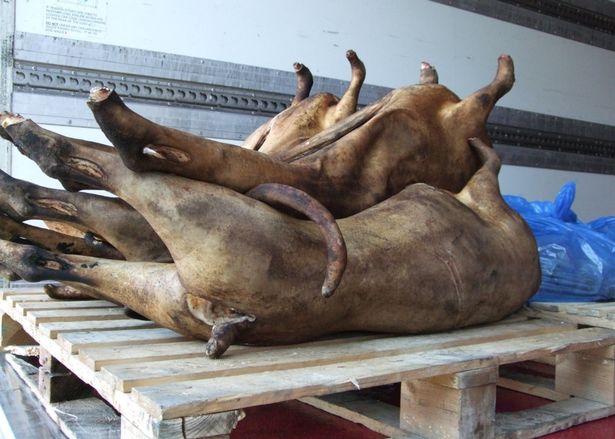
“Smokies” refers to skin-on sheep meat produced by singeing the fleece off an unskinned carcass, giving it a distinctive colour and smell. The process is illegal in the UK and is often carried out in unapproved premises that may not meet basic hygiene standards.

Neil Castle, Deputy Head of the National Food Crime Unit, said: “Carmello Gale is considered a significant figure in the illegal smokies trade, with the investigation uncovering his involvement in the wide-scale distribution of smokies across the UK.
“This guilty plea reflects the work of everyone involved in this investigation. I would like to thank Ceredigion County Council, Dyfed-Powys Police, Southwark Council, Swansea Council, and the Tarian Regional Organised Crime Unit for their support.
“The NFCU will not stop in its efforts to identify, investigate and bring to justice those who seek to exploit our food system.”
The agency is urging anyone with concerns about food fraud or illegal “smokies” production to report it to their local Trading Standards team or contact the unit confidentially.
Fears grow over fertility problems as virus spreads across England and Wales
FARMERS are being urged to vaccinate their cattle against bluetongue before spring turnout, as the virus continues to spread and cause serious fertility issues across England and Wales.
The warning comes following a briefing organised by the National Beef Association (NBA) and Ruminant Health and Welfare (RH&W), as part of the Agriculture and Horticulture Development Board (AHDB) campaign, Battle Bluetongue.
UK Chief Veterinary Officer Dr Christine Middlemiss and NBA Chief Executive Neil Shand both stressed the need for urgent action, warning that delaying vaccination could have severe consequences for herds.
Defra has reported 320 confirmed cases of bluetongue since July last year, but industry leaders believe the true figure may be significantly higher due to under-reporting.
Neil Shand said: “From what we are seeing in England, and to a lesser extent in Wales, there are higher levels of abortions and ‘dummy’ calves during the spring calving season.
“In some cases, calves are being born with severe deformities, including partial or absent brain development.
“We are seeing this across much of England, but notably far less in eastern counties where vaccine uptake was higher due to earlier restrictions.
“With the current value of livestock, protecting cattle against bluetongue is a no-brainer – and vaccination is the best way to do that.”
Dr Christine Middlemiss warned that some of the most serious effects of the disease may not yet be visible.
She said: “The reproductive signs of bluetongue may not appear until months after infection, so farmers must think ahead.
“Vaccinate now while cattle are still housed and can be handled safely, rather than waiting to see the impact later.”
Farmers are also being advised to vaccinate breeding animals, including bulls and tups, well in advance, and to carry out semen testing six to eight weeks after vaccination to ensure fertility is not affected ahead of the breeding season.

Industry leaders warned that bluetongue could be significantly under-reported, as symptoms are not always immediately obvious.
Mr Shand added: “The official Defra statistics could represent only a fraction of the true picture. We would encourage farmers to report any suspected cases so we can better understand the spread of the disease.”
Bluetongue is a notifiable disease. Suspected cases must be reported immediately by calling the Defra Rural Services Helpline on 03000 200 301.
In Wales, farmers should call 0300 303 8268, while those in Scotland should contact their local Field Services Office. Failure to report suspected cases is a criminal offence.
Further guidance, including resources and updates on the BTV-3 strain, is available via Ruminant Health and Welfare.


THE FINAL stage of removing decades old agricultural planning condition ties to a Pembrokeshire property has been given the go-ahead by Pembrokeshire planners.
Back in December, Tim and Cathy Arthur were granted permission for the removal of an agricultural worker-only condition at New Creamson, Creamston Road, near Haverfordwest by members of Pembrokeshire County Council’s planning committee.
An officer report for members said the agricultural condition was imposed when the dwelling was built in 1988/89, with a recent certificate of lawful development granted after it was proven the site had been occupied for more than 10 years on breach of that condition.
An application for a certificate of lawfulness allows an applicant to stay at a development if they can provide proof of occupancy over a prolonged period.
Speaking at that meeting, agent Andrew Vaughan-Harries of Hayston Developments & Planning Ltd told members the original agriculture worker-only condition was a poor decision by planners back nearly four decades ago for a 50-acre farm that “should never have been approved as it shouldn’t have been viable”.
Since that approval, an application by Mr Arthur before the March committee sought removal of a Section 106 legal agreement, entered into back in 1994, tying New Creamson to the agricultural land along with an agricultural worker condition.
A report for members recommending approval added: “The applicant wishes to separate the land from the dwelling as the dwelling can lawfully be occupied not in connection with agriculture,” recommending that S106 agreement be removed.
Speaking at the March meeting, Mr Vaughan-Harries, who said his clients were not farming the land at all, described the latest application as “just tidying up the paperwork”.
“If you release this today it allows the useful farmland to be released to other agricultural uses.”

Approval was moved by Cllr Mark Carter and unanimously supported by committee members.



Crime7 hours ago
Rapist jailed after ‘abhorrent’ attacks on woman and children
Haverfordwest man told police “women won’t have sex without force” A HAVERFORDWEST man who raped a woman and a young...


News9 hours ago
Reform secures first Pembrokeshire councillor in Hakin by-election win
Late Reform candidate takes seat as independent surge and Labour withdrawal shape contest REFORM UK candidate Scott Thorley has won...


News20 hours ago
Scott Thorley elected as Pembrokeshire’s first Reform councillor
REFORM UK candidate Scott Thorley has won the Hakin by-election after securing 179 votes. The full result is as follows:...


News1 day ago
Police confirm man has died after being recovered from River Cleddau
Major emergency response in town centre after concerns raised for man in water A MAN has died after being recovered...


Community1 day ago
Davies and Kurtz urge groups to seek employability funding
Community organisations in Pembrokeshire encouraged to apply for new grants supporting skills and job access LOCAL Senedd Members Samuel Kurtz...


News1 day ago
Emergency services flood Haverfordwest after reports of person in river
Town centre sealed off as multi-agency response continues A MAJOR emergency response is underway in the centre of Haverfordwest after...


News1 day ago
Detectives receive surge of new information in bid to identify man found at Powys reservoir
Public response follows release of facial image as officers pursue fresh lines of enquiry DETECTIVES investigating the identity of a...


News2 days ago
Senedd committee urges next Welsh Government to prioritise Wales–Ireland links
A SENEDD committee has called on the next Welsh Government to continue prioritising Wales’s relationship with Ireland, describing it as...

Education2 days ago
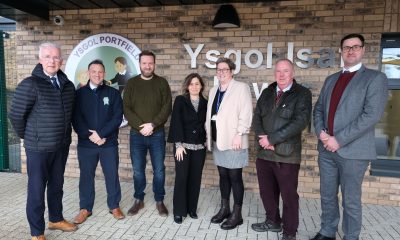
New facilities open at Portfield School as redevelopment reaches key milestone
THE FIRST phase of a major redevelopment programme at Portfield School in Haverfordwest has been completed, marking a significant step...


News2 days ago
£377m spent saving blast furnaces months after Port Talbot closure
Government intervention keeps UK’s last primary steelmaking furnaces running THE UK GOVERNMENT spent £377 million to prevent the closure of...
-

 Health5 days ago
Welsh Ambulance Service to host bi-monthly Board meeting
-

 News4 days ago
Rayner and Lammy visit Wales to discuss justice and community safety
-

 News3 days ago
Fishguard linked to allegations in Many Tears Animal Rescue investigation
-
News1 day ago
Emergency services flood Haverfordwest after reports of person in river
-

 News6 days ago
Calls grow for water industry overhaul after Welsh Water faces £44.7m fine
-

 Education6 days ago
Manorbier school closure approved while insurance claim still unresolved
-
 Local Government4 days ago
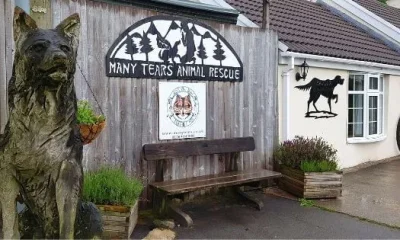
Investigation confirmed after inspectors visit Many Tears Animal Rescue
-

 Charity6 days ago
Many Tears Animal Rescue visited by inspectors as police attend in support role