


News
Where will the next refinery closure be?

 OIL prices may be tumbling, Russia may be brought to its knees, but for Europe’s refineries little has changed. Margins remain as tight as ever, driven by a systemic overcapacity of petrol production and under-production of diesel. Last month, Murco refinery became the latest European refinery to succumb to market pressures. Murco was the third UK refinery to close in the past five years, following the closure of Petroplus’ Coryton refinery in 2012 and Teesside refinery in 2009.
With these three closures the UK has lost 445,000 barrels per day (bpd), one quarter of its refining capacity. And yet, as far as the whole of Europe is concerned, some say the closures to date haven’t gone far enough. Speaking to Process Engineering for our January 2015 cover feature, Wood Mackenzie downstream principal analyst Jonathan Leitch said that his firm’s modeling showed that “by 2018 we need to decrease crude runs in Europe by 1.6 million barrels per day – that’s twelve Milford Havens”.
While he pointed out that the UK’s top refineries are among the most advanced in the world, he also admitted that the closures needed to bring European production back to equilibrium wouldn’t necessarily come at the weakest refineries. “There are some smaller lossmaking refineries where, if they close down that’s the end of their business, and for that reason they continue to operate,” he said. “At the other end, some of the major oil companies may own several refineries across Europe.
The two or three they choose to close down will not be the worst in Europe.” For these reasons, further UK refinery closures cannot be ruled out. Most at risk would appear to be the country’s two smallest refineries. Total tried and failed to sell its 200,000 bpd Lindsey refinery in Killingholme, North Lincolnshire in 2011, and while it has since committed to investing in the plant and keeping it operational, there are worrying echoes of Milford Haven’s situation – like the Pembrokeshire plant, which had the larger, better connected Valero Pembroke refinery for a neighbour, Lindsey too has a local big brother in the form of the 221,000 bpd Phillips 66 Humber refinery.
Meanwhile, there was speculation in the summer that Indian company Essar was trying to sell its Stanlow refinery in Ellesmere Port. The company dismissed talk of a sale as nothing but rumours, but following the mothballing of a crude distillation unit at the plant in September and subsequent closure of Milford Haven, Stanlow is now the country’s smallest refinery at 195,000 bpd, and must therefore be considered at risk in an industry where it is generally the largest, most complex plants that are most likely to survive. No matter what the oil price does, there seems little respite for refiners in the year to come.


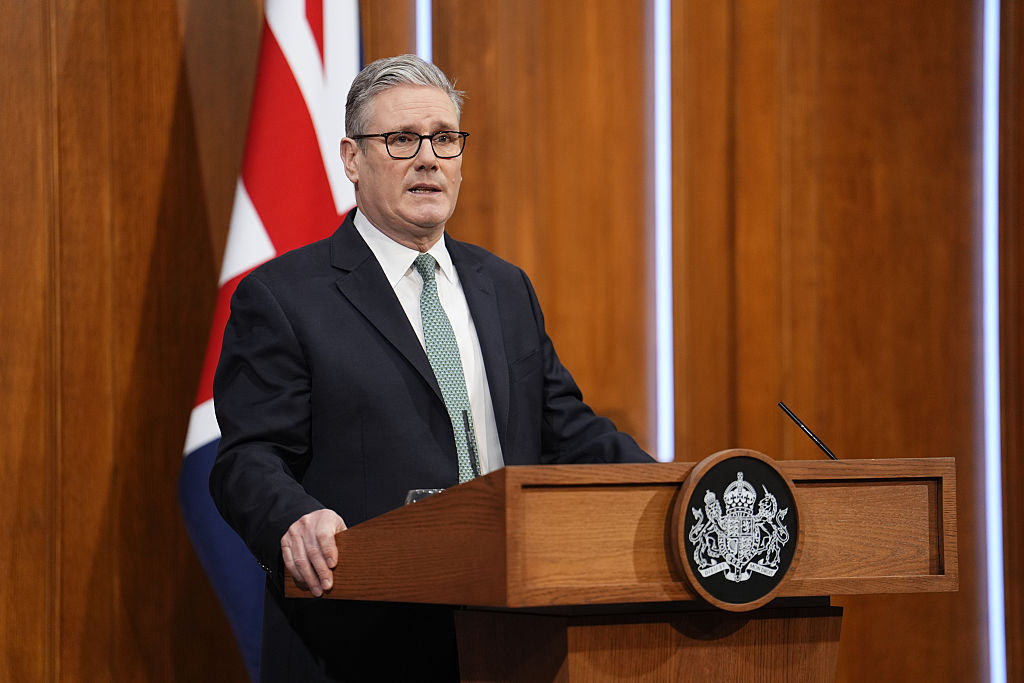
UK backs freedom of navigation but will not join any US-led move to shut down the world’s most sensitive oil shipping route
BRITAIN will not take part in Donald Trump’s threatened blockade of the Strait of Hormuz, despite the US president’s claim that other countries would join the operation.
The move came after Trump announced that American forces would begin stopping vessels attempting to enter or leave the narrow but strategically vital waterway, following the collapse of peace talks between the United States and Iran in Pakistan.
The Strait of Hormuz, one of the world’s most important energy choke points, has already been heavily disrupted in recent days after Iran tightened its grip on the passage in retaliation for the US-Israel war. The confrontation has sent oil and gas prices sharply higher and raised fears of a wider economic shock.
In a post on Truth Social, Trump said the US military would begin “blockading any and all ships” trying to use the strait. He also warned that any vessel found to have paid a toll to Iran for passage would be targeted.
He wrote that the US Navy would “seek and interdict every vessel in International Waters that has paid a toll to Iran”, adding that no ship making such payments would have safe passage.
Trump also claimed that “other countries will be involved with this blockade”, but it is understood the UK will not be among them.
A UK Government spokesperson said Britain continued to support freedom of navigation and wanted to see the strait reopened without further escalation.
The spokesperson said: “We continue to support freedom of navigation and the opening of the Strait of Hormuz, which is urgently needed to support the global economy and the cost of living back home.
“The Strait of Hormuz must not be subject to tolling.

“We are urgently working with France and other partners to put together a wide coalition to protect freedom of navigation.”
Prime Minister Sir Keir Starmer has previously called for “as many partners as possible” to be involved in securing a workable international response, while stressing the need to protect shipping rather than deepen the conflict.
Britain is expected to host a third round of international discussions on the crisis this week, following a virtual summit of more than 40 countries chaired by the Foreign Secretary, as well as a meeting of allied military figures.

Sir Keir has also said British mine-hunting systems are already deployed in the region.
Earlier on Sunday, the Prime Minister urged Washington and Tehran to find a diplomatic path forward after 21 hours of negotiations in Islamabad failed to produce an agreement, leaving the already fragile two-week ceasefire hanging by a thread.
In a Downing Street readout of Sir Keir’s call with the Sultan of Oman, His Majesty Sultan Haitham bin Tarik al Said, a spokeswoman said the two leaders agreed it was vital for the ceasefire to continue and for all sides to avoid further escalation.
Meanwhile, Trump stepped up his criticism of both Nato and Britain, accusing allies of failing to support offensive action against Iran and branding the military alliance “shameful”.
The US president also renewed his personal attacks on Sir Keir, once again likening him to Neville Chamberlain, the former prime minister associated with the policy of appeasement in the years before the Second World War.
Speaking to Fox News, Trump said Sir Keir’s position amounted to a weak response, mocking the Prime Minister’s stance that support should come after the fighting ends.
Trump also said the Pakistan talks, involving US vice-president JD Vance, had gone well on most issues, but claimed the central dispute over Iran’s nuclear ambitions remained unresolved.

Historic defeat for Europe’s longest-serving nationalist strongman could redraw Hungary’s place in the West — but the real battle may only just be beginning
VIKTOR ORBAN has conceded defeat in Hungary’s parliamentary election, bringing a dramatic end to the nationalist leader’s 16-year grip on power and delivering what could prove to be the most significant political upset in Europe this year.
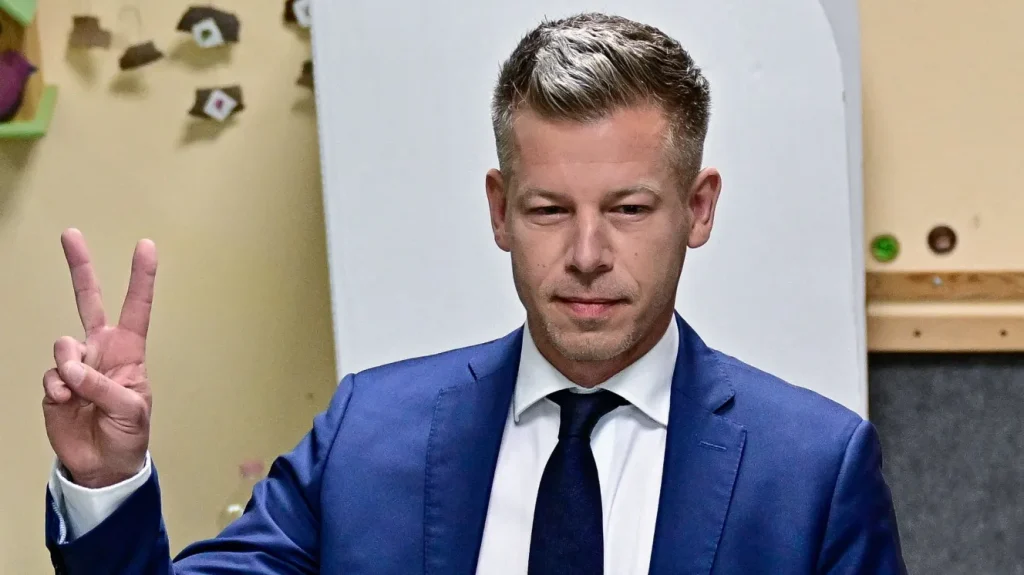
Early and partial results put Péter Magyar’s Tisza party well ahead of Fidesz, with Orbán acknowledging a painful loss as record turnout suggested a country no longer willing to settle for more of the same. For many Hungarians, this was not simply a vote to change government, but a decision to break with a political era that had come to define the nation itself.
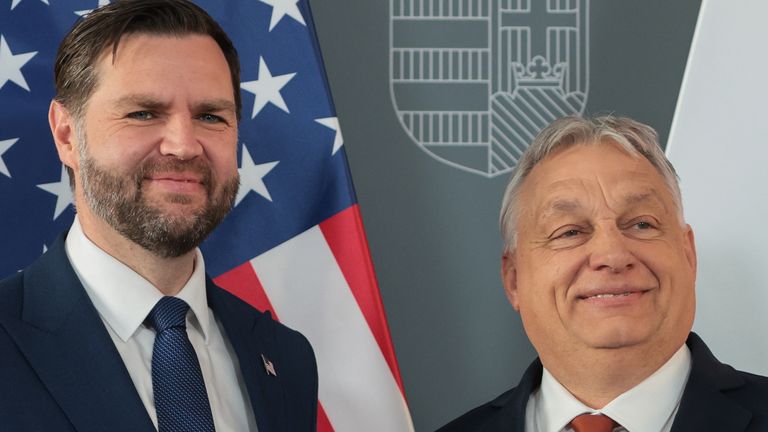
This was no ordinary election defeat for a sitting prime minister. It was a rejection of an entire system. Orbán did not merely govern Hungary; he remade it in his own image, constructing what he proudly called an “illiberal” state and turning himself into a hero for parts of the global Right. In the process, Hungary became the European Union’s most disruptive and controversial member.
That is why his fall matters far beyond Budapest. The result is significant not just because of who has won, but because of what voters appear to have turned against: entrenched power, allegations of cronyism, democratic backsliding, and a style of politics built on permanent cultural warfare.
The scale of the result is what makes it historic. Reuters reported that with 46 per cent of votes counted, Tisza was on course to win 135 seats in the 199-seat parliament — enough for a two-thirds majority if confirmed. The Associated Press, reporting on later partial returns, said Tisza had more than 52 per cent of the vote with around 60 per cent counted, far ahead of Fidesz on 38 per cent. Turnout was above 77 per cent, described by AP as the highest in post-communist Hungarian history.
That turnout tells its own story. Hungary was not sleepwalking into change; it was straining towards it. After years in which Orbán had seemed electorally untouchable, voters appear to have decided that economic drift, rising living costs and long-running corruption allegations mattered more than the government’s warnings about migrants, war and foreign enemies. Reuters said frustration over economic stagnation and the cost of living helped drive the opposition surge.
Péter Magyar’s rise makes the outcome all the more remarkable. He is not a veteran dissident or a familiar opposition grandee. He is a former Fidesz insider who broke with the ruling camp and then reinvented himself as the vessel for anti-Orbán anger. That gave him an advantage previous challengers lacked: he could not easily be dismissed as an outsider who failed to understand the system he was trying to dismantle. To Orbán loyalists, he is a traitor. To his supporters, he is proof that the rot had begun from within.
For Brussels, this could mark the start of a major reset. Orbán spent years obstructing EU partners over rule-of-law disputes, media freedom, relations with Moscow and support linked to Ukraine. Reuters reported that a Tisza victory could reopen the path to frozen EU funds and shift Hungary’s stance on key European decisions, including those connected to Ukraine. Put simply, one of the EU’s most stubborn blockers may have been removed by his own electorate.
The symbolism reaches well beyond Europe. Orbán became a reference point for nationalist and populist movements across the Western world, admired by figures on the American Right and tolerated elsewhere as a difficult but durable fact of European politics. His defeat is therefore more than a domestic upset. It is a reminder that strongman politics can look invincible until the moment voters decide they have had enough.

But this is where caution is needed. Orbán’s defeat does not necessarily mean Orbánism is finished. Even if Tisza secures a commanding majority, Hungary remains deeply divided, and much of the state, media landscape and political culture has been moulded by Fidesz over a decade and a half. Removing Orbán from office is one thing. Unpicking the loyalties, habits and networks of his era is another entirely. That will be Magyar’s true test.
There is a danger for the victors too. Political earthquakes create expectations that are almost impossible to satisfy. Magyar has campaigned as the man who can clean up the state, restore trust, improve services and bring Hungary back towards the European mainstream. That is a compelling message in opposition. It is far harder in government, particularly in a country where Orbán’s influence has been embedded so deeply. Voters may have delivered a revolution at the ballot box, but revolutions do not, by themselves, produce stable government.
Still, the meaning of the night is already unmistakable. Hungary has not merely changed government; it has rejected the assumption that Viktor Orbán’s model was permanent. After sixteen years in power, the man who made himself the face of Europe’s nationalist resistance to liberal democracy has been brought down not by Brussels, nor by foreign pressure, but by Hungarian voters themselves.

That is what makes this result so powerful — and why its consequences may reach far beyond Hungary.
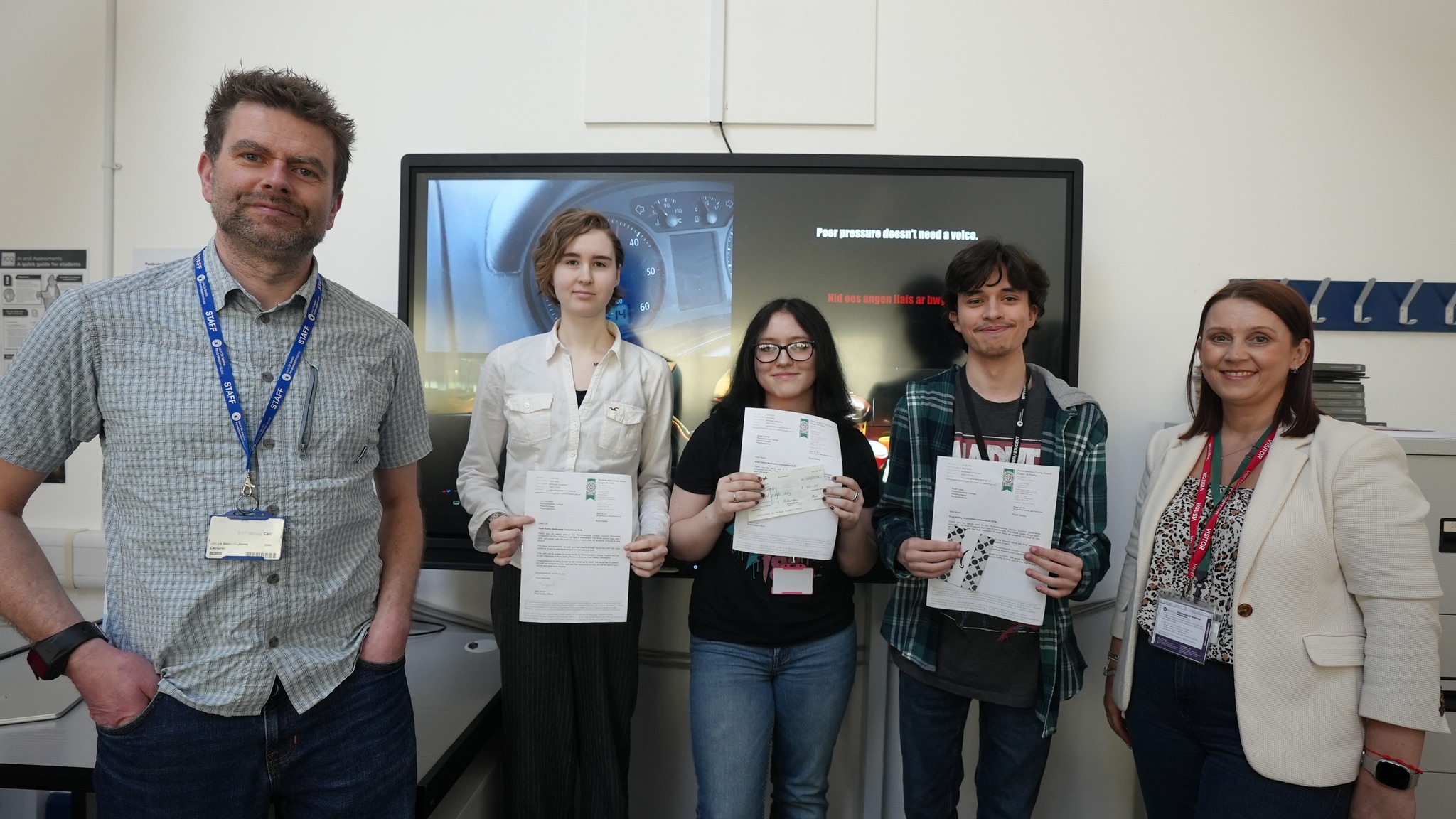
Creative Media learners recognised after producing hard-hitting videos to warn young drivers about the dangers of peer pressure
PEMBROKESHIRE COLLEGE has praised its Creative Media learners after students produced a series of powerful short films as part of an annual road safety competition run in partnership with Pembrokeshire County Council.
The project challenged learners to create short social media videos highlighting one of the main causes of serious road traffic collisions, with this year’s theme focusing on the dangers of peer pressure. The films were designed to help raise awareness of road safety issues among young people across the county.
Aliyah was named overall winner for her video, Peer Pressure Doesn’t Need a Voice, and received a £100 prize.
Noah was recognised as a runner-up for his film, Don’t Treat the Road Like a Toy, while Lily was also commended for her entry, Don’t Give in to Peer Pressure.
The college said the competition gave learners the chance to respond to a real-world brief while producing work with an important public safety message.
Lecturer Denys Bassett-Jones praised the standard of the entries and said the issue of peer pressure was a major factor in young people’s lives, making it an important theme to highlight to new drivers and their passengers.
Sally Jones, Road Safety Officer at Pembrokeshire County Council, also praised the students’ work and said the group had produced interesting and dynamic videos while rising well to the brief.
The college said projects like this continue to give learners valuable practical experience while supporting wider efforts to reduce serious collisions on local roads.


News11 hours ago
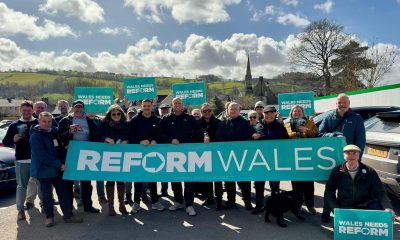
Reform attacks Plaid on spending and immigration ahead of Senedd poll
Party claims Plaid’s plans would strain public finances and increase pressure on services, while rivals insist Wales needs a different...


News11 hours ago
Emergency response after person enters water at Milford Haven marina
Casualty recovered as police, coastguard and lifeboat crews attend A MAJOR emergency response was launched at Milford Marina in Milford...

News1 day ago
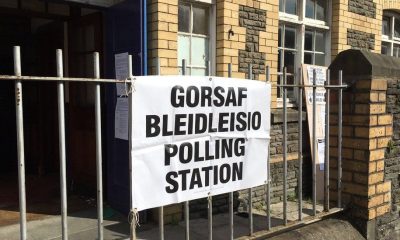
Senedd election candidates confirmed as vote.wales goes live
Voters can now check who is standing in their constituency ahead of polling day on May 7 A TOTAL of...

Crime2 days ago
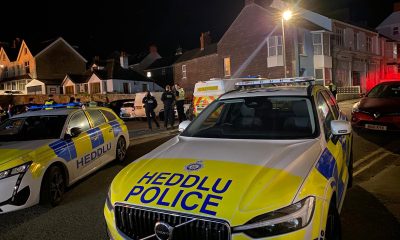
Police and partners launch summer crackdown after Tenby station stabbings
Extra patrols, more rail security and tougher action promised after violent disorder left four youths injured POLICE and partner agencies...


Crime2 days ago
Drug and weapon charges after Pembroke Dock arrest
Man remanded in custody following Diamond Street vehicle search A MAN has been remanded in custody after appearing at Swansea...


Crime2 days ago
Woman fights order taking four dogs from her
Swansea Crown Court hears appeal after long-running barking dispute in Trefin A PEMBROKESHIRE woman has told Swansea Crown Court that...


News2 days ago
Former county councillor Paul Dowson to stand in Ceredigion Penfro
Ex-Pembrokeshire member says he will offer voters a straight-talking independent alternative at the Senedd election FORMER Pembrokeshire county councillor Paul...

News3 days ago
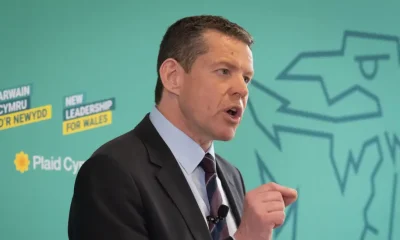
Plaid Cymru sets out childcare, NHS and child poverty pledges in 2026 manifesto
Rhun ap Iorwerth’s party says plan is radical and fully costed as it bids to lead next Welsh government PLAID...

Community3 days ago
Police intervene after post raises fears of planned Pembroke Dock fight
Extra patrols launched after social media alert in aftermath of Tenby stabbings POLICE intervened after an online warning raised fears...
Crime3 days ago
Man arrested after alleged child sexual assault in Haverfordwest
Police enquiries ongoing after incident in Castle Square A MAN has been arrested after an alleged sexual assault of a...
-
 Crime5 days ago
Four youths stabbed at Tenby railway station as two arrested
-

 Local Government6 days ago
Bridge works on Neyland-Burton road to continue into late April
-
 News5 days ago
Haverfordwest County AFC faces High Court winding-up threat from HMRC
-

 Entertainment5 days ago
Little Pigs at Home offers a peaceful sanctuary escape in Pembrokeshire
-
 Charity6 days ago
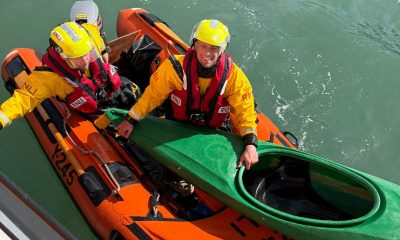
St Davids RNLI launches on Easter Monday after drifting kayak spotted off Solva
-
 Charity6 days ago
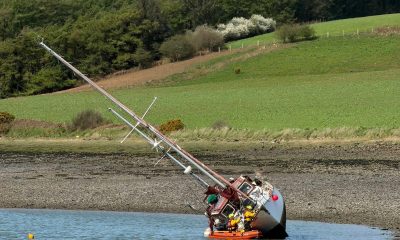
Angle RNLI answers string of call-outs across the Milford Haven Waterway
-

 Crime5 days ago
Questions raised as 81-year-old woman faces ‘failure to provide’ case
-

 Crime5 days ago
Henry Tufnell responds after four youths stabbed in Tenby