


Sport
Crymych edge Maesglas in dramatic penalty shootout


Emrys Morgan Cup clash decided after 2-2 draw
CRYMYCH FC booked their place in the next round of the Emrys Morgan Cup with a nail-biting 6-5 penalty shootout win over Maesglas on Saturday (Sept 20).
The tie, played in difficult wet and windy conditions, swung back and forth throughout before being settled from the spot.
Ross McDonald put Crymych ahead in the 16th minute, finishing neatly after a slick move involving Gethin Evans. But Maesglas were gifted an equaliser on 35 minutes when a cross struck the post and rebounded off keeper Elis Williams’ head into the net.
Early in the second half, Evans provided his second assist of the game, setting up Declan Harries who struck low across the goalkeeper to restore Crymych’s lead. However, a free kick conceded on the edge of the box handed Maesglas the chance to level again, and they took full advantage to make it 2-2.
Neither side could find a winner in normal time, forcing the match to penalties. Williams, at fault for both goals in normal play, produced a crucial save in the shootout before Maesglas missed their final spot-kick. Crymych held their nerve to win 6-5.

It was a hard-fought contest that tested both sides, but Crymych progress to the next round while Maesglas can take heart from a spirited display.

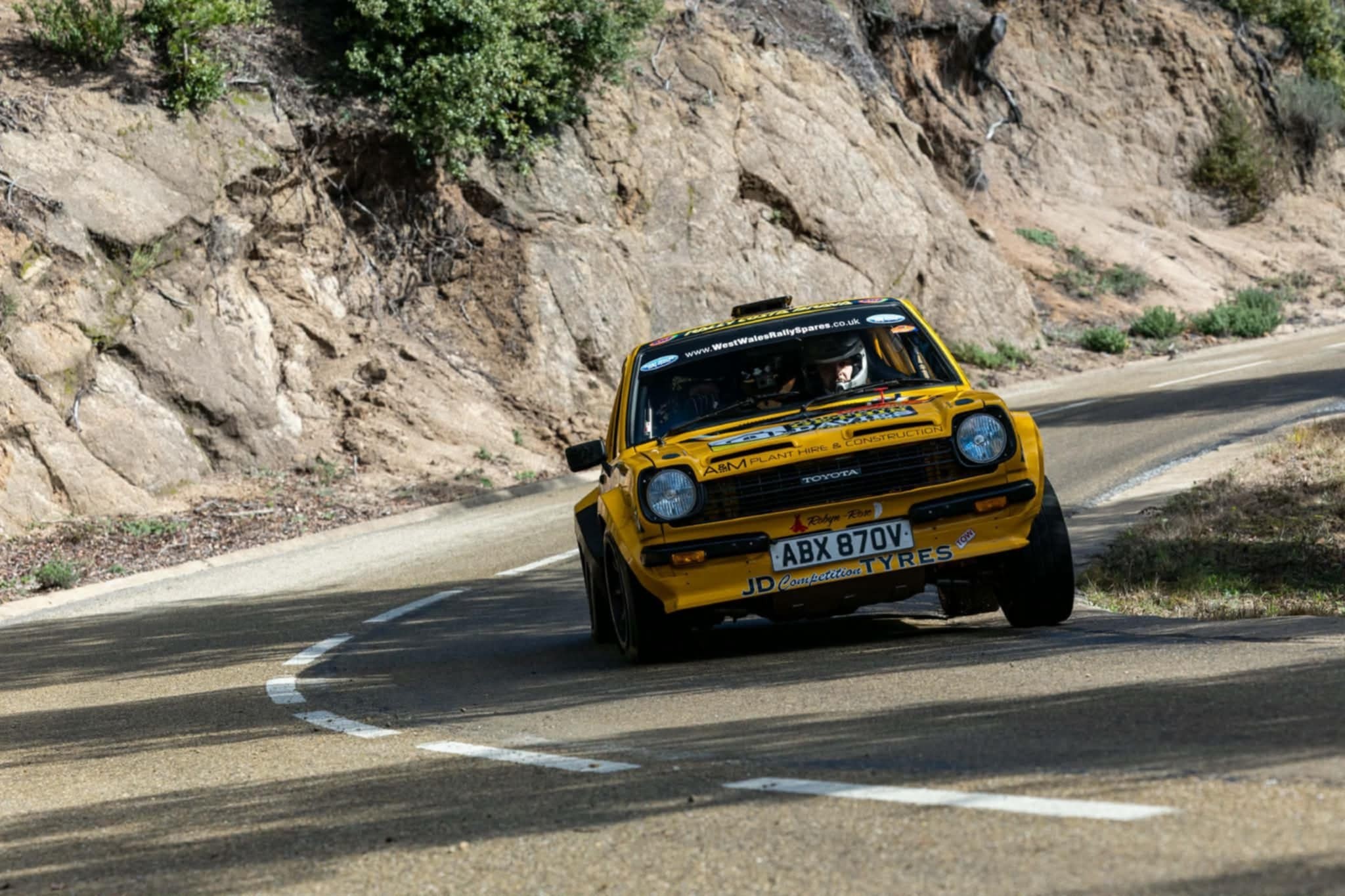
Chris Richmond Hand and co-driver Ben Duke return from Spain with commanding win after gruelling mountain stages
LOCAL rally driver Chris Richmond Hand said he was left “totally gobsmacked” after securing victory on his first appearance at the Rally KH7 Costa Brava 2026 in Spain.
The challenging event, held around Girona near Barcelona, saw Chris and his co-driver Ben Duke return to Wales triumphant with a commanding 45-second lead. More international rallies are now firmly on their radar.
The three-day competition is the oldest historic rally in Spain and attracts some of the world’s finest classic motorsport entries. Being invited to compete was a proud moment for the Teifi Valley Motor Club member.
“Who doesn’t want to go to Spain to compete?” Chris said with a grin. “After 22 hours of travelling and only stopping for fuel, we made it – and what a rally it was. It was absolutely worth every mile.”
Chris remains on cloud nine after taking the Open Class win in demanding conditions. Rain and thick fog added to the already technical challenge of the mountain stages, but the Welsh duo rose to the occasion.

“I don’t really know where to start other than saying follow your dreams,” he said. “Doing an event like this in Spain has always been a bit of a bucket list thing for me.
“If someone had told me a few years ago that we’d be competing in rallies like this, I honestly wouldn’t have believed them – especially doing it in ABX, my Toyota Starlet.”
The rally’s twisting hairpin bends and technical stages proved demanding for both driver and co-driver. For Ben Duke, it was only his fourth time reading pace notes in competition.
“The stages were tough and demanding,” Chris added. “A huge thank you to Ben for doing a brilliant job on the notes all weekend – you absolutely smashed it. I also can’t thank Alex Sasplugas enough for inviting us. It was probably one of the most challenging rallies I’ve ever competed in.”

Chris said the result would not have been possible without the support of his team behind the scenes.
“A huge thank you to the service boys Dafydd Lloyd and Josh Clark – the car was faultless all weekend. That’s a real credit to all the hard work you put in behind the scenes.
“And of course a big thank you to all of our sponsors for their continued support. Without these amazing people, journeys and opportunities like this just wouldn’t be possible.

“Finally, to my awesome wife Letty – thank you for keeping everything afloat while I was away. I couldn’t do any of this without you.”
Chris now has his sights set on the famous Donegal Rally in Ireland later this year, where he hopes to continue his winning run and keep Wales firmly on the international rallying map.

Ramos penalty in Paris seals title as Ireland fall just short and Wales end losing run
FRANCE were crowned 2026 Six Nations champions in one of the most dramatic finales in the history of the tournament, sealing the title with the final kick of the championship on Saturday (Mar 14).
A tense and thrilling final match in Paris saw Les Bleus edge England 48-46, with full-back Thomas Ramos landing a long-range penalty deep into injury time to secure victory and the title. The kick not only broke English hearts but also ended Ireland’s hopes of reclaiming the trophy after they had earlier beaten Scotland in Dublin.
France finished the championship on 21 points, two ahead of Ireland, securing their second consecutive Six Nations title.
The competition, which ran from early February to mid-March, delivered high-scoring matches, historic upsets and a dramatic three-way title race between France, Ireland and Scotland that was only settled in the final minutes of the final game.

Super Saturday drama decides the championship
The tournament’s climax came on the traditional “Super Saturday”, when all three final matches were played on the same day.
Ireland kept their title hopes alive with a commanding 43-21 victory over Scotland at the Aviva Stadium. The win secured Ireland the Triple Crown, awarded to the home nations side that defeats England, Scotland and Wales in the same championship.
Ireland’s result briefly moved them to the top of the table and meant the championship would be decided later that evening in Paris.
Earlier in the afternoon, Wales hosted Italy in Cardiff. Wales produced one of their best performances of the campaign to defeat Italy 31-17, bringing an end to a long losing run in the championship and giving Welsh supporters something to cheer after a difficult period.
With those results completed, the title race came down to the final match of the tournament — the famous “Le Crunch” clash between France and England.
France and England produce classic encounter
The match in Paris delivered one of the most spectacular contests seen in the Six Nations for many years.
Both teams attacked relentlessly in a remarkable 13-try thriller that swung back and forth throughout the evening.
England, who had endured a difficult campaign, produced arguably their best performance of the tournament and repeatedly took the lead against the defending champions. At one stage they looked set to snatch an unlikely victory after Tommy Freeman’s late try put them ahead.

France, however, refused to give up. In the dying moments, Ramos stepped forward to kick the decisive penalty and send the Stade de France into celebration.
The dramatic finish confirmed France as champions and ensured the 2026 Six Nations would be remembered for one of the most extraordinary finales in the competition’s history.
Three-way title race builds throughout tournament
The championship had been finely balanced across the five rounds.
France began strongly and quickly established themselves as favourites, including a record 54-12 victory over Wales in Cardiff early in the tournament.
However, their hopes of completing a Grand Slam were ended when Scotland produced one of the shocks of the championship, defeating France 50-40 in a high-scoring encounter at Murrayfield.
Ireland also remained firmly in the title race despite suffering a heavy defeat to France earlier in the campaign.
Going into the final weekend, France, Scotland and Ireland were all still capable of winning the championship, setting up one of the most exciting finales the tournament has seen in many years.
Italy make history
One of the most memorable moments of the championship came in Rome when Italy defeated England for the first time in Six Nations history, winning 23-18 in a famous upset.
The victory was a major milestone for Italian rugby and underlined the continued improvement of the Azzurri, who have become increasingly competitive against the tournament’s traditional powers.
Italy ultimately finished fourth in the standings, ahead of both England and Wales.
England endure difficult campaign
Despite their spirited performance against France in the final match, England finished the championship with just one victory from five matches.
Early defeats to Scotland and Ireland, followed by the shock loss to Italy, left Steve Borthwick’s side struggling near the bottom of the table before their impressive attacking display in Paris.
However, the seven tries scored against France offered some encouragement that England may yet rebuild momentum heading into future international competitions.
Wales rebuilding after tough period
For Wales, the 2026 championship was largely about rebuilding confidence after a difficult run of results in recent seasons.
Heavy defeats earlier in the tournament highlighted the scale of the challenge facing Welsh rugby, but the final-round victory against Italy provided a welcome lift and brought an end to a lengthy losing streak in the competition.
Although Wales finished bottom of the table, the performance in Cardiff offered some encouragement for supporters looking for signs of recovery.
Standout players of the championship
Several players produced outstanding performances during the tournament.
France’s Thomas Ramos finished as the championship’s leading points scorer with 74, while winger Louis Bielle-Biarrey scored nine tries — the most in the tournament and a new Six Nations record for a single campaign.
Their contributions were central to France’s attacking style and proved decisive in the race for the title.
Final standings
France
Ireland
Scotland
Italy
England
Wales
Championship remembered for dramatic finish
The 2026 Six Nations will be remembered as one of the most entertaining and dramatic editions of the tournament.
From Italy’s historic victory over England to Scotland’s upset win against France and the extraordinary final-day drama in Paris, the championship delivered a competition full of twists and high-scoring rugby.
In the end, the title was decided by the very last kick of the tournament — a moment that ensured the 2026 championship will be remembered as one of the great Six Nations campaigns.

Dominant first-half display at the Principality Stadium sees Wales secure long-awaited victory before Italy stage late rally
WALES 31 – 17 ITALY
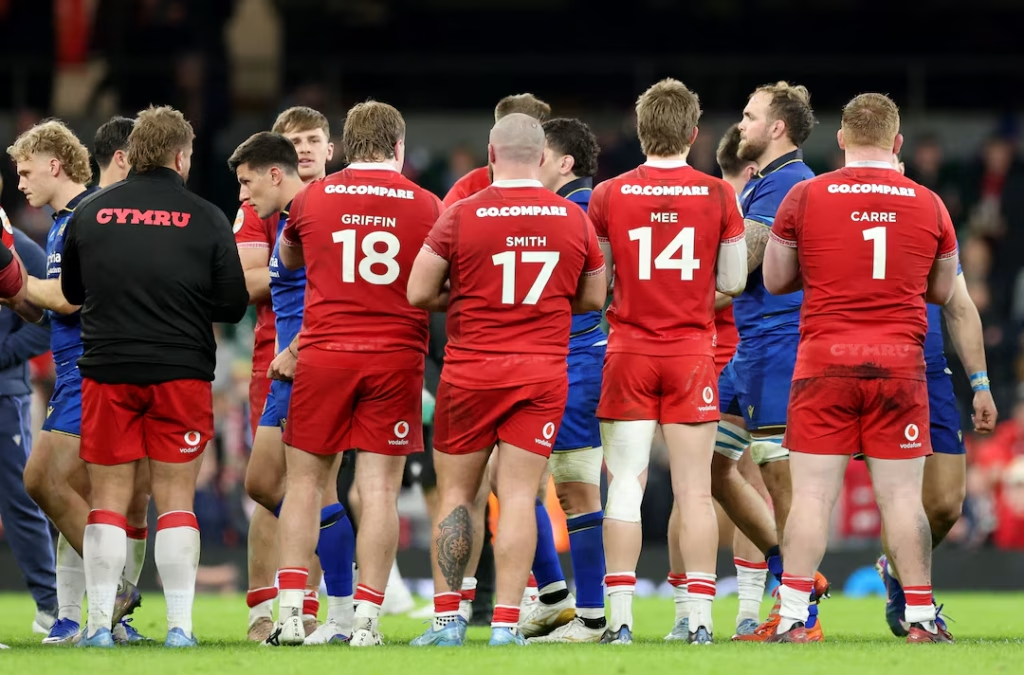
WALES ended their painful Six Nations losing streak with a much-needed 31–17 victory over Italy at the Principality Stadium on Saturday (Mar 14), producing their most complete performance of the tournament in front of a relieved Cardiff crowd.
After a difficult campaign, the hosts delivered a display built on strong forward play, improved discipline, and a far more confident attacking structure. A dominant first hour allowed Wales to surge into a commanding lead before a late Italian rally added respectability to the scoreline.
The opening exchanges were cagey, with both sides testing each other through the kicking game. Wales gradually gained the upper hand in territory thanks to accurate kicking from fly-half Dan Edwards and solid work from the back three under the high ball.
Italy initially defended well, slowing the breakdown and forcing Wales to recycle possession patiently. However, the pressure began to tell midway through the first half when Wales launched a sustained attack inside the Italian 22.
After several powerful carries from the Welsh forwards, Aaron Wainwright broke through a narrow defensive channel to score the opening try. Edwards added the conversion to give Wales a deserved early advantage.
The home side continued to dominate possession and territory. Wales’ line-out functioned efficiently, allowing them to launch a series of driving mauls that placed Italy under heavy pressure.
Their second try came from exactly that source. A line-out inside the Italian 22 set up a well-organised maul which rumbled towards the line before Wainwright forced his way over for his second try of the afternoon.
With Edwards again converting, Wales suddenly had a firm grip on the match.
The Welsh pack continued to dominate the set-piece, particularly through the line-out and driving maul, and Italy struggled to slow the momentum.
On the half-hour mark Wales struck again from another well-executed catch-and-drive. The maul surged towards the line before captain Dewi Lake peeled away to crash over for the third try.
Edwards maintained his perfect kicking record to give Wales a commanding 21–0 lead at halftime, reflecting a first-half performance full of energy and physicality.

Wales carried their momentum into the second half and soon delivered the decisive blow. A sweeping attacking move, sparked by quick ball from the breakdown, saw Edwards break through the Italian defence to score Wales’ fourth try and secure the bonus point.
The fly-half then capped his impressive performance with a superb drop goal shortly afterwards to stretch Wales’ lead to 31–0 and effectively end the contest.
Italy, however, refused to surrender. As Wales’ intensity dropped slightly in the final quarter, the visitors began to find more space in attack.
Tommaso Di Bartolomeo scored Italy’s first try following sustained pressure close to the Welsh line, giving the visitors a foothold in the game.
That score sparked a late Italian revival. Tommaso Allan crossed soon afterwards before Paolo Garbisi added another try in the closing stages.
Despite the late surge, Wales remained composed and saw out the remaining minutes to secure a long-awaited victory.
For the Welsh players, the final whistle brought clear relief after a difficult period that has tested the confidence of the squad and supporters alike.
While the result will not dramatically alter Wales’ standing in this year’s championship, the performance offered encouraging signs. The forward pack delivered one of its most physical displays of the tournament, the line-out functioned effectively, and the attack showed glimpses of creativity that have been missing in recent matches.
Most importantly, Wales rediscovered the winning feeling.
After a long run of defeats in the Six Nations, the victory over Italy provides a welcome boost and offers hope that this young Welsh side is beginning to rebuild.
For the supporters inside the Principality Stadium, it was a reminder of what Welsh rugby can still deliver when confidence and momentum finally return.
Match summary
Wales 31 – 17 Italy
Six Nations Championship
Principality Stadium, Cardiff
Saturday (Mar 14)
Wales scorers:
Tries: Aaron Wainwright (2), Dewi Lake, Dan Edwards
Conversions: Dan Edwards (4)
Drop goal: Dan Edwards
Italy scorers:
Tries: Tommaso Di Bartolomeo, Tommaso Allan, Paolo Garbisi
Conversions: Paolo Garbisi (1)
Half-time: Wales 21 – 0 Italy
Key moments:
15 min – Aaron Wainwright powers over for Wales’ opening try.
26 min – Wainwright scores again after a dominant Welsh maul.
32 min – Captain Dewi Lake crashes over from a line-out drive.
41 min – Dan Edwards breaks through the Italian defence to secure Wales’ bonus-point try.
48 min – Edwards adds a long-range drop goal as Wales move 31 points clear.
62 min – Tommaso Di Bartolomeo scores Italy’s first try.
69 min – Tommaso Allan crosses as Italy begin a late comeback.
78 min – Paolo Garbisi adds a third Italian try before the final whistle.
Player of the match:
Aaron Wainwright – outstanding throughout, scoring twice and leading Wales’ forward effort.
Attendance:
Approx. 70,000 at the Principality Stadium, Cardiff.



Education10 hours ago
New facilities open at Portfield School as redevelopment reaches key milestone
THE FIRST phase of a major redevelopment programme at Portfield School in Haverfordwest has been completed, marking a significant step...


News10 hours ago
£377m spent saving blast furnaces months after Port Talbot closure
Government intervention keeps UK’s last primary steelmaking furnaces running THE UK GOVERNMENT spent £377 million to prevent the closure of...


Sport1 day ago
France crowned Six Nations champions after extraordinary final-day drama
Ramos penalty in Paris seals title as Ireland fall just short and Wales end losing run FRANCE were crowned 2026...

News1 day ago
Fishguard linked to allegations in Many Tears Animal Rescue investigation
Claims about puppies arriving through Pembrokeshire port emerge as licensing probe continues FISHGUARD has been named in allegations linked to...


Local Government2 days ago
Investigation confirmed after inspectors visit Many Tears Animal Rescue
Licensing authority declines to comment as police confirm attendance at Carmarthenshire rescue centre AN INVESTIGATION is underway following a visit...


Business3 days ago
Work set to begin on £50m hydrogen plant in Milford Haven
A MAJOR new hydrogen production facility worth around £50 million is expected to begin construction in Milford Haven later this...


Education4 days ago
Manorbier school closure approved while insurance claim still unresolved
Council confirms negotiations with insurer ongoing following 2022 fire PEMBROKESHIRE COUNTY COUNCIL has confirmed that negotiations with its insurer over...


Crime5 days ago
‘Knife attack’ at Spittal property leaves man in hospital
POLICE have arrested a woman following what is being described as a ‘knife attack’ at a property in Spittal on...


Community5 days ago
Pembrokeshire to receive its first banking hub in Pembroke Dock
LINK, the UK’s Cash Access and ATM network, has today announced local people and businesses in Pembroke Dock will benefit from a new banking...


Health7 days ago
Future of Withybush Hospital petition sparks urgent call for Senedd debate
CALLS have been made for an urgent debate in the Senedd over the future of services at Withybush Hospital as...
-

 Health3 days ago
Welsh Ambulance Service to host bi-monthly Board meeting
-

 News2 days ago
Rayner and Lammy visit Wales to discuss justice and community safety
-

 Local Government5 days ago
Register now to vote in May’s Senedd election
-
News1 day ago
Fishguard linked to allegations in Many Tears Animal Rescue investigation
-

 Crime6 days ago
E-bike rider who sped through pedestrian alley sentenced by court
-

 Entertainment7 days ago
How the Cheltenham Festival Captivates Racing Fans Every Year
-

 Crime6 days ago
Driver caught with three illegal drugs in system on way to MOT test
-
 Community5 days ago
Modern-day maritime hero backs exhibition marking 200 years since launch of HMS Erebus