


Politics
Vulnerable people ‘overlooked’ in building safety reforms


HOUSING experts have warned proposed fire safety reforms could leave vulnerable residents at risk by focusing on the building’s height rather than the people who live inside.
Witnesses broadly backed the building safety bill which was brought forward to ensure the 2017 Grenfell Tower tragedy, in which 72 people died, can never happen again.
But the Chartered Institute of Housing (CIH) Cymru warned groups like older or disabled people and single-parent households face a greater risk regardless of how tall a building is.
The bill, which aims to create clear lines of legal responsibility for managing safety risks, would create three categories of building with different restrictions for each:
- Category one: highest risk, at least 18 metres or seven storeys
- Category two: medium risk, 11m to 18m or five or six storeys
- Category three: lower risk, less than 11m and fewer than five storeys
Cerys Clark, policy manager at CIH Cymru, told the Senedd’s housing committee that risk should be more nuanced rather than arbitrarily based on the height of a building.

CIH Cymru called for “lower risk” buildings to be classified as category two if they house more vulnerable people, raising the example of sheltered accommodation.
Gary Strong, of the Royal Institution of Chartered Surveyors (Rics), said: “We’ve always been quite critical of trying to determine the risk of a building by simply describing its height.”
The Rics global building standards director supported taking a distinct path to England by including buildings under 18 metres, with Wales having fewer high-rise towers.
Mr Strong, who chairs the UN’s international fire safety standards coalition, added: “But you do need to look at the risk more carefully. If you just have a simple cut off… that sometimes can miss out quite high-risk buildings which may not fall neatly into those categories.”

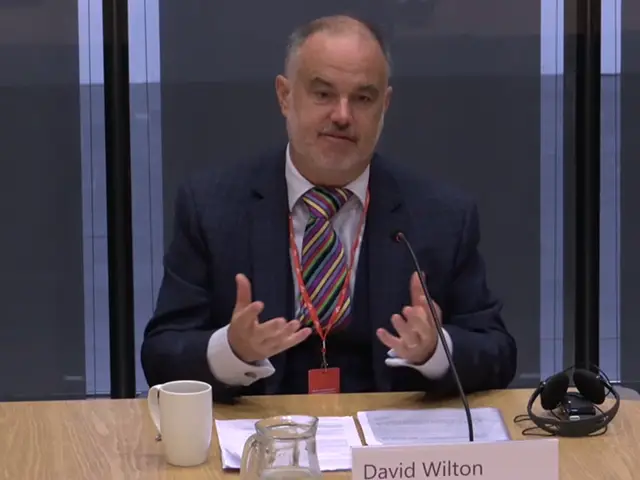
David Wilton, chief executive of TPAS Cymru, which represents tenants, was disappointed the bill did not include more around evacuation plans.
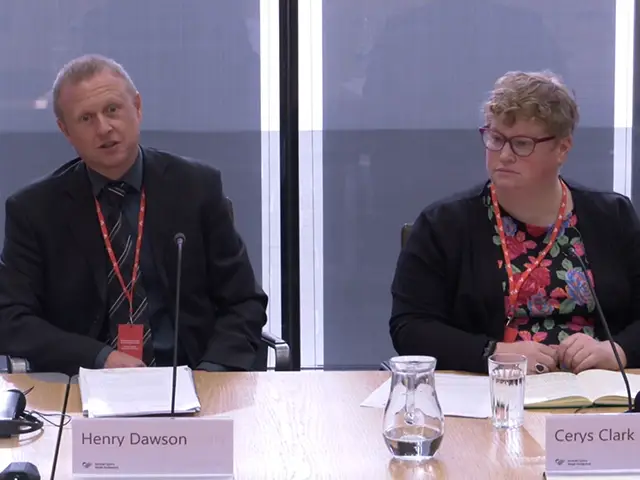
Henry Dawson, of the Chartered Institute of Environmental Health, warned the bill will likely lead to an increase in housing costs, with rents rising as landlords seek to meet their duties.
Siân Gwenllian, Plaid Cymru’s shadow housing secretary, suggested the bill could be amended to prevent landlords from passing such costs on to renters or leaseholders.

The witnesses questioned the estimated £165m costs of implementing the bill, sounding a warning that the true cost may be higher and urging the Welsh Government to revisit it.
Ms Clark raised a risk that new building safety requirements could delay housebuilding, cautioning that the planning system is already creaking due to a lack of capacity.
In written evidence, CIH Cymru warned of a critical shortage of skilled professionals and overstretched councils putting the building safety reforms at risk.
Dr Dawson also raised concerns about the inclusion of houses of multiple occupation (HMOs) within the bill potentially overlapping with the Housing Act 2004.
“As a regulator, it’s often helpful to have multiple tools you can draw upon to address health risks in these properties,” he said. “But this may be confusing for landlords and tenants.”
Mr Wilton disagreed with Wales’ 22 councils becoming “building safety authorities” under the bill, suggesting it would be better for local authorities to “club together” regionally.
Ms Clark cautioned that councils could “mark their own homework” by being responsible for regulating their own buildings but she otherwise backed keeping 22 authorities.
Dr Dawson suggested a centralised Rent Smart Wales-style model, with three joint regulatory teams below matching the areas of Wales’ fire and rescue authorities.
Giving evidence on September 24, Mr Wilton agreed with Lee Waters’ suggestion that the bill fails to strike the right balance by not addressing remediation of historical defects.
Mr Wilton also warned the bill could allow “faceless” firms to swerve accountability as he called for a named person to be legally responsible for safety, not a limited company.
He said tenants want a name above the door, much like premises licensed to sell alcohol.
Conservative Joel James pointed to plans for a building safety regulator in England, as the Grenfell review recommended, but for councils and fire services to take on the role in Wales.
“It isn’t how I would have done it,” Mr Wilton replied.
“It feels like we’re lumping more things on local authorities…. I think we’re going to see different interpretations and that’s slightly worrying to me.”



A CALL to back feasibility funding which may ultimately see new leisure centres in both Milford Haven and Pembroke, as well as a multi-million grant to keep Tenby’s pool running for at least a decade, has been backed by senior councillors.
At the March 16 meeting of Pembrokeshire County Council’s Cabinet, members were asked to approve a leisure investment programme including feasibility funding for new leisure centres in Pembroke and Milford Haven, along with works at Tenby leisure centre, with the aim of extending the lifespan of the trust-run swimming pool by at least 10 years.
A report for members said of Pembroke and Tenby leisure centres that “the advancing age of the buildings, combined with the end-of-life cycle of a number of key components, has now resulted in the need for a significant replacement programme across both sites”.
To replace Tenby pool on its current footprint would be approximately £27.47m, with efforts to identify a viable alternative site within the town’s catchment area unsuccessful.
For Pembroke Leisure Centre, it says costs to extend the lifespan of the 1974-built pool by 10 years would be £8,288,418.

For Milford Haven Leisure Centre, the report said a condition survey “highlights significant areas that require attention, including, for example, building structure (metal cladding, roof) and mechanical and electrical works,” with an estimated cost over a 30-year period to address all findings at some £12,677,279, £5.6m of that over the next four years.
For Tenby, the aim is to extend its lifespan by at least a decade, with a grant to the charitable trust running the pool.
Members backed a long string of recommendations, subject to future decisions of Cabinet in accordance with the governance arrangements in the Capital Strategy to approve individual projects and put them into the capital programme.
For Pembroke this includes a detailed feasibility study for a new-build Leisure Centre in Pembroke, on the current school site, providing a feasibility budget of £195,000 from reserves.

For Milford Haven, members backed £1.2m (at risk) in the capital programme to develop a high-level leisure brief into the tender of the new English Medium primary and secondary school project in Milford Haven, and the preconstruction services to develop the project designs (to RIBA 4, Detailed Design) for a new leisure centre at the same time as the school.
For Tenby, members backed a grant of £4,606,667 to the Tenby and District Swimming Pool Association, as owner of the asset, for works to extend the lifespan of the current swimming pool by at least 10 years.
Members also backed other recommendations including £50,000 from reserves to procure external funding consultants to identify and secure as much funding as possible towards the delivery of the investment programme, and to establish a leisure operations review board to undertake a formal review of the leisure services operating model.



Welfare groups celebrate historic decision as pressure mounts for UK-wide ban
ANIMAL welfare charities have welcomed the Senedd’s decision to ban greyhound racing in Wales, describing the move as a “landmark moment” that will prevent the “needless suffering” of thousands of dogs.
The vote, passed on Tuesday (Mar 17), will see greyhound racing outlawed in Wales following a transition period, making it the first UK nation to take such action.
A coalition of leading charities, including Dogs Trust, Blue Cross, RSPCA Cymru, Hope Rescue, and Greyhound Rescue Wales, said the decision marked a major victory for animal welfare.
The group, known as the Cut the Chase coalition, has campaigned for years to end greyhound racing, citing concerns over injuries, deaths, and poor living conditions for dogs involved in the sport.
Owen Sharp, Chief Executive of Dogs Trust, said: “Today’s vote in Wales is a landmark moment for dog welfare and a huge step towards ending the needless suffering of greyhounds.”
“For too long, dogs have paid the price for this outdated form of entertainment, with injuries and deaths that are entirely preventable.”
Figures cited by campaigners suggest that since 2017, more than 4,000 greyhounds across the UK have died or been put to sleep due to racing, while over 35,000 injuries have been recorded.
Charities argue that racing greyhounds around oval tracks places significant strain on their bodies, often leading to serious or fatal injuries. Concerns have also been raised about conditions away from the track, including kennelling, transport, and long-term welfare.
Chris Burghes, Chief Executive of Blue Cross, said the legislation would finally bring an end to what he described as a “cruel so-called sport”.

He added: “The death of just one racing dog is one too many. We are ready to support the rehoming of retired greyhounds and ensure they receive the care they need.”
Hope Rescue, which led a public petition attracting more than 35,000 signatures, said the decision reflected strong public support for a ban.
Its Chief Executive, Vanessa Waddon, said: “We are proud that our campaign has helped secure this historic win. Wales has put animal welfare first.”
Greyhound Rescue Wales described the decision as “transformative”, with Chief Executive Claire James saying it would end a practice that had persisted despite years of campaigning for reform.
The RSPCA also welcomed the vote, with Chief Executive Jo Rowland stating that the level of injury and death linked to racing was “simply unacceptable”.
Attention will now turn to Scotland, where a similar vote is expected on Wednesday (Mar 18). Campaigners are also urging the UK Government to introduce a ban in England and Northern Ireland.
Charities say Wales’ decision could set a precedent for the rest of the UK, as pressure grows to phase out greyhound racing nationwide.

GREYHOUND racing will be banned in Wales after Senedd Members voted in favour of new legislation aimed at protecting the welfare of racing dogs.
The Bill introduces a phased transition period to allow the industry to wind down responsibly, strengthen rehoming arrangements for retired greyhounds, and give enforcement bodies and local authorities time to prepare for the change. The ban is expected to come into force between April 1, 2027 and April 1, 2030.
The legislation reflects a clear policy decision that the risks associated with greyhound racing – including injuries, fatalities and poor outcomes for dogs after their racing careers end – can no longer be justified. Despite efforts by parts of the industry to improve standards, harm to greyhounds has remained a persistent concern.
Huw Irranca-Davies, Deputy First Minister with responsibility for Climate Change and Rural Affairs, said: “Wales is a progressive nation, committed to ethical standards and forward-thinking legislation. This Bill strengthens our reputation as a leader on animal welfare and delivers the standards that the people of Wales rightly expect.”
The move follows significant public engagement, with thousands of people, campaigners and organisations contributing through petitions, consultations and personal testimony. Their input has played a central role in shaping the legislation.
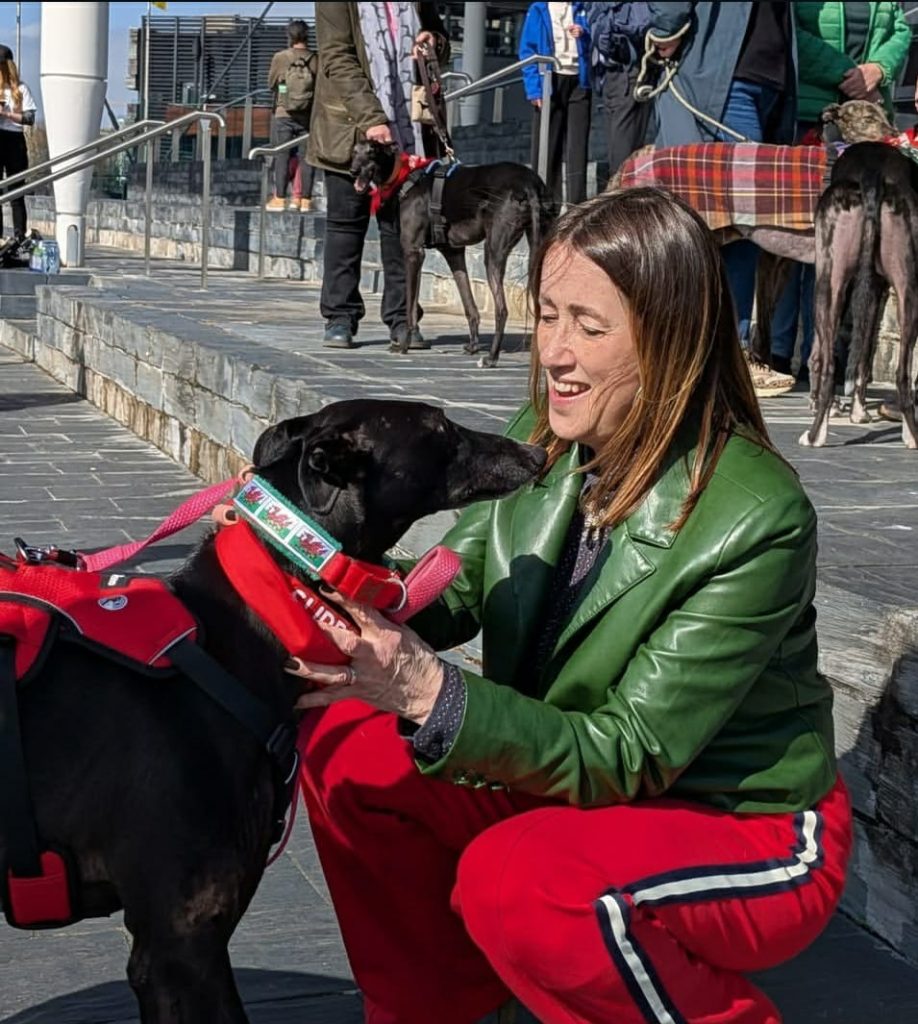
Commenting on the news that the greyhound racing ban has been passed by the Senedd, Welsh Liberal Democrat Leader Jane Dodds MS, who has spearheaded the campaign, said “This is a massive victory for animal welfare, and I’m proud that the Welsh Liberal Democrats have helped deliver it.
“Today, Wales has made a clear statement about the kind of nation we want to be: compassionate, forward-looking, and willing to act when the evidence demands it.”



News6 hours ago
Scott Thorley elected as Pembrokeshire’s first Reform councillor
REFORM UK candidate Scott Thorley has won the Hakin by-election after securing 179 votes. The full result is as follows:...


News13 hours ago
Police confirm man has died after being recovered from River Cleddau
Major emergency response in town centre after concerns raised for man in water A MAN has died after being recovered...


Community13 hours ago
Davies and Kurtz urge groups to seek employability funding
Community organisations in Pembrokeshire encouraged to apply for new grants supporting skills and job access LOCAL Senedd Members Samuel Kurtz...


News15 hours ago
Emergency services flood Haverfordwest after reports of person in river
Town centre sealed off as multi-agency response continues A MAJOR emergency response is underway in the centre of Haverfordwest after...


News16 hours ago
Detectives receive surge of new information in bid to identify man found at Powys reservoir
Public response follows release of facial image as officers pursue fresh lines of enquiry DETECTIVES investigating the identity of a...


News1 day ago
Senedd committee urges next Welsh Government to prioritise Wales–Ireland links
A SENEDD committee has called on the next Welsh Government to continue prioritising Wales’s relationship with Ireland, describing it as...


Education2 days ago
New facilities open at Portfield School as redevelopment reaches key milestone
THE FIRST phase of a major redevelopment programme at Portfield School in Haverfordwest has been completed, marking a significant step...


News2 days ago
£377m spent saving blast furnaces months after Port Talbot closure
Government intervention keeps UK’s last primary steelmaking furnaces running THE UK GOVERNMENT spent £377 million to prevent the closure of...


Sport3 days ago
France crowned Six Nations champions after extraordinary final-day drama
Ramos penalty in Paris seals title as Ireland fall just short and Wales end losing run FRANCE were crowned 2026...


News3 days ago
Fishguard linked to allegations in Many Tears Animal Rescue investigation
Claims about puppies arriving through Pembrokeshire port emerge as licensing probe continues FISHGUARD has been named in allegations linked to...
-

 Health5 days ago
Welsh Ambulance Service to host bi-monthly Board meeting
-

 News4 days ago
Rayner and Lammy visit Wales to discuss justice and community safety
-

 Local Government7 days ago
Register now to vote in May’s Senedd election
-
News3 days ago
Fishguard linked to allegations in Many Tears Animal Rescue investigation
-
News15 hours ago
Emergency services flood Haverfordwest after reports of person in river
-

 Community7 days ago
Modern-day maritime hero backs exhibition marking 200 years since launch of HMS Erebus
-

 Crime7 days ago
‘Knife attack’ at Spittal property leaves man in hospital
-

 Education6 days ago
Manorbier school closure approved while insurance claim still unresolved