

Farming
Farming crisis deepens as four bluetongue cases confirmed

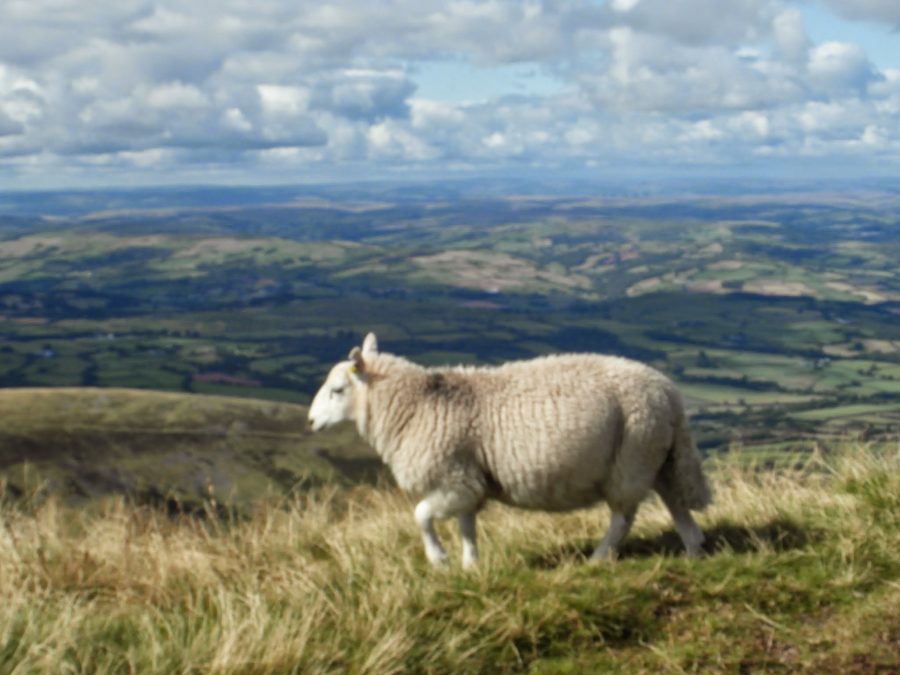
THE WELSH Government has defended its “control and contain” strategy for bluetongue, with four confirmed cases highlighting the financial turmoil already hitting livestock markets.
Huw Irranca-Davies said four premises where bluetongue has been confirmed have been placed under restrictions as investigations on the source and spread of the disease continue.
The Deputy First Minister and rural affairs secretary told the Senedd appropriate local control zones will be declared, if required, and compensation will be paid for culled animals.
The first two cases of the year were confirmed in Powys and Monmouthshire on Monday but the minister confirmed in the Senedd today (October 1) the number has now risen to four.
Samuel Kurtz, the Tory shadow rural affairs secretary, pressed his opposite number about efforts to contain the disease as well as support farmers and livestock markets.


Mr Kurtz, who is from a farming family, warned: “This is a serious concern for our farming industry,” as he called for support to help farmers with the costs of vaccination.
He questioned whether confirmation of the cases would change the Welsh Government’s approach to restrictions and how such measures will evolve in the weeks ahead.
The Conservative told the Senedd: “The impacts of the current restrictions have already been felt financially. The effect on livestock markets has been stark, with many reporting huge drops in turnover, almost overnight.”
Mr Kurtz said cattle movements across the border have dropped from thousands to only a few hundred, threatening the viability of markets which are central to the rural economy.
Mr Irranca-Davies replied: “If you are one of the farmers in proximity of one of these incidents, you should be having a discussion with your vet immediately about vaccination.”
He pointed to the “really significant” potential costs of not vaccinating, describing the Welsh Government’s approach as being to “control and contain” the confirmed cases.

Bluetongue – which affects sheep, cattle, deer, goats and camelids such as llamas and alpacas – does not affect people nor food safety.

The Deputy First Minister said the government’s response has sought to “buy time” for farmers and for the vaccination supply chain to build up.
He told Senedd Members: “It’s not possible to protect livestock, livelihoods and the mental wellbeing of farmers by keeping this disease out without having some restrictions on animal movements but we’ll keep this, as we’ve always said, under review.
“But we recognise it has been disruptive: it could be a darn sight more disruptive economically – and in terms of health and welfare of farmers – if we’d let this rip across Wales in the way we are now seeing, regrettably, across parts of England.”
Llŷr Gruffydd, Plaid Cymru’s shadow rural affairs secretary, questioned the sufficiency of the Welsh Government’s response, suggesting ministers should have been more proactive.

Asked about the BTV-8 strain being found in Cornwall – the first confirmed UK case since 2008 – Mr Irranca-Davies said chief veterinary officers are in discussions about how to respond should the strain spread across parts of England.
He told the chamber: “This is the news that we were dreading but we were also in some ways anticipating. Our control and containment measures were ready for this and in place.”
On local control zones, he said: “We wait to see if that is necessary and if we do need to take those measures, we will. It is in our mind but a decision has not been arrived at yet.”
Mr Irranca-Davies stated ministers will reconsider animal movement restrictions in the mid-winter based on new and emerging evidence.
He said: “There are some people… who are saying ‘well, this is mild, let this disease rip’. The experience in other parts of Europe but also the speed it’s now moving around England suggests this may not be the case and we really have to get ahead of this with vaccinations.”
The former MP stressed: “The way we keep this disease locked out – even with these four incidents – is to double down on the need that everybody needs to play by the same rules to protect every farmer in Wales.”


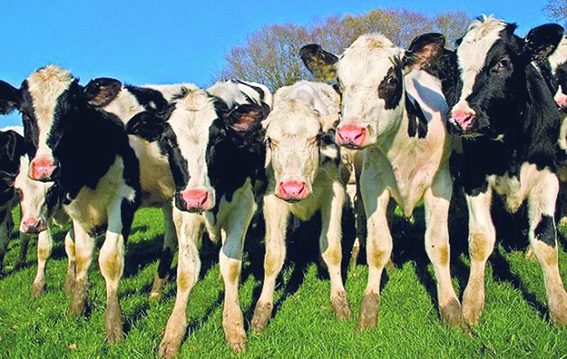
A RETROSPECTIVE call for amendments to a previously granted building and slurry lagoon at a 700-herd Pembrokeshire dairy farm has been given the go-ahead by county planners.
In an application to Pembrokeshire County Council, Bill Ridge of Vaynor Farm Ltd, Bethesda sought retrospective permission for a replacement agricultural building for cattle housing, the retention of a slurry lagoon as built and associated works at Talybont Farm, Llawhaden.
A supporting statement through agent Cynllunio RW Planning Ltd said: “Bill Ridge farms at Vaynor Farm, trading as Vaynor Farm Ltd. The farm is a 645-acre farm compromising of owned and rented land, this supports a dairy herd of circa 700 cows. The dairy system is an extensive grass-based spring calving system.
“The application is made following receipt of a letter from the local authority planning enforcement department stating that the replacement agricultural building which had recently been erected required planning permission and that the lagoon also recently built seemed not to be in line with the approved plans of [the 2022 application] recently approved on site for the lagoon.
“Therefore, this application seeks retrospective planning permission for the retention of the building as built and the lagoon as built.”
It said the 22.72 by 13.33-metre agricultural building “will house the farm’s dairy replacement heifers as a replacement to the previous building on site,” and the lagoon is of a similar size, depth and capacity to the previously approved one, other than slight changes in positioning and orientation, providing 4,500square metres of slurry storage, which in combination with the existing store of 6,900cubic meters at Vaynor will provide over 170 days’ storage.
It went on to say: “All development is reasonably required for the purpose of agriculture. The applicant does not intend to increase the farm’s stocking rate as a result of this development.”
An officer report recommending approval said the application had been amended since being submitted to improve the proposed green infrastructure, adding: “Information has been provided during the course of the application that proposal is not intended to result in, or support, an increase in the herd numbers of the agricultural enterprise.”
It concluded: “Based upon the information provided within the application, it is considered that the development would be reasonably necessary for the purpose of agriculture.”
The application was conditionally approved.

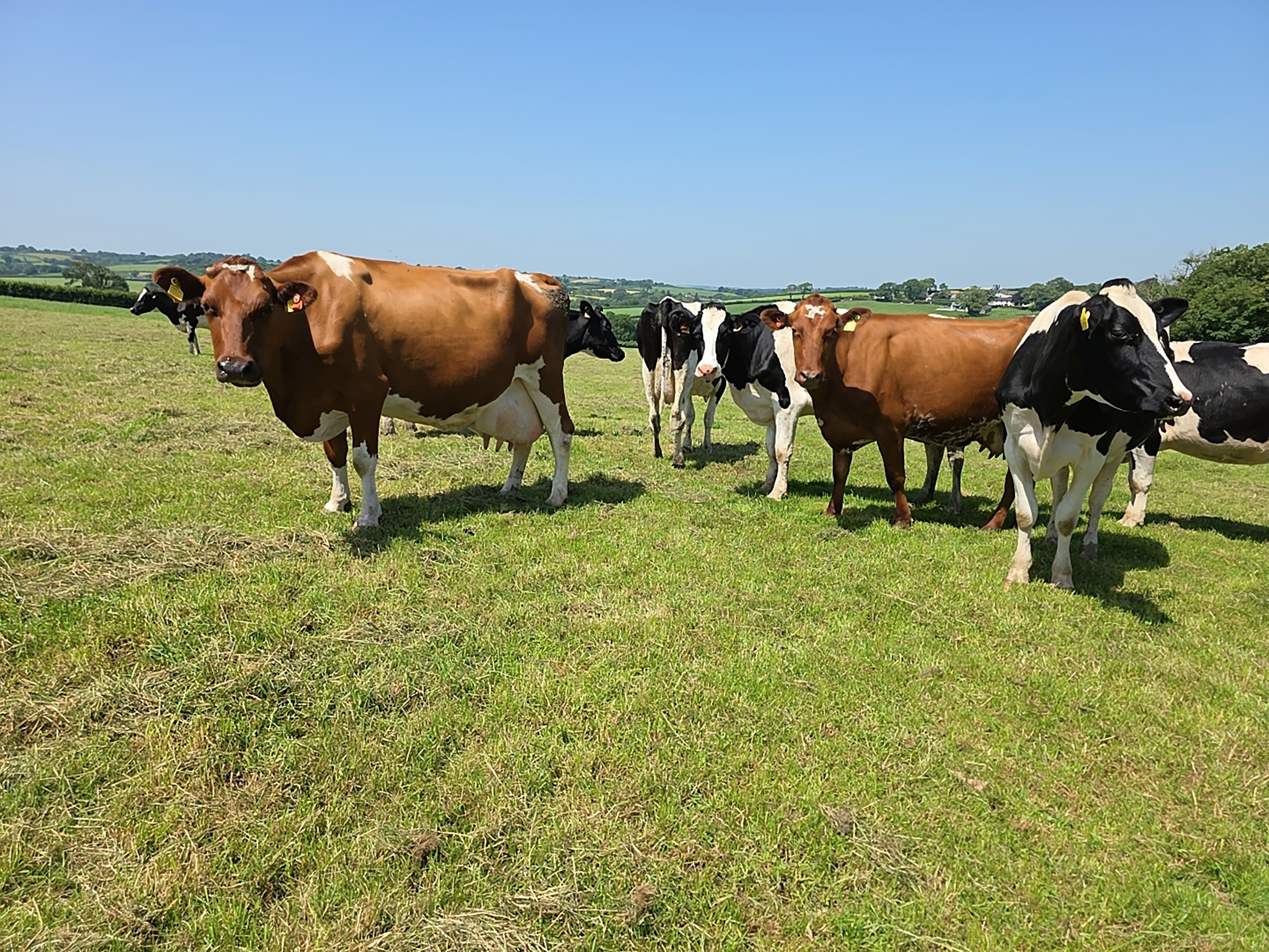
Farmers urged to review dry cow nutrition as grazing shortages and heat stress increase pre-calving risks
DAIRY farmers preparing autumn-calving cows are being urged to pay close attention to pre-calving nutrition as prolonged hot and dry weather reduces grazing availability and increases the risk of heat stress.
Dr Alison Bond, Technical Services Manager at Rumenco, said the six to eight weeks before calving were particularly important, with farmers needing to maintain suitable body condition and address any nutritional deficiencies.
She said: “Milking cows will naturally be front of mind when farmers are assessing grazing and rationing, but it is important not to forget the dry cows.
“Farmers should assess body condition during late lactation and adjust drying-off dates where necessary. Cows in poorer condition may need to be dried off earlier, with the aim of calving at around body condition score three and in optimum health.”
Where grass is limited, Dr Bond said farmers may need to consider housing dry cows and feeding a ration based on good-quality silage with appropriate supplements.
Careful nutrition during the dry period can help cows make a smooth transition from pregnancy into lactation and reduce the likelihood of problems including difficult calvings, milk fever, mastitis and retained placentas.
It can also affect fertility after calving and the quality of colostrum provided to newborn calves.
Dr Bond said: “Good-quality colostrum is essential during the calf’s most vulnerable period. It helps to prime the immune system and provides protection against challenges such as scour and respiratory disease.
“With the added pressure of heat stress and possible disruption to forage supplies, closer attention to the needs of dry cows will be particularly important this year.”
Farmers who have moved cattle indoors are advised to provide good-quality forage and, where possible, have it analysed for its mineral and trace element content so that any deficiencies can be identified.
Dr Bond said shortages of forage, or changes in its quality, could leave cows more vulnerable to deficiencies in minerals and trace elements during the weeks before calving.
Rumenco recommends using a specialist pre-calving supplement where necessary. The company produces LIFELINE Pre-Calver, available as a mineral bucket or crumb, which is designed to supply vitamins, minerals and trace elements to cows before calving.

The company says the product contains a low-calcium and high-magnesium balance intended to reduce the risk of milk fever and difficult calvings.
Rumenco also says trials have shown improvements in colostrum quality of up to 20 per cent, although farmers should seek independent nutritional or veterinary advice when deciding what supplementation is appropriate for their herd.
Dr Bond added: “Ensuring cows receive the nutrition they need is recommended best practice, particularly when they are facing additional stresses such as extreme heat and reduced grazing.
“Taking action before calving can support the health of the cow, improve calf vigour and help protect future fertility and milk production.”
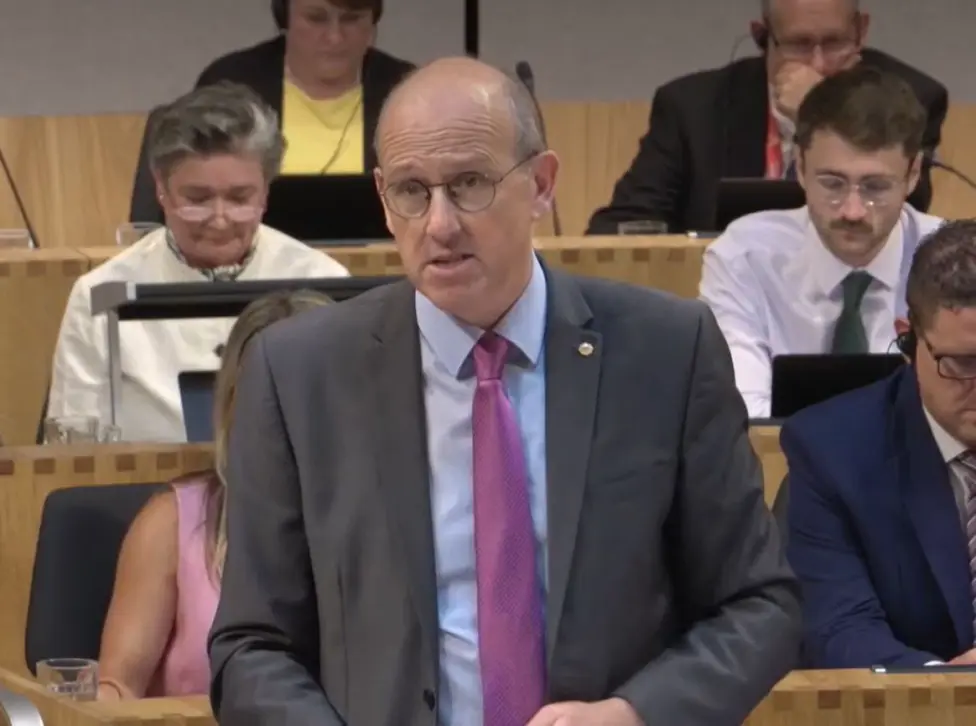
THE WELSH Government has no plans to force a reduction in livestock numbers to meet climate targets, the rural resilience minister has insisted.
Llyr Gruffydd said agriculture remains “central” to Wales’ rural economy following a clash in the Senedd over net-zero policies.
The minister was challenged by Reform’s Laura Anne Jones, who accused the administration of pursuing “left-wing ideological climate targets” at the expense of farmers.
Ms Jones, the shadow rural affairs minister, questioned whether the government would adopt independent recommendations to cut meat and dairy consumption.
The UK Climate Change Committee previously advised that meat consumption should drop by 25% by 2033, alongside a 27% reduction in cattle and sheep numbers by 2040 to hit net-zero goals by 2050.
Ms Jones said the UK Government had accepted the framework and called for clarity on whether Wales would follow suit.

Rejecting the claims, Mr Gruffydd said: “This government is clear that Wales needs a strong, sustainable and productive livestock sector.
“We want to see Welsh farmers producing high-quality food in a way that’s both economically and, yes, environmentally sustainable.”
The minister pointed to the upcoming Sustainable Farming Scheme as the primary vehicle to help farmers improve long-term resilience while maintaining food production standards.
He added that his long-term vision relied on boosting local production, processing, and procurement.
The row escalated when Ms Jones expressed surprise that the minister would not commit to the UK committee’s figures, citing an “obsession” with climate targets.
Responding to what he described as a “quip” about left-wing ideology, Mr Gruffydd said: “Your colleague two questions ago was asking me about heat in schools and the consequences of climate change and the need for air conditioning and improved infrastructure.

“Maybe you should talk to each other about where you stand on this, because I’m hearing very different messages coming from these sides, these benches over here.”

Labour MS, Vikki Howells reminded the Siambr of the work done by the previous Labour administration to protect nature in Wales.
Noting that the Welsh Labour government was the first in the world to formally recognise and declare a nature emergency in 2021, Ms Howells stressed the importance of policies and initiatives to help improve habitats and reverse biodiversity loss.
The Pontypridd Cynon Merthyr MS – who is also the Labour spokesperson for the environment and farming – discussed one of the last initiatives established by her party, Nature Estate Cymru.
She also referenced the Naturfa sites – places for nature recognised under a Welsh Government programme – four of which were announced at the end of the last Senedd term.
Ms Howells asked Mr Gruffydd for his assessment of the two schemes, and if he will commit to continuing them.
Admitting he is not yet “fully versed” on the two initiatives, Mr Gruffydd said he will write to Ms Howells with his reflections.
He added: “We do have an aspiration within our climate and nature action plan, which we’re working at and working on, that will hopefully meet and support some of the aspirations that those groups and herself, I’m sure, will share.”

Andrew RT Davies meanwhile told the Siambr that the Economy, Trade and Rural Affairs Committee has produced a report on governance at Hybu Cig Cymru.
The former Welsh Conservative leader noted one of it’s recommendations was that it should be “returned to the producers and actually be run by the producers and the levy payers”.
Mr Davies, who declared an interest as a levy payer himself, called for HCC to be returned to the levy payers.
He said this would promote “quality Welsh beef, lamb and pork on the world stage rather than paying solicitors and human resources advisers to deal with ludicrous accusations levelled against many individuals within that organisation”.
Mr Gruffydd confirmed he has met with the chief executive and the chair of Hybu Cig Cymru, saying they “know what [his] view is”.
He said: “I want a fully functioning, firing-on-all-cylinders Hybu Cig Cymru. I feel that under the new chief exec and the Vision 2030 strategy that’s been published recently, that they are now on a positive trajectory.
“I will be a critical friend of theirs, but I will support the work that they do, because I honestly think that they are the organisation to move us forward in this space.
“Levy payers’ voices are critical, of course they are, but we need to strike the right balance in terms of making sure that we have an organisation that is functioning, delivering.
“If we rip it up and start again, I fear we’ll do nothing but look at internal structures for time to come. I think we’re beyond the point now where we’re looking back. For me, it’s about looking forward and building Hybu Cig Cymru into what it could and should be.”
But Mr Davies accused the minister of failing to answer his question and pressed for clarification on whether he will allow levy payers to take ownership of HCC.
Mr Gruffydd responded: “Let’s not forget that the Welsh Government brings a lot to the table here as well. So, the Welsh Government has to be represented in the organisation. And I believe that they are on the right trajectory now.
“So, I don’t believe in changing the current structure. I will, of course, keep a watching brief on things as they develop.
“And I’ve spoken with NSA Cymru and others on a myriad of issues around this. But I’ve also spoken to the people running HCC, leading HCC, and they are giving me confidence that they are on the right track and I will support them.”


Local Government1 day ago
Catapult attacks suspected after wildlife deaths at Pembroke Mill Pond
Wildlife Crime Officers are investigating after the town council said around five animals showed signs of deliberate injury WILDLIFE found...


Crime1 day ago
Narberth retailer speaks of shoplifting toll after ‘collectable bear’ stolen
Independent shop owner said rising costs meant businesses could not afford to absorb losses caused by theft A NARBERTH retailer...


Crime1 day ago
Teen accused of attempting to murder teacher says she lied about stabbing
Defendant accepts teacher was terrified and that a knife wound to the head could kill, but denies deliberately attacking her...


Local Government3 days ago
Calls grow for independent investigation into Manorbier school closure
Councillor alleges misleading figures, inadequate insurance and poor treatment of staff CALLS for an independent investigation into the controversial closure...


Community3 days ago
Neyland Carnival hailed a huge success after streets fill with colour and crowds
NEYLAND CARNIVAL organisers have thanked the community, volunteers and local businesses who helped make this year’s event a memorable success....


Community3 days ago
Tenby Summer Spectacular: Anger grows over ‘disaster waiting to happen’ warning
A growing backlash has followed police calls for the event’s licence to be revoked, with supporters questioning why authorities failed...

Charity4 days ago
RSPB secures ‘missing link’ to reconnect wildlife habitats in Carmarthenshire
RSPB CYMRU has purchased a 96-hectare upland site in Carmarthenshire, describing it as a vital step towards reconnecting one of...


Crime5 days ago
Ann Widdecombe: Welsh politicians pay tribute as murder probe launched
Prime Minister Sir Keir Starmer has praised the former minister’s “conviction and dedication”, while political figures in Wales remembered her...


News5 days ago
Solardo pulls out of Haverfordwest show as organisers offer full refunds
Headline act confirms non-appearance as Park House Series announces major event changes DANCE music duo Solardo will no longer perform...


Local Government5 days ago
Conservatives win Pembroke Dock seat as Reform stalls and Dowson polls just 11
Jamie Street takes Market ward with a 43-vote majority as Reform finishes fourth despite its major Senedd breakthrough two months...
-

 Farming6 days ago
Working Carmarthenshire farm opens gates to visitors with new holiday cottages
-

 Sport6 days ago
Rising rally star claims maiden Mini Rally Challenge victory
-
 Farming6 days ago
Outer Hebrides stickmaker to make final Royal Welsh Show appearance
-

 Crime6 days ago
Greenacres confirms seized dogs are safe as investigation continues
-

 Sport6 days ago
Bluebirds give new home strip first run-out
-

 Health5 days ago
Hospital ward closed after highly contagious scabies outbreak
-

 Community6 days ago
Haverfordwest Castle refurbishment reaches new heights as roof goes on
-
Crime6 days ago
Teacher stabbing trial: The first week of evidence