


Business
Tata Steel calls for ‘level-playing field’ amid EU plans to slash imports

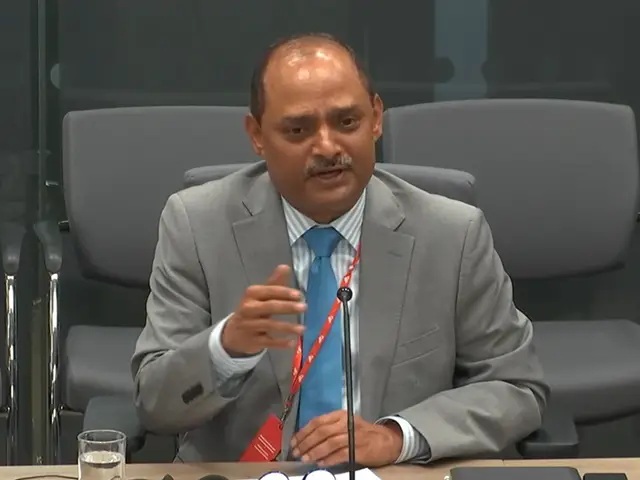
TAT STEEL’S UK boss has warned of a “difficult” future ahead amid EU plans to slash steel quotas, prompting an urgent call for the UK to create a “level-playing field”.
Rajesh Nair, chief executive of Tata Steel UK, urged UK ministers to safeguard the domestic market after the EU announced plans to cut tariff-free steel import quotas by 47%.
Mr Nair called on the UK Government to design new quota systems in a similar way to the EU to safeguard steel by banishing imports, “to ensure we have a level-playing field”.
He said: “Yes, you could look at it as an existential crisis or you could look at it as an opportunity to make a difference and I think the conversations that are happening today are ‘how can we convert this into something that would work for the UK?’.”
Mr Nair warned trade wars and protectionism in steel have become the norm, “so we’ve got to find our own ways of managing the domestic market”.

He told Senedd Members: “The UK quotas are significantly disproportionate… these quotas were set up, particularly in flat steel – in which south Wales is really a significant player – in 2017/18 when the demand… was nearly 30% higher than what it is today.
“The demand has declined, the quotas have remained where they are. The quotas in general… are 70%… to up to 140% of the demand in some product categories.”
Mr Nair contrasted this with EU quotas of between 15% and 30% of demand before the latest announcement which will see levels reduce further.
He said: “The key thing is the trade situation is becoming more and more difficult, and things are moving pretty fast, so one of the expectations is that we need to bring pace into it….

“But I’m reasonably confident… that the government will also look to do things very similar to what the EU has done… on one hand to protect the UK domestic market and, on the other hand, to work with the EU to ensure we have the right trading interests between the two.”
Appearing before the Senedd’s economy committee on October 9, Mr Nair called for clarity on how the EU announcement will work and apply to different categories of products.
The chief executive said the first intent would be to work with the EU to secure preferential treatment and concessions as one of the bloc’s biggest long-time trading partners.

‘Great confidence’
Giving evidence just over a year on from the end of traditional steelmaking in Port Talbot, Mr Nair was pleased by progress on transitioning to an electric-arc furnace (EAF).
He said: “I would like to believe we’ve dealt with it in the best possible manner, in the most responsible manner and, one year down the line, I’m happy to see the progress being made, especially on the project in terms of bringing the EAF online by the end of 2027.”
Mr Nair said he had “great confidence” of hitting the 2027 target to start green steelmaking in south Wales after securing planning approval and breaking ground in July.
He told the committee that orders have been placed for about £400m worth of equipment but construction on the ground, which is due to begin in the next few months, will be the key test.
Chris Jaques, chief HR officer, said Tata Steel UK employs just under 5,900 people, down from about 8,150, confirming 2,255 staff have left the business since the announcement.
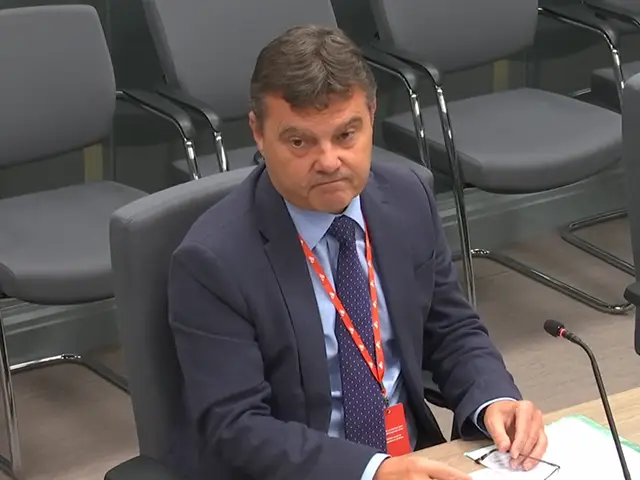
Mr Jaques told the committee compulsory job losses were minimised to about 120 and Tata Steel UK expects to employ about 5,300 people when the EAF is fully commissioned.
‘Very, very volatile’
Mr Nair was asked about the UK Government passing an emergency bill to protect steelmaking by keeping blast furnaces open in Scunthorpe – but not Port Talbot.
He said Tata Steel had a viable transition plan but Scunthorpe was a “different story”, confirming no talks took place on including Port Talbot in the rescue legislation.
As part of its inquiry on the future of steel, the committee also heard from trade unions which warned commitments on future investment have fallen by the wayside.
Alasdair McDiarmid, assistant general-secretary of the Community union, said: “We’re not where we wanted to be. All of the trade unions thought there was a possibility of a more gradual transition which would have protected jobs and primary steelmaking for longer.”
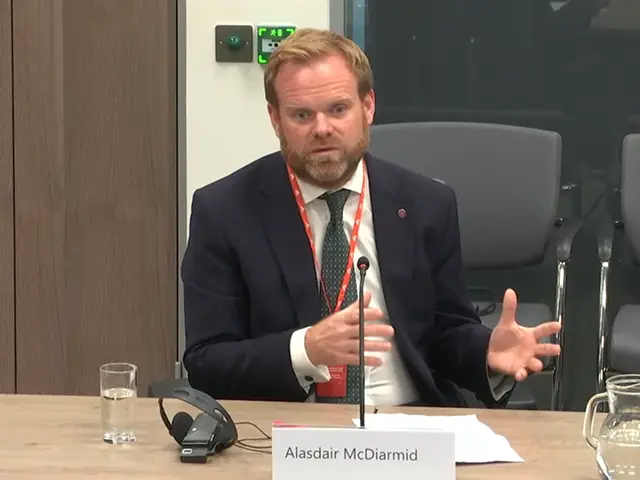
McDiarmid added: “But the reality is this is where we are: those blast furnaces are not coming back on – whatever some irresponsible politicians might want to suggest.”
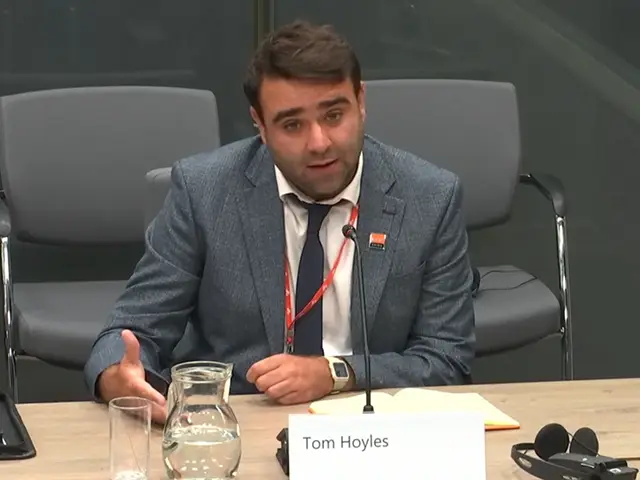
Tom Hoyles, a senior organiser from the GMB union, told Senedd Members: “There’s obviously a lot of anger at what’s happened but, in one respect, that is done. However, the bigger questions around Port Talbot and British steelmaking remain.
“We’ve seen the announcement in the past few days – it is a very, very volatile sector.”



A TRAVELLING jewellery and antiques roadshow is in Pembrokeshire today (Tuesday, Mar 17), offering free valuations and on-the-spot cash offers for a wide range of items.
The event is being held at the Best Western Lamphey Court Hotel & Spa and is open until 6:00pm this evening.
Organisers say they are looking to buy “all items of interest”, including gold, silver, rings, watches, coins, military memorabilia and diamond jewellery. Broken jewellery is also accepted, along with items in any condition.
The promotional material states there are no fees, no commissions and no obligation to sell, with free appraisals available to anyone who brings items along.
They are also advertising interest in vintage items such as old watches, scientific instruments, medal groups and even classic cars and motorbikes.
A follow-up event will take place tomorrow (Wednesday, Mar 18) at Hotel Mariners in Haverfordwest, running from 10:00am until 9:00pm, with late appointments available.
A third and final stop is scheduled for Thursday (Mar 19) at Wolfscastle Country Hotel, open from 10:00am until 6:00pm.
Organisers can be contacted on 07544 074 549, and also invite people to send photos via WhatsApp for a preliminary valuation.

Top prices paid: The jewellery and antiques roadshow is in Lamphey today before moving on to Haverfordwest and Wolfscastle (Pic: supplied).


WELSH businesses have secured £436 million in new export sales over the past five years with support from the Welsh Government, the Cabinet Secretary for Economy Rebecca Evans said at the Explore Export Wales conference in Llandudno on Tuesday (Mar 18).
Exports account for more than a third of Wales’ GDP and remain central to the Welsh Government’s ambition to grow the economy and create new jobs.
Since the launch of the Export Action Plan in 2020, nearly 1,500 Welsh businesses have been supported to export for the first time or expand into new international markets. During that time the Welsh Government has organised 89 trade missions, taking 844 business representatives to markets around the world.
International Trade Advisors have also held around 6,000 face-to-face meetings with businesses and delivered more than 430 export market research projects. Over 600 overseas business development visits have been supported, including trips to Kenya, Vietnam, Argentina and South Korea.
The Export Cluster programme now provides peer-to-peer support across six priority sectors and has attracted more than 350 members. Meanwhile the New Exporter Programme has supported 68 businesses taking their first steps into international markets, with a sixth intake now open.
One company benefiting from the programme is Reacta Healthcare, a life sciences business based in north Wales. The firm develops specialist allergy diagnostic products used in clinical trials around the world.
Exports now account for 100 per cent of Reacta’s business. Over the past year the company has expanded its workforce from fifty to eighty employees and secured new clients in Europe and the United States.
The business is now preparing to supply these contracts over the next three years, representing significant growth in both volume and revenue. Reacta is also expanding its Deeside site by 50 per cent with a new facility next to its existing premises.
Belinda Mortell, Head of Commercial at Reacta, said the company’s expansion reflected growing global demand.
She said: “We have recently secured our largest customer contract to date, marking a significant milestone for the business. The growth we’ve seen over the past year, from expanding our team to opening a new facility, is a direct result of increasing international demand.
“The support we’ve received from the Welsh Government has been invaluable and has helped us enter new markets with confidence as we strengthen our international presence.”
Last week the Welsh Government also launched its trade missions programme for 2026-27, aimed at helping businesses showcase their products and services overseas.
The programme will focus on sectors including clean energy, advanced manufacturing, life sciences, creative industries and technology. Trade missions are planned across Europe, North America, Asia and the Middle East as Wales seeks to boost exports, investment and economic growth.
Rebecca Evans said: “Exporting makes a real difference to businesses across Wales, driving economic growth and creating jobs.
“That is why we are investing £3.5 million each year to support Welsh businesses on their export journeys.”

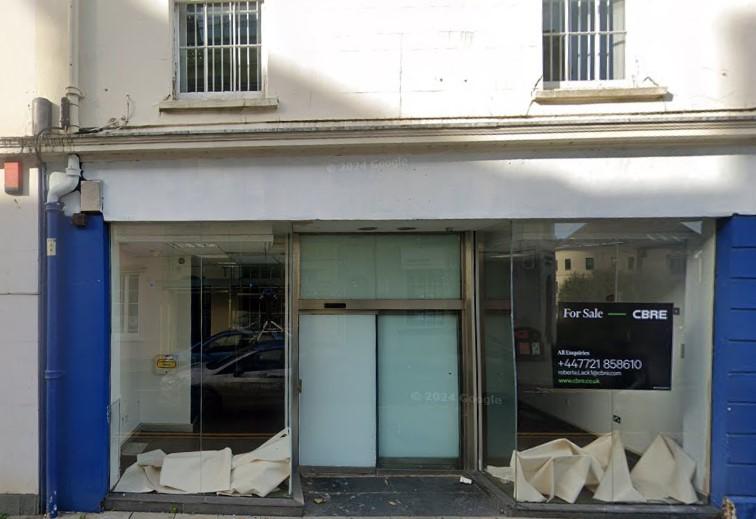
A CALL to convert a Pembrokeshire town centre former bank to a nail bar has been refused by county planners.
Huw Tuyen Nguyen, through agent Hayston Developments & Planning Ltd, sought permission for a change of use of the former Halifax bank at Grade-II-listed 10 Victoria Place, in Haverfordwest’s conservation area, to a nail bar, along with a related listed building consent.
Halifax closed its Haverfordwest branch back in 2024, leaving it with no more branches in the county.
A supporting statement accompanying the nail bar application at the three-storey building said: “The previous use of the building, a bank operated by the Halifax, ceased a few years ago and remains vacant making no contribution to the vitality or viability of the town centre.
“This application seeks to put the ground floor to an alternative commercial/retail use and which together with some internal and external alterations, also seeks to convert the upper two floors into a single high-quality flat. The upper floors have largely been under-utilised in the past. As such, the proposal would make a positive contribution to the town centre.”

It went on to say of the change of use to a nail bar: “This part of the application would allow the relocation and expansion of a professional service facility to serve Haverfordwest and the surrounding areas. This forms the basis of aspirations to grow the business, both in the immediate short term, and in the future as the business continues to grow.
“The applicant has explained that the current business is a nail salon which has been trading for some 15 years but under a different management. The applicant has had the business since January 2022.
“The business hours would be 9 am to 6 pm Monday to Saturday but closed on Sundays and which would employ 2/3 people.”
The application was refused on the grounds “the proposed external alterations, by virtue of the chosen materials, finish and detailing, represent poor design that fails to respect the historic character of the listed building and the wider terrace”.
The refusal went on to say: “The works do not respond appropriately to the building’s significance and would result in a harmful intervention that undermines its special architectural and historic interest.
“Furthermore, the proposal fails to satisfy the statutory duty to preserve or enhance the character and appearance of the Haverfordwest Conservation Area, and to pay special regard to the desirability of preserving the listed building and its features of architectural and historic interest.”



News45 minutes ago
Scott Thorley elected as Pembrokeshire’s first Reform councillor
REFORM UK candidate Scott Thorley has won the Hakin by-election after securing 179 votes. The full result is as follows:...


News8 hours ago
Police confirm man has died after being recovered from River Cleddau
Major emergency response in town centre after concerns raised for man in water A MAN has died after being recovered...


Community8 hours ago
Davies and Kurtz urge groups to seek employability funding
Community organisations in Pembrokeshire encouraged to apply for new grants supporting skills and job access LOCAL Senedd Members Samuel Kurtz...


News10 hours ago
Emergency services flood Haverfordwest after reports of person in river
Town centre sealed off as multi-agency response continues A MAJOR emergency response is underway in the centre of Haverfordwest after...


News10 hours ago
Detectives receive surge of new information in bid to identify man found at Powys reservoir
Public response follows release of facial image as officers pursue fresh lines of enquiry DETECTIVES investigating the identity of a...


News21 hours ago
Senedd committee urges next Welsh Government to prioritise Wales–Ireland links
A SENEDD committee has called on the next Welsh Government to continue prioritising Wales’s relationship with Ireland, describing it as...


Education1 day ago
New facilities open at Portfield School as redevelopment reaches key milestone
THE FIRST phase of a major redevelopment programme at Portfield School in Haverfordwest has been completed, marking a significant step...


News2 days ago
£377m spent saving blast furnaces months after Port Talbot closure
Government intervention keeps UK’s last primary steelmaking furnaces running THE UK GOVERNMENT spent £377 million to prevent the closure of...


Sport2 days ago
France crowned Six Nations champions after extraordinary final-day drama
Ramos penalty in Paris seals title as Ireland fall just short and Wales end losing run FRANCE were crowned 2026...


News3 days ago
Fishguard linked to allegations in Many Tears Animal Rescue investigation
Claims about puppies arriving through Pembrokeshire port emerge as licensing probe continues FISHGUARD has been named in allegations linked to...
-

 Health4 days ago
Welsh Ambulance Service to host bi-monthly Board meeting
-

 News3 days ago
Rayner and Lammy visit Wales to discuss justice and community safety
-

 Local Government6 days ago
Register now to vote in May’s Senedd election
-
News3 days ago
Fishguard linked to allegations in Many Tears Animal Rescue investigation
-
News10 hours ago
Emergency services flood Haverfordwest after reports of person in river
-

 Community6 days ago
Modern-day maritime hero backs exhibition marking 200 years since launch of HMS Erebus
-

 Crime6 days ago
‘Knife attack’ at Spittal property leaves man in hospital
-

 Education6 days ago
Manorbier school closure approved while insurance claim still unresolved