


Farming
Study shows why farm tech investment must be considered on a case-by-case basis

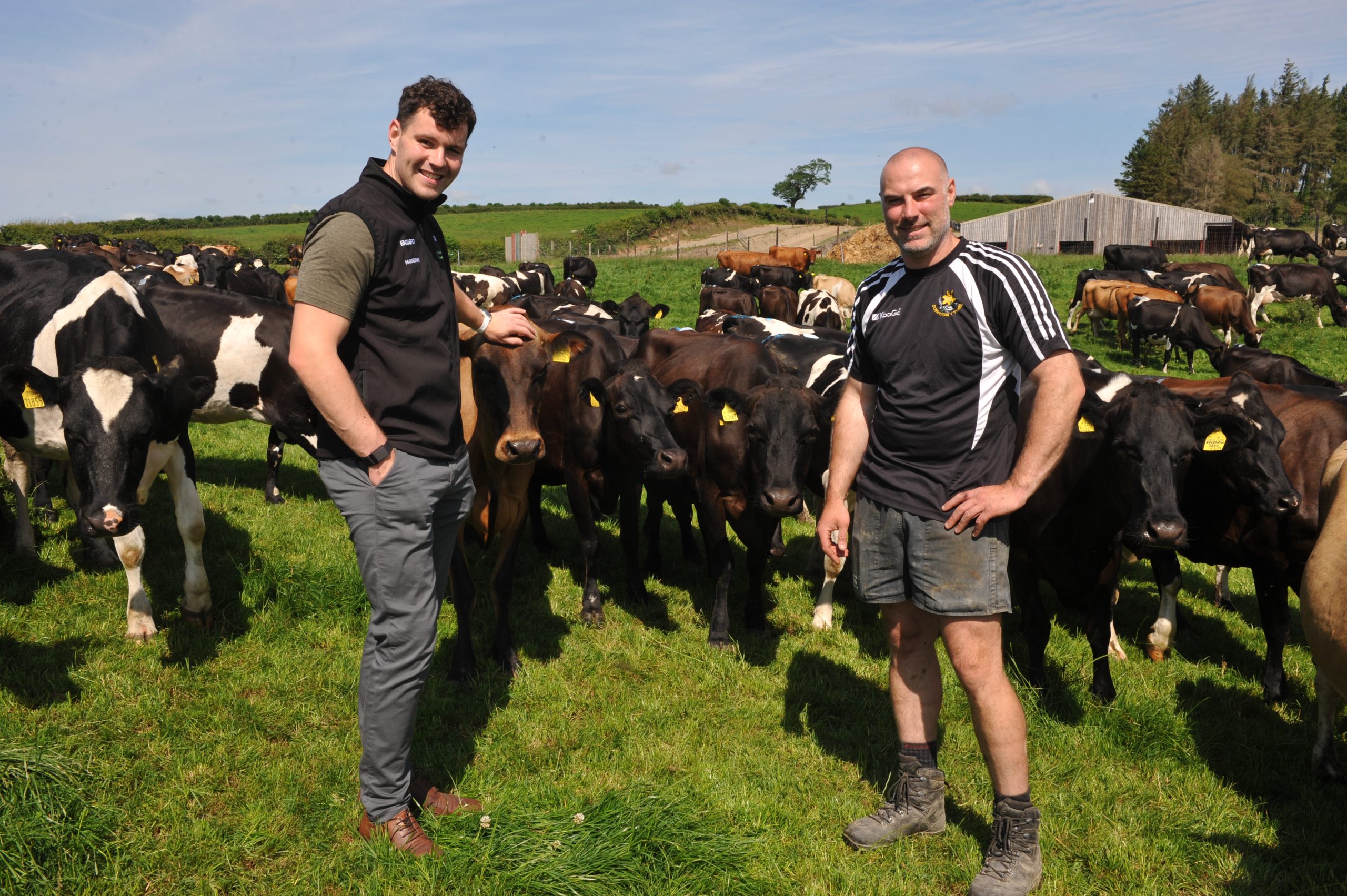
A NEW study commissioned by Cyswllt Ffermio (Farming Connect) has found that while new technologies can improve labour efficiency and reduce production costs on Welsh dairy farms, the financial returns do not always add up for every business.
Rhodri and Siwan Jones, who farm at Penparc near Llanerfyl, run a 197-cow spring-calving herd. They converted Siwan’s family’s former beef and sheep enterprise into a dairy unit, investing heavily in good grazing infrastructure and modern facilities designed for simplicity and efficiency.
But the question posed by researchers was whether further investment in technology — such as heat detection collars and automatic calf feeders — could boost efficiency and profitability even more.
Limited gains from collars, stronger ROI from feeders
The Ein Ffermydd (Our Farms) project found that while collars offered only limited benefits for the Jones family’s business, the automatic calf feeders showed a higher return on investment (ROI) and a much shorter payback period.
Feeders were estimated to deliver a 14% ROI, paying for themselves within seven years. By contrast, the payback period for collars doubled, with an ROI of just 7.2%.

Conor Hogan, Dairy Programme Manager at Teagasc Moorepark, Ireland, who carried out the study for Cyswllt Ffermio, urged farmers to interpret such figures carefully.
“If improvements in herd health and fertility are realised, the ROI would improve substantially compared with these estimates,” he said.
His calculations for the calf feeders were based on a two-station system costing £11,000, feeding at least 45 heifer calves. While the study found little difference in calf performance or health, the feeders could save £1,525 in labour each year, adding flexibility as calves no longer needed immediate feeding after milking.
However, there was a potential downside.

“Calves may need to be kept indoors and on milk for longer, as feeders can lengthen the rearing period,” Conor noted.
Collars offer smaller savings for already efficient herds
The figures for collars were based on 185 cows at £110 each plus a one-off £3,500 investment in a base unit — a total of £23,850.
The annual labour savings during the 12-week breeding period were estimated at £1,680, meaning a 14-year payback period.
Given the Joneses’ already strong six-week calving rate of 81% and low empty rate of 13%, Conor concluded that collars would bring limited fertility improvement.

He added that while collars also provide useful health monitoring data, this benefit could not be fully measured within the ROI analysis due to limited health data available for the herd.
“Where health improvements could be achieved through collars, and where sexed semen is used more efficiently, the ROI would improve rapidly,” he explained.
“But data on these benefits remains limited and should be assessed farm by farm.”
Even so, collars would ease the labour burden during breeding by reducing the need for constant observation of cows, offering valuable flexibility.
Smart spending: prioritising what pays
Conor praised Penparc’s existing layout and facilities, saying there was no urgent need for new technology investment. Instead, he suggested a planned, phased approach, giving priority to areas that offer the fastest and most reliable returns.
“Improving soil fertility, reseeding, and investing in cow tracks can deliver rapid and substantial economic returns at relatively low cost,” he advised.
Investing in facilities should come next — to speed up milking, improve animal handling, and enhance slurry storage efficiency.
Only after those improvements, Conor said, should automation be considered — such as calf feeders, heat detection collars, drafting gates, automatic cluster removers, and wash systems.
“Some automation technologies may not significantly cut labour time, but they can offer greater flexibility and make routine tasks easier,” he said.
“Different farms are at different stages of development, so the benefits of each investment depend on the individual business.”
He also noted that grant funding, when available, could make a substantial difference to affordability and ROI calculations.



A CALL to keep a holiday pod sited on a Pembrokeshire farm, as part of a wider holiday pod farm diversification over two areas which saw the larger part supported, has been submitted to county planners.
In an application to Pembrokeshire County Council, Bill Ridge of Vaynor Farm Ltd, Bethesda, through agent Gerald Blain Associates Limited, seeks retrospective permission to keep a self-catering pod at Broomley Farm, Sodston, Narberth, works having been completed in 2022.
The application is part of a wider scheme of holiday pods diversification encompassing two farms.
Back in December, Pembrokeshire County Council’s planning committee granted delegated retrospective permission to Vaynor Farm Ltd for the siting of two self-catering holiday accommodation pods at The Cart House, Vaynor Farm, Bethesda, near Narberth as part of a farm diversification enterprise.
A supporting statement accompanying the latest application says: “Vaynor farm is a 400-acre working dairy farm with a herd of 700 milking cows. The enterprise comprises of three self-catering pods. Two of the pods are situated at the Vaynor homestead and another at the opposite end of the holding at Broomley farm.

“The first unit was sited adjacent to Vaynor farm stead some four years ago and a further two added in subsequent years. The units have enjoyed successful occupancy rates over several years offering a unique secluded tourism offer on a working dairy farm, more detail of which is outlined within the supporting business plan.”
It says the Broomley farm application is a resubmission of a previously refused scheme, adding: “It should be noted that this application was originally part of [the application] which was recommended approval at planning committee in December 2025. This element however was separated due to its location on another part of Vaynor farm deeming it not possible to be considered under the same application.”
At the December meeting, an officer report said: “A business plan has been submitted with [that] application, which explains that due to uncertainties associated with dairy farming, the applicant has sought to diversify the farm enterprise to incorporate tourism accommodation.
“The application makes the case that the proposed development represents farm diversification. It is acknowledged that the development has resulted in the provision of an alternative type of holiday accommodation for which it has been demonstrated there is a demand, contributing to the diversity and quality of accommodation available within the county and supporting an existing farm business, with consequent economic and social benefits.

“Evidence has been provided that demonstrates the extent to which the pods have provided income which has been used to support the farm business.”
That application was conditionally approved; the latest part to be considered by planners at a later date.
Fewer than five per cent of farms inspected as prosecutions remain rare
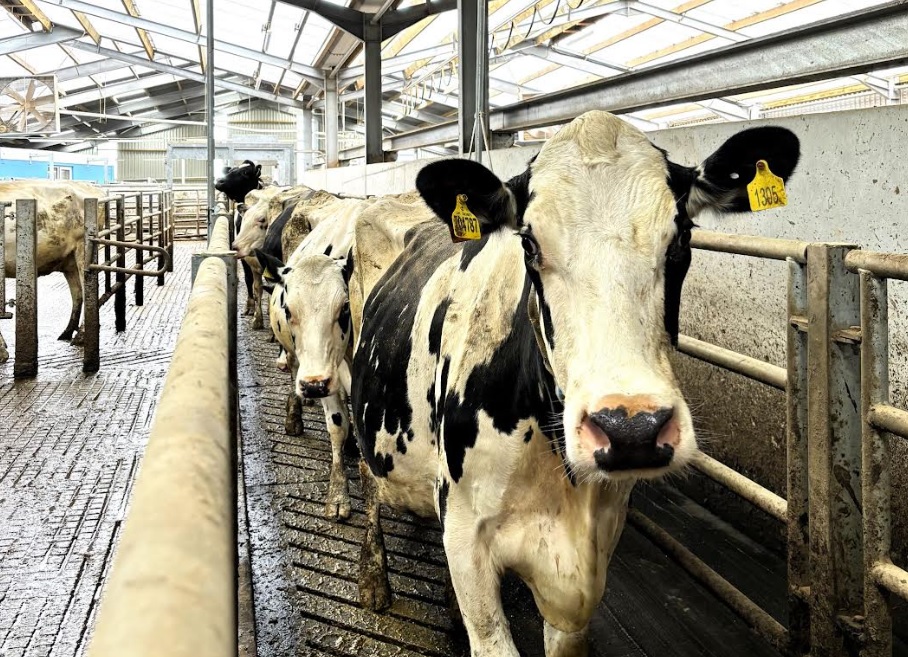
LEGAL experts have warned that animal welfare laws in Wales are being routinely ignored due to a “critical failure” in enforcement, with thousands of farms going uninspected and breaches rarely leading to action.
The stark warning came during an event at the Senedd on Tuesday (Mar 25), organised by the Animal Law Foundation and sponsored by Carolyn Thomas MS.
The meeting brought together legal specialists, enforcement bodies and Members of the Senedd to examine what campaigners describe as a growing gap between legislation and real-world enforcement.
Figures presented at the event paint a troubling picture. Just 4.67 per cent of Wales’ 34,777 farms are inspected, with only one inspector responsible for every 657 farms. Even when concerns are raised, only around 65 per cent of complaints result in an inspection.
More strikingly, where breaches are identified, prosecutions are launched in fewer than one per cent of cases.

The Animal Law Foundation described this as part of a wider “Enforcement Problem” — a term used to describe situations where laws exist but are not effectively applied.
Edie Bowles, Executive Director of the foundation, said: “These figures point to a system that is simply not working. When inspections are rare, complaints do not trigger investigations, and breaches do not lead to enforcement action, the legal safeguards risk becoming little more than words on paper.”
She added that meaningful enforcement is essential not only to protect animals, but to maintain public confidence in the law.
Carolyn Thomas MS said ensuring existing laws are properly enforced “should not be a controversial ask,” but acknowledged it remains a significant challenge.

Calls for stronger oversight were echoed by representatives of Animal Licensing Wales, who highlighted the need for greater resources and capacity within enforcement bodies.
The findings are backed by recent undercover investigations, including footage from a Wrexham slaughterhouse and a farm at Tafarn Y Bugail, which allegedly showed serious mistreatment of animals.
Abigail Penny, Executive Director of Animal Equality UK, said: “What we uncovered was an extraordinary failure of the systems meant to protect animals. That such cruelty could persist, undetected and unchallenged, shows the urgent need for stronger oversight and meaningful sanctions.”

Animal welfare on farms in Wales is governed by the Animal Welfare Act 2006 and a range of additional regulations covering farming, transport and slaughter. Enforcement responsibility lies primarily with local authorities, while the Food Standards Agency oversees welfare in slaughterhouses.
Campaigners say that without urgent reform, those protections risk being undermined by a lack of inspections, limited resources, and a reluctance to take enforcement action.

Rural communities urged to stay vigilant amid sharp increases in red diesel and heating oil costs
FARMERS and rural residents across Wales are being urged to remain vigilant against fuel theft following a sharp rise in fuel and heating oil prices linked to ongoing tensions in the Middle East.
FUW Insurance Services Ltd has issued the warning after recent data showed significant increases in fuel costs. Reports suggest the price of red diesel has climbed to around 109p per litre in mid-March, up from approximately 67p in February, representing an increase of more than 60%. Heating oil prices have also risen steeply, in some cases more than doubling from around 60p per litre to £1.30.
The increases are placing additional pressure on rural households, many of which remain heavily reliant on oil. In Powys, around 55% of homes are not connected to the gas grid, while in Ceredigion the figure rises to 74%, leaving communities particularly exposed to price fluctuations.
Concerns are also growing over the potential rise in rural crime. Historically, spikes in fuel costs have been linked to increased theft, with farms often targeted due to the presence of fuel tanks and machinery. Such incidents can lead not only to financial losses but also environmental damage where tanks are tampered with or fuel is spilled.
Farmers are being advised to take practical steps to protect their property, including regularly checking fuel levels, securing tanks and pumps with appropriate locks, and installing CCTV where possible. Reporting suspicious activity promptly is also seen as key to preventing theft.
The warning also applies to other rural premises, including churches, chapels, village halls and community buildings, which often rely on heating oil and may be left unattended for long periods.
Dafydd Peredur Jones, Senior Account Executive at FUW Insurance Services Ltd, said: “Rising fuel prices are placing additional pressure on rural communities, but they also increase the risk of theft. We are urging farmers and rural residents to take proactive steps to protect their fuel supplies and remain vigilant. Simple preventative measures can make a significant difference.”
FUW Insurance Services Ltd said it will continue to support customers during the current period and encouraged anyone with concerns about their insurance cover or security arrangements to seek advice.



News17 hours ago
Reform reveals west Wales candidates for Senedd battle
Monkton councillor tops Pembrokeshire list as party confirms Carmarthenshire names and includes Haverfordwest councillor in unwinnable Swansea spot REFORM UK...


Health24 hours ago
Clash over Withybush Hospital services as Paul Davies challenges First Minister
A HEATED exchange in the Senedd has laid bare growing tensions over the future of hospital services in west Wales....


Crime2 days ago
Police stop car in Pennar as three arrested in drugs investigation
Suspected drug driver report leads to major police response and multiple arrests DRAMATIC scenes were reported in Pennar on Monday...


Business2 days ago
New pilot vessel Llanion arrives at Milford Haven
State-of-the-art 22-metre craft marks reset after £3.6m pilot boat controversy THE PORT OF MILFORD HAVEN has taken delivery of a...


Community2 days ago
Sycamore Gap legacy tree to take root in Pembrokeshire landscapes
A SAPLING grown from the famous Sycamore Gap tree is set to become part of Wales’ protected landscapes — with...


Business3 days ago
Could Primark be coming to Haverfordwest? Major retailer in talks for former Wilko site
Council confirms advanced discussions as speculation grows over high street boost HAVERFORDWEST could soon see a major high street revival,...


Business3 days ago
Rail investment ‘could unlock 40,000 jobs and £11bn for Wales’ says new report
RAILWAY stations across Wales could help unlock around 40,000 jobs and more than £11 billion for the economy by 2036,...


Local Government3 days ago
Milford Haven set for £200m investment with schools, leisure centre and rail upgrade
Council outlines major plans for town with backing from Welsh Government MILFORD HAVEN is set for a major transformation with...


Community4 days ago
Broad Haven volunteers secure ‘national asset’ status for nature reserve
A SMALL stretch of woodland and former opencast coal mine has been transformed into a nationally recognised biodiversity site, in...


Entertainment5 days ago
Tenby steams up in spectacular style as crowds flock to festival
Colourful parade, towering creations and Victorian flair bring town centre to life TENBY was transformed into a vibrant Victorian fantasy...
-

 Health7 days ago
NHS waiting list falls — but cancer delays and diagnostic backlog worsen
-

 Crime6 days ago
Pembroke man remanded in custody over knife threat, assault and damage allegations
-

 Crime7 days ago
Illegal workers found at Cardigan takeaway after immigration raid
-

 Crime6 days ago
Broad Haven man remanded in custody over sexual harm prevention order breach
-

 News7 days ago
Council unveils plans for new state-of-the-art secondary school in Milford Haven
-

 Education7 days ago
Milford Haven school plans unveiled but funding not yet secured
-

 Farming7 days ago
£3 million secured to continue Welsh sheep genetics programme
-

 Crime6 days ago
Publican jailed for six years for supplying cocaine and cannabis