


Politics
Greyhound racing industry defends sport as Wales weighs ban


THE GREYHOUND racing industry has hit back at plans to ban the sport in Wales, claiming data shows deaths have “more than halved” and injuries saw a “significant drop” last year.
Mark Bird, chief executive of the Greyhound Board of Great Britain (GBGB), accused animal welfare charities of citing “inaccurate, historic or even misleading” data to support the ban.
The Welsh Government has introduced a draft law to ban greyhound racing, leaving Wales’ last remaining track – the Valley Greyhound Stadium in Ystrad Mynach – facing closure.
Mr Bird told a Senedd committee the industry has made “leaps and bounds” on animal welfare since the Valley stadium became a GBGB-regulated track in 2023.
Labour’s Lee Waters asked about the Welsh Government using GBGB’s own data on dog injuries and deaths to justify plans for a phased ban on greyhound racing by 2030.

Mr Bird said: “Overall, the data is very positive in terms of where the transition is going… fatalities over that period of time have more than halved in terms of the numbers of dogs being put down on the track. But also last year we saw a significant drop in injuries as well.”
Giving evidence to today’s (October 23) culture and sport committee, which is scrutinising the bill, he criticised the Cut the Chase coalition of charities for presenting “out-of-date” data.
Pressed about figures for the Valley, Mr Bird said the regulator has decided not to publish disaggregated data for fear of tracks being targeted by animal rights activists. He was hesitant to supply the information as it could then become subject to transparency law.
Mr Waters responded: “It’s not a secret state, is it? We’re talking about a ban, surely it’s relevant to have that information in the public domain?”

Mr Bird told Senedd Members: “Last year’s fatalities, the mean number of dogs that died at each of the tracks as a result of their injuries was six and as far as the Valley was concerned, they were below the mean.”
He said GBGB’s data showed a 1.29% chance of a dog being injured in any given race, with the Valley track inspected at least twice a month during unannounced visits. He added that a vet is present at every race meeting.
Simon Franklin, chair of the Racecourse Promoters’ Association, described the industry as “too open” in reporting injuries that are not career-ending including a torn toenail.

Pressed about plans to ban the sport on animal welfare and ethical grounds, GBGB director Madeleine Campbell rejected a distinction between using animals in sport compared with food production, medical science or keeping them as pets.
Prof Campbell, a veterinary surgeon, said: “All of those human uses… expose animals to at least potential harms and, in fact, if you think about it, the benefits to humans from all of those – with the exception of using animals in medical science – are also trivial.
“We don’t need to eat meat or drink milk, we don’t need to have dogs as companions… so that argument around unique triviality, I don’t think stacks up.”
She contended: “The bill, as proposed, will do nothing to support positive welfare for greyhounds across their lifetimes.”
Asked about the popularity of the sport, Katie Bennison – general manager of Valley Greyhounds Stadium – said attendances vary but, during a typical week, around two hundred people attend the Wednesday or Thursday races.
She told the committee: “But then on a week when we race on a Saturday evening like we will be this Saturday, we’ll have around 150 people just at that meeting.”
Richard Brankley – head of operations for Satellite Information Services (SIS), the media rights distributor for Valley Greyhounds – said hundreds of thousands watch races remotely.
Mr Brankley told Senedd Members racing live from the Valley is shown three to four times a week to customers in approximately 7,000 betting shops in the UK and Ireland.
He said domestic bookmakers stream every race live from the Valley and the SIS website, which has a dedicated stream, clocks up 250,000 unique visitors every month.
Mr Brankley warned the economic impact of a ban has been an “afterthought”.
Mr Bird recognised a decline in popularity, saying: “Greyhound racing was probably at its most popular after the Second World War, we’re coming up to 100 years…
“But you’ll see that the shrinkage, a lot of that has been due to the fact that most racing tracks were in areas where there was high social deprivation – those areas have since been gentrified, ground has been taken back for housing etc.
“If you look at Wales… back in the 1960s there were at least ten greyhound tracks… most of those would have been centred around mining [and] steel communities.”
He told the committee 19 tracks remain in the UK but he insisted it remains a popular sport, saying: “It may have shrunk but it’s a far more sustainable sport going into the future.”
Mr Bird, a former police officer, warned of unintended consequences from a ban, telling Senedd Members: “The whole idea of driving something underground means you’ve got a bigger problem than you first started with.”


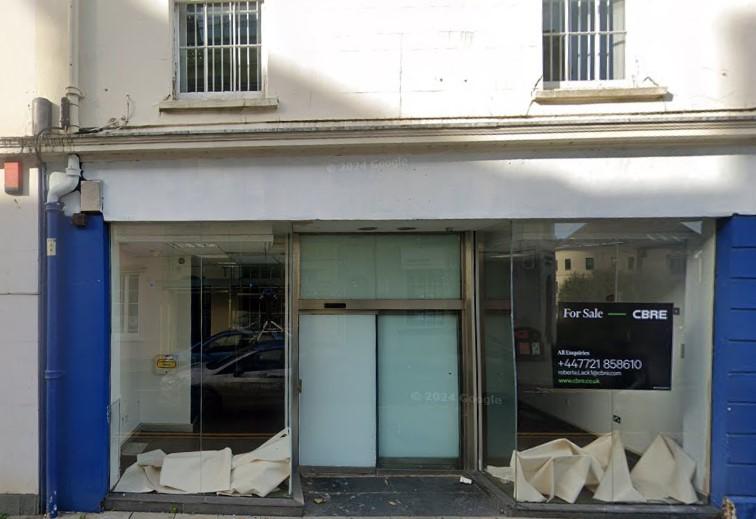
A CALL to convert a Pembrokeshire town centre former bank to a nail bar has been refused by county planners.
Huw Tuyen Nguyen, through agent Hayston Developments & Planning Ltd, sought permission for a change of use of the former Halifax bank at Grade-II-listed 10 Victoria Place, in Haverfordwest’s conservation area, to a nail bar, along with a related listed building consent.
Halifax closed its Haverfordwest branch back in 2024, leaving it with no more branches in the county.
A supporting statement accompanying the nail bar application at the three-storey building said: “The previous use of the building, a bank operated by the Halifax, ceased a few years ago and remains vacant making no contribution to the vitality or viability of the town centre.
“This application seeks to put the ground floor to an alternative commercial/retail use and which together with some internal and external alterations, also seeks to convert the upper two floors into a single high-quality flat. The upper floors have largely been under-utilised in the past. As such, the proposal would make a positive contribution to the town centre.”

It went on to say of the change of use to a nail bar: “This part of the application would allow the relocation and expansion of a professional service facility to serve Haverfordwest and the surrounding areas. This forms the basis of aspirations to grow the business, both in the immediate short term, and in the future as the business continues to grow.
“The applicant has explained that the current business is a nail salon which has been trading for some 15 years but under a different management. The applicant has had the business since January 2022.
“The business hours would be 9 am to 6 pm Monday to Saturday but closed on Sundays and which would employ 2/3 people.”
The application was refused on the grounds “the proposed external alterations, by virtue of the chosen materials, finish and detailing, represent poor design that fails to respect the historic character of the listed building and the wider terrace”.
The refusal went on to say: “The works do not respond appropriately to the building’s significance and would result in a harmful intervention that undermines its special architectural and historic interest.
“Furthermore, the proposal fails to satisfy the statutory duty to preserve or enhance the character and appearance of the Haverfordwest Conservation Area, and to pay special regard to the desirability of preserving the listed building and its features of architectural and historic interest.”
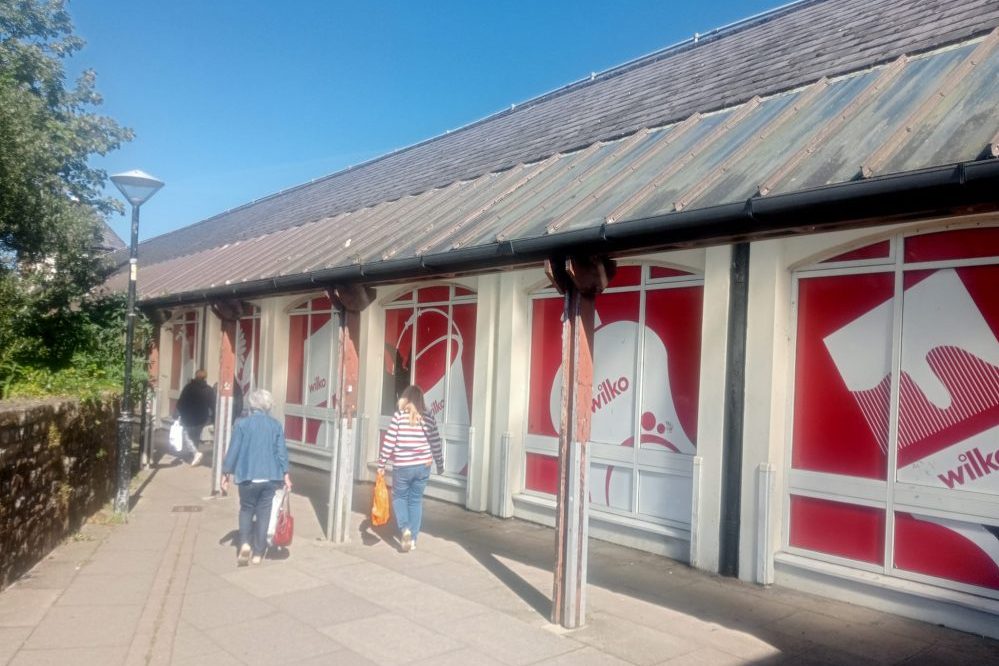
A CALL for Pembrokeshire’s council to pursue a £1m loan to help fund the redevelopment of the ‘blight’ derelict former Wilko store in Haverfordwest as part of wider redevelopment of the county town has been backed.
A report for members of the March 16 meeting of Pembrokeshire County Council’s Cabinet, recommended for approval by Leader Cllr Jon Harvey, said: “The proposed project seeks to repurpose and redevelop the former Wilko building located on [2-6] Old Bridge, Haverfordwest, a large and prominently positioned commercial unit.
“The project will enable the revitalisation of one of Haverfordwest’s most strategically positioned commercial units located immediately adjacent to the new Haverfordwest Public Transport Interchange, on the main pedestrian route from the Interchange to the town centre.
“Pembrokeshire County Council, under Cabinet decision November 30, 2020, agreed the acquisition of Riverside Shopping Centre in Haverfordwest which includes the 2–6 Old Bridge and the Perrots Road Car Park.
“At the time of acquisition, the building was leased by Wilko, with this occupation ceasing when Wilko went into administration and the Haverfordwest store closed in September 2023.”
It added: “The building was in poor repair when returned from the outgoing tenant with limited ability to seek dilapidation costs as the tenant had gone into administration. The deteriorating roof and outdated internal configuration render it unsuitable for modern retail, commercial, or community use without significant investment.”
It went on to say: “The building’s current dereliction contributes to a blight at a key town access point. Funding would directly address these structural issues, unlocking the property’s potential and generating broader regeneration benefits for the town. High street anchor tenants attract significant footfall, with evidence showing that the majority of visitors subsequently engage with other shops.
“The preferred strategy is to secure such a tenant, creating a strong draw to the town centre and complementing surrounding uses. Even if a high street anchor is not achievable, there is credible interest in alternative commercial or community uses.”
It said an initial scoping stage “has identified a budget of circa £1.6m to undertake the required redevelopment works,” adding that the empty unit is currently costing the authority £125,000 a year annum in Business Rates, insurance and maintenance, along with a lost rental income of £150,000.

It said the council’s approved capital programme currently has £656,000 for the Riverside Phase 1/Eastern Quayside, and it was proposed that these funds are utilised, alongside an additional £1m funding source for 2-6 Old Bridge.
Cabinet Member for Young Persons, Community, Wellbeing and Future Generations Cllr Marc Tierney said: “The regeneration case on this particular property is really strong; if we don’t do anything the risk is we’re just holding on to another vacant property in Haverfordwest.”
Cabinet Member for Housing Cllr Michelle Bateman said the proposal was part of “a bigger picture” of regeneration in the town, with Cabinet member for finance Cllr Alistair Cameron pointing out the loan, if approved, would be “interest-free” to the council.


Cllr Harvey said: “I think we just have to do this, if we don’t we won’t get a major retailer in; this will really increase the retail offer in Haverfordwest , we’re spending a lot of money in Haverfordwest – grant-aided – and the town centre is in quite a reasonable situation.
“It’s really positive; in two-to-three-to-five years Haverfordwest will be a more vibrant place than it is today.”
Members backed a recommendation to submit a call for £1m from Town Centre Loan funding for the works, adding that to the current capital programme allocation, totalling £1.656m.
If the funding call is not successful, a future Cabinet meeting will hear alternative recommendations.


Candidates say residents must be heard after emergency services decision
PLAID CYMRU candidates for the Ceredigion Penfro constituency will host a public meeting in Pembrokeshire to discuss concerns over the future of services at Withybush Hospital.
The event will take place at 6:30pm on Monday (Mar 31) at Letterston Village Hall, giving residents the opportunity to share their experiences and concerns following Hywel Dda University Health Board’s decision last month to remove emergency general surgery from the hospital.
Campaigners say the move will force many patients requiring urgent treatment to travel further for care, raising fears about the potential impact on patient safety in rural west Wales.
Elin Jones, Plaid Cymru lead candidate for Ceredigion Penfro, said: “Withybush is such an important hospital for the community and residents of Pembrokeshire. The decision to remove its emergency general surgery will severely weaken the life-saving capacity of this hospital.
“Plaid Cymru has long championed small rural hospitals such as Bronglais and Withybush. We need to ensure these hospitals remain strong local services within our communities. Withybush should have the basic life-saving and everyday treatment services it needs to function as a full general hospital.”
Kerry Ferguson, Plaid Cymru candidate for Pembrokeshire within the Ceredigion Penfro constituency, said the recent success of a public petition had demonstrated the strength of local feeling.
“It’s great to see that the online petition calling for Welsh Government intervention to restore emergency surgery and essential services at Withybush has reached its target, meaning it will now be debated in the Senedd,” she said.
“We are extremely disappointed by the Health Board’s decision to remove emergency general surgery at Withybush. Increased journey times for anyone in need of urgent medical treatment will put lives at risk. We need government intervention now to overturn this decision.”
Residents across Pembrokeshire have continued to raise concerns about the future of services at the hospital, which has long been a focal point in debates about healthcare provision in rural west Wales.



Education21 hours ago
New facilities open at Portfield School as redevelopment reaches key milestone
THE FIRST phase of a major redevelopment programme at Portfield School in Haverfordwest has been completed, marking a significant step...


News22 hours ago
£377m spent saving blast furnaces months after Port Talbot closure
Government intervention keeps UK’s last primary steelmaking furnaces running THE UK GOVERNMENT spent £377 million to prevent the closure of...


Sport2 days ago
France crowned Six Nations champions after extraordinary final-day drama
Ramos penalty in Paris seals title as Ireland fall just short and Wales end losing run FRANCE were crowned 2026...


News2 days ago
Fishguard linked to allegations in Many Tears Animal Rescue investigation
Claims about puppies arriving through Pembrokeshire port emerge as licensing probe continues FISHGUARD has been named in allegations linked to...

Local Government3 days ago
Investigation confirmed after inspectors visit Many Tears Animal Rescue
Licensing authority declines to comment as police confirm attendance at Carmarthenshire rescue centre AN INVESTIGATION is underway following a visit...


Business4 days ago
Work set to begin on £50m hydrogen plant in Milford Haven
A MAJOR new hydrogen production facility worth around £50 million is expected to begin construction in Milford Haven later this...


Education5 days ago
Manorbier school closure approved while insurance claim still unresolved
Council confirms negotiations with insurer ongoing following 2022 fire PEMBROKESHIRE COUNTY COUNCIL has confirmed that negotiations with its insurer over...


Crime6 days ago
‘Knife attack’ at Spittal property leaves man in hospital
POLICE have arrested a woman following what is being described as a ‘knife attack’ at a property in Spittal on...


Community6 days ago
Pembrokeshire to receive its first banking hub in Pembroke Dock
LINK, the UK’s Cash Access and ATM network, has today announced local people and businesses in Pembroke Dock will benefit from a new banking...


Health7 days ago
Future of Withybush Hospital petition sparks urgent call for Senedd debate
CALLS have been made for an urgent debate in the Senedd over the future of services at Withybush Hospital as...
-

 Health4 days ago
Welsh Ambulance Service to host bi-monthly Board meeting
-

 News3 days ago
Rayner and Lammy visit Wales to discuss justice and community safety
-

 Local Government6 days ago
Register now to vote in May’s Senedd election
-
News2 days ago
Fishguard linked to allegations in Many Tears Animal Rescue investigation
-

 Crime7 days ago
E-bike rider who sped through pedestrian alley sentenced by court
-

 Entertainment7 days ago
How the Cheltenham Festival Captivates Racing Fans Every Year
-

 Community6 days ago
Modern-day maritime hero backs exhibition marking 200 years since launch of HMS Erebus
-

 Crime7 days ago
Driver caught with three illegal drugs in system on way to MOT test