


Business
Wales ‘hurt hardest’ by Brexit trade barriers

WALES has been “hurt hardest” by Brexit amid a “mess” of trade barriers, cultural blockades and a “fading” Welsh presence in EU relations, Senedd committees have warned.
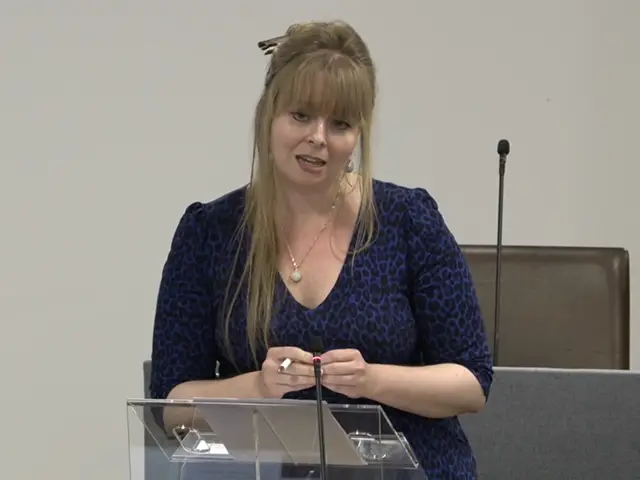
Delyth Jewell led an “unprecedented” cross-committee inquiry which found “unanimous” agreement from witnesses that the UK-EU trade deal has not benefited Wales.
The Plaid Cymru politician warned the Welsh Government was not informed of UK priorities in advance, leaving Wales with a “diminishing voice” and no “seat at the table”.
Ms Jewell, who chairs the Senedd’s culture and international relations committee, criticised UK ministers for refusing to give evidence to the inquiry or share their EU priorities.
She told the Senedd: “This is a moment for ambition and for Wales not to be a mere passive observer in the processes that happen.

“We must take an active role in shaping outcomes that matter to our culture, our economy, our environment, our communities.”
Turning to the impact on culture, she said: “Touring artists, creative professionals and cultural organisations face barriers that were unimaginable before Brexit, barriers that restrict mobility, increase costs and diminish Wales’s cultural presence on the international stage.
“The evidence is stark – current arrangements for touring are described as unworkable.”
The debate heard the economic impact has been severe – with the EU remaining the biggest trading partner, accounting for 47% (or £17.6bn) of Wales’ total trade in goods.

Hannah Blythyn, for the economy committee, said 90% of businesses are still dealing with challenges, including increased bureaucracy, costs, time, and supply chain disruption.
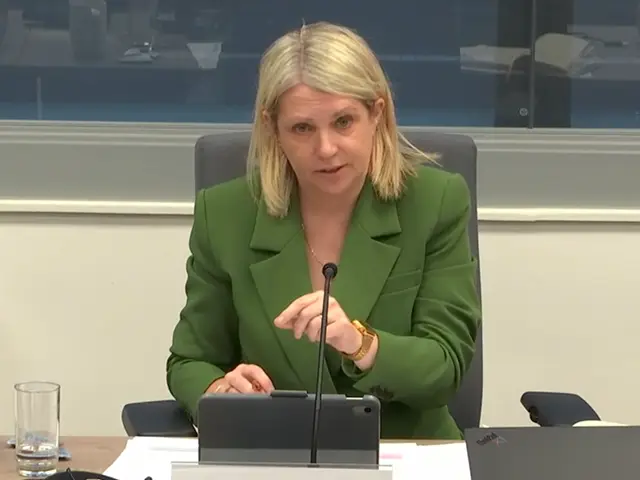
The ex-minister said: “According to committee witnesses, processes cause extreme levels of cost, administration, complications and loss, intense annoyance, and are hugely frustrating.”
Ms Blythyn, who is the Labour Senedd Member for Delyn, criticised the Welsh Government for rejecting calls to produce its own detailed impact assessment of the trade agreement.

She pointed out that such documents had been produced for trade deals with “Wales’ smaller trading partners, but not its largest to date”.

The report’s criticism was not limited to trade. Llŷr Gruffydd, chair of the climate committee, warned Wales has had a glaring environmental governance gap since the UK left the EU.
The Plaid Cymru politician expressed concerns about the UK-EU trade and cooperation agreement (TCA) containing no dedicated chapter on environment and climate cooperation.
Meanwhile, Mike Hedges – who chairs the Senedd’s legislation committee – sounded the alarm about Wales’ diminishing voice in UK-EU relations. He criticised ministers for “not stepping in” to support Welsh organisations’ involvement.
Mr Hedges told Senedd Members the Welsh Government has not published any Wales-specific information, advice nor guidance on the TCA since 2021.
“This is incredible,” he warned during Wednesday’s (November 5) debate. “It is one of the most significant international treaties that will ever be considered by the Senedd.”

His Labour colleague Alun Davies told the Senedd he could “think of no witness… who said that Brexit had benefited Wales,” adding he was “astonished” the Welsh Government “doesn’t seem to want to set real objectives for the future”.
The criticism was echoed by Adam Price, the former Plaid Cymru leader, who said: “If I can sum it up – we are in a mess, aren’t we?”
Raising the World Trade Organisation’s first post-Brexit review of trade, Mr Price warned Wales has been “hurt the hardest” due to a reliance on exports and smaller companies.
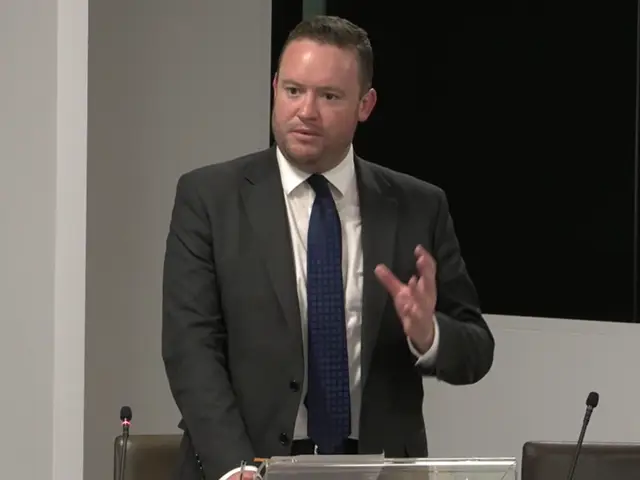
Conservative Gareth Davies was the only speaker to defend Brexit as he challenged the premise of the committees’ report. He flatly rejected the report’s framing, stating the “debate is over” and the task is to “make Brexit work for Wales, not to re-run the arguments of 2016”.
Responding to the debate, Labour’s Rebecca Evans said the Welsh Government was focused on ensuring Wales’ distinct priorities are represented in UK-EU talks.
Wales’ economy secretary welcomed a “new, more positive direction” in EU relations but insisted it remains “vital that the views of devolved nations are heard”.


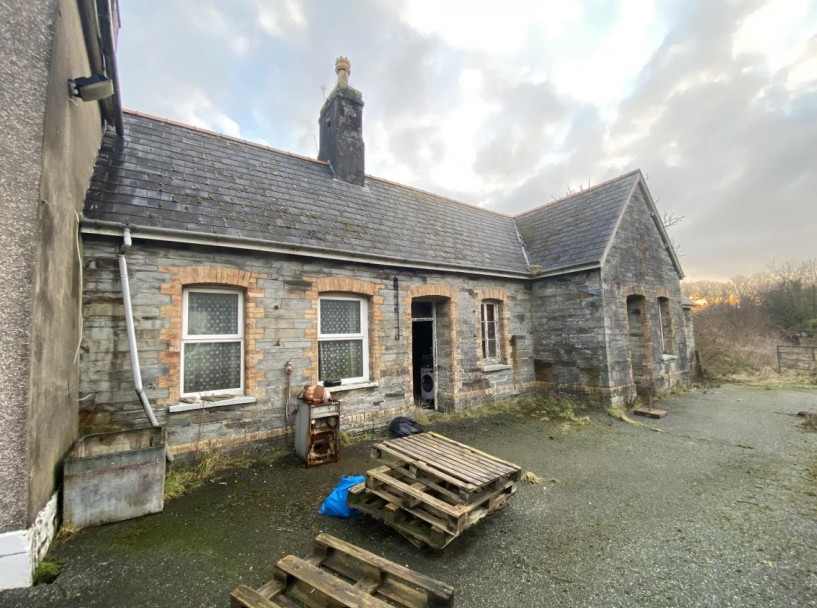
A CALL to convert a ticket office to a home at a former Pembrokeshire railway line which closed more than 60 years ago has been lodged with county planners.
In an application to Pembrokeshire County Council, Mr James, through agent Harries Planning Design Management seeks permission for the conversion of a ticket office into a dwelling, at the old Ticket Office, Station Road, Crymych.
A supporting statement says: “The building used to serve as the ticket office for the Crymych Arms Railway Station serving both the Whitland and Cardigan Railway. The station closed in 1962, with this building becoming disused.
“Since its closure the building has been used as temporary storage by the owner, who has continued to maintain, fix and repair the building to a state where conversion is possible. The ticket office is semi-detached with a dwelling to the north. The ticket office building comprises faced stone elevations and a slate roof.
“Externally, it is served by overgrown green space to the south and concreted areas to the east and west. There are no known environmental or historical designations on site.”
It goes on to say: “The dwelling will retain the existing form, with no external extensions proposed. Internally, it is proposed to convert the building into a two-bed dwelling, with an open plan kitchen/living/dining area to provide ample space for modern habitation. Garden space is to be provided to the south and west, with lawned gardens and native beech hedging. External materials will remain as existing for the most part, with the windows replaced with heritage style UPVC sash and the existing chimney removed.”
It concludes: “The proposal seeks to retain the external form of the building to conserve its historic impact within the landscape. The proposal seeks to comply with [planning policy] which places open market housing within the settlement boundary of a service village and for the conversion of a historic building which is not being utilised. Therefore, the principle of development is considered acceptable and will contribute to a positive conversion within the landscape.”
The application will be considered by county planners at a later date.
The 27-and-a-half-mile-long Whitland and Cardigan Railway branch line, initially called the Whitland and Taf Vale Railway before becoming the Whitland and Cardigan, reached Crymych in 1874 though a passenger service didn’t start until the following year, with an extension to the edge of Cardigan opening in 1886.
A proposal to close the line, known locally as the Cardi Bach, came a little before the infamous ‘Beeching Axe’ which saw many stations in Wales and elsewhere close; the line closing to passengers in 1962, the last being the 5.45 Cardigan Mail, remaining open to freight traffic for a short while before a final closure in 1963.
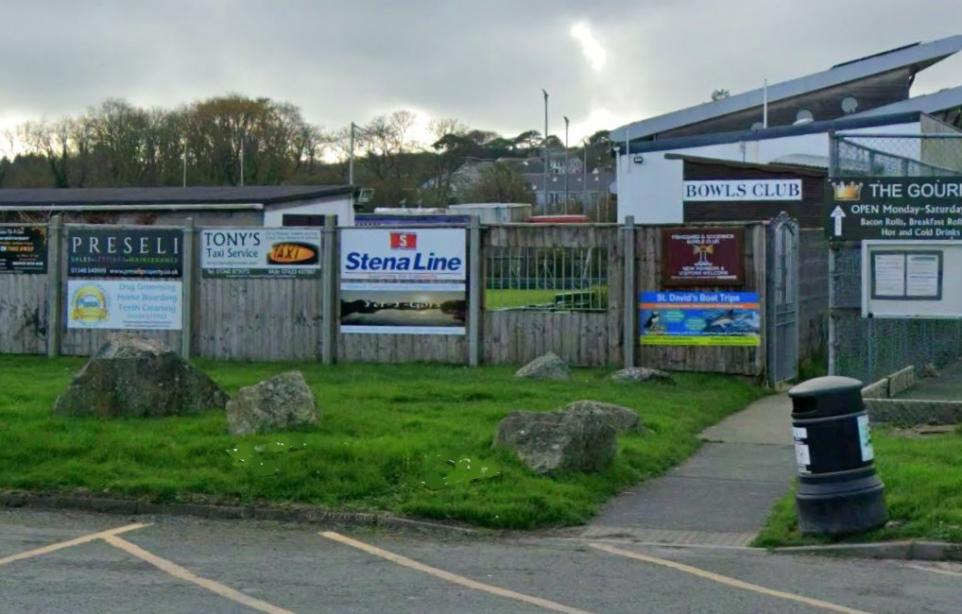
A PEMBROKESHIRE town bowls club’s call on planners to let it keep advertising signs for local businesses which help support its operations has been turned down.
In an application to Pembrokeshire County Council, Fishguard & Goodwick Bowls Club, Wern Road, Goodwick sought retrospective permission for up to 36 signs on land close to the town’s Phoenix Centre.
The signs had been in place for some 18 months, being removed ahead of the formal planning application.
A supporting statement accompanying the application says: “This application seeks retrospective consent for the display of up to 36 non-illuminated, single-sided advertisement panels mounted to an existing timber boundary fence.
It said the advertisements are modest in scale, facing an existing large car park rather than nearby residential properties and does not project over any public highway or footpath.
It added: “The advertisement signs have been temporarily removed while planning permission is sought. The advertisements and fence had been in place for approximately 18 months prior to their temporary removal, during which time no complaints were received.
“The total number of advertisements has been consciously limited, and not all fence bays display signage, ensuring that the proposal does not result in harm to visual amenity or public safety.
“The income generated from the advertisements provides an important source of revenue for the Fishguard and Goodwick Bowls Club, supporting the ongoing operation and maintenance of local community sporting facilities.
“The advertising panels also offer local businesses an affordable and accessible means of promotion within the community.”
An officer report recommending refusal said two objections to the scheme were received, raising issues over discrepancies in the application and the scheme having no merit, being “at odds with the established character and appearance of the area”.
The report added: “While it is acknowledged that businesses have a reasonable need to advertise their presence and services, such advertisements must be appropriately sited and designed to ensure they do not detract from the visual amenity of the area.”
It went on to say: “It is considered that the proposed advertisements are inappropriately sited relative to their functional purpose. The cumulative impact arising from the proliferation of signage in close proximity, extending along the entirety of the boundary fencing, results in a visually cluttered and intrusive form of development.

“Furthermore, the scale and number of the proposed 36 advertisement boards is considered excessive and not reasonably necessary, giving rise to a harmful impact on the visual amenity of the surrounding area.”
The application was refused by planners on the grounds it was “an excessive concentration of signage within the locality, creating visual clutter that would harm the visual amenity and undermine the character and appearance of the site and its surroundings”.
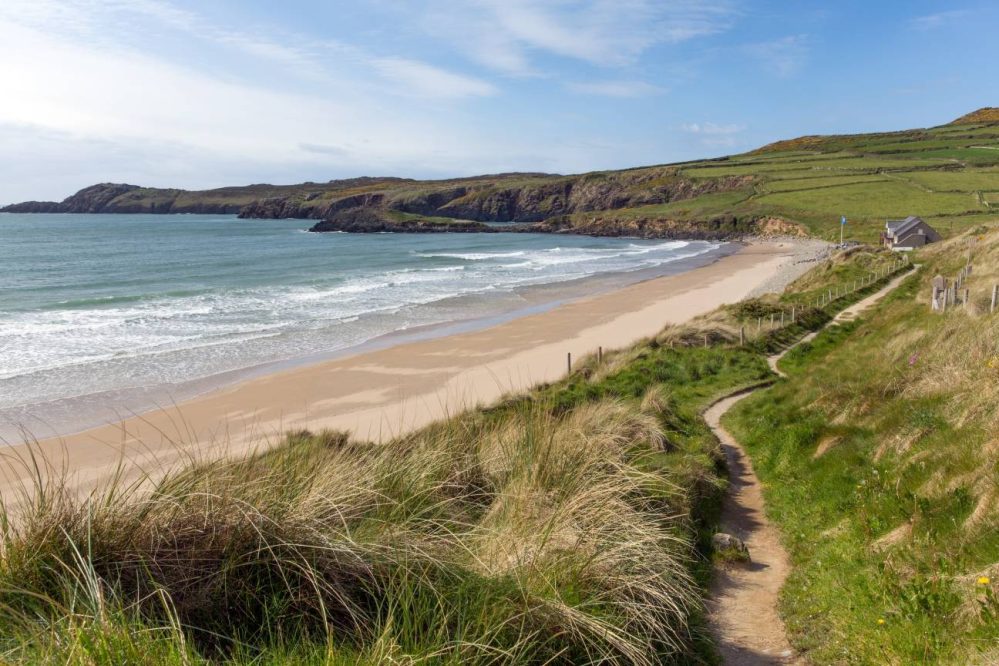
PLANS to convert historic farm buildings near north Pembrokeshire’s Whitesands beach for use as holiday accommodation have been given the go-ahead, but their use doesn’t have to be restricted to just that purpose.
In an application to Pembrokeshire Coast National Park, Matthew James of James Properties, through agent Harries Planning Design Management sought permission for the conversion of two derelict barns to two self-catering holiday accommodation units at Porthmawr Ganol, Whitesands, St Davids.
An officer report said: “The farmstead occupies a prominent position within a landscape characterised by open agricultural fields enclosed predominantly by traditional dry-stone walls, exposed coastal pasture and areas of heathland associated with Carn Llidi.”
It added: “The site lies within the Porthmawr Historic Landscape Character Area, an area recognised for its historic pattern of dispersed settlement, traditional farmsteads, dry-stone wall field boundaries and evidence of medieval and post-medieval agricultural activity.
“The retention and reuse of the existing buildings therefore has the potential to preserve an important element of the area’s historic landscape character whilst securing a viable long-term future for structures that would otherwise continue to deteriorate.”
It said that insufficient evidence had initially been submitted to demonstrate that the buildings were unsuitable for permanent residential conversion and only for self-catering accommodation and therefore an affordable housing contribution should be secured.
Policy would lead to a contribution of £36,400, the report said, but a financial viability assessment by the applicant “demonstrated that the development would not be viable if required to provide the full policy contribution,” the maximum contribution capable of being supported whilst maintaining viability was £12,641.
This reduced figure was accepted, the officer report saying: “Whilst this represents a reduced contribution when compared with the full policy requirement, the submitted viability evidence demonstrates that the development could not reasonably support the full contribution whilst remaining deliverable.
“In these circumstances, securing a reduced contribution is considered preferable to losing the opportunity to secure the restoration and beneficial reuse of the historic buildings.”
It stated that, with the affordable contribution, the scheme would not be limited to self-catering development only.
The application was conditionally approved by Park planners.


Local Government1 hour ago
Council admits 74 rights of way complaints remain unresolved
Key post vacant since February as walker raises safety concerns over paths near Llanteg and Amroth PEMBROKESHIRE COUNTY COUNCIL has...


Education24 hours ago
Diocese threatens legal action as Manorbier school closure battle intensifies
Church says council could face judicial review over fire-hit school A BITTER row over the future of Manorbier Church in...


Health1 day ago
Baby loss charity calls for urgent action after latest Wales figures published
Sands says Welsh Government must set clearer targets to reduce stillbirths and neonatal deaths A BABY loss charity has called...

Health1 day ago
Cancer delays worsening as west Wales hospitals struggle to recruit specialists
Health board admits standards are difficult to meet as doctors warn of “extremely dangerous” shortages PATIENTS in west Wales are...


News1 day ago
Rhun ap Iorwerth highlights first 25 days in office as First Minister
Plaid Cymru leader says government is moving quickly on NHS, farming and economic priorities FIRST MINISTER Rhun ap Iorwerth has...


Crime2 days ago
Man accused of six rapes including alleged Haverfordwest offence
A MAN has been sent to Crown Court accused of six rapes, including an alleged offence at a Haverfordwest campsite....


News2 days ago
Childcare row erupts as Plaid faces questions over costs and delivery
Opposition parties clash over flagship pledge as Senedd debate exposes growing divisions PLAID CYMRU’S flagship promise to create what it...


Crime3 days ago
Farmers fined in bovine TB scandal face fresh court action
Hartt family members listed at Haverfordwest Magistrates’ Court over unpaid penalties linked to major cattle prosecution TWO PEMBROKESHIRE farmers convicted...


Crime3 days ago
Pembrokeshire child killer stabbed to death in prison cell, murder trial hears
Kyle Bevan, jailed for the murder of Haverfordwest toddler Lola James, was allegedly stabbed 25 times and left ‘as if...


News3 days ago
Pendine cliff fall victim recovering after major emergency response
A 22-YEAR-OLD man who suffered serious injuries after falling from cliffs overlooking Pendine Beach is recovering well following emergency surgery....
-

 News7 days ago
Community appeal for privacy after serious emergency in Pendine
-

 Crime5 days ago
Sex offender in senior role at Tenby family hotel
-

 Crime4 days ago
Haverfordwest pair accused of £80,000 rogue trading frauds
-

 Community5 days ago
Forgotten wartime archive found in Pembroke Dock attic after 80 years
-

 Crime4 days ago
Families condemn failed appeal by paddleboard boss jailed over Haverfordwest tragedy
-
 Crime4 days ago
Knife blankets call as school staff face rising violence fears
-
Education24 hours ago
Diocese threatens legal action as Manorbier school closure battle intensifies
-
Crime2 days ago
Man accused of six rapes including alleged Haverfordwest offence