


News
Public urged not to feed foxes


 DON’T FEED foxes is one of the key recommendations in a new document entitled Urban Foxes: Guidelines on their management launched today.
The publication produced by a coalition of public health bodies and conservation organisations provides the most up to date advice and guidance on practical methods to control the urban fox population.
With so many differing views and opinions on the management of urban fox populations, the Chartered Institute of Environmental Health (CIEH)and its National Pest Advisory Panel (NPAP) called on specialist knowledge and expertise to help produce this science-based document. The guidance incorporates the views of public health practitioners, pest controllers and conservationists.
Few doubt that left unchecked urban foxes can cause disturbance, nuisance and in rare cases a public health threat. The urban environment in our cities provides a very suitable environment for foxes to live, breed and in many cases thrive.
Poor food waste management at fast food outlets and restaurants, overgrown back gardens, gaps under sheds and house foundations and broken air vents are all contributory factors to the successful colonisation of urban areas of foxes.
Some people enjoy seeing foxes in their gardens and actively encourage them by providing food and harbourage. By addressing these two core areas, public health campaigners say it is possible to lessen the risk of foxes becoming a problems in the first instance.

Key recommendations in the document include:
- Do not feed foxes, either intentionally or unintentionally, as this can disrupt the ‘natural order of things’ and artificially sustain populations. Store rubbish, especially food waste (including composted food waste), in fox proof containers made of materials such as metals
- Ensure foxes cannot access food put out for other wildlife or pets
- Always clear away spilt food from under any bird feeder
- Clear overgrown areas of gardens, especially where there are brambles
- Ensure that gaps under sheds and house foundations are suitably proofed to prevent ingress
Commenting on the document, Bob Mayho, CIEH Principal Policy Officer, said:
“While there is no single solution to managing fox problems, I am confident that this document can help the public, public health professionals and pest controllers with enough solid guidance to help manage ‘fox problems’ in a practical and humane way.
“Foxes are a natural part of our urban environment but their numbers do need to be controlled to avoid them causing a nuisance or a potential public health problem.

“Digging, defecating and bin raiding habits of foxes can cause considerable nuisance and disturbance. The risk of catching infections from a fox in the UK is low but care should be taken to avoid direct contact with faeces. Do not handle droppings with bare hands and ensure that children and adults always wash their hands after spending time in the garden.”


New fund would expand toy libraries and automatically register babies for library cards
EVERY child in Wales will have an equal right to read and play, regardless of their background, under plans announced by Welsh Labour today.
The party says that if it is re-elected in the next Senedd term, it will introduce a new programme aimed at improving access to books and toys for families across the country.
The proposals include automatic registration for a library card for every child in Wales when a baby’s birth is registered, the creation of a nationwide network of 100 toy libraries, and a new Children’s Reading and Play Fund. The fund would help pay for toys and increase the number of children’s books available in both public and school libraries.
Welsh Labour says the measures are designed to ensure that children from all backgrounds have access to resources that support learning, creativity and early development.
Cabinet Secretary for Education Lynne Neagle said the plans would help ensure no child misses out on opportunities because of their family’s financial circumstances.
“Every child in Wales should have access to books and toys, regardless of their background. No child should have to go without because their family can’t afford them,” she said.
“Books and toys are a vital part of growing up. The new Children’s Reading and Play Fund would ensure this is a right for every child in Wales and help reduce costs for families.”
Toy libraries operate in a similar way to traditional libraries, allowing families to borrow toys and return them after use. While some toy libraries already exist in parts of Wales, access is currently patchy.
Welsh Labour says its proposal would establish a national network of 100 toy libraries to ensure a more consistent offer across the country. Under the plan, the libraries would work together and receive national support and promotion.
The party argues that improving access to books and play materials can help support early literacy, learning and social development for young children while easing financial pressure on families.
Further details about the proposed Children’s Reading and Play Fund are expected to be set out as part of Welsh Labour’s programme for the next Senedd term.

Community hub supporting more than 700 people a month recognised at West Wales health and social care awards
PLANED has won the Working in Partnership Award at the West Wales Regional Health and Social Care Awards, held at Canolfan Pentre Awel.
The awards were hosted by the West Wales Regional Partnership Board and recognise projects that demonstrate strong collaboration across health, social care and community organisations.
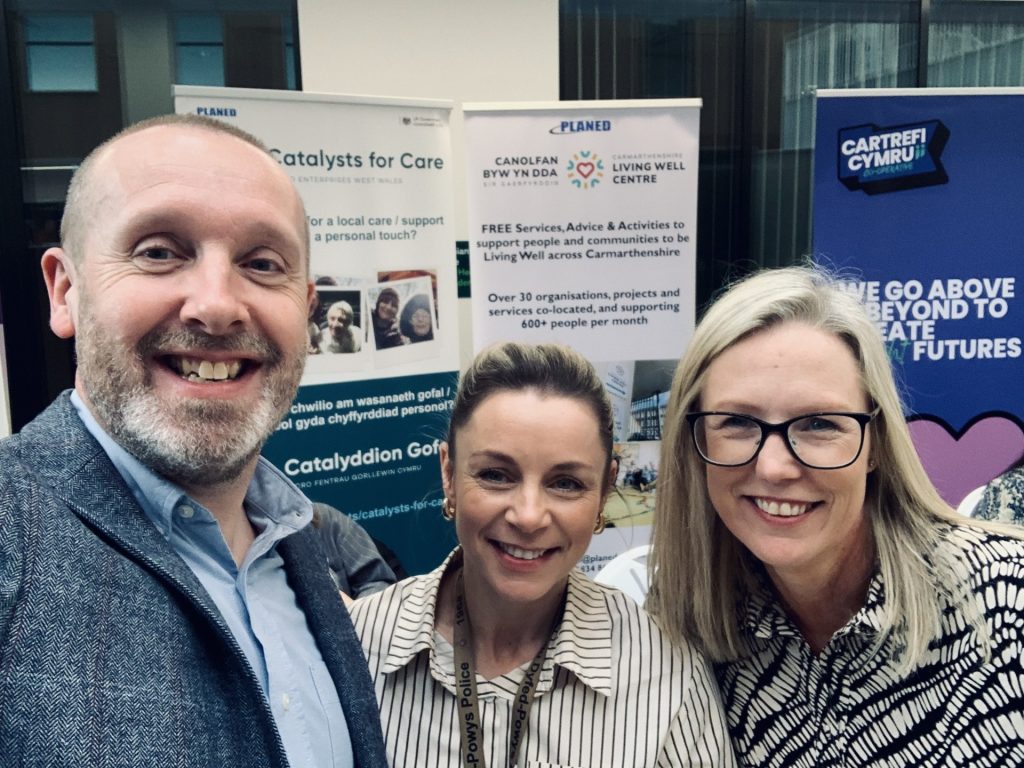
The award celebrates the success of the Carmarthenshire Living Well Centre, a project led and managed by PLANED which has become a key hub for community support in the county.
The centre brings together a range of organisations and initiatives offering advice, wellbeing activities and support services free of charge to local residents.
PLANED said the success of the centre has been built on strong collaboration with the many projects and organisations based there, all working together to support communities across Carmarthenshire.


More than 700 people each month now access services at the centre, taking part in group sessions, receiving advice and support, and benefiting from a wide range of community-led activities.
The organisation said the award recognises not only PLANED’s leadership in developing and managing the centre, but also the collective effort of the partners delivering services from the facility.
PLANED added that it will continue seeking further funding to support the development of the centre so it can expand its work and help even more people in the future.
Representatives from the organisation said it was great to see so many partners and familiar faces at the awards ceremony, adding that the recognition belongs to everyone involved in delivering the project.



RESIDENTS across parts of south Pembrokeshire have reported unusually loud explosions over the past week as military exercises take place at the Castlemartin Training Area.
The Ministry of Defence confirmed that live firing has been underway at the range between Monday (Mar 2) and Friday (Mar 6) as part of routine training for armoured units.
People living in Milford Haven, Neyland and surrounding communities said the blasts were noticeably louder than usual, with some reporting that the noise could be heard clearly indoors.
One resident in Milford Haven told The Herald that the sound carried across the Haven during the week.
“I’ve lived here for years and you always hear the range from time to time, but this week it seemed much louder than normal. You could hear it clearly inside the house.”
The Castlemartin Range Complex, located on the south Pembrokeshire coast between Bosherston and St Govan’s Head, is one of the UK’s main live-fire training areas for armoured units.
According to the official MOD firing notice for March, a range of weapons systems are being used during the exercises, including 120mm tank guns, mortars and heavy machine guns.
The 120mm main gun used by modern battle tanks produces extremely powerful shockwaves which can carry significant distances, particularly across water.
During some training periods the range operates during normal daytime hours, typically 7:30am to 4:45pm, but certain exercises include 24-hour firing sessions.

For safety reasons, several roads and footpaths in the Castlemartin area are closed during firing periods, including the road from Bosherston to St Govan’s Chapel and access to parts of the coastline.
A sea danger area is also enforced several miles offshore while the exercises are underway.
Castlemartin has been used by the military since the 1930s and is regularly used by armoured units training with Challenger tanks before deployment on operations or major exercises.

Live firing is scheduled to continue at intervals throughout March.



News2 hours ago
Reform energy policy raises questions for Milford Haven and Celtic Freeport ambitions
PLANS outlined in Reform UK’s Welsh manifesto have sparked debate over how the party’s energy policies could affect the future...


Crime5 hours ago
Man who threatened to kill police during Milford Haven standoff avoids jail
Judge tells defendant his ‘erratic and reckless’ behaviour caused serious disruption to emergency services A MILFORD HAVEN man who threatened...


Crime6 hours ago
Police investigating nightclub assault in Saundersfoot
POLICE are appealing for information following a serious assault at a nightclub in Saundersfoot which left two people with significant...


News1 day ago
Greens oppose US space radar plan for St Davids Peninsula
CANDIDATE CRITICISES DARC PROPOSAL THE GREEN PARTY has voiced strong opposition to plans for a major US military radar installation...


Crime1 day ago
Chinese intelligence probe reaches Dyfed-Powys Police area
Counter-terror officers arrest man in Powys as part of national security investigation THREE men have been arrested in Wales and...


Crime1 day ago
Man sentenced after punching convicted paedophile in Haverfordwest pub
A HAVERFORDWEST man has been sentenced after punching a convicted paedophile inside a town centre pub. Haverfordwest Magistrates’ Court heard...


Health2 days ago
Davies and Kurtz attack ‘fantasy hospital’ pledge for west Wales
Senedd Members demand immediate investment in Withybush and Bronglais as election campaign intensifies SENEDD Members Paul Davies and Samuel Kurtz have launched a fresh...


Health2 days ago
Hywel Dda warns of ‘significant pressure’ as A&E departments remain packed
Patients urged to use NHS 111 as Withybush, Glangwili and Bronglais face continued strain HYWEL DDA University Health Board has...


News3 days ago
War stops Qatar gas: Milford Haven LNG supplies disrupted
UK energy security concerns grow after shutdown at major export facilities ENERGY bills in the UK could rise sharply after...


Community3 days ago
Martyn Butler dies aged 71 months after Haverfordwest visit
Co-founder of Terrence Higgins Trust attended local plaque unveiling honouring friend Terry Higgins A LEADING figure in the UK’s response...
-

 Community6 days ago
St David’s Day parade brings colour and celebration to Haverfordwest
-

 Crime3 days ago
Nine deny Class A drugs conspiracy as case set for Crown Court trial
-

 Health3 days ago
Welsh Labour launches Senedd campaign with £4bn hospital pledge
-

 On The Road6 days ago
The Complete Guide to Choosing the Right Alloy Wheels
-
Crime5 hours ago
Man who threatened to kill police during Milford Haven standoff avoids jail
-

 Ministry of Defence2 days ago
Welsh pride HMS Dragon to sail to shield UK’s Cyprus base
-

 Sport3 days ago
New arrival celebrated at Bridge Meadow
-

 Education3 days ago
School in lockdown after reported phone threat