


Health
Welsh Government urged to prioritise third sector in suicide prevention strategy


Community services ‘vital’ as men account for more than three quarters of suspected suicides in Wales
MIND CYMRU says support for the third sector must be placed at the centre of Wales’ new suicide and self-harm prevention strategy, after new figures showed that men now account for more than three quarters of suspected suicide deaths in Wales.
The Welsh Government published its 10-year strategy in April, alongside data from Public Health Wales which shows that around 350 people die by suspected suicide each year. Of those deaths in 2023-24, 76 per cent were men.
Responding to the figures during Men’s Health Month, Mind Cymru is calling for investment in community-based services – including local Mind branches – to ensure the strategy can be delivered effectively, and that the lived experiences of men such as Aled Edwards are taken into account.
Aled, from Bangor, describes the period following his suicide attempt six weeks after the birth of his youngest child as “the hardest journey of my life”. He says feelings of being an inadequate husband and father became overwhelming.
“I was up in the middle of the night with my wife, I was changing nappies every time she was breast feeding, I couldn’t have done any more,” he said. “But something was there that I just couldn’t put a finger on. I thought the best thing for everybody would be to eliminate the problem – which was myself.

“But with the love and support of my wife, my children and a few close friends, I was able to reach out and finally get the help I needed. That’s when I was diagnosed with postnatal depression — something I didn’t even realise men could experience.
“I looked for somewhere I could go to talk openly, where men could sit together and share their experiences without fear or judgment. But there was nothing like that for dads.”
According to the National Childbirth Trust, rates of depression in the first year of fatherhood are twice as high as in the general UK population. Aled has since set up a social enterprise, Sut Mae Dad? (How’s Dad?), supporting men with mental health, postnatal depression and suicide prevention.
The Welsh Government’s Understanding strategy aims to reduce the rate of self-harm, suicide and attempted suicide in Wales. Mind Cymru says the strategy is a positive step but insists that increased investment in the third sector is essential to improve practical support for people like Aled.

Simon Jones, Head of Policy and Campaigns at Mind Cymru, said: “Suicide is a hugely complex issue and, as Aled’s story shows, everyone’s experiences are different. It is well known that becoming a new parent is a time when extra emotional support is often needed.
“Our network of local Minds provides invaluable community-based support to people with their mental health across Wales, including new parents through our Mums Matter programme, but there is clearly a need to support fathers too.
“The need to build on these services so that everyone with a mental health problem in Wales can get the support they need is more urgent than ever.

“In practical terms that means listening to, and investing in, locally-based third sector organisations that are already working closely with their communities to support people however they can.”
Mind Cymru’s Support Line offers a safe space for anyone to talk about their mental health with trained advisors and can signpost to specialist support if needed. The line is open Monday to Friday, 9:00am to 6:00pm, on 0300 102 1234.
Details of local Mind services can be found at: www.mind.org.uk/local



Hywel Dda Health Charities is delighted to announce that it has secured three free charity places for supporters wishing to take part in the TCS London Marathon MyWay 2026 – the virtual version of the world‑famous marathon.
Taking place on Sunday, April 26, the TCS London Marathon MyWay gives participants the freedom to complete the iconic 26.2‑mile distance from any location. Whether running, jogging or walking, entrants have 23 hours, 59 minutes and 59 seconds to finish the challenge. The event must be completed outdoors, but participants can choose any route that suits them.
The virtual marathon is the perfect option for anyone who has always dreamed of taking part in the London Marathon but would prefer a more flexible timeframe, the chance to complete the distance at their own pace and the ability to take part without travelling to London.
Participants will receive a finisher’s T-shirt and medal (optional), a free trial with Coopah, the official training app of the TCS London Marathon and access to the official event tracking app.
In return for one of the limited free places, Hywel Dda Health Charities asks supporters to raise a minimum of £300 in aid of a Hywel Dda service of their choice.
Tara Nickerson, Fundraising Manager for Hywel Dda Health Charities, said: “We’re so excited to offer these special MyWay places to our supporters. The virtual marathon is a fantastic opportunity for people of all abilities to take on an iconic challenge in a way that works best for them.
“Every pound raised will make a meaningful difference to patients and staff across our local NHS services. We can’t wait to cheer on our amazing fundraisers as they take on the 26.2 miles their own way.”
Places will be allocated on a first‑come, first‑served basis. To request a place or find out more, please contact the Hywel Dda Health Charities team via email at [email protected] or by phone on 01267 239815.
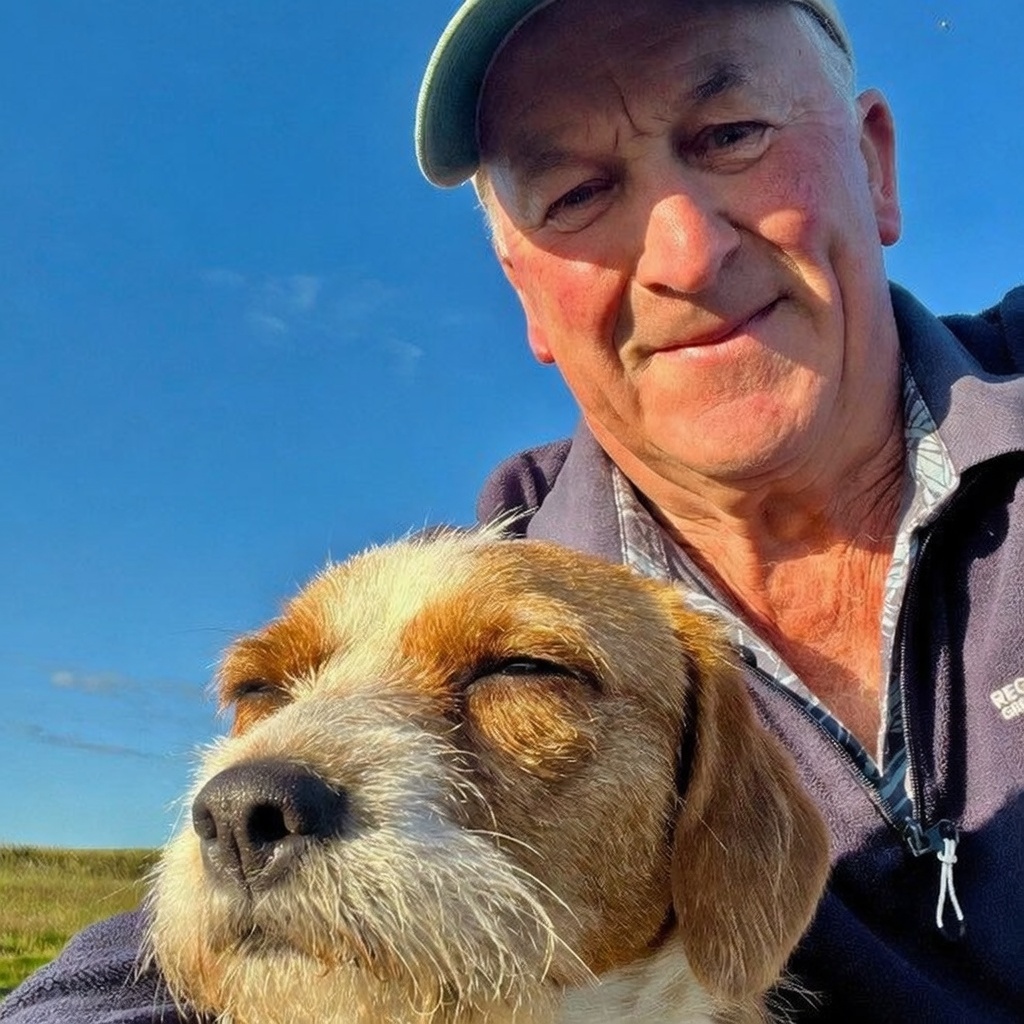
A retired Pembrokeshire farmer is lacing up his trainers for one of the world’s most iconic marathons, inspired by his family and driven by a cause close to his heart.
On March 22, Steve Ford, 68, will take on the Rome Marathon when he will be running alongside his daughter and son-in-law in what has become a remarkable family endeavour.
Since beginning his training in May 2025, Steve has clocked an extraordinary amount of miles for a first-time marathon runner. He has covered a staggering 726 miles and has logged no fewer than 130 hours of running. This includes 34,524 feet of elevation which is more than the height of Mount Everest.
Now, with less than three weeks to go, Steve has just completed one of his longest training runs to date.
He is running in aid of Parkinson’s UK, which is a cause close to his family’s heart, having been personally touched by the condition. To date, he has raised over £4,100, and his family are immensely proud of everything he has achieved.
Parkinson’s is a complex, progressive brain condition affecting more than 153,000 people in the UK. With over 40 symptoms, ranging from tremor and pain to anxiety and depression, and no cure, the need for research and support has never been greater. Someone in the UK is diagnosed every 20 minutes, and by 2050, the number of people living with Parkinson’s worldwide is expected to double to 25 million. Parkinson’s UK funds vital research into new treatments and provides life-changing support services for those affected.
To support Steve and donate to Parkinson’s UK, visit: https://events.parkinsons.org.uk/fundraisers/stephenford/overseas-runs-2026

A NEW seaweed extract could have a positive impact on mental health and wellbeing, according to scientists testing it as part of efforts to improve the nation’s health.
Sourced from seaweed sustainably harvested in the UK, it could offer a new natural remedy for gut health ailments. Seaweed is considered to be a “superfood”, due to its high fibre, amino acids, vitamins and minerals.
Long recognised in Asia for its therapeutic potential, the seaweed extract fucoidan is now attracting growing interest elsewhere in the world as demand rises for natural compounds with proven health benefits.
The 12-month INNOSea study focused on producing and trialling a purified extract of fucoidan, marketed as Thalivra, which showed promising effects on digestive health and overall wellbeing.
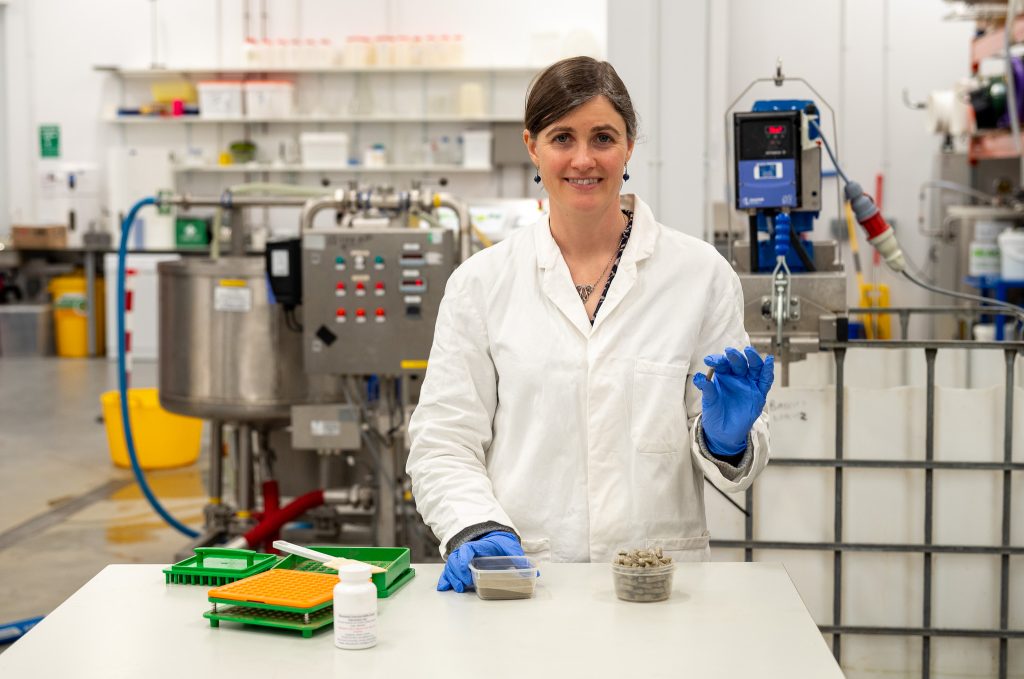
The first 28-day clinical trial suggested improvements in the mental wellbeing of young adults. The results pave the way for larger-scale testing.
Scientists at Aberystwyth University’s Department of Life Sciences, alongside researchers at the Institute of Biological, Environmental and Rural Sciences (IBERS) and seaweed ingredient technology company BioMara, developed and conducted the work.
Dr Jessica Adams, a seaweed expert from IBERS at Aberystwyth University, said: “Many people will have heard of the health and dietary benefits of seaweed – these tests add to that evidence. From a processing and bioactivity standpoint, the data from our study is striking. Achieving food-grade fucoidan at scale with such a potent anti-inflammatory profile is a real breakthrough. It opens the door for Thalivra to be positioned not just as a safe ingredient, but as one with genuine functional potential in gut health and immune-support formulations.”
The human trial was led by Dr Amanda J Lloyd and Dr Alina Warren-Walker from the Department of Life Sciences at Aberystwyth University. Dr Lloyd added: “This was the first time BioMara’s seaweed extract has been tested in humans, and the results are very encouraging. Participants tolerated the supplement extremely well, and we observed early trends in mental wellbeing that deserve further study. Importantly, the strong safety and retention profile gives us confidence to scale up into larger and different groups, and for longer trial periods.”
The project was funded by Innovate UK and BBSRC as part of a £2.5 million investment in 13 projects to drive the design and development of innovative food and beverage products.
Jay Dignan, Founder and CEO of BioMara, said: “Completing INNOSea marks a turning point. We’ve proven that Thalivra can be produced at scale, is safe for daily use, and shows compelling anti-inflammatory and wellbeing trends. This lays the foundation for larger clinical trials and, ultimately, commercial partnerships to bring Thalivra into gut health and immune-support formulations in a fast-growing global market.”
Thalivra fucoidan is harvested in Scottish waters and processed into a powder using BioMara’s unique method. It is approved for use as a novel food.



News7 hours ago
Reform energy policy raises questions for Milford Haven and Celtic Freeport ambitions
PLANS outlined in Reform UK’s Welsh manifesto have sparked debate over how the party’s energy policies could affect the future...


Crime10 hours ago
Man who threatened to kill police during Milford Haven standoff avoids jail
Judge tells defendant his ‘erratic and reckless’ behaviour caused serious disruption to emergency services A MILFORD HAVEN man who threatened...


Crime11 hours ago
Police investigating nightclub assault in Saundersfoot
POLICE are appealing for information following a serious assault at a nightclub in Saundersfoot which left two people with significant...


News1 day ago
Greens oppose US space radar plan for St Davids Peninsula
CANDIDATE CRITICISES DARC PROPOSAL THE GREEN PARTY has voiced strong opposition to plans for a major US military radar installation...


Crime1 day ago
Chinese intelligence probe reaches Dyfed-Powys Police area
Counter-terror officers arrest man in Powys as part of national security investigation THREE men have been arrested in Wales and...


Crime1 day ago
Man sentenced after punching convicted paedophile in Haverfordwest pub
A HAVERFORDWEST man has been sentenced after punching a convicted paedophile inside a town centre pub. Haverfordwest Magistrates’ Court heard...

Health2 days ago
Davies and Kurtz attack ‘fantasy hospital’ pledge for west Wales
Senedd Members demand immediate investment in Withybush and Bronglais as election campaign intensifies SENEDD Members Paul Davies and Samuel Kurtz have launched a fresh...


Health2 days ago
Hywel Dda warns of ‘significant pressure’ as A&E departments remain packed
Patients urged to use NHS 111 as Withybush, Glangwili and Bronglais face continued strain HYWEL DDA University Health Board has...


News3 days ago
War stops Qatar gas: Milford Haven LNG supplies disrupted
UK energy security concerns grow after shutdown at major export facilities ENERGY bills in the UK could rise sharply after...


Community3 days ago
Martyn Butler dies aged 71 months after Haverfordwest visit
Co-founder of Terrence Higgins Trust attended local plaque unveiling honouring friend Terry Higgins A LEADING figure in the UK’s response...
-

 Community7 hours ago
Whitland Post Office re-opens under new management
-

 Community6 days ago
St David’s Day parade brings colour and celebration to Haverfordwest
-

 Crime3 days ago
Nine deny Class A drugs conspiracy as case set for Crown Court trial
-

 Health3 days ago
Welsh Labour launches Senedd campaign with £4bn hospital pledge
-

 On The Road7 days ago
The Complete Guide to Choosing the Right Alloy Wheels
-
Health2 days ago
Davies and Kurtz attack ‘fantasy hospital’ pledge for west Wales
-
Crime10 hours ago
Man who threatened to kill police during Milford Haven standoff avoids jail
-

 Sport3 days ago
New arrival celebrated at Bridge Meadow