


Ministry of Defence
Castlemartin range set for heavy activity as winter live-fire exercise begins


Army warns of late-night firing and increased traffic
CASTLEMARTIN Training Area will be extremely busy over the next few weeks as the Army begins a major live-fire exercise running from now until to 5 December.
The winter training block will see troops carrying out critical preparation ahead of future deployments, with extensive armoured manoeuvres and both daytime and night-time firing.
Extended firing hours
Live firing will take place between the following times:
- Monday: 8:00am – 6:00pm and 8:00pm – 3:00am
- Tuesday: 8:00am – 6:00pm and 8:00pm – 3:00am
- Wednesday: 8:00am – 6:00pm and 8:00pm – 3:00am
- Thursday: 8:00am – 6:00pm and 8:00pm – 3:00am
- Friday: 8:00am – 6:00pm
There will be no live firing at weekends, although military vehicles will still be moving around the area.
Residents are being reminded that these times are the earliest and latest possible firing windows. Not every day will start or finish at the maximum hours listed.

Traffic expected on rural roads
The Army says there will be increased vehicle movements on local roads—particularly in Angle, Castlemartin and the Freshwater West area—in the week leading up to the exercise and throughout the training period.
A spokesperson said the support of local people is appreciated: “These exercises are essential for maintaining readiness and ensuring our troops are fully trained for any future operational requirement.”

RESIDENTS across parts of south Pembrokeshire have reported unusually loud explosions over the past week as military exercises take place at the Castlemartin Training Area.
The Ministry of Defence confirmed that live firing has been underway at the range between Monday (Mar 2) and Friday (Mar 6) as part of routine training for armoured units.
People living in Milford Haven, Neyland and surrounding communities said the blasts were noticeably louder than usual, with some reporting that the noise could be heard clearly indoors.
One resident in Milford Haven told The Herald that the sound carried across the Haven during the week.
“I’ve lived here for years and you always hear the range from time to time, but this week it seemed much louder than normal. You could hear it clearly inside the house.”
The Castlemartin Range Complex, located on the south Pembrokeshire coast between Bosherston and St Govan’s Head, is one of the UK’s main live-fire training areas for armoured units.
According to the official MOD firing notice for March, a range of weapons systems are being used during the exercises, including 120mm tank guns, mortars and heavy machine guns.
The 120mm main gun used by modern battle tanks produces extremely powerful shockwaves which can carry significant distances, particularly across water.
During some training periods the range operates during normal daytime hours, typically 7:30am to 4:45pm, but certain exercises include 24-hour firing sessions.

For safety reasons, several roads and footpaths in the Castlemartin area are closed during firing periods, including the road from Bosherston to St Govan’s Chapel and access to parts of the coastline.
A sea danger area is also enforced several miles offshore while the exercises are underway.
Castlemartin has been used by the military since the 1930s and is regularly used by armoured units training with Challenger tanks before deployment on operations or major exercises.

Live firing is scheduled to continue at intervals throughout March.
Ministry of Defence
Royal British Legion calls for stronger support for Armed Forces families in Wales

Manifesto highlights healthcare access, military compensation and support for children as key priorities ahead of Senedd election
THE ROYAL BRITISH LEGION is urging politicians from all parties to take meaningful action to improve support for the Armed Forces community in Wales ahead of the Senedd elections in May.
The charity has published a new manifesto outlining the key areas where serving personnel, veterans and their families continue to face disadvantage, and where the next Welsh Government could take practical steps to improve support.
Central to the manifesto is the Armed Forces Covenant – the commitment that those who serve, or have served, in the Armed Forces, and their families, should face no disadvantage because of their service.
The RBL is calling on the Senedd and Welsh Government to strengthen their commitment to the Covenant by ensuring it is properly funded, clearly implemented across public services and regularly reviewed.
Access to healthcare is identified as a major concern. Because military families often move frequently as part of service life, they can face difficulties registering with GPs, dentists and other local health services.
The RBL says the next Welsh Government should introduce practical measures to make it easier for military families to access healthcare when they relocate.
The charity is also calling for fairer treatment of military compensation payments awarded to personnel or families who have suffered injury, bereavement or other harm through service.
In Wales, such payments are often treated as income during means-tested assessments for benefits or support services. The RBL argues that this practice unfairly disadvantages the very people the compensation is intended to help.
Support for children from military families is another key theme of the manifesto. Frequent school moves and long periods of separation from a parent can disrupt children’s education and wellbeing.

The RBL is calling for greater recognition of these challenges and improved support to ensure children from Armed Forces families are able to thrive in school.
John Williams, Head of Public Affairs and Campaigns at the Royal British Legion said: “The 2026 election is an important opportunity for the Senedd to prioritise the needs of the Armed Forces community.
“This manifesto focuses on the issues we believe are of greatest importance and sets out how the next Welsh Government can take them forward.

“The manifesto has been informed by evidence and lived experience, and we hope that by working with all parties we can ensure the unique contribution of the whole Armed Forces community is given the recognition it deserves.”


CAMPAIGN group ‘PARC Against DARC’ – launched in 2024 in opposition to the proposed US military radar installation at Brawdy – is calling for a county wide response to the official consultation on DARC Radar.
As part of statutory public engagement obligations, London Based PR corporation Cascade Communications announced the opening of the public consultation on February 22, which will close four weeks later on March 22. They say the MOD will then submit an official planning application to Pembrokeshire County Council after which the local authority is expected to run its own public engagement and consultation process with agencies, stakeholders and the general public.
As a result, PARC Against DARC has launched what they describe as ‘a massive community led response of opposition’ which offers several ways of actively opposing the plans. They are urging people to visit the consultation page on their website www.parcagainstdarc.com and take part in the consultation response via what they describe as ‘an accessible action-tools with simple one-click’ options to email the consultation and register opposition to the Radar plans. Emails can also be sent to Cascade Communications at: [email protected] directly.
The campaign group has already made significant inroads to stalling the plans in its first two years, with Plaid Cymru and the Green Party firmly supporting the campaign at national Party levels. Thirty eight elected politicians have also supported motions in both the Senedd and Westminster opposing the plans, with many pledging to escalate opposition through parliamentary procedures in both Cardiff and Westminster.
A spokesperson said: “There is already a massive momentum of opposition to this dangerous radar which if ever built would unquestionably be the most powerful, most high-radiation installation ever imposed on British soil. With residents a stone’s throw away from the edge of the base, the MOD’s absolute stone-cold refusal to publish any data for public scrutiny is disgusting, and we deserve better from our government, and the Labour Party.
“When questioned about this and thousands of studies showing health risks, all the MOD does is trot out one widely-criticised research group that ignores the modern research body on radiation and is under intensive military lobbying influence, and expects residents here to shut up.”
PARC Against DARC claims their petition has been signed by over 18,000 people,while local politicians have pledged to fight the proposals in the High court.
“This is set to be a serious ‘vote killer’ in the upcoming Senedd elections this May,” said the spokesperson.



News5 hours ago
Reform energy policy raises questions for Milford Haven and Celtic Freeport ambitions
PLANS outlined in Reform UK’s Welsh manifesto have sparked debate over how the party’s energy policies could affect the future...


Crime8 hours ago
Man who threatened to kill police during Milford Haven standoff avoids jail
Judge tells defendant his ‘erratic and reckless’ behaviour caused serious disruption to emergency services A MILFORD HAVEN man who threatened...


Crime10 hours ago
Police investigating nightclub assault in Saundersfoot
POLICE are appealing for information following a serious assault at a nightclub in Saundersfoot which left two people with significant...


News1 day ago
Greens oppose US space radar plan for St Davids Peninsula
CANDIDATE CRITICISES DARC PROPOSAL THE GREEN PARTY has voiced strong opposition to plans for a major US military radar installation...
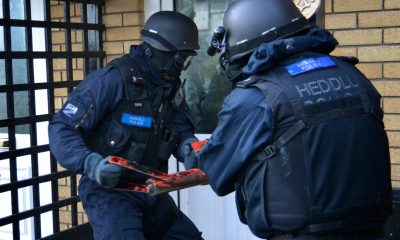

Crime1 day ago
Chinese intelligence probe reaches Dyfed-Powys Police area
Counter-terror officers arrest man in Powys as part of national security investigation THREE men have been arrested in Wales and...


Crime1 day ago
Man sentenced after punching convicted paedophile in Haverfordwest pub
A HAVERFORDWEST man has been sentenced after punching a convicted paedophile inside a town centre pub. Haverfordwest Magistrates’ Court heard...


Health2 days ago
Davies and Kurtz attack ‘fantasy hospital’ pledge for west Wales
Senedd Members demand immediate investment in Withybush and Bronglais as election campaign intensifies SENEDD Members Paul Davies and Samuel Kurtz have launched a fresh...


Health2 days ago
Hywel Dda warns of ‘significant pressure’ as A&E departments remain packed
Patients urged to use NHS 111 as Withybush, Glangwili and Bronglais face continued strain HYWEL DDA University Health Board has...


News3 days ago
War stops Qatar gas: Milford Haven LNG supplies disrupted
UK energy security concerns grow after shutdown at major export facilities ENERGY bills in the UK could rise sharply after...


Community3 days ago
Martyn Butler dies aged 71 months after Haverfordwest visit
Co-founder of Terrence Higgins Trust attended local plaque unveiling honouring friend Terry Higgins A LEADING figure in the UK’s response...
-

 Community5 hours ago
Whitland Post Office re-opens under new management
-

 Community6 days ago
St David’s Day parade brings colour and celebration to Haverfordwest
-
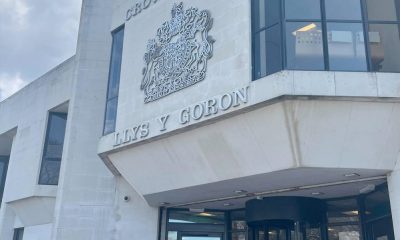
 Crime3 days ago
Nine deny Class A drugs conspiracy as case set for Crown Court trial
-

 Health3 days ago
Welsh Labour launches Senedd campaign with £4bn hospital pledge
-

 On The Road6 days ago
The Complete Guide to Choosing the Right Alloy Wheels
-
Crime8 hours ago
Man who threatened to kill police during Milford Haven standoff avoids jail
-
Community3 days ago
Martyn Butler dies aged 71 months after Haverfordwest visit
-

 Sport3 days ago
South Pembrokeshire Short Mat Bowls Association results