


Business
‘Fat cats’ preying on veterinary practices

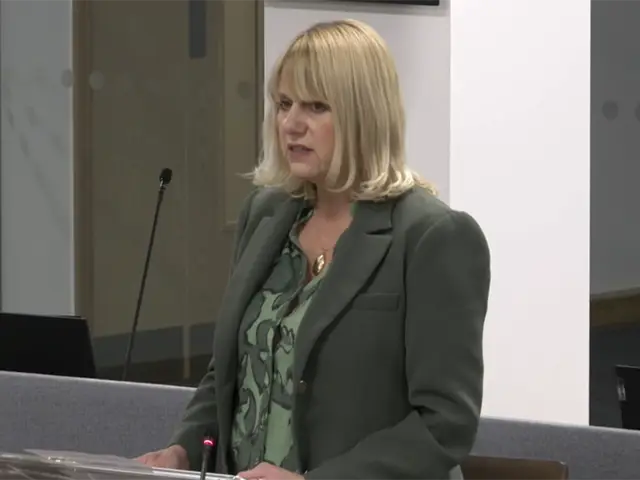
PRIVATE equity firms have been accused of collaring the market in a corporate “feeding frenzy” that has seen local, independent vets gobbled up by global giants.
Carolyn Thomas told the Senedd that non-vet ownership has led to a “monopolisation” of the sector, with six big firms owning 60% of UK practices – up from 10% a decade ago.
Leading a debate on Wednesday December 10, the Labour politician warned the “endless pursuit of profit” was driving down wages for staff while pushing up fees for customers.
“The cost-of-living crisis has put significant financial burden on pet owners,” she said.
“Many have been priced out of pet insurance, with premiums based on postcode. If an area has a large corporate presence, premiums are higher, but without insurance, sudden, huge vet bills can be impossible to pay…

“I read about pet owners skipping meals to cover costs, having to hand over their pets to rescue, or – in some cases – very sadly being forced to euthanise their pet.”
The short debate was prompted by a petition submitted by Linda Evelyn Joyce-Jones raising concerns about the corporate takeover of veterinary practices.
In 1999, the Blair UK Government changed the law to allow vet practices to be owned not only by qualified veterinary surgeons.
Ms Thomas raised an ongoing Competition and Markets Authority (CMA) investigation into the veterinary market for household pets which has uncovered major competition concerns.
She told Senedd Members: “One of the companies being looked into is IVC Evidensia, the largest provider of vet services in the UK, owning over 1,000 practices. It is owned in part by Nestlé, which also manufactures pet food.
“How can owners be confident of the quality of the food or the nutrition advice from their vet when the two have such a conflict of interest?”
Ms Thomas, who chairs the Senedd’s petitions committee, said bills for pet owners have increased by 60% – “double the rate of inflation and increases in vet salaries”.

She pointed to growing pressure on rescue centres, with the RSPCA reporting a 25% rise in the number of pets abandoned in Wales and England this year.
She said: “Pets are a much-loved part of the family and it can be incredibly worrying for owners and have a significant mental health impact when their animal becomes unwell.
“It’s even more stressful and expensive when this happens outside of normal practice hours, and many of the large companies… do not cover out-of-hours emergency care.”
Ms Thomas told the Senedd the corporate takeover is having a “severe negative impact” on those working in the sector, “which is plagued by support staff experiencing poverty pay”.
She warned vets feel pressured to upsell to pet owners or book emergency appointments for non-urgent symptoms due to strict deadlines and targets.
“The situation is clearly unsustainable,” she said.
“It’s costing the lives of pets, it’s traumatising and unaffordable for pet owners and has created an unacceptable work environment for vets and support staff.
“France has taken legal steps against the corporate ownership of clinics, and Ireland is considering the same. I believe that the UK needs to take action now, before it’s too late.”
The north Walian warned of a “dire” situation on Anglesey where there are no out-of-hours vet services, “a constant source of concern for local pet owners”.
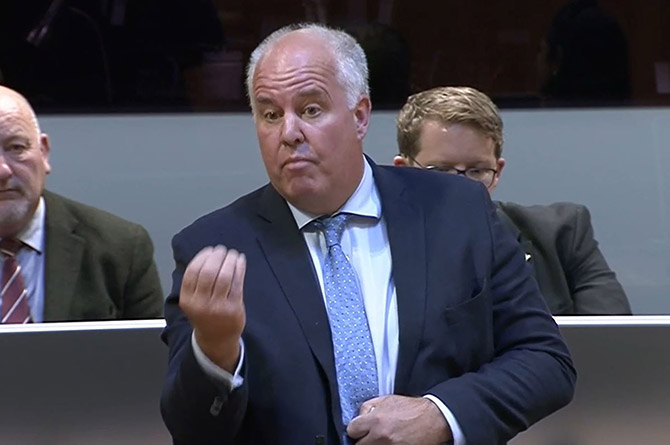
Andrew RT Davies, the former Tory group leader, described the situation on Ynys Môn as an “unmitigated disaster” for islanders who view their pets as part of their family.
Responding to the debate, Huw Irranca-Davies, Wales’ Deputy First Minister, acknowledged the growing trend of corporate consolidation had raised critical questions.
Mr Irranca-Davies, who is responsible for animal welfare policy, said the Welsh Government was awaiting the final outcome of the CMA’s investigation expected in March 2026.
He pointed out that regulation of veterinary surgeons remains non-devolved as he welcomed the UK Government’s intention to consult on “timely” reform of the Veterinary Surgeons Act.
The MP-turned-Senedd Member, who was a Defra minister under Gordon Brown, said: “My priority is to ensure that Wales has exemplary standards of animal health and welfare, and a thriving veterinary sector is essential to achieving those goals.”




TRADERS in Tenby have been left frustrated after Pembrokeshire County Council extended the closure of Crackwell Street once again.
The street, which provides direct access to Tenby Harbour, has been closed for several months to allow scaffolding work to be carried out at Goscar House.
It had been due to reopen on Friday, but the council has now extended the closure until June 19.
Local businesses say the repeated delays have affected trade, with concerns that the ongoing closure is making access to the harbour area more difficult during a busy period for the town.
The road remains closed while scaffolding is in place at the property.
Caption:
Ongoing closure: Scaffolding remains in place on Crackwell Street, Tenby (Pic: Malcolm Richards).

Strategy promises investment, skilled jobs and new supply chains, but major barriers remain over grid connections, planning and delivery
THE CELTIC FREEPORT has published a new five-year strategy setting out how Milford Haven and Port Talbot will be used to attract major investment, create jobs and build a new low-carbon industrial economy across South and West Wales.
The plan, published today, Monday (Jun 15), says the Freeport will focus on renewable energy, advanced manufacturing, port infrastructure, floating offshore wind, hydrogen, sustainable fuels, carbon capture, cleaner steel and low-carbon logistics.
For Pembrokeshire, the strategy places Milford Haven at the heart of plans to modernise port infrastructure, support future energy projects and create new employment and training opportunities for local people.
The Celtic Freeport spans sites in Milford Haven and Port Talbot and is backed by a public-private partnership involving Associated British Ports, Camplas, Dragon LNG, Impala, Ledwood Mechanical Engineering, Neath Port Talbot Council, the Port of Milford Haven, RWE and Pembrokeshire County Council.
Over a 25-year period, the Freeport is projected to deliver more than £8bn of investment and create 11,500 jobs.
Focus on Milford Haven
The five-year strategy says the Freeport will help enable major port infrastructure upgrades to support the roll-out of floating offshore wind.
Milford Haven is already one of the UK’s most important energy ports, and the plan makes clear that the area is expected to play a major role in the transition from traditional energy industries to cleaner fuels and renewable power.
The document says the Freeport will work to attract investment into key sectors including offshore wind, hydrogen, solar, batteries, sustainable aviation fuel, ammonia, pipelines, carbon capture and storage, and advanced manufacturing.
It also says the Freeport wants to create a stronger local supply chain so that businesses in Pembrokeshire and the wider region can benefit from major industrial development, rather than seeing work and contracts go elsewhere.
The strategy says one of the aims is to ensure local businesses and landowners are supported in accessing capital and external investment for land remediation, infrastructure upgrades and priority projects.
Jobs and skills
A major part of the plan focuses on skills, training and local employment.
The Freeport says it wants to create a “sustainable talent pipeline” where local people can see future job opportunities and receive support with upskilling, career advice and connections to employers.

The strategy says this will include work with schools, colleges, trade unions, local authorities and employers to identify future skills gaps and create employment pathways.
Pembrokeshire College is named among the education partners expected to help deliver workforce transition and future skills for both existing energy industries and new green energy sectors.
The plan also says the Freeport will look at ways to support economically inactive people into work and will consider using some funding to establish a community fund focused on projects that visibly benefit local people, including possible support for transport-related challenges.
Investment and infrastructure
The strategy sets out four main priorities for the next five years.
These are driving capital investment into key Freeport industries, helping landowners progress development projects, exploring local supply chain innovation and decarbonisation, and laying the foundations for a thriving skills market.
The Freeport says it will deliver a £25m seed capital programme by the end of 2028/29 and will prioritise at least two seed capital projects in 2026, subject to agreements on governance and funding.
Business cases for selected projects are expected to be prepared during 2026 before being considered by the Celtic Freeport board. If projects are no longer considered feasible, the strategy says a reallocation process will be required.
The Freeport also plans to build a pipeline of future investment projects using retained non-domestic rates, with revenues expected to begin flowing back from 2028.
The document says business development and marketing will be used to attract high-value tenants to priority sites, including through international investment campaigns and sector-specific proposals.
Planning and grid issues
The plan acknowledges that major development is not straightforward.
It says businesses face challenges including grid connection issues, planning delays, policy uncertainty and the high upfront cost of infrastructure.
To tackle this, the Freeport says it will work with the UK and Welsh Governments, Natural Resources Wales, local authorities and public investment bodies to remove barriers and unlock private investment.
It will also hold monthly meetings with landowners to monitor progress, identify delivery problems and escalate strategic risks where necessary.
Governance and public accountability
The strategy also sets out plans to expand the Freeport’s governance arrangements.
The current board includes representatives from Milford Haven Port Authority, Associated British Ports, Pembrokeshire County Council and Neath Port Talbot Council.
The Freeport says this structure will be expanded to include non-executive directors and representatives from key landowners and business operators.
The plan also includes commitments to publish board schedules and minutes, hold one public board meeting each year, organise an annual community open day, run skills and employment sessions in schools, and hold local job fairs and apprenticeship roadshows as opportunities grow.
Trade unions are also expected to have a formal route into the process through a workers’ consultative forum, with the strategy saying unions will help inform skills interventions, fair work principles and employment priorities.
Cathy Hall, Interim CEO of the Celtic Freeport, said: “This Five-Year Plan sets out how the Celtic Freeport will support businesses across the region to decarbonise, grow and access new opportunities.
“We will be focussing on delivering projects to consolidate the region’s strong industrial future.”
The publication of the plan marks an important moment for Pembrokeshire, where hopes of long-term industrial renewal are closely tied to Milford Haven’s role in energy, ports and marine engineering.
Supporters say the Freeport could bring major investment and skilled jobs to the county.
But the success of the plan will depend on whether the promised benefits are felt locally, whether Pembrokeshire firms can win work from the new supply chains, and whether young people in the county are given a realistic route into the jobs created by the green industrial transition.

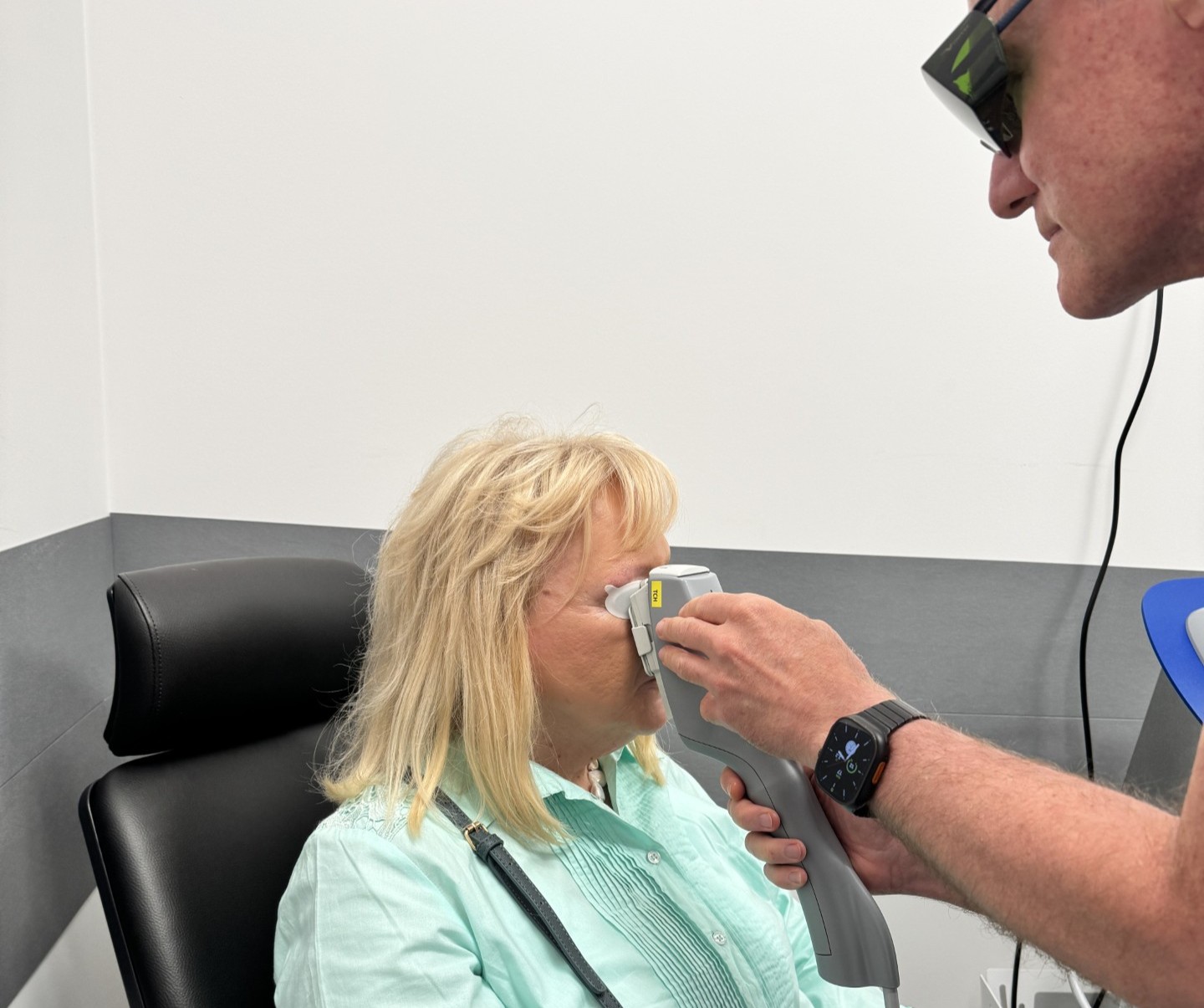
A HAVERFORDWEST opticians has launched a specialist clinic for dry eye disease, offering new support for people living with the common condition.
Specsavers Haverfordwest has introduced its Advanced Dry Eye Clinic to give customers access to in-depth diagnosis and targeted treatment for dry eye.
Dry eye is a common, but often misunderstood, condition where the eyes do not produce enough tears, or the tears evaporate too quickly, leading to discomfort, irritation and sometimes blurred vision.
It can be linked to a range of factors, including increased screen use, contact lens wear, ageing and environmental conditions. As many as one in three people suffer from dry eye and most causes can be treated.
Many people are surprised to learn that watery eyes can actually be a sign of dry eye, as the eyes produce poor-quality reflex tears in response to irritation. The new service provides an in-depth approach to diagnosing and managing the condition.
While many high street opticians now offer dry eye clinics, Specsavers Haverfordwest provides a wider range of specialist treatments and technology that are not commonly available.
Using advanced imaging to assess the eyes and tear glands, the team can identify the underlying cause of symptoms and create a personalised treatment plan for each customer.
Whilst there are a range of different treatments available, the major investment has been in the introduction of eye-light devices, bringing advanced IPL (Intense Pulsed Light) and LLLT (Low-Level Light Therapy) treatments to customers suffering from dry eye symptoms.
Designed to target the underlying causes of dry eye disease, the eye-light device combines clinically proven light-based therapies to help improve tear quality, reduce inflammation, and restore eye comfort. The treatment is safe, non-invasive, and suitable for many patients experiencing irritation, burning, watery eyes or discomfort linked to screen use and modern lifestyles.
The clinic also supports contact lens wearers experiencing discomfort, helping them return to comfortable, everyday use.
Some of the first customers to use the clinic have already noticed improvements in their symptoms.
Danielle Thomas says: ‘I honestly can’t believe the difference. I’d been struggling with sore, gritty eyes for years and had given up wearing my contact lenses altogether – they just became too uncomfortable. I was constantly using drops with very little relief.

‘From the moment I walked into the dry eye treatment room, it felt completely different to a normal appointment. The environment is calm, almost spa-like and the whole experience was surprisingly relaxing. The treatments were comfortable and the team explained everything so clearly. After just three sessions the improvement was notable – my eyes feel normal again.
‘The constant irritation and watering have gone and I’m now back in contact lenses comfortably, which I never thought would be possible. It’s genuinely been life changing. I wish I’d known about it sooner.’
Wayne Jones, optometrist and retail director at Specsavers Haverfordwest, adds: ‘Dry eye is something we see very frequently, yet it’s still widely dismissed as a minor irritation. In reality, it can have a real impact on comfort, vision and overall quality of life.
‘What many people don’t realise is that, in many cases, there is an underlying cause that can be identified and treated.
‘By launching this clinic, we’re able to offer a much more detailed and personalised level of care here in West Wales, helping us support more customers locally. We would encourage anyone experiencing persistent symptoms such as dryness, irritation or blurred vision to have their eyes checked, as there’s often a treatable cause.’
People interested in using the clinic should call Specsavers Haverfordwest on 01437 767788 to book an initial assessment and discuss treatment options.


Business1 day ago
Celtic Freeport five-year plan puts Milford Haven at centre of green energy future
Strategy promises investment, skilled jobs and new supply chains, but major barriers remain over grid connections, planning and delivery THE...


Education1 day ago
Closure of Ysgol Clydau approved after emotional council debate
COUNCILLORS WARNED RURAL COMMUNITIES WILL REMEMBER DECISION PEMBROKESHIRE councillors have voted to close Ysgol Clydau following an emotional debate over...


Education1 day ago
Manorbier school closure process to continue after narrow council vote
Questions remain over insurance, rebuilding costs and possible legal action by Diocese PEMBROKESHIRE councillors have voted to press ahead with...

Community1 day ago
The father, son and daughter lifeguard trio saving lives in Pembrokeshire
A FATHER, son and daughter are preparing to help keep beachgoers safe on the Pembrokeshire coast this summer as part...

Community2 days ago
Beating of the Bounds brings music, boats and tradition to Haverfordwest
CENTURIES-OLD CEREMONY DRAWS FAMILIES TO THE RIVERSIDE HAVERFORDWEST’S historic Beating of the Bounds returned on Sunday (Jun 14), with boats,...


Community2 days ago
Milford Haven School pupil praised after stepping in during real-life emergency
A YEAR 11 pupil at Milford Haven School has been praised after putting his first aid training into action to...

Community2 days ago
River festival brings crowds to Haverfordwest
A CELEBRATION of the River Cleddau brought crowds into Haverfordwest on Saturday (June 13) as the town’s River Festival returned...


Charity2 days ago
Voices at the Castle hailed as unforgettable night after weather setback
Russell Watson headlines spectacular charity concert at Pembroke Castle A SPECTACULAR evening of live music at Pembroke Castle has been...


Local Government3 days ago
Council admits 74 rights of way complaints remain unresolved
Key post vacant since February as walker raises safety concerns over paths near Llanteg and Amroth PEMBROKESHIRE COUNTY COUNCIL has...


Education4 days ago
Diocese threatens legal action as Manorbier school closure battle intensifies
Church says council could face judicial review over fire-hit school A BITTER row over the future of Manorbier Church in...
-

 Community2 days ago
Pembrokeshire Chess Club crowned Welsh champions
-
Education4 days ago
Diocese threatens legal action as Manorbier school closure battle intensifies
-

 Crime5 days ago
Pembroke Dock teenager sentenced over train strangulation attack
-

 Crime5 days ago
Man accused of six rapes including alleged Haverfordwest offence
-

 Local Government4 days ago
Taxi suspended after county-wide licensing checks
-

 Crime5 days ago
Brothers found guilty of causing death of Welsh dad in ‘reckless’ race
-

 Crime4 days ago
Currys worker denies stealing £2,500 of store stock
-

 Business4 days ago
Consumers ‘falling between agencies’ as Computer Solutions Wales complaints reviewed