


Science and technology
£2.5m Aberystwyth drone project to tackle malaria in Africa


DRONES and AI will be used in a new £2.5 million Aberystwyth University-led effort to wipe out malaria hot spots in Africa, supported by funding from the Gates Foundation.
Malaria is one of Africa’s most devastating public health challenges, causing hundreds of thousands of preventable deaths each year.
A new international research project in Zanzibar, led by Aberystwyth University, will target the aquatic habitats of mosquito larvae before they mature.
The project will exploit the latest drone, satellite and artificial intelligence technology to help identify these sites more effectively. It builds upon success in previous projects that used smartphones and drones.

The initiative brings together researchers, public health experts, and community stakeholders to develop sustainable, locally-led strategies for mosquito control, supported by funding from the Gates Foundation.

The research team will overcome the limitations of conventional mapping by using drones equipped with advanced sensors – including near-infrared and thermal imaging – to tackle challenges such as water hidden by dense vegetation. Satellite imagery will also be used to map larger water bodies. The combination of these technologies will enable mosquito habitat mapping over a large area without requiring extensive fieldwork.
Artificial intelligence will be trained to analyse the images and accurately find mosquito breeding grounds, even in complex or obscured environments like rice paddies or swamps with thick aquatic vegetation or algae cover.
Key software developed by the project will be open source, with the ultimate goal being to create a transferable and scalable model for malaria-hit regions worldwide.
Dr Andy Hardy, lead researcher from Aberystwyth University’s Department of Geography and Earth Sciences, said:
“This project is reinventing mosquito control in a bid to tackle one of sub-Saharan Africa’s most urgent public health challenges. By using drones, satellite imagery, and AI, we can rapidly and precisely map breeding grounds, making interventions more targeted and effective.
“Our focus on the ecology of mosquito habitats and collaboration with local communities will help build a scalable, sustainable model that could serve as a blueprint for malaria control across the globe.”
In addition to technological innovation, the project will invest in community engagement, in order to overcome any concerns or resistance to the new technologies, and to train people in methods of eradicating mosquito larvae before they emerge from the water as adults.

The three-year project will create a digital toolkit to streamline mosquito control operations. It will feature a central dashboard for managers to plan and oversee activities, alongside a smartphone app that will help field staff to map, spray, and monitor tasks.
The system will recommend the most effective way to map an area based on terrain and budget and include guidelines to support consistent and effective implementation.
Dr Shija Joseph Shija from the Zanzibar Malaria Elimination Program which is collaborating on the project, said:
“Zanzibar has made tremendous progress in the fight against malaria, yet we continue to face the persistent challenge of mosquito breeding sites that are often difficult to detect and control. This new £2.5 million initiative, led by Aberystwyth University and supported by the Gates Foundation, represents a powerful step forward in our efforts to eliminate malaria from our islands.
“We are particularly encouraged that the tools and software developed through this project will be open source. This means Zanzibar will be among the first regions globally to benefit from a fully transferable, data-driven model that can support real-time planning, monitoring, and decision-making in larval source management.”
Other partners on the project include the London School of Hygiene & Tropical Medicine, Liverpool School of Tropical Medicine, Ifakara Health Institute in Tanzania, and Zzapp Malaria.


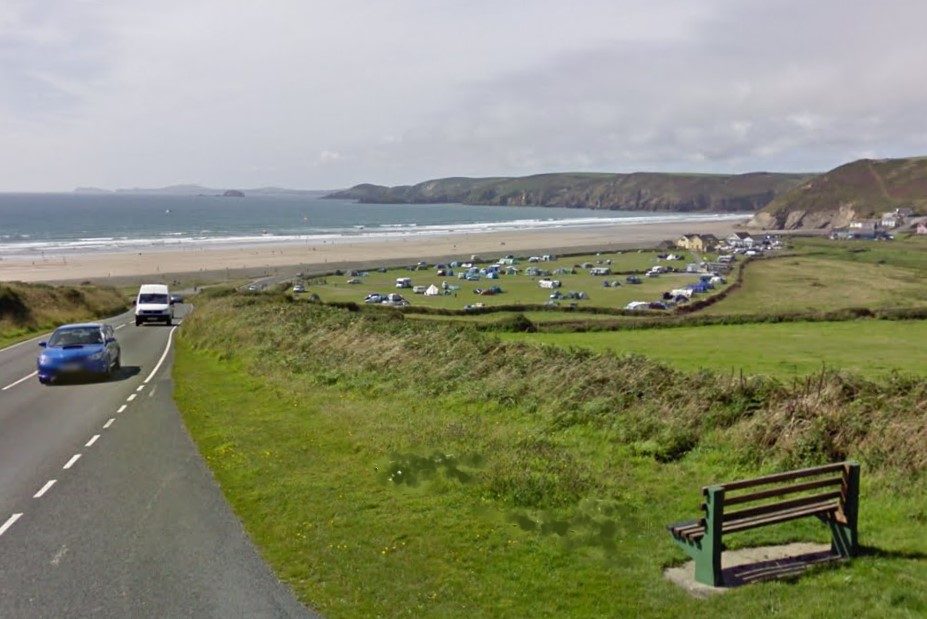
PLANS by a Vodafone phone company subsidiary to bring fibreoptic cables across the sea from Ireland to a Pembrokeshire seaside beach village in order to improve broadband coverage have been lodged.
In an application to Pembrokeshire Coast National Park, Apollo Submarine Cable Systems limited, through agent APEM Group, seeks permission for the construction of four underground telecom chambers and interconnecting ducts, along with Horizontal Directional Drilling (HDD) underneath Brandy Brook, Newgale, and the construction of one HDD bore-to-sea outfall.
A supporting statement accompanying the application says the scheme would form the onshore part of a project to bring a fibreoptic cable onshore from Kilmore Quay, Wexford, Ireland to a site at Newsurf Shop car park, Sands Café Car Park and Duke of Edinburgh Inn, Newgale.
It says the majority of the project is subterranean, with very minor above ground works are proposed, which comprise the installation of a manhole cover.
It adds: “To facilitate improved internet connectivity, the applicant is proposing the installation of a fibreoptic telecoms cable (the Beaufort cable) from Kilmore Quay, Wexford, Ireland to Newgale.
“The project is to facilitate the installation of the Beaufort cable, as it comes ashore in Wales and to link it into the wider network, which will be operated by Vodafone’s wholly-owned subsidiary Apollo Cable System Limited in the UK.”
It says the project would see three underground telecom chambers and a 120-metre interconnecting duct, the 87-metre HDD underneath Brandy Brook, launching from the receiver pit located within the Site, along with the construction of one HDD bore-to-sea outfall, in a subtidal area of Newgale bay, of approximately 920 metres, and one underground telecom chamber and interconnecting duct.
Citing a report on digital connectivity, it says 5G geographic coverage has seen improvements but is still relatively low at 57 per cent of Wales’ landmass, with 4G the primary service.
That report says there is a difference in full fibre coverage between urban and rural areas (83 per cent versus 59 per cent) and highlighting a need for further coverage.
On the scheme itself, the statement says short-term noise and disruption to local residents “is anticipated during the construction phase however this will be limited to 57 days,” adding: “The proposed drilling operations are not to be continuous and will be limited to approximately 20 minutes in each hour,” the works in total expected to last 91 days after which land will return to its former use without restrictions.
It goes on to say: “The HDD is specifically designed to mitigate the risk of any shoreward movement of the shingle bank and beach level changes. The use of HDD reduces the likelihood of potential environmental impact on the landscape and seascape.
“The project is not anticipated to interact with Brandy Brook. All drilling works will take place within excavated launch pits and all construction works will be confined to the hardstanding of the car park.”

The application will be considered by Park planners at a later date.

New government-backed AI Growth Lab will test legal technology for debt claims, conveyancing and access to justice — but regulators say safeguards are essential
THE LEGAL watchdog for England and Wales is backing a new government scheme to test artificial intelligence in the legal sector — a move that could eventually make legal help cheaper and easier to access for consumers and small businesses.
The Legal Services Board (LSB) will join the government’s newly launched AI Growth Lab, which aims to allow legal technology firms and law providers to trial AI systems in supervised real-world settings before they are rolled out more widely.
The announcement, embargoed until Sunday (June 8), will be made during the government’s AI Adoption Summit as part of London Tech Week.
The initiative has been described as an “advisory sandbox”, giving firms the chance to test AI products while receiving guidance from regulators about how existing legal rules apply. Officials stressed that involvement in the scheme does not amount to official approval or endorsement.
For ordinary people, the changes could eventually affect everything from debt recovery and court paperwork to house purchases and legal advice.
One example already authorised under existing rules is an AI-powered law firm called Garfield.Law Ltd, which helps small and medium-sized businesses recover unpaid debts through the small claims court.
The firm uses artificial intelligence to help process cases where pursuing unpaid invoices may otherwise cost more than the debt itself.
However, the Legal Services Board said safeguards remain essential. Although AI may assist with services, regulated solicitors still remain legally accountable for work carried out and firms are expected to have measures in place to reduce risks such as inaccurate information or poor legal advice.
House buyers could also see changes in the future.
A second example being explored involves an AI system designed to analyse property sales packs during conveyancing to flag inconsistencies or potential legal issues for solicitors to investigate.
Supporters say such tools could speed up house sales, identify problems earlier and reduce delays in what is often one of the most stressful stages of buying a property.
But concerns remain around transparency, confidentiality and trust.

The Legal Services Board said public confidence in legal AI would depend on strong protections, clear explanations of how systems work, and accountability when mistakes happen.
Richard Orpin, Chief Executive of the Legal Services Board, said the project was a “pragmatic and timely initiative” that could help firms innovate safely while improving access to legal services.
He said the regulator hoped AI could ultimately help lower costs, improve user experience and increase access to justice, while ensuring consumers remained protected.
The Legal Services Board oversees legal regulators in England and Wales, including the Solicitors Regulation Authority and the Council for Licensed Conveyancers.
Applications for companies wishing to join the AI Growth Lab are expected to open later this summer.
The development raises a bigger question for consumers: if AI can make legal help cheaper and faster, would you trust a computer to help fight your case?

Treasury plans would make it harder for major clean-energy and infrastructure projects to be delayed by legal challenges
THE MILFORD HAVEN Waterway could be one of the areas most affected by new UK Government plans to speed up the delivery of major energy and infrastructure projects.
Chancellor Rachel Reeves is expected to announce reforms giving Parliament greater power to approve nationally important clean-energy schemes, including new power stations, offshore wind farms and grid connections.
The Treasury says the move is designed to strengthen energy security, reduce bills and support economic growth.
But the proposals could also prove highly significant for Pembrokeshire, where the Haven Waterway is increasingly being promoted as a key hub for floating offshore wind, port infrastructure, grid upgrades, hydrogen, and other clean-energy projects.
Under the plans, Parliament would be able to designate key clean-energy schemes as being of “Critical National Importance”. That would reduce the scope for judicial review challenges, except on human rights grounds.
For other nationally significant infrastructure projects, including transport and water schemes, the government plans to introduce a fixed legal challenge window. Once that period has passed, developers would have greater certainty that projects could proceed.
The Treasury said the aim was to stop repeated legal challenges from delaying projects considered vital to the country.
A Treasury spokesperson said: “For too long, vital infrastructure delivery has been delayed by judicial reviews of projects the country needs.
“The Chancellor won’t stand for it any longer and is bringing forward bold changes to support delivery.”
The announcement will be watched closely in Pembrokeshire, where Milford Haven Waterway already plays a major role in the UK’s energy system.
The waterway is home to major port, fuel, gas and power infrastructure, and is central to plans for the next generation of low-carbon energy development in west Wales.
Supporters are likely to argue that faster decision-making could bring investment, jobs and supply-chain opportunities to Pembrokeshire.
However, the proposals may also raise concerns about local accountability, particularly if smaller energy projects are allowed to apply directly to the Planning Inspectorate rather than going through local councils.
That could leave communities feeling they have less influence over developments affecting their landscape, coastline and infrastructure.
The government says the new route would apply specifically to clean-energy projects, reflecting what it describes as the urgent need to move away from reliance on fossil fuels.
For Milford Haven Waterway, the reforms could mean major schemes connected to offshore wind, power generation, grid reinforcement and port-linked infrastructure move forward more quickly.
But they may also intensify debate over who gets the final say when national energy policy meets local communities.



News22 hours ago
A40 closed near Llandeilo following collision
A SECTION of the A40 in Carmarthenshire has been closed in both directions following a collision. The road is currently...


Local Government22 hours ago
Award-winning Saundersfoot sauna faces refusal over location concerns
PLANS to allow an award-winning outdoor sauna to remain permanently at Saundersfoot Harbour have been recommended for refusal by Pembrokeshire...


Health1 day ago
NHS at 78: A moment to give back to the service Wales helped create
As the health service marks its 78th birthday, people in Pembrokeshire are being urged to support local NHS charities helping...


Community2 days ago
Saundersfoot Harbour regeneration project wins national planning award
SAUNDERSFOOT HARBOUR’S redevelopment has been named Best Project at the RTPI Cymru Awards for Planning Excellence 2026. The award recognises...


Business2 days ago
Pembrokeshire-based Ascona Group expands UK portfolio with Truckhaven acquisition
PEMBROKESHIRE-BASED Ascona Group has completed the acquisition of Truckhaven (Carnforth) Ltd, a major trunk road services area in Lancashire. The...


Health3 days ago
Wales begins early NHS winter planning after long waits and ambulance pressure
Ministers say health boards and councils must act now to ease pressure on hospitals, ambulances and social care before winter...


Crime4 days ago
Judge calls pensioner a ‘dirty old man’ as he avoids jail for exposing himself to women
Judge says 75-year-old Stewart Laugharne behaved ‘disgracefully’ as he avoids jail but is ordered to sign sex offenders register A...
Health4 days ago
Stroke services consultation reaches halfway point as public urged to have say
HYWEL DDA University Health Board is urging people to take part in its consultation on the future of stroke services,...


Business4 days ago
Welsh firms eye share of £5bn defence drone boom
WELSH defence and aerospace firms could be in line for a share of billions of pounds in new military spending...


Community6 days ago
Thousands line Cardigan streets for Lord Rhys homecoming parade
THOUSANDS of people lined the streets and quayside in Cardigan on Saturday as the town marked 850 years since Lord...
-

 Crime7 days ago
Dyfed-Powys Police rated only ‘Adequate’ in organised crime inspection
-

 News5 days ago
Biker dies and woman seriously injured in Black Mountain crash
-

 Crime7 days ago
Swansea man jailed for 16 years after attacking vulnerable woman
-
Community6 days ago
Thousands line Cardigan streets for Lord Rhys homecoming parade
-

 Crime4 days ago
Estate agent banned after drug-drive crash in Milford Haven
-

 Community6 days ago
Civic service brings Pembrokeshire towns together in Haverfordwest
-

 Local Government5 days ago
Flood defence scheme moves closer as community invited to view plans
-

 Crime4 days ago
Eight guilty over ‘industrial scale’ cocaine conspiracy into Pembrokeshire and Carmarthenshire