


News
Why NASA’s new race to the moon is partly powered by Wales


SPECIAL REPORT – How latest lunar plans are a truly an international effort
THE SPACE RACE is back — but forget Apollo’s flag-planting sprint. NASA’s Artemis programme is a marathon of supply chains, standards and long-term presence. As NASA’s massive Artemis II rocket slowly rolls out to the launch pad today (Sunday) this isn’t just about who plants a flag first. It’s about who builds the infrastructure, sets the rules, and sustains influence in the next era of lunar exploration and beyond.


On the surface, Artemis looks like an American show: a Florida launchpad, NASA’s Space Launch System rocket, an Orion spacecraft. But peel back the layers and it becomes obvious this is a genuine coalition effort — one where the United Kingdom, and increasingly Wales, has a meaningful supporting role in the rules, the hardware and the industrial backbone that will define deep-space missions for decades.


The UK is not a passenger
Britain isn’t supplying the giant rocket, running the launch, or leading the programme overall. Yet the UK is embedded in Artemis through three critical dimensions: diplomatic frameworks, essential hardware and specialist capability.
First, the UK signed the Artemis Accords in October 2020. That sounds like paperwork, but it matters. In a future of frequent missions, lunar bases and commercial activity, the real competition will be over behaviour, interoperability and trust: who shares data, who can work safely together, and who helps shape the norms that govern activity beyond Earth. The Accords are the scaffolding for all of that — and signing them puts Britain inside the tent as the rules of the next space era are written.

Second, the most tangible proof that Artemis is international is bolted directly to the spacecraft. Orion relies on a European Service Module delivered through the European Space Agency, with Airbus as prime contractor. This module isn’t a decorative “European contribution”. It provides the unglamorous essentials that make the mission possible: electricity, propulsion, thermal control, and key life-support resources such as air and water. Without it, the spacecraft cannot operate as intended.

Third, that European contribution draws on a distributed industrial chain — the modern reality of spaceflight. The UK’s space sector matters because it is strong in the behind-the-scenes work: high-reliability engineering, advanced electronics, precision materials, software and testing. These are not headline-grabbing roles, but they are the difference between a mission concept and a mission that flies.
So where does Wales fit?
To be clear and honest about scale: Wales isn’t designing the SLS rocket, selecting the crew, or dictating mission timelines. But Wales is demonstrating real relevance in the technologies the long-duration exploration economy will depend on — and that is what “powered by Wales” should mean.
Cardiff-based Space Forge is the standout example. At the end of 2025, the company successfully generated plasma aboard its ForgeStar-1 satellite — describing it as a world-first capability for commercial orbital semiconductor manufacturing. In plain English, it showed that the extreme conditions needed for processes like gas-phase crystal growth can be created and controlled autonomously in low Earth orbit.
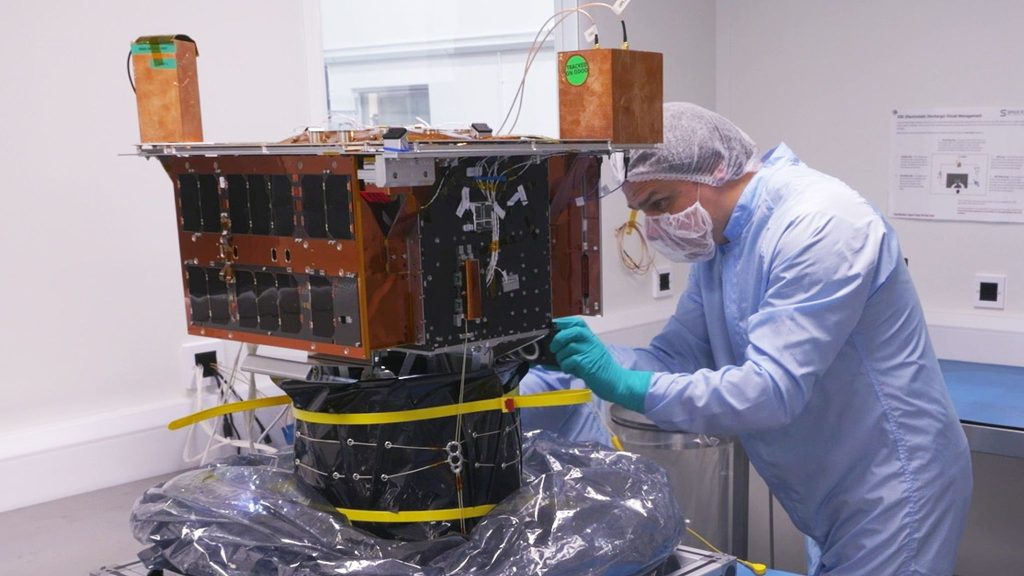
Why does that matter to a Moon programme? Because better semiconductor materials and tougher high-performance components can mean more efficient power systems, more resilient communications, and hardware that survives harsh environments for longer. These are the incremental gains that ripple through satellites today and, in time, through the systems needed for sustained lunar operations tomorrow.
This is not isolated innovation, either. Wales is building the kind of ecosystem that turns a clever demonstration into a supply-chain advantage. The Wales Space Cluster Catalyst Fund — backed by the UK Space Agency in partnership with Space Wales and the Welsh Government — is designed to unlock opportunities for Welsh businesses and researchers, building skills and collaboration across the sector.
In the new space race, that ecosystem-building is not window dressing. It is how places secure a future share of contracts and talent. You do not have to own the rocket to benefit from the industry — but you do have to be ready when primes and agencies decide who they trust to deliver.
Why the international angle matters — especially for Wales

The new Moon race isn’t just prestige. It is strategic: presence, influence, and economic leverage in a domain where China is advancing its own lunar ambitions and partnerships. America’s answer is not isolation, but alliance — spreading cost and risk, and building legitimacy through international cooperation.

For the UK, Artemis offers leverage: a voice in standards, industrial participation through ESA-linked hardware, and the technology spillovers that come with serious programmes. For Wales, the opportunity is more specific: to become known for specialist capability — in advanced manufacturing, materials, electronics, and the research-to-industry pipeline that turns prototypes into products.
The real prize isn’t the first set of footprints. It is the long tail: sustained supply-chain roles, industrial growth and well-paid skilled jobs.
This isn’t about waving a flag at a distant launch. It is about doing what Wales has always done best: building clever, reliable things the world increasingly needs — and making sure Wales is on the supply lists when lunar exploration stops being a spectacle and becomes routine.



There is something particularly special about watching a children’s cast take to the stage, and Robin Hood: The Legend of the Black Knight, presented by Torch Youth Theatre, was a wonderful example of just how much talent, enthusiasm and confidence young performers can bring to a show.
Running at the Torch Theatre from Monday, July 20 to Thursday, July 23, the production offers a brand-new retelling of the timeless Robin Hood legend, transporting audiences into the heart of Sherwood Forest.

The story follows Robin Hood, Maid Marian and a host of familiar characters as they fight for freedom against the tyranny of Queen Eleanor and the ruthless Sheriff of Nottingham. With daring escapes, a legendary archery contest and the mysterious presence of the Black Knight, there is plenty to keep audiences entertained.
From the outset, the production felt well organised and ran remarkably smoothly, with no noticeable hiccups. The set was simple and minimalistic, which worked particularly well. Rather than distracting from the action, it provided an effective backdrop that allowed the cast and story to remain the focus.
The lighting was another real highlight. It was beautifully executed throughout, helping to establish the mood and tone of each scene while adding to the overall atmosphere of the production. The timing was excellent, and there were no noticeable technical issues.
The costumes were also a real highlight and helped bring the characters and story to life. They were well designed, colourful and suited the production perfectly, adding to the overall visual appeal of the show. It was clear that a lot of thought had gone into making sure each character looked the part.

The props were also well chosen and surprisingly realistic. One particular detail that caught my attention was the Ring of Power, which looked wonderfully sparkly under the stage lights and added a lovely touch of magic to the production.
The sound was generally clear, and the children did an excellent job of projecting their voices. There were a few moments when the sound seemed to drift slightly, and some lines were harder to hear when there was additional commotion happening on stage. However, this was only a minor issue, and overall the cast communicated confidently and clearly.
The performances themselves were a real strength of the show. While the entire cast deserves credit for the effort and commitment they brought to their roles, a few performers particularly stood out. Maid Marian was absolutely brilliant and showed an impressive level of confidence and natural ability. She is clearly a very promising young performer, and it would be wonderful to see where her talent takes her in the future.
The adult Robin Hood was also excellent and, in my opinion, perfectly cast. Together, they provided a fantastic opportunity to showcase two very talented performers, and both certainly rose to the occasion.
The comic relief was another highlight, with some genuinely entertaining moments throughout. The brief singing with the ukulele, along with Steven’s contribution, brought plenty of fun and energy to the production and added to the enjoyment of the audience.
What impressed me most, however, was the confidence and commitment of the entire cast. Every performer played their part with enthusiasm, and I was particularly impressed by how well the younger children handled themselves on stage. It is no small achievement to perform in front of an audience, and they should all be incredibly proud of themselves.

The inclusion of Welsh-speaking elements was also a lovely touch. It fitted naturally into the production and added a sense of local identity, making the show feel particularly well suited to its setting.
Away from the stage, the theatre itself was clean and welcoming, with comfortable seating and a good selection of snacks and drinks available, including during the interval. These small touches helped make the whole experience feel relaxed and enjoyable.
Perhaps the greatest compliment I can give the production is the atmosphere in the theatre. Throughout the performance, the audience appeared completely at ease and engaged. It was lovely to see families enjoying the show together, with siblings cuddling up and parents sitting back, relaxed and entertained.
Overall, Robin Hood: The Legend of the Black Knight was a thoroughly enjoyable production that showcased an impressive amount of young talent. The cast performed with confidence, energy and enthusiasm, supported by effective lighting, a well designed set, fantastic costumes and some lovely production details.
There was a real sense of warmth and community throughout the evening, and it was clear how much work had gone into bringing the production to life.
With tickets priced at £10, or £8 for concessions, the production offers an affordable opportunity for families to enjoy a night of live theatre while supporting the next generation of young performers.
A huge well done to everyone involved, including the cast, crew and everyone behind the scenes. You should all be incredibly proud of what you have achieved.
Tickets are available on the Torch Theatre website.

Stephen Kinnock has been named the new Secretary of State for Wales after Prime Minister Andy Burnham unveiled his first Cabinet reshuffle, replacing Jo Stevens following two years in the post.
The appointment comes as the new Prime Minister continues to shape his government after entering Downing Street, with the Wales Office among a number of departments seeing changes at ministerial level.
Mr Kinnock, the Labour MP for Aberafan Maesteg, takes over responsibility for representing Welsh interests at the Cabinet table and overseeing the UK Government’s relationship with the Welsh Government.
The 55-year-old has served in Parliament since 2015 and has held a number of ministerial positions. Before joining the Cabinet, he served as a minister in both the Home Office and the Department of Health and Social Care, where he was involved in immigration, public health and NHS-related policy.
He is also well known as the son of former Labour leader Neil Kinnock, one of Wales’ most prominent political figures, and former European Commissioner Glenys Kinnock.
Mr Kinnock replaces Jo Stevens, who has served as Secretary of State for Wales since 2024. During her tenure she worked on issues including economic investment, the transition to green energy, rail infrastructure and cooperation between the UK and Welsh Governments.
The change follows Prime Minister Andy Burnham’s first Cabinet reshuffle since taking office, with several senior ministerial appointments announced as he begins setting out the priorities of his new administration.
As Secretary of State for Wales, Mr Kinnock will be expected to play a key role in discussions over economic growth, energy, transport, the future of the steel industry, and constitutional matters affecting Wales. He is also likely to be heavily involved in negotiations between Westminster and Cardiff Bay as the Burnham Government develops its agenda.
His appointment will be closely watched across Wales, including in Pembrokeshire, where businesses, local authorities and public services will be looking for signs of how the new Government intends to deliver on its promises for investment, infrastructure and economic development.
Further announcements on the new Government’s programme are expected in the coming days.

Detectives say it was “pure good fortune” the victim did not suffer even more serious injuries during the classroom attack
POLICE have praised the bravery of a teacher who was attacked with a knife at Milford Haven Comprehensive School, saying the emotional impact of the incident “cannot be underestimated”.
A 16-year-old boy was convicted at Swansea Crown Court of wounding with intent and unlawful wounding following the attack on Thursday, February 5.
The jury cleared him of attempted murder. He had previously pleaded guilty to possessing a knife.
The teenager, who cannot be identified because of his age, was 15 when the incident took place.
At approximately 3.20pm, he approached the teacher and asked for assistance with schoolwork before following her into a classroom.
He then attacked her while armed with a knife.
The teacher managed to disarm the pupil despite sustaining injuries which required hospital treatment. She later recovered from her physical injuries.
Dyfed-Powys Police said officers and other emergency services swiftly attended the school, where pupils and staff were safeguarded and a lockdown was put in place.
The teenager was traced and arrested shortly afterwards. He was charged on February 7 and remanded in custody ahead of his trial.
Following the verdicts, Senior Investigating Officer Detective Inspector Sarah Totterdale commended the victim for attending court and giving evidence about the attack.
She said: “Firstly, I would like to commend the bravery shown by the victim in this case.
“What happened to her on February 5 must have been a truly terrifying ordeal, so to have to attend court and relive that experience has taken exceptional courage.

“It is thanks to pure good fortune that she did not sustain even worse injuries, but the emotional impact cannot be underestimated.
“We would like to thank her for her assistance throughout this investigation.”
DI Totterdale said the incident had also deeply affected pupils, teachers and the wider Milford Haven community.
She added: “This incident understandably had a profound impact on other students and teachers at Milford Haven Comprehensive School, as well as the wider community.
“Fortunately, we were able to promptly attend the school, ensure the safeguarding of pupils and teachers, and apprehend the offender.”
She also thanked the emergency services, school staff, parents, pupils, Pembrokeshire County Council and members of the community for their support and patience during the investigation and subsequent court proceedings.
DI Totterdale said: “I hope that, with the trial now concluded, the victim in this case can begin to obtain some closure from this incident, and that Milford Haven Comprehensive School can continue passionately teaching, learning and thriving together in a safe environment.”
The teenager will return to Swansea Crown Court to be sentenced on Thursday, September 3.



Community3 hours ago
Household Cavalry drum horse returns home to Pembrokeshire for final farewell
Dyfed Willa Rose, who became Major Juno and the first mare to serve as a Household Cavalry Drum Horse, was...

News20 hours ago
Jo Stevens out as Welsh Secretary as Burnham reshapes government
Cardiff East MP repeatedly visited Pembrokeshire to champion clean energy jobs, but her successor inherits unresolved questions over Milford Haven’s...


Crime1 day ago
Teen cleared of attempted murder but guilty of GBH after Milford teacher stabbed
Jury returns 11-1 majority verdict on charge of causing grievous bodily harm with intent, with sentencing set for September 3...

Community1 day ago
French troops march through Fishguard as Britain’s last invasion returns to life
Battle scenes, cavalry displays and a surrender procession brought one of Pembrokeshire’s most extraordinary stories back to the streets MUSKET...


News1 day ago
Andy Burnham promises new politics as he enters Downing Street
New Prime Minister admits politicians have “not been good enough” as he sets out a ten-year plan for Britain and...


Health2 days ago
Two new surgeons appointed as Hywel Dda admits orthopaedic waits remain too long
Health board says it is increasing capacity after figures revealed hip replacement patients waited an average of 64 weeks HYWEL...


Community3 days ago
84-year-old man rescued after falling overboard near Tenby
A MAYDAY call sparked a major nighttime rescue after an 84-year-old man fell from a tender and was swept towards...


Crime4 days ago
Jury hears final arguments in Milford Haven teacher stabbing trial
Defence says there was no motive or intention to kill as judge reviews competing accounts of classroom knife incident SPECIAL...


News4 days ago
Andy Burnham becomes Labour leader and prepares to enter No 10
Former Greater Manchester mayor promises an ‘unashamedly Labour’ government after completing extraordinary return to Westminster ANDY BURNHAM has been formally...


News4 days ago
Motorcyclist dies following collision near Narberth
Police appeal for witnesses and footage after fatal crash on B4313 at Redstone A MOTORCYCLIST has died following a collision...
-

 Health1 day ago
Welsh Ambulance Service invites public to AGM and Board meeting
-
Crime1 day ago
Teen cleared of attempted murder but guilty of GBH after Milford teacher stabbed
-
News2 days ago
Andy Burnham set for No 10 as Wales awaits change
-

 Crime1 day ago
What the Milford Haven School stabbing verdict really means
-

 Business1 day ago
Port appoints two new directors as energy and regeneration projects advance
-
 Community2 days ago
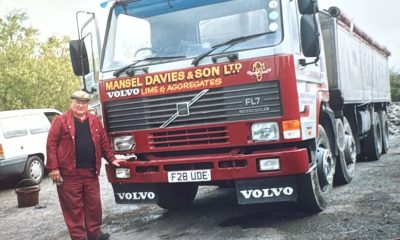
Tributes paid to long-serving Mansel Davies driver Gareth Griffiths
-
Community3 hours ago
Household Cavalry drum horse returns home to Pembrokeshire for final farewell
-

 Entertainment2 days ago
Dinosaur adventure set to roar into the Torch Theatre