


Business
Pembrokeshire reaches 75% gigabit broadband coverage


PEMBROKESHIRE has reached a major digital milestone, with 75% of the county now able to access gigabit-capable broadband.
The figure marks a dramatic rise from just over 5% coverage in 2019, with year-on-year growth driven by public and private investment, community engagement, and support from the Swansea Bay City Deal’s Digital Infrastructure Programme.
Early commercial interest in rural Pembrokeshire was limited, so a strong focus was placed on working with communities to demonstrate demand and remove barriers to deployment. That approach helped create the conditions for competitive investment and has since transformed the local market.
Today, 43.7% of gigabit coverage in Pembrokeshire is delivered by alternative network suppliers, including Ogi, Voneus and local provider Dragon WiFi. Openreach also remains a major network developer in the county and is expected to continue playing a key role.
Cllr Paul Miller, Deputy Leader and Cabinet Member for Place, the Region and Climate Change at Pembrokeshire County Council, who has had portfolio responsibility for digital infrastructure since 2017, said: “Reaching over 75% gigabit-capable coverage is a major milestone for Pembrokeshire and demonstrates what can be achieved through partnership working.

“In 2019, large parts of the county were being overlooked for investment and just 5% could get gigabit speeds. Since then, working with partners across the sector, approximately 50,000 homes and businesses in Pembrokeshire have been connected.
“While we recognise there is more to do before we reach 100%, the progress so far, particularly given the rural nature of our county, has been incredible.”
Delivery across the county has been supported by a combination of public and private investment, including the Local Full Fibre Networks programme, which connected around 70 public sector sites, the UK Government’s Gigabit Broadband Voucher Scheme, Openreach’s Fibre Community Partnerships, Welsh Government’s Access Broadband Cymru grants, planned commercial builds and the Digital Infrastructure Programme’s Better Broadband Infill Project.
Martin Williams, Partnership Director for Wales and the West of England at Openreach, said: “We’re proud to be supporting Pembrokeshire’s digital future, with our full fibre network now reaching 43,000 premises, backed by £12.9m of investment.

“This milestone means faster, more reliable connectivity for homes and businesses across the county, especially in rural areas. Working closely with Pembrokeshire County Council and the UK Government, we’re continuing to bring full fibre to even more communities.”
Pembrokeshire County Council said its Digital Champions have played a key role in increasing connectivity. Through a proactive “barrier-busting” approach, the team has helped streamline internal processes and provide coordination to support suppliers and speed up deployment.
Work will now continue to extend coverage further, particularly in harder-to-reach rural areas, as Pembrokeshire builds the digital foundations needed to support economic growth, public services and resilient local communities.

For more information about connectivity in your area, email [email protected]


Concern mounts over future of production as Wales’ famous bakery battles falling sales and changing consumer tastes
ONE of Wales’ best-known bakery brands is facing a major threat as changing eating habits, rising costs and falling demand for the traditional sliced loaf put pressure on jobs and production.

Brace’s Bakery, founded in 1902, has warned that the market for standard sliced bread has changed dramatically, with the company blaming an “acceleration of the decline in standard sliced bread” for its recent financial pressures.
The issue has now taken on fresh urgency amid fears over the future of production at one of the company’s Welsh sites.

Industry reports have said Brace’s planned to close its Pen-y-Fan Industrial Estate site as part of a wider business “reset”, with production being consolidated at its larger Croespenmaen operation. Earlier reports suggested the company expected fewer than 20 redundancies, with most staff transferring, but latest local reporting has raised concerns among workers that the situation may be moving faster than previously expected.
The company has said the Pen-y-Fan factory has one production line, while Croespenmaen has two sliced bread plants and also produces Welsh cakes, rolls and artisan-style products.
Brace’s director Mark Brace has previously described the pressures facing the industry as severe.
He said: “We are a long-standing family business in a very challenging marketplace as the rest of the baking industry is UK wide.”

He added that since Covid there had been a slow annual decline in standard bread sales, but that in the last two years major competitors such as Kingsmill and Hovis had also seen declines of more than 15 per cent.
Leon James, director of finance at Brace’s, gave an even starker assessment, saying: “There has been a massive reduction in the consumption of standard white bread – and the white loaf is our cash cow.”
He also warned of the difficulty in passing rising costs on to customers, saying: “If we put our prices up, customers will very quickly switch.”
The problem is not unique to Brace’s. Across Britain, the traditional wrapped sliced loaf has been losing ground as shoppers change the way they eat. Market research cited by The Guardian found that sliced loaf bread sales had fallen by around 15 per cent over five years, while only around a third of people now eat sliced loaf bread daily, down from about half in 2015.

Kiti Soininen, head of food and drink research at Mintel, said: “Whenever a new breakfast or lunch option comes into the market, more often than not it’s bread that loses out.”

Younger consumers are increasingly turning to wraps, flatbreads, oats, yoghurt, salads, rice bowls, noodles, sushi and higher-protein meals. At the same time, concerns over ultra-processed foods and refined carbohydrates have pushed some shoppers towards seeded, wholegrain, sourdough and higher-fibre breads.
The UK bread industry is already responding with consolidation. Associated British Foods, the owner of Kingsmill, agreed a £75m deal to buy Hovis, a move expected to create the UK’s biggest bread brand if approved by the Competition and Markets Authority. The deal follows falling sales and losses in parts of the traditional bread sector.
For Wales, however, Brace’s carries a particular significance. This is not just another food manufacturer. It is a household name whose loaves have been bought in corner shops, supermarkets and family kitchens for generations.
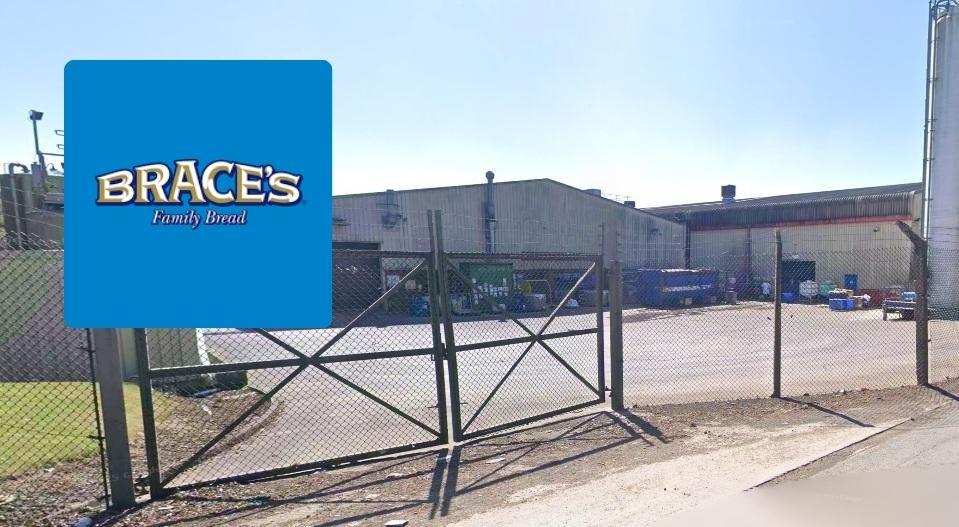
The crisis highlights a wider question for Welsh manufacturing: how can long-established family firms survive when consumer habits change faster than factories can adapt?
Brace’s has already shifted more attention towards Welsh cakes, rolls, premium loaves and artisan-style products. But the pressure on the standard sliced loaf remains a serious challenge for a company whose name has long been associated with everyday bread.
Bread itself is not disappearing from Welsh homes. But the kind of bread people buy, and the way they eat it, has changed.
For Brace’s, the future may now depend on whether one of Wales’ most familiar food brands can move beyond the old white sliced loaf without losing the loyalty, identity and scale that made it famous.

WELSH businesses are being urged to tighten credit control after new figures showed a rise in overdue invoices across the country.
R3, the UK trade body for restructuring, turnaround and insolvency professionals, said its latest Quarterly Business Health report showed 475,000 late payments in Wales during the first quarter of 2026.
That was up 3% on the same period last year, when 462,000 late payments were recorded.
The report, based on data from Creditsafe, also found that around 57,000 companies in Wales had overdue invoices on their books in the first quarter of this year, slightly up from 56,000 in Q1 2025.
However, there was some positive news for Welsh firms, with insolvency-related activity falling year-on-year.
R3 said there were 212 cases of administration, voluntary liquidation and compulsory liquidation in Wales during Q1 2026, down 14% from 246 cases in the same quarter last year.
But the figure was still 24% higher than in the final quarter of 2025, when 171 cases were recorded.
Bethan Evans, chair of R3 in the South West and partner at Menzies LLP, said the figures should be treated as an early warning sign for local businesses.
She said: “Our latest Business Health report highlights an early warning sign for local businesses, with more companies being affected by late payments.
“With a worrying increase in the number of late payments locally, day-to-day cashflow remains under real strain.
“Late payments are a significant contributor to business failure, and mounting arrears can quickly turn manageable cashflow issues into a wider crisis, particularly for small and medium-sized companies.
“With businesses also facing higher energy and fuel costs linked to global uncertainty, our members expect pressure to intensify as the year progresses.
“With this in mind, business owners should prioritise credit control and seek professional advice early if they begin to struggle, rather than waiting until problems become unmanageable.”
Nationally, the number of overdue invoices rose to 17.48 million in Q1 2026, up 3% on the same period last year.
The West Midlands recorded the highest number, with 3.05 million overdue invoices, followed by Greater London with 2.91 million and Scotland with two million.
The UK Government has said late payments cost the economy £11bn each year and lead to the closure of 38 businesses every day.
Its proposed Small Business Protections (Late Payments) Bill would introduce maximum payment terms of 60 days, enforce interest on late payments and give the Small Business Commissioner new powers, including the ability to fine businesses that persistently pay suppliers late.

FISHGUARD is celebrating a major boost for its town centre after 25 new businesses opened in just 18 months.
North Pembrokeshire Trade and Tourism (NPTT) is marking Small Business Week by highlighting what it says is a remarkable period of growth for the town, with a further two businesses expected to launch this month.

The organisation said the figures reflected growing confidence in the local economy and showed Fishguard’s continuing development as a vibrant destination for residents, visitors and independent traders.
At the recent It’s Your Pembrokeshire event in Narberth, representatives from NPTT spoke about Fishguard’s transformation and the role the organisation has played in promoting the town.
NPTT said its work had supported the vision and determination of local business owners who had chosen to invest in Fishguard despite difficult trading conditions.
The group has promoted the town through visitor information points and marketing campaigns across the county, showcasing Fishguard’s independent shops, attractions and coastal location.
This month, Fishguard is also being featured in Visit Pembrokeshire’s county-wide promotional campaign.
NPTT chair Andy Linforth said: “The opening of 25 new businesses in just 18 months is a tremendous achievement for Fishguard.
“It demonstrates the resilience, creativity and confidence of local entrepreneurs and shows that our town is an increasingly attractive place in which to live, work and invest.
“We are delighted to celebrate their success during Small Business Week.”
The town’s growing reputation has also attracted political interest.
This week, Kerry Ferguson MS, Deputy Presiding Officer of the Senedd, is due to spend much of a day with NPTT and local businesses to discuss the opportunities and challenges facing the small business sector.

NPTT said the continued growth of independent businesses was helping to strengthen the local economy, create employment opportunities and improve Fishguard’s appeal as a year-round destination.



Community2 hours ago
HMS Erebus tragedy links Pembroke Dock ship to Templeton family
DNA breakthrough identifies cabin boy David Young as exhibition marks 200 years since ship’s launch ON MAY 19, 1845, a...


Community5 hours ago
Narberth cash machine closures spark urgent access review
CALLS have been made for an urgent review of access to cash in Narberth after two town centre ATMs were...


Health19 hours ago
First Minister quizzed on Welsh NHS pressures in his first-ever FMQs
SENEDD Members pressed the First Minister over the state of the health service in Wales, as the Plaid Cymru leader...


Community1 day ago
Historic paddle steamer Waverley to return to Fishguard this month
THE WORLD’S last seagoing paddle steamer will return to Fishguard this month as part of her annual visit to South...


Local Government1 day ago
National Express use of new Haverfordwest interchange still subject to risk checks
A RUMOUR that National Express coaches may struggle to use Haverfordwest’s new transport interchange has been denied by Pembrokeshire County...


Crime1 day ago
Milford Haven man jailed for illegal Premier League streaming service
A MILFORD HAVEN man who supplied illegal Premier League streams and loaded Firesticks to almost 2,000 customers has been jailed...


Community2 days ago
RNLI lifeguards rescue beachgoers during busy heatwave weekend
FOUR PEOPLE RESCUED AS RIP CURRENTS AND OFFSHORE WINDS HIT PEMBROKESHIRE BEACHES RNLI lifeguards in Pembrokeshire rescued four people and...


Local Government2 days ago
Council and school staff pay row could hit Pembrokeshire services
COUNCIL workers, carers and school support staff in Pembrokeshire could be drawn into a growing UK-wide pay dispute after GMB...


Health3 days ago
Hywel Dda to hold second consultation on future of stroke services
A SECOND phase of public consultation is to be held on the future of stroke services across Hywel Dda University...


Community3 days ago
Warning as algal blooms mistaken for sewage on Welsh coast
Beachgoers urged to avoid contact with suspicious foam and report pollution concerns NATURAL RESOURCES WALES has issued summer advice to...
-

 Health6 days ago
Paul Davies warns health board over Withybush and Bronglais services
-

 Crime6 days ago
Carmarthenshire man sent to Crown accused of 33 historic sexual offences
-
Crime1 day ago
Milford Haven man jailed for illegal Premier League streaming service
-
Crime1 day ago
Haverfordwest man admits cocaine offence as Crown disputes basis of plea
-

 Crime6 days ago
Suspended prison sentence for man who left dogs without vet care
-

 News6 days ago
Vehicle destroyed in early morning fire in Pembroke
-

 News6 days ago
Davies calls for NHS foreign language interpreters to be scrapped
-

 Crime6 days ago
Man accused of police station bomb hoax remanded in custody