


Business
Biffy’s Bar and Restaurant set to open in February with dog-friendly welcome


New owners promise fresh menu, familiar standards and a warm reception for ‘furry friends’
A NEW bar and restaurant is preparing to open its doors on Milford Waterfront next month after the team behind it quietly took over the venue formerly known as Salt.
Dayne and Victoria, who took over the business in October, said they have spent the past few months working behind the scenes and are now ready to relaunch the venue under a new name — Biffy’s Bar and Restaurant.
The official opening date has been set for Friday, February 6.
In a message to customers, the owners said anyone who has visited since October will already have experienced the standard of food and service they plan to build on, adding that a new menu is on the way.
They said: “Over the past few months, we’ve been quietly working behind the scenes and we’re finally ready to start putting our own stamp on the place — which will soon be Biffy’s.

“If you’ve visited us since October, then you’ve already experienced the standard of food and service you can expect going forward — because that’s exactly what we’re building on. We’re excited to say we’ve got a delicious new menu coming your way too.”
Dog-friendly
The announcement has drawn plenty of supportive messages online — including one customer asking whether the new venue will welcome dogs.
Replying to Dympna Pettit, the business confirmed it will be dog friendly, saying: “Of course, we can’t wait to meet your furry friend.”
Others wished the owners well, with some saying they were looking forward to trying the new menu and seeing the venue return to top form.

Helen Court said she used to visit regularly before COVID, adding that she was looking forward to giving the new venture a try.
Customers who want to book a table for opening day are being asked to message the business via its social media page or book through the Tableo link.
The owners also introduced Daisy and Dexter as part of the team — describing them as the venue’s “Head of Security” and “Chief Morale Officer.”



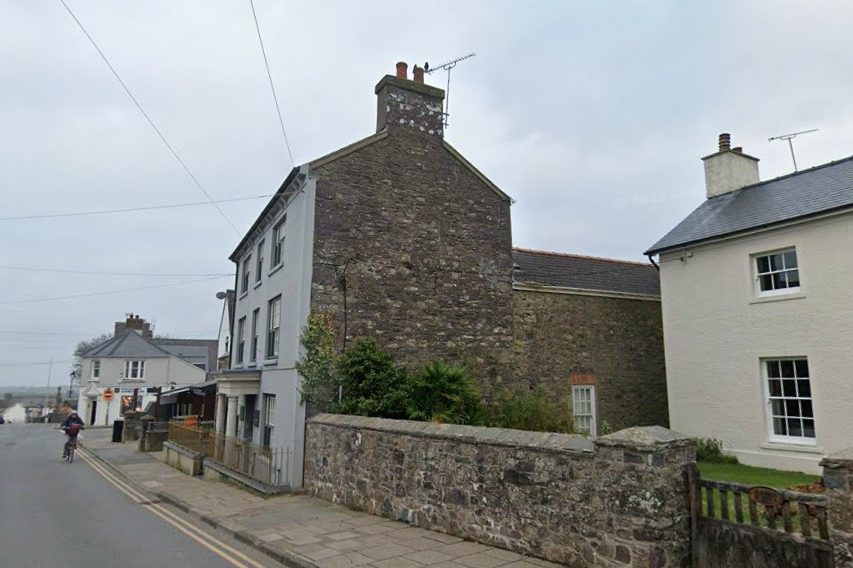
PLANS to change a former hairdressing salon in Pembrokeshire’s only city to a family-friendly coffee bar have been approved by the national park.
In an application to Pembrokeshire Coast National Park, Gerallt Nash sought permission for a change of use of 26 High Street, St Davids from a hairdressing salon to a family friendly coffee bar and children’s playroom.
The first floor, formerly used as accommodation of a tenant, would be used as an office and storage of business.
A supporting statement said: “It is proposed to open a family-friendly coffee bar with a children’s playroom on ground floor. It is not intended to cook food on the premises, therefore there will be no requirement for an extractor system.
“Other than small scale repairs to part of one floor, and the installation of a sink and serving counter in the inner room (plumbing and electrics are already in place since its last use as a salon) the main work will be the redecoration of surfaces and ceilings, the provision of new light fittings and laying of new floor coverings.
“This part of High Street has been identified as a ‘commercial’ zone by PCNPA. Existing businesses close to No 26 include outdoor and surfing outlets; restaurants; clothes shops; holiday accommodation; ice cream parlour; fish and chips outlet; delicatessen and craft shops.
“The current proposal would fill a gap in the market, as most food outlets do not open until after 11am or 12pm, or only during the evenings in some cases. It would also provide somewhere for [young] families to go to unwind whilst their children can relax in the playroom.”
The scheme was supported by St Davids City Council but one representation from a member of the public raised concerns about potential noise, smells and risk of vermin from waste storage on site.
An officer report said the county council’s public protection team has been consulted and has no objections to raise, adding the application states there is no intention to cook on the premises; the opening hours listed as 8am-6pm, Monday to Friday, and 8am-7pm on Saturdays.
In recommending approval, it said: “There are no concerns in relation to significant impacts upon amenity, subject to a condition relating to opening hours, and it is not considered that the proposal would have an impact upon the character or appearance of the St David’s Conservation Area.”
The application was conditionally approved.

Sustainability expert Rebecca Heaton and regeneration specialist Owen Davies will join the board later this year
THE PORT OF MILFORD HAVEN has appointed two new Non-Executive Directors as it prepares for a period of major investment in renewable energy, the Celtic Freeport and the wider economy of south-west Wales.
Dr Rebecca Heaton and Owen Davies will join the Port’s board later this year, bringing extensive experience in sustainability, energy transition, regional development and regeneration.
Dr Heaton has worked in sustainability and climate policy for more than 25 years, holding senior positions with organisations including Lloyds Banking Group, Drax Group, OVO Energy, Shell and BP.
Her experience includes governance, commercial strategy, risk management and stakeholder engagement. She has also served on the Climate Change Committee and the Natural Environment Research Council.
Dr Heaton said the Port occupied a central position in Wales’s energy system and had an opportunity to help deliver long-term economic and environmental benefits.
She said: “Having lived in Wales for more than 30 years, I have seen the vital role that infrastructure, industry and energy play in supporting communities and creating economic opportunity.
“The Port sits at the heart of Wales’s energy system and has a unique opportunity to help shape a stable and sustainable future.”
Mr Davies joins the board with more than 30 years’ experience in regional development, town planning and placemaking.
A Chartered Town Planner and Fellow of the Institute of Place Management, he has advised the Welsh Government on regional economic frameworks, town centre regeneration and community engagement.
He has also worked as a UK Government High Streets Task Force expert and has been involved in regeneration and master-planning projects in waterfront and coastal communities, including Pembrokeshire.
Mr Davies currently runs his own consultancy and holds several advisory and governance positions, including with the Canal & River Trust in Wales and the Plas Gunter Mansion Trust.
He said: “The Port occupies a uniquely important position within Wales as a major economic driver, a nationally significant energy gateway and the custodian of one of our most important natural assets.

“Pembrokeshire and south-west Wales are entering a period of significant opportunity, with investment in renewable energy, the Celtic Freeport and wider economic development helping to shape the region’s future.”
The appointments come as Debra Bowen Rees and Erica Cassin complete their terms as Non-Executive Directors.
Dr Sian George, Chair of the Port of Milford Haven, welcomed the new members and thanked the departing directors for their service.
She said: “Rebecca and Owen bring outstanding experience and expertise that will further strengthen the breadth of skills and perspectives around our board table.
“The Port has a unique responsibility as a Trust Port to balance commercial success with our role as custodians of the Milford Haven Waterway and as a key contributor to regional prosperity.”
Dr George said both new directors shared the Port’s commitment to sustainable growth and long-term investment.
She added: “I would also like to express my sincere thanks to Debra Bowen Rees and Erica Cassin as they complete their terms on the board.
“Both have made a significant contribution to the Port during a period of considerable progress and transformation.”
The Port of Milford Haven is Wales’s busiest port and handles around 20% of Britain’s seaborne oil and gas trade. It also owns and operates Pembroke Port and Milford Waterfront, with its activities supporting more than 4,000 jobs in and around Pembrokeshire.

Union warns UK trade concession could threaten Llanwern steelworks despite government promises to protect domestic production
FEARS have been raised for the future of one of Wales’s most strategically important steel plants after the UK Government granted India a significantly larger quota for tariff-free galvanised steel imports.
Union leaders and industry figures have warned that the decision could undermine Tata Steel UK’s Llanwern works near Newport, which produces around 600,000 tonnes of galvanised steel each year.
The plant supplies almost half of total UK demand for the material, which is widely used by the automotive and construction industries.
The warning comes just months after ministers unveiled a new strategy intended to protect British steelmaking from cheap overseas competition and increase the proportion of steel used in the UK that is produced domestically.
However, details of the new import arrangements show that India has been allocated a tariff-free quota of 125,000 tonnes for metallic-coated steel, commonly referred to within the industry as Category 4 steel.
India exported around 43,000 tonnes of the product to Britain last year, meaning the new allowance is almost three times that volume.
Trade deal concession
The Financial Times reported that the quota was increased during last-minute negotiations to secure the implementation of the UK-India free trade agreement.
According to the report, India had objected to proposals to reduce its steel allocations and warned that the trade agreement could be delayed unless its concerns were addressed.
The deal came into force on Wednesday, July 15, and has been promoted by ministers as a major economic opportunity for British exporters.
The UK Government estimates that the agreement could eventually increase bilateral trade by £25.5 billion a year and add £4.8 billion annually to the economy.
It includes lower Indian tariffs on products such as British whisky and vehicles, while reducing UK duties on Indian clothing, footwear and some food products.
However, steelworkers now fear that the price of securing those wider benefits could be paid by Welsh industry.

Threat to Llanwern
Llanwern specialises in producing high-quality galvanised steel, which is coated with zinc to protect it from corrosion.
Its products are used in vehicles, buildings and infrastructure, making the Newport site an important part of both the Welsh economy and Britain’s manufacturing supply chain.
Alasdair McDiarmid, assistant general secretary of the steelworkers’ union Community, said the import allowances could threaten the sustainability of the plant.
He described Llanwern as a crucial strategic facility supplying high-quality steel to the automotive and construction sectors.
The union said workers could already see imported steel coils accumulating at Newport docks and questioned why Llanwern appeared to have received less protection than other areas of the British steel industry.
No closure or job losses have been announced, but the warning will cause renewed concern in communities that have already experienced years of uncertainty surrounding the future of steelmaking in Wales.
Wider quotas also increased
The decision relating to India had wider consequences because international trading rules require comparable exporting countries to be treated equally.
South Korea has reportedly been allocated a Category 4 quota of 100,000 tonnes, while Vietnam has received an allowance of 175,000 tonnes.
Industry representatives are particularly concerned about material entering from Vietnam, amid claims that the country processes steel originating from China, where excess production has contributed to a global fall in prices.
The combined allowances could expose Llanwern to significantly more overseas competition in a market it currently plays a leading role in supplying.
One industry insider estimated that the new arrangements could cost British steel producers hundreds of millions of pounds in lost revenue.
Policy described as ‘baffling’
The decision appears to contrast sharply with the UK Government’s broader approach to steel imports.
Under measures that came into force on July 1, overall tariff-free steel import quotas were reduced by 51 per cent. Imports exceeding the allocated amounts are now subject to a 50 per cent tariff.
Ministers said the protections were required because of global overcapacity, which has allowed large volumes of cheaper steel to enter international markets and placed British producers under intense pressure.
UK crude steel production has fallen by more than half over the past decade, while high energy prices and ageing industrial infrastructure have further weakened the sector’s competitiveness.
Peter Brennan, director of trade at industry body UK Steel, said the government had taken the bold action required across most steel categories.
However, he described the effective liberalisation of Category 4 imports from countries outside the European Union as baffling.
Tata Steel UK has also expressed concern that the quotas for metallic-coated products remain too high and do not properly reflect conditions within the British market.
The company said effective trade protections were essential to maintaining domestic production, investment and commercially viable downstream operations.
Welsh steel under pressure
The latest dispute comes during a period of major change for the steel industry in Wales.
Traditional blast furnace production at Port Talbot has ended as Tata Steel develops a new electric arc furnace, supported by £500 million from the UK Government.
That transition resulted in the loss of thousands of jobs and left the future of the wider Welsh steel network dependent on the commercial success of remaining and modernised operations.
Llanwern is one of the most valuable downstream facilities in that network, producing finished steel for customers in sectors where reliability and quality are critical.
Critics argue that allowing additional volumes of competing galvanised steel into the country could weaken the business case for continued production and investment at the site.
They also question how the decision fits with the government’s stated ambition to rebuild industrial capacity, protect strategically important industries and reduce Britain’s dependence on overseas suppliers.
Government defends arrangements
The UK Government said the steel measure was intended to strike a balance between protecting domestic production and ensuring businesses had access to secure supplies.
A spokesperson said the final quotas followed extensive consultation with industry and promised that the arrangements would be reviewed after 12 months.
However, unions are likely to demand action well before that review if increased imports begin to affect orders or production at Llanwern.
The controversy leaves ministers facing difficult questions over whether the interests of Welsh steelworkers were sacrificed to secure a wider international trade agreement.
For communities across industrial south Wales, the concern is that another strategically important plant could be left exposed after years of promises that domestic steel production would finally receive stronger protection.



Community3 hours ago
Household Cavalry drum horse returns home to Pembrokeshire for final farewell
Dyfed Willa Rose, who became Major Juno and the first mare to serve as a Household Cavalry Drum Horse, was...


News20 hours ago
Jo Stevens out as Welsh Secretary as Burnham reshapes government
Cardiff East MP repeatedly visited Pembrokeshire to champion clean energy jobs, but her successor inherits unresolved questions over Milford Haven’s...


Crime1 day ago
Teen cleared of attempted murder but guilty of GBH after Milford teacher stabbed
Jury returns 11-1 majority verdict on charge of causing grievous bodily harm with intent, with sentencing set for September 3...


Community1 day ago
French troops march through Fishguard as Britain’s last invasion returns to life
Battle scenes, cavalry displays and a surrender procession brought one of Pembrokeshire’s most extraordinary stories back to the streets MUSKET...


News1 day ago
Andy Burnham promises new politics as he enters Downing Street
New Prime Minister admits politicians have “not been good enough” as he sets out a ten-year plan for Britain and...


Health2 days ago
Two new surgeons appointed as Hywel Dda admits orthopaedic waits remain too long
Health board says it is increasing capacity after figures revealed hip replacement patients waited an average of 64 weeks HYWEL...


Community3 days ago
84-year-old man rescued after falling overboard near Tenby
A MAYDAY call sparked a major nighttime rescue after an 84-year-old man fell from a tender and was swept towards...


Crime4 days ago
Jury hears final arguments in Milford Haven teacher stabbing trial
Defence says there was no motive or intention to kill as judge reviews competing accounts of classroom knife incident SPECIAL...


News4 days ago
Andy Burnham becomes Labour leader and prepares to enter No 10
Former Greater Manchester mayor promises an ‘unashamedly Labour’ government after completing extraordinary return to Westminster ANDY BURNHAM has been formally...


News4 days ago
Motorcyclist dies following collision near Narberth
Police appeal for witnesses and footage after fatal crash on B4313 at Redstone A MOTORCYCLIST has died following a collision...
-

 Health1 day ago
Welsh Ambulance Service invites public to AGM and Board meeting
-
Crime1 day ago
Teen cleared of attempted murder but guilty of GBH after Milford teacher stabbed
-
News2 days ago
Andy Burnham set for No 10 as Wales awaits change
-

 Crime1 day ago
What the Milford Haven School stabbing verdict really means
-

 Business1 day ago
Port appoints two new directors as energy and regeneration projects advance
-

 Community2 days ago
Tributes paid to long-serving Mansel Davies driver Gareth Griffiths
-
Community3 hours ago
Household Cavalry drum horse returns home to Pembrokeshire for final farewell
-

 Farming2 days ago
Welsh farmers promised £1bn funding package under three-year deal