


News
Andy Burnham promises new politics as he enters Downing Street


New Prime Minister admits politicians have “not been good enough” as he sets out a ten-year plan for Britain and pledges early action on the cost of living
ANDY BURNHAM has become Prime Minister of the United Kingdom, promising a more stable and responsible government while admitting that politicians must do better to regain the public’s trust.
The former Mayor of Greater Manchester entered Downing Street on Monday, July 20, after being formally invited by King Charles III to form a government following the resignation of Sir Keir Starmer.
Burnham becomes Britain’s seventh prime minister in just over a decade and takes charge of a Labour government with a substantial Commons majority, but facing deep public frustration over living standards, struggling services and political instability.
In an unusually informal arrival, Burnham walked along Downing Street greeting supporters, shaking hands and sharing hugs before speaking outside Number 10 without a lectern or visible notes.
He used his first address as Prime Minister to acknowledge the scale of public disillusionment with Westminster.

Burnham said he knew “people at home are fed up with politics” and called on those in public life to rise to the challenge facing the country.
“I want to be honest with you: we have not been good enough and we need to be better. We will be,” he said.
A promise of honesty and stability
Burnham presented his arrival as a moment of reflection and resolution for a country that has experienced repeated changes of leadership and growing distrust in its political institutions.
He promised a more stable and responsible style of government, arguing that stability must be used to produce real improvements in people’s lives rather than simply preserve the political status quo.

The new Prime Minister said the country needed honesty about the scale of the challenges it faces and a government willing to confront problems that have been repeatedly postponed.
His message was intended to mark a break from the point-scoring and short-term political calculations that he has repeatedly criticised.
Burnham has said his government will focus on solving problems rather than manufacturing political conflict, with ministers expected to be judged on delivery.

He also paid tribute to Starmer’s service and indicated that his government would build on parts of the previous administration’s record rather than attempt to erase it.
However, his declaration that politicians had not been good enough amounted to a clear acknowledgement that Labour’s first two years in office had failed to meet public expectations.
Ten-year plan for Britain
At the centre of Burnham’s new government will be a proposed ten-year plan to change how Britain is governed and reverse the decline experienced by many communities.
The programme is expected to focus on the cost of living, housing, public services, social care, transport, industrial investment and the transfer of power away from Westminster.
Burnham has argued that Britain’s problems cannot be solved through announcements designed around a single Budget or electoral cycle.
Instead, he wants the government to make early investments and pursue longer-term reforms intended to raise living standards and rebuild economic strength across the country.
His plans include a major social and council housebuilding programme, reforms to social care, greater public control over essential services and a substantial expansion of regional devolution.
Burnham has also proposed establishing a “Number 10 North” operation in Manchester, focused on housing, utilities and economic regeneration.
The challenge will be turning that broad vision into funded policies at a time when the public finances remain under pressure.
Cost-of-living action expected
Burnham has indicated that helping households with the cost of living will be one of his government’s first priorities.
Families across Britain continue to face pressure from food prices, energy bills, rents, mortgages and stagnant wages.
The new Prime Minister is expected to announce early measures intended to give households greater breathing space, with energy costs and transport fares likely to be among the areas considered.
He has already abandoned the previous government’s proposed national digital identity scheme, saying resources should instead be concentrated on policies that make an immediate difference to people’s lives.
Burnham has also spoken about the need to reform an economic model which, he believes, has failed to deliver secure housing, reliable services and rising living standards for large parts of the population.
However, he inherits limited financial room, major defence commitments, pressure on the NHS and an unresolved social care crisis.
Any substantial spending commitments will need to be accompanied by a credible explanation of how they will be funded.
Starmer says his “work is done”
Sir Keir Starmer delivered his final address outside Number 10 before travelling to Buckingham Palace to formally tender his resignation.
He said it had been the privilege of his life to serve as Prime Minister and defended the achievements of his two years in office.
Starmer said Britain was stronger and fairer than when Labour entered government in 2024 and highlighted progress on workers’ rights, child poverty, immigration, defence and NHS waiting times.
He concluded by saying his “work is done” and that he was leaving Downing Street with good grace, a smile and pride in what his government had achieved.
Starmer also offered Burnham his full support as he passed responsibility for the country to his successor.
His departure followed months of pressure from Labour MPs over the direction of the government, its handling of the economy and the party’s declining public support.
Although Labour retains a large parliamentary majority, Britain has changed prime minister without holding a general election.
There is no constitutional requirement for Burnham to seek an immediate public mandate, although opposition parties are expected to continue demanding an early national vote.
From the “King of the North” to Number 10
Burnham enters Downing Street with a political identity built largely outside Westminster.
During his time as Mayor of Greater Manchester, he presented himself as a champion of communities overlooked by governments in London.
His public clashes with Whitehall during the coronavirus pandemic earned him the nickname the “King of the North” and helped turn him into one of Labour’s most recognisable figures.
Burnham returned to Parliament after winning the Makerfield by-election before securing overwhelming support from Labour MPs to succeed Starmer.
He was confirmed as Labour leader after receiving 379 nominations from Labour MPs and facing no rival candidate.
His political argument is that Britain has become too centralised and that decisions affecting communities are too often taken by institutions with little understanding of local needs.
As Greater Manchester mayor, Burnham oversaw the return of local bus services to public control and promoted a model of cooperation between government, councils and business.
He now wants to apply that approach nationally.
First Minister calls for a new relationship with Wales
Burnham’s arrival could have major consequences for Wales.
For the first time, a Labour Prime Minister at Westminster will work with a Plaid Cymru-led Welsh Government following Rhun ap Iorwerth’s election as First Minister.
Responding to Burnham’s appointment, the First Minister said the change at Number 10 presented an opportunity to redefine the relationship between the Welsh and UK governments.
Rhun ap Iorwerth said: “I congratulate Andy Burnham on his appointment as Prime Minister, which presents an opportunity to redefine the relationship between the Welsh and UK Governments.
“I know that Andy Burnham shares my belief in the power of devolution to improve the lives of the people we serve.
“In that spirit, I hope we can speak the same language when it comes to devolving powers out of Westminster by strengthening, not bypassing, Wales’s national parliament and its ability to empower people and communities.
“I look forward to an early meeting with the new Prime Minister to agree how we can give Wales the powers it needs to grow the economy and build a fairer, more prosperous future for all.”
The reference to strengthening rather than bypassing the Senedd is likely to become central to the early relationship between the two governments.
Burnham has spoken frequently about transferring power away from Westminster, but much of his political record has focused on English councils, combined authorities and city regions.
The Welsh Government will seek assurances that any new programme of decentralisation recognises the Senedd as Wales’s national parliament.
It will oppose any attempt to transfer powers directly from Westminster to Welsh councils without the involvement of Cardiff Bay.
Pressure for further devolution
Plaid Cymru is expected to press Burnham over the devolution of rail infrastructure, policing, justice and control of the Crown Estate.
The Welsh Government will also seek a new approach to funding, arguing that Wales has repeatedly lost out through decisions made in Westminster.
Burnham’s record suggests he understands the frustration caused by excessive centralisation.
However, he will now have to demonstrate that his support for devolution extends beyond England’s large cities.
His promise to govern differently will be tested by whether he is prepared to strengthen the powers of a Welsh Government controlled by a political opponent.
The planned early meeting between Burnham and Rhun ap Iorwerth could therefore set the tone for relations between Westminster and Cardiff Bay for the remainder of the parliamentary term.
Welsh Labour sees an opportunity
The change at Number 10 also presents both an opportunity and a challenge for Welsh Labour.
Ken Skates, recently confirmed as the permanent leader of Welsh Labour, has welcomed Burnham’s emphasis on decentralisation and giving communities greater control.
Welsh Labour will hope the new Prime Minister’s popularity and more traditional Labour message can help the party rebuild following its historic defeat in the Senedd election.
However, tensions are likely between the Labour government at Westminster and the Plaid Cymru administration in Cardiff Bay.
Both parties will seek to claim credit for any additional funding or powers secured for Wales.
Plaid Cymru will argue that pressure from a non-Labour Welsh Government is necessary to win concessions.
Welsh Labour, meanwhile, will portray Burnham as a Prime Minister who understands the needs of communities beyond London and can deliver for Wales from within the Union.
What it could mean for Pembrokeshire
For Pembrokeshire, the test will not be the words delivered outside Downing Street but whether Burnham’s government produces visible investment and better services.
His promise to shift power and economic activity away from London could benefit rural and coastal communities that have long argued that national policy is designed around major cities.
However, a model based heavily on English city regions will not automatically answer the needs of west Wales.
Pembrokeshire faces limited public transport, shortages of affordable housing, pressure on health and social care, seasonal employment, fragile town centres and the continued loss of young people who feel they must leave the county to find secure work.
A genuine programme of national renewal would need to recognise that rural isolation can be every bit as damaging as deprivation in large urban areas.
Burnham’s plans for industrial investment could also have significant implications for Milford Haven and the wider Haven waterway.
The area is already central to Britain’s energy system and is seeking to position itself at the heart of future developments involving offshore wind, hydrogen, port infrastructure and lower-carbon industry.
A UK Government committed to reindustrialisation could bring substantial opportunities to Pembrokeshire.
Local businesses and communities will, however, want firm decisions on energy policy, grid capacity, investment and skilled employment rather than another series of announcements without delivery.
West Wales will also be watching closely for changes to rail funding and transport policy.
Successive Welsh governments have argued that Wales has not received a fair share of major UK rail investment.
Burnham’s claim that he will govern for overlooked places will carry little weight locally unless communities west of Swansea see better connectivity and a fairer distribution of infrastructure spending.
No guaranteed honeymoon
Despite Labour’s large Commons majority, Burnham is unlikely to enjoy an easy transition.
The Conservatives and Reform UK have questioned his mandate, arguing that the public voted for a government led by Starmer rather than Burnham.
They are expected to demand an early general election and portray the leadership change as an internal Labour appointment rather than a national endorsement.
Burnham must also manage competing pressures within his own party.
Some Labour MPs want a decisive break from the cautious approach associated with Starmer, while others fear ambitious spending commitments could damage confidence in the economy.
Businesses, investors and trade unions will closely examine his first Cabinet appointments and the details of his economic programme.
The first major decisions of the new government are expected quickly, with Burnham promising that political stability will be accompanied by action rather than delay.
A moment of possibility
Burnham enters Number 10 with considerable political advantages.
He is an experienced former Cabinet minister, a strong communicator and one of the few senior politicians to have developed a substantial political power base outside Westminster.
His informal arrival, without a lectern or prepared notes, was intended to demonstrate a more direct and personal approach to leadership.
But style alone will not be enough.
The new Prime Minister has promised honesty, stability, a ten-year programme of renewal and an economy that works for every part of the country.
For Wales, the central question is whether his belief in decentralisation will translate into greater respect, fairer funding and meaningful additional powers.
For Pembrokeshire, the question is simpler.
Will the arrival of a self-declared champion of overlooked communities finally bring investment and opportunity beyond Britain’s largest cities?
Andy Burnham has reached Downing Street promising that politics will be better.
His premiership will ultimately be judged on whether people hundreds of miles from Number 10 can feel the difference.
Photo: Getty Images


Annual report, finances and patient experiences will be discussed during online meetings on July 30
THE WELSH AMBULANCE SERVICE is inviting members of the public to attend its Annual General Meeting and bi-monthly Board meeting later this month.
The AGM will be held online via Microsoft Teams on Thursday, July 30, from 9.30am until 10.45am.
Members of the Board will provide updates on the Trust’s performance and financial position, as well as discussing its annual report and accounts for 2025/26.
There will also be an opportunity for stakeholders and members of the public to submit questions.
Colin Dennis, Chair of the Welsh Ambulance Service, said: “Our AGM is an important opportunity to reflect on the achievements and progress of the past year and the impact these have had on our services.
“This includes transforming the way we deliver services to provide patients with the right advice and care, in the right place, every time.
“It also gives us the chance to look ahead, share our vision for the future and explain the actions we are taking to achieve it.”
Questions can be submitted during the AGM using the Microsoft Teams Q&A function.
Alternatively, questions can be sent in advance by emailing [email protected] before Wednesday, July 29.
The Trust’s bi-monthly Board meeting will take place immediately after the AGM, beginning at 11am.
During the meeting, Board members will hear the findings of the Good Governance Institute’s recent external review of the Trust Board’s effectiveness.
They will also hear from Lucy Burrows, whose young son lives with a range of physical and neurodiverse conditions.

Ms Burrows will speak about her family’s experience of the patient-centred care provided by an attending Emergency Medical Service crew.
An agenda for the Board meeting is expected to be published on the Welsh Ambulance Service’s website shortly.
Questions for the Board can also be submitted in advance by emailing [email protected] by Wednesday, July 29.
The Microsoft Teams links for both meetings will become active around ten minutes before each meeting begins.

Live DJs, terrace sessions and a new community event will form the hotel’s biggest August programme to date
THE IMPERIAL HOTEL in Tenby has announced plans for its biggest August Bank Holiday celebration yet, with four days of music, entertainment and community events overlooking South Beach.
The programme will run from Friday, August 28, until Monday, August 31, building on the hotel’s popular Tenby Rocks terrace sessions, which have taken place every Saturday throughout the summer.
Celebrations will begin on Friday evening with a ticketed event featuring DJ Mammoth, also known as Steve Dickson, who will perform a selection of Ibiza classics and house music.
Guests will also be served a specially prepared set menu in the hotel’s Essence restaurant before the evening continues with music and dancing overlooking the coastline.
Tickets for the Friday event cost £25 per person.
On Saturday, Tenby Rocks will return from midday until 7pm, with music and cocktails served on the terrace throughout the afternoon.
Presenters and DJs from Pembrokeshire radio station Pure West will take over from 5pm until 7pm.
A special community-focused event will then be held on Sunday from 5pm until 10pm.
The hotel has not yet released full details, but organisers say the evening will be designed to bring residents and visitors together in a celebration of Tenby and its community.
The weekend will conclude on Monday with live entertainment from midday until 6pm.
Inspired by the Tenby Rocks format, the final afternoon will feature laid-back reggae music aimed at families and groups of friends enjoying the last day of the Bank Holiday.
Amelia Parkes, Group Marketing Executive at Crest Hotels, said: “Our Tenby Rocks afternoons have become a real highlight of the summer, attracting both local residents and visitors who love the relaxed atmosphere, great music, cocktails and unbeatable views from the Imperial Hotel.

“For the August Bank Holiday, we wanted to create something even bigger by extending the celebrations across the entire weekend.
“Whether you are joining us for our ticketed Friday evening, enjoying DJ sets with Pure West on Saturday, discovering our Sunday community event or relaxing with music on Monday, there is something for everyone.
“Tenby is one of the UK’s favourite seaside destinations, and we are looking forward to welcoming guests from across Pembrokeshire for what promises to be an unforgettable Bank Holiday weekend.”
The celebrations are expected to add to the atmosphere in Tenby during what is traditionally one of the town’s busiest weekends of the summer.
Tickets for Friday evening are available through the Imperial Hotel Tenby website, with further details about Sunday’s community event due to be announced in the coming weeks.
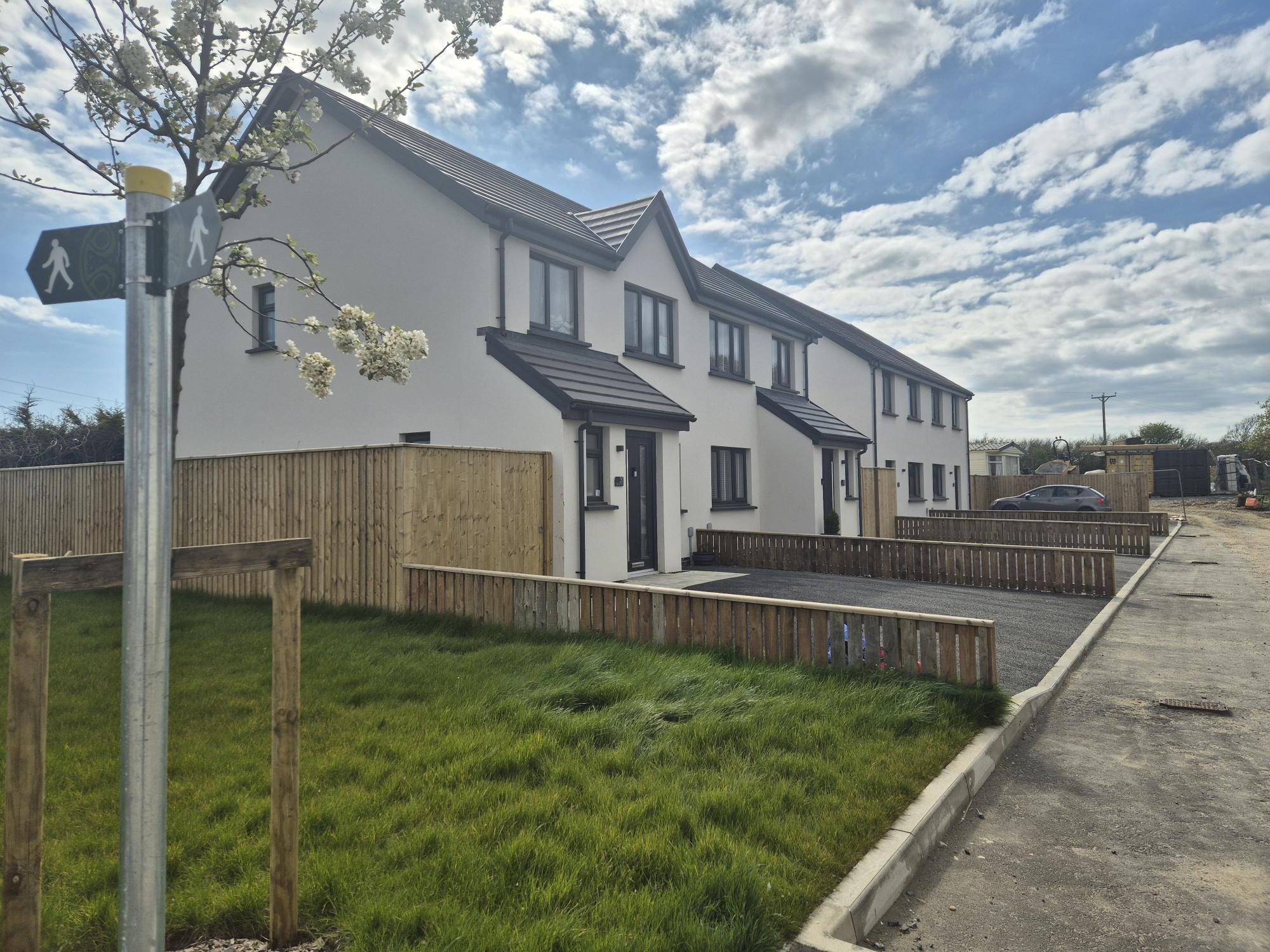
Harcourt Close development provides social and intermediate-rent properties for households facing rural housing pressures
A NEW housing development in Hook is helping local families remain in rural Pembrokeshire amid growing concerns over the availability and affordability of homes.
Harcourt Close includes a mixture of two to five-bedroom properties, designed for households ranging from first-time tenants and smaller families to larger, multi-generational families.
The homes have been built to modern standards and include energy-efficiency measures aimed at reducing running costs and supporting more sustainable living.
The development includes both social housing and intermediate-rent properties, providing affordable options for people with differing levels of housing need.
Social housing is intended for households in the greatest need, while intermediate rent provides an alternative for working households that may not qualify for social housing but are struggling to meet the cost of renting privately.
A Local Lettings Policy has also been introduced, giving priority to applicants with strong connections to Hook and the surrounding area.
Pembrokeshire County Council said the policy had helped residents remain close to relatives, schools, employment and existing support networks.
One resident said the policy had enabled her family to remain in the community where she had grown up.
She said: “I have lived in Llangwm all my life, and the Local Connections Lettings Policy meant that I was able to secure a family home in the same area where I grew up.
“This has allowed me to remain close to family and friends and means that my daughter can attend the same primary school that I did.”
Housing availability has become an increasing concern across rural Pembrokeshire, where rising property prices, private rents and the number of second homes have made it more difficult for some local people to remain in their communities.
Councillor Michelle Bateman, Pembrokeshire County Council’s Cabinet Member for Housing, said Harcourt Close was providing much-needed affordable homes.

She said: “Harcourt Close is providing much-needed affordable homes for local people while helping to keep families connected to their communities.
“The mixed-tenure approach ensures a range of housing options for residents, supporting those in greatest need as well as working households looking for an affordable home.
“This development demonstrates the positive impact that well-planned affordable housing can have, not only by providing quality homes but also by helping communities to thrive and remain sustainable for future generations.”
The council said the scheme formed part of its wider effort to meet local housing demand and support sustainable rural communities.
Anyone wishing to apply for one of the properties must have an up-to-date housing application.
Further information is available by emailing [email protected], calling 01437 764551 or visiting the Pembrokeshire County Council Housing Services Facebook page.



Health1 day ago
Two new surgeons appointed as Hywel Dda admits orthopaedic waits remain too long
Health board says it is increasing capacity after figures revealed hip replacement patients waited an average of 64 weeks HYWEL...

Community2 days ago
84-year-old man rescued after falling overboard near Tenby
A MAYDAY call sparked a major nighttime rescue after an 84-year-old man fell from a tender and was swept towards...


Crime3 days ago
Jury hears final arguments in Milford Haven teacher stabbing trial
Defence says there was no motive or intention to kill as judge reviews competing accounts of classroom knife incident SPECIAL...

News3 days ago
Andy Burnham becomes Labour leader and prepares to enter No 10
Former Greater Manchester mayor promises an ‘unashamedly Labour’ government after completing extraordinary return to Westminster ANDY BURNHAM has been formally...


News3 days ago
Motorcyclist dies following collision near Narberth
Police appeal for witnesses and footage after fatal crash on B4313 at Redstone A MOTORCYCLIST has died following a collision...


Local Government4 days ago
Stepaside school saved as council abandons closure proposal
Governors welcome decision but maintain original plans were based on outdated information STEPASIDE Community Primary School will remain open after...

Crime4 days ago
Footballer given 200 hours’ unpaid work for eye-gouging assault during match
Magistrates heard Robert Hedley put an opposing player in a headlock before gouging at his eyes during a match in...


Community4 days ago
Tenby Summer Spectaculars brought to an end after harbour licence revoked
Round Table says it was willing to make major safety changes but could not secure the access controls needed to...
Local Government6 days ago
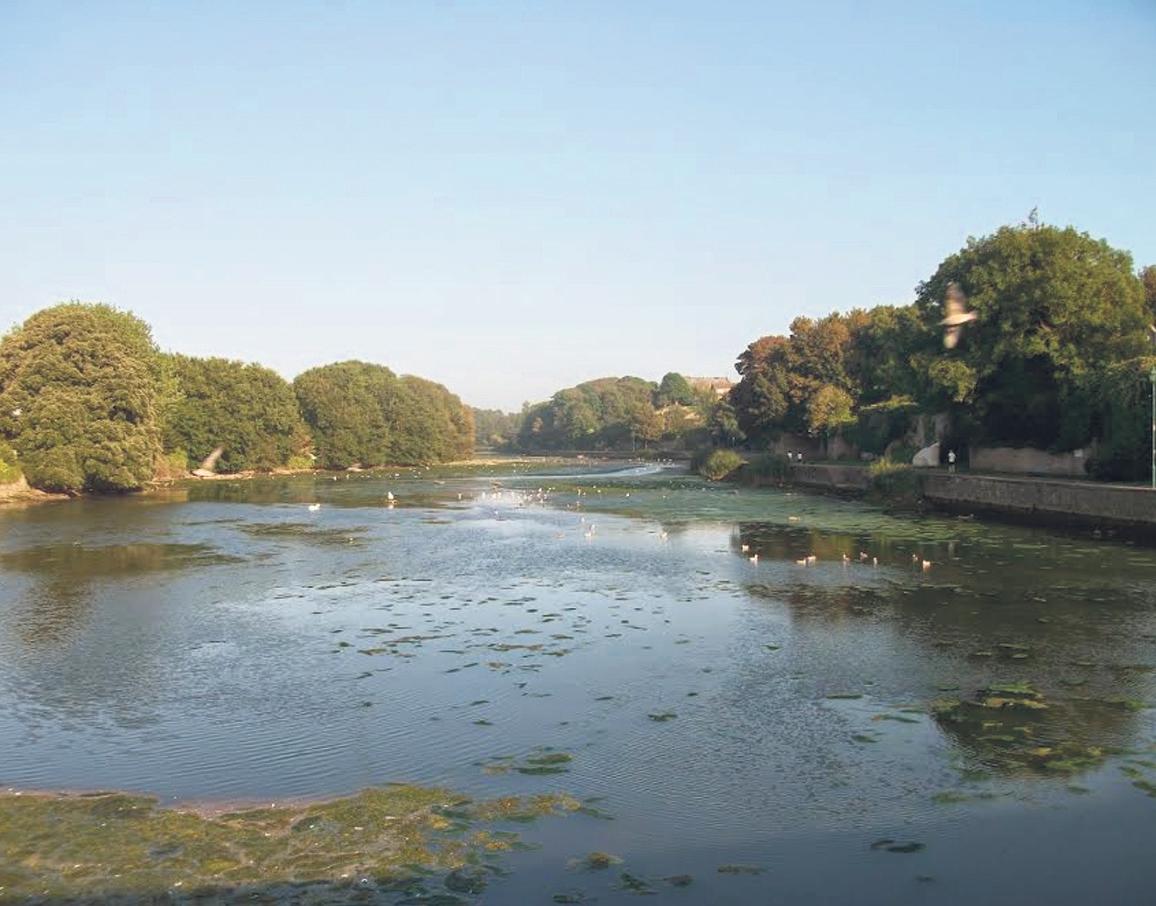
Catapult attacks suspected after wildlife deaths at Pembroke Mill Pond
Wildlife Crime Officers are investigating after the town council said around five animals showed signs of deliberate injury WILDLIFE found...

Crime6 days ago
Narberth retailer speaks of shoplifting toll after ‘collectable bear’ stolen
Independent shop owner said rising costs meant businesses could not afford to absorb losses caused by theft A NARBERTH retailer...
-
Community2 days ago
84-year-old man rescued after falling overboard near Tenby
-

 Health30 minutes ago
Welsh Ambulance Service invites public to AGM and Board meeting
-
Health1 day ago
Two new surgeons appointed as Hywel Dda admits orthopaedic waits remain too long
-

 Crime2 days ago
Drug-driver sent vehicles airborne in terrifying M4 collision
-
News17 hours ago
Andy Burnham set for No 10 as Wales awaits change
-

 Business1 day ago
First look at plans for new Llanelli indoor market
-

 Business2 hours ago
Port appoints two new directors as energy and regeneration projects advance
-

 Community20 hours ago
Tributes paid to long-serving Mansel Davies driver Gareth Griffiths